Justin’s Library
Every book cited across the Field Notes essays, in one place. 21 of them, pulled from 25 pieces. No book is here because it is famous. Each one is here because an argument on this site leans on it, and the essay that leans on it is linked underneath.
Some links in this piece go to Amazon. If you buy through one I may earn a commission, at no extra cost to you. It does not change what I recommend or what I think of it.
Hospitality as a discipline
The case that a warm room is the business rather than a cost against it. These are the books the consulting work actually rests on.
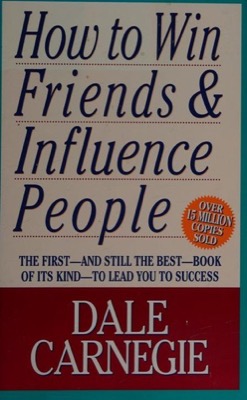
How to Win Friends and Influence People
Dale Carnegie
Carnegie's 1936 handbook on dealing with people. Most of it reads like what it is, a Depression-era self-improvement course; the part that survives is the observation that a person's own name and a sincere interest in them do more work than any technique.
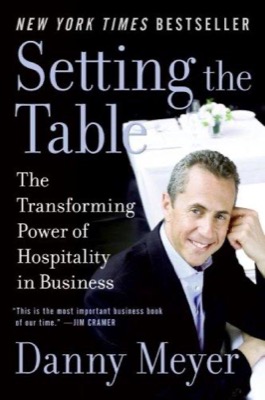
Setting the Table
Danny Meyer
Part memoir, part operating manual from the founder of Union Square Hospitality Group. Sets out “enterprising hospitality” and the order of priorities behind it — staff first, then guests, community, suppliers, investors — and separates service, which is the delivery of a thing, from hospitality, which is how the delivery makes someone feel.
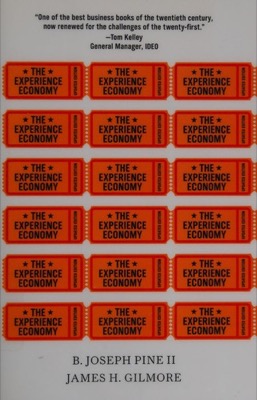
The Experience Economy
B. Joseph Pine II and James H. Gilmore
Pine and Gilmore's 1998 Harvard Business Review argument, expanded into a book: economic value climbs a ladder from commodities to goods to services to experiences, and businesses that only compete on the rung below get priced like it.
Buy now (affiliate link, opens Amazon in a new tab)Cited in: The Five Layers of Immersive Hospitality, Gingy 9000: Why I Built a Robot Mascot for a 100-Year-Old Ginger Ale, The Experience Economy Is Becoming the Human Experience Economy, Immersive Hospitality Changing Lives Through Experience and 6 more
- Out of printThe Great Good PlaceRay Oldenburg
The Great Good Place
Ray Oldenburg
The book that named the “third place” — the public space that is neither home nor work — and listed what one actually requires: neutral ground, a leveller, conversation as the main activity, regulars who set the tone, a plain exterior, and a playful mood.
Opens an Amazon search. Editions of this one change hands, so a single listing would go dead.
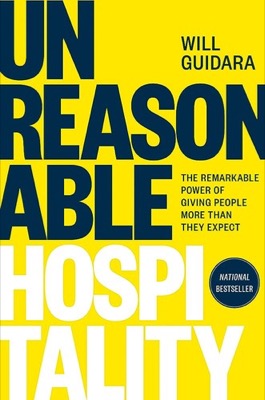
Unreasonable Hospitality
Will Guidara
Guidara's account of taking Eleven Madison Park to the top of the World's 50 Best list, built around deliberately disproportionate gestures for individual guests. The argument is that the unreasonable effort is the product, not a flourish on top of it.
Places built on purpose
Malls, parks and planned cities: what happens when somebody designs a place for how people are supposed to behave in it, and what happens next.
- No coverBirnbaum's Walt Disney WorldBirnbaum Guides
Birnbaum's Walt Disney World
Birnbaum Guides
The officially authorised guide, and cheerful by design. Useful for what is actually there, park by park, rather than for a verdict on whether it is any good.
- Out of printMall Maker: Victor Gruen, Architect of an American DreamM. Jeffrey Hardwick
Mall Maker: Victor Gruen, Architect of an American Dream
M. Jeffrey Hardwick
A biography of Victor Gruen, the Viennese émigré architect who invented the enclosed shopping mall as a piece of civic infrastructure, and who spent his last years disowning what developers did with it.
Opens an Amazon search. Editions of this one change hands, so a single listing would go dead.
- No coverProject FutureChad Emerson
Project Future
Chad Emerson
How roughly 27,000 acres of central Florida were quietly assembled through shell companies, and the legislation that followed to create the Reedy Creek Improvement District and with it Walt Disney World.
- Out of printThe Heart of Our CitiesVictor Gruen
The Heart of Our Cities
Victor Gruen
Gruen's own 1964 book: a diagnosis of post-war sprawl and the case for dense, pedestrian city cores with cars kept to the edge. The mall was supposed to be the prototype.
Opens an Amazon search. Editions of this one change hands, so a single listing would go dead.
- No coverThe Unofficial Guide to Walt Disney World 2027Bob Sehlinger and Len Testa
The Unofficial Guide to Walt Disney World 2027
Bob Sehlinger and Len Testa
The independent, data-led guide: measured wait times, ride-by-ride assessments and computer-generated touring plans. It is the one that will tell you something is not worth your time.
- No coverWalt Disney and the Promise of Progress CitySam Gennawey
Walt Disney and the Promise of Progress City
Sam Gennawey
Gennawey reads Walt Disney's EPCOT proposal as a serious piece of urban planning rather than a theme-park concept, tracing it back to the planners and exhibitions Disney was drawing on.
Why people do this
Memory, attention and the self. Mostly here because the honest answer to “why did that feel good” is usually psychology rather than design.
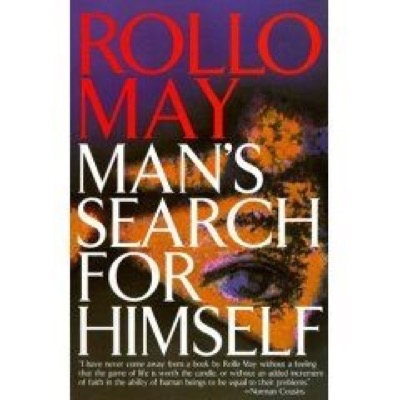
Man's Search for Himself
Rollo May
A 1953 book of existential psychology on emptiness, anxiety and loneliness, and on the difference between values a person has chosen and values they have absorbed from the people around them.
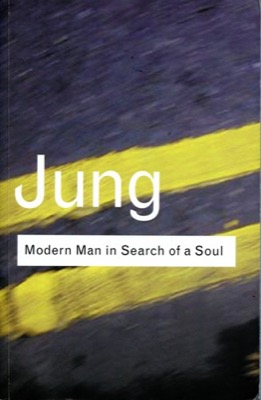
Modern Man in Search of a Soul
C. G. Jung
Jung's essays for a general reader, collecting dream analysis, psychological types, the unconscious and the persona. The shortest route into his ideas that is still in his own words.
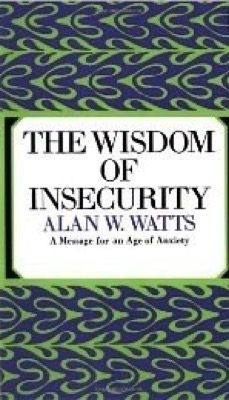
The Wisdom of Insecurity
Alan Watts
Watts argues that the pursuit of security is itself the source of anxiety, because it trades the only moment that exists for an imagined future one. Subtitled A Message for an Age of Anxiety.
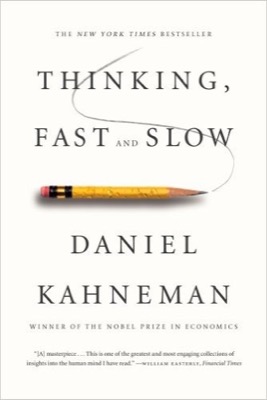
Thinking, Fast and Slow
Daniel Kahneman
Kahneman's summary of a career: the fast, automatic System 1 against the slow, effortful System 2, and the biases that follow. It is also where the experiencing self and the remembering self are set against each other, including the cold-water experiment.
Film and storytelling craft
Twenty years of the day job. Several of these are more useful outside filmmaking than in it.
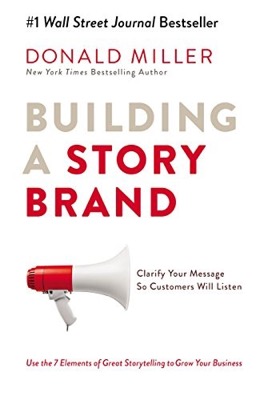
Building a StoryBrand
Donald Miller
A seven-part messaging framework whose central move is casting the customer as the hero of the story and the business as the guide who helps them, rather than the other way round.
Buy now (affiliate link, opens Amazon in a new tab)Cited in: What AI Actually Does for a Small Business Owner, Automate the Invisible. Humanize the Visible., Gingy 9000: Why I Built a Robot Mascot for a 100-Year-Old Ginger Ale, Rufus Hightower and the Case for Giving a Business Its Own Mythology and 3 more
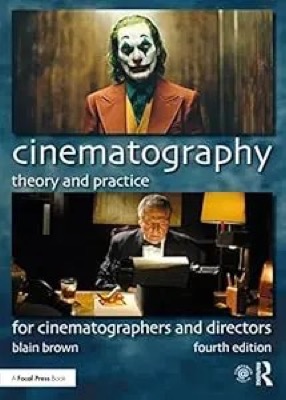
Cinematography: Theory and Practice
Blain Brown
The working reference for the technical half of the job: sensors, exposure, dynamic range, colour and lighting, with the maths kept to what a person on set actually needs.
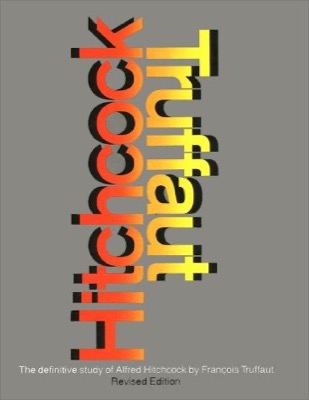
Hitchcock
François Truffaut
Truffaut's week of interviews with Hitchcock, working through the films one at a time. It is the primary source for most of what is commonly repeated about how Hitchcock built suspense.
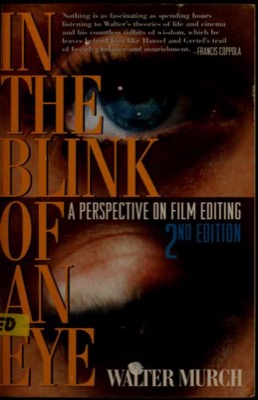
In the Blink of an Eye
Walter Murch
A short essay on film editing by the man who cut Apocalypse Now. Sets out a ranked list of what a cut must serve — emotion first, story second, rhythm third, and only then the physical continuity most people assume matters most.
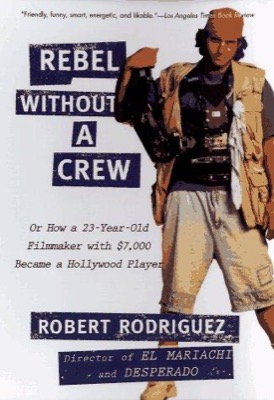
Rebel Without a Crew
Robert Rodriguez
Rodriguez's diary of shooting El Mariachi for about seven thousand dollars, partly funded by volunteering for medical trials, and what happened when it reached Sundance.
Buy now (affiliate link, opens Amazon in a new tab)Cited in: What AI Actually Does for a Small Business Owner, Rufus Hightower and the Case for Giving a Business Its Own Mythology, Small Businesses Can Now Build Like Much Larger Companies, Trying to Impress Ghosts: What Family Legacy Can Do to an Entrepreneur
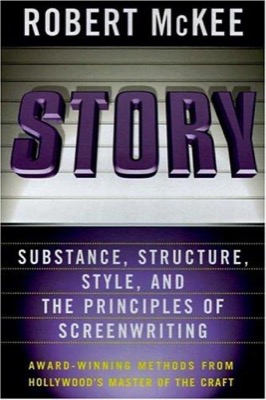
Story
Robert McKee
McKee on dramatic structure: the inciting incident, scene design, and the idea that a scene without a change in value is a scene that has not happened. Written for screenwriters and used well beyond them.
Buy now (affiliate link, opens Amazon in a new tab)Cited in: The Five Layers of Immersive Hospitality, Gingy 9000: Why I Built a Robot Mascot for a 100-Year-Old Ginger Ale, The Guest Is Not the Audience. The Guest Is the Character., Rufus Hightower and the Case for Giving a Business Its Own Mythology and 3 more
Rather talk than read?
Most of what is in these books ends up in a room somewhere. Thirty minutes, no charge, and I will tell you honestly whether I am the right person for your venue.