The Guest Is Not the Audience. The Guest Is the Character.
Traditional media assumes the audience is on the other side of the frame. Immersive experience quietly puts them inside it. Notes on why so many 'immersive' businesses aren't.
I want to stage a scene for you. It is a thought experiment, so feel free to bring popcorn.
You are in a revival house on a weeknight. Red velvet seats worn shiny at the armrests, a screen too big for the room in the way that only old theaters get away with, the projector humming somewhere behind your head like a patient insect. The film is Vertigo, 1958. You have maybe seen it, maybe not. Either way, Hitchcock does not care, because he is about to do the same thing to you that he does to everyone.
Jimmy Stewart hangs from a gutter above a San Francisco street, and the movie teaches you in about four seconds what his body already knows: the ground is not where it should be. Later, a bell tower. A staircase coiling up through the dark. Stewart looks down, and the shot everyone remembers arrives: the camera physically pulls back while the lens zooms in, and the staircase stretches like taffy, the floor plunging away without moving an inch. Around you, a few hundred strangers' stomachs drop in unison. You can hear it, that soft collective intake of breath, the sound a theater makes when a director reaches into every rib cage in the room at the same moment.
Now notice the trick underneath the trick. Nobody in that theater can do anything about any of it. You cannot lean sideways to see around the corner of the staircase, because there is no around. The corner is light on a wall. You cannot call out a warning, or rather you can, but the man on the stairs has been unable to hear you since 1958. You cannot wander off to explore the mission courtyard, cannot ask the woman in the gray suit what she is actually thinking, cannot decide that tonight you would rather follow the detective's friend Midge for an hour, who frankly deserved it. Hitchcock decided, months before you were involved, exactly where your eyes would be pointed during every second of this experience. And here they are. Right where he left them.
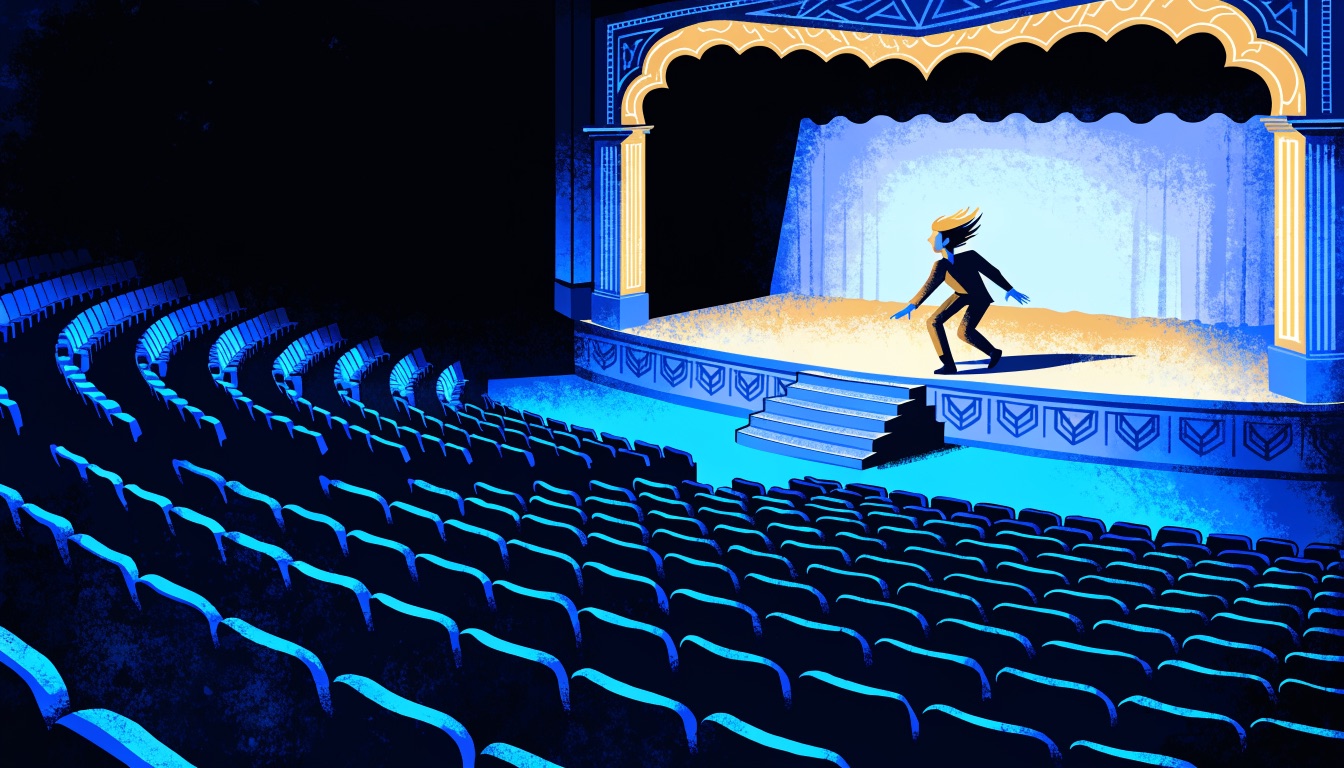
That is not a flaw. That is the premise of the medium. Film assumes the audience is on the other side of the frame: the director controls the world, the audience receives it, and the fourth wall stays where it belongs. Everything film has ever achieved is built on that contract, and Vertigo is what total mastery of the contract looks like. The audience is fixed so that the film can move.
But stay in the thought experiment a moment longer. Stand up, mid-film. The projectionist will forgive you; none of this is real. Walk up the aisle, through the lobby with its butter smell and its dead-eyed cardboard standees, out the doors, down the block, and into a different dark room, this one lit warm instead of silver. A bar. Any good bar. Notice what just happened to the physics. You can move. You can speak, and the room answers. You can sit where you like, follow what interests you, change your mind. The people here are not recordings of people. Somewhere between the lobby and the bar stool, without signing anything, you changed mediums.
The question that has come to organize most of my working life is: does the room know that? Because most rooms do not. Most rooms, including most rooms that advertise themselves as immersive, are still operating on the movie theater's contract. They just took out the screen and left the seats pointed at where it used to be.
A different medium
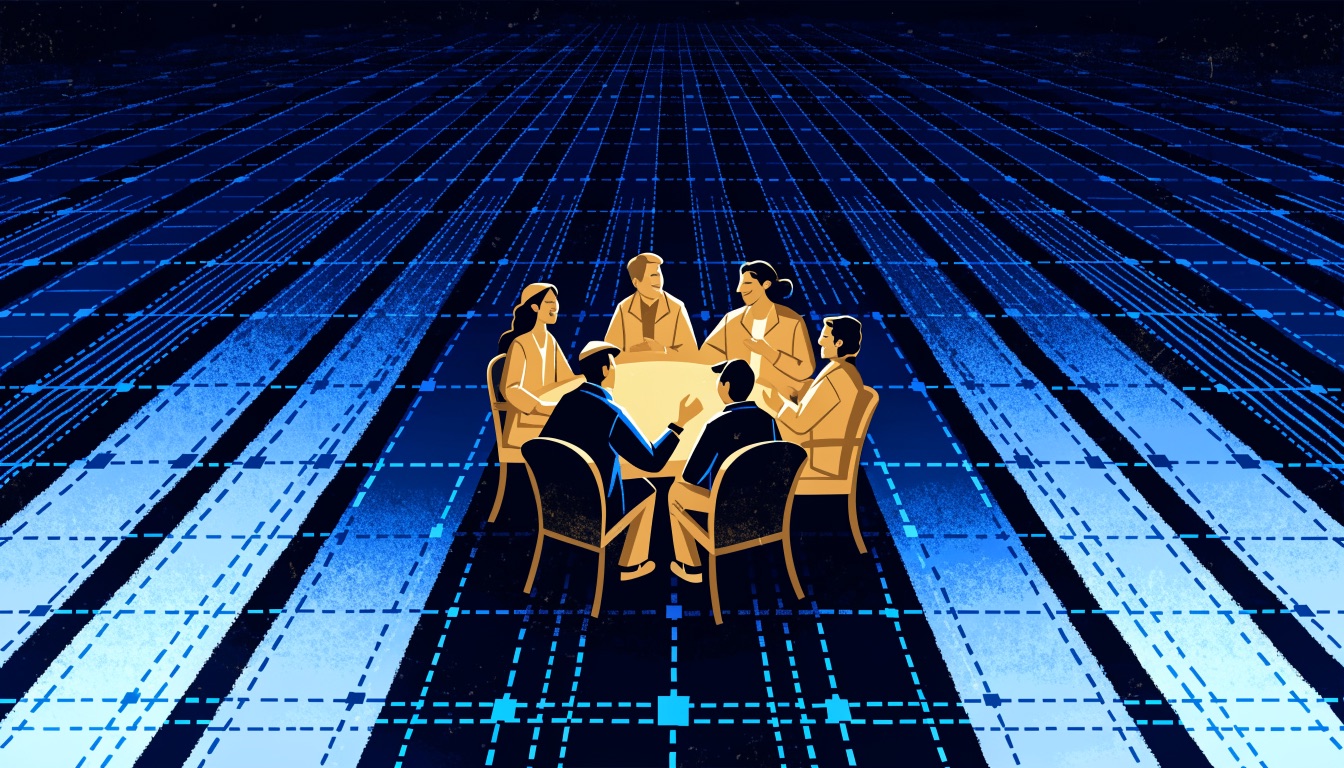
Here is the reframe, stated plainly. The guest is not the audience. The guest is the character.
That sounds like a slogan, and I would distrust it too, except that it has operational consequences you can build with. If you treat the guest as an audience, you design a show. You point the room's attention at the front. You optimize sightlines, give everyone a comfortable seat and plenty to look at, and run the evening at the guests. What you have built is a theater with drinks, and a theater with drinks can be a lovely business. It is also leaving most of the medium unused.
If you treat the guest as a character, you design a place. You make sure there is something for them to do, not just see. You give them small choices that actually change their evening. You build enough responsiveness into the room that a guest can feel their own presence being registered, the way you feel it when a host remembers your name versus when a host remembers your reservation number. The two versions can look nearly identical on paper. Standing inside them, guests can tell which one they are in within about five minutes, even if they never articulate it. Especially if they never articulate it.
In fairness, the show model did not take over hospitality by conspiracy. It took over because everyone alive has been trained by a century of dominant media to be an audience. We know how to do it expertly: find the seat, face the front, receive. Guests walk in carrying that training, and a room that asks nothing more of them is meeting a real expectation. Which is exactly why the invitation matters so much. You are not just designing an experience. You are gently un-training a habit the guest has been rehearsing since childhood, and you have to do it without ever making them feel corrected.
The word "immersive" was supposed to describe the second thing, and then it got popular, and then it got debased with impressive speed. A lot of businesses now use "immersive" to mean "we spent money on theming." But theming is set design. Set design is a prerequisite for immersion the way a violin is a prerequisite for a violin concerto: necessary, and not remotely the same as the music. A themed room where the guest sits still and watches is a themed theater. An immersive room is one where the guest's presence is load-bearing.
The failure modes are specific enough to list, because I have visited all of them, some more than once, occasionally on purpose.
- Everything to look at, nothing to do. The room is spectacular. The guest is a spectator. Photographs beautifully, feels like a screensaver.
- Forced participation. The opposite ditch. The guest is handed an itinerary, a costume, and functionally a script. That is a play, and very few people want to be in a play at eight on a Friday. Most of us want to be in a bar.
- Difficulty mistaken for immersion. If the guest has to solve the room before they can enjoy the room, you have built a puzzle game. There is a real market for puzzle games. It is not the general hospitality market.
- Mandatory mythology. The world only opens for guests who already know the lore, and everyone else feels like they walked into a private joke. This is the opposite of hospitality. I have written about the reward-over-punishment rule in Rufus Hightower and Storyworld Hospitality, and it is the hill I have chosen to die on.
- An event mistaken for an environment. A great one-night experience can be wildly participatory. Running that same participation as a permanent daily operation is a different and much harder problem, and most operators have only ever solved the first one.
Five failures, one mistake: designing a stage when the assignment was a room.
Making room for the character
The most extreme counterexample I know of ran in a Manhattan warehouse for more than a decade. Sleep No More, the theater company Punchdrunk's staging of Macbeth, dressed several floors of a building as a fictional 1930s hotel and turned the audience loose inside it: masked, silent, and free to follow whatever or whomever they chose. No seats. No fixed sightlines. The mask turns out to be the load-bearing element, and it is worth understanding why. Behind a mask, in the dark, with no obligation to perform themselves, ordinary theatergoers did things audiences never do. They opened drawers and read the letters inside. They followed a single performer for an hour of private obsession. They stood alone in an empty room, going through a stranger's belongings, fully inside the fiction with nobody watching them do it.
What that proves, to me, is that the appetite is real. Give people agency, permission, and zero obligation to perform, and they will step into a story with a willingness that would shock anyone who has only ever seen them in row F. But it is also a caution. Sleep No More was a pilgrimage: a show you visit once or twice, pay handsomely for, and tell stories about. A bar is a place you live near. Daily hospitality cannot hand out masks and demand silence. It has to generate that same permission with much lighter touches, hundreds of times a night, for people who came in for entirely non-narrative reasons, like a drink.
So the craft question becomes: what are the lighter touches? The trick is giving the guest agency they can choose to take, never agency they are required to take. In practice, in an actual room, it looks like this.
Small choices with real consequences. The bartender who asks what mood the guest is in and builds accordingly. The menu that offers a dealer's-choice path beside the standard one. Nothing dramatic. Just enough decision that this visit belongs to this guest and could not have belonged to anyone else.
Objects the guest can hold. A menu that behaves like an artifact. A card handed over at the right moment. A coaster with a joke that only works inside this room. Hands are underrated in experience design; give them something to do and the guest settles into the world instead of hovering above it.
Rituals that reward participation without requiring it. A particular way of ordering a particular drink. A phrase that means something here. Guests who notice, join. Guests who do not are never punished, never quizzed, never made to feel like they missed the syllabus.
Staff who respond to the actual person. Not scripted personalization, which guests can smell from the parking lot, but real registering: adjusting to this table, this mood, this occasion. This is the oldest technology on the list and still the most powerful.
A narrative the guest can enter at any point. A world that has been running long enough that regulars can watch it develop, while a first-timer still gets a complete chapter. Both are inside the story. Neither needed a briefing.
And extensions beyond the room, for whoever wants them. We built SodaBarVT, an interactive case-file mystery on the web, in the same universe as the physical lounge, so a guest can keep pulling the thread between visits if they want to. The important word in that sentence is if.
Underneath all of it, one rule: agency by invitation, never by demand.
There is a deeper reason I keep pressing on this, beyond craft pride. The question hiding inside all experience design, the one I end up judging my own room against, is what the guest is allowed to become for the length of the visit. A character is not just somebody the story happens to. A character gets to be someone. Watch people in a room that has genuinely made room for them and you can see the defenses come down by degrees: adults getting curious the way children are curious, strangers talking to strangers, the person who arrived armored in a long day slowly turning into the person who leans over and asks about the strange object on the shelf. None of that appears on a receipt. All of it is the actual product. An audience member is allowed to feel things, which is no small gift, and film proves it nightly. But a character is allowed to act. And acting, even at the modest scale of choosing the dealer's-choice cocktail, is the moment an evening starts belonging to the person living it.
I should say where this obsession comes from, because it is not a hospitality textbook. It is the extension of the filmmaking-into-hospitality argument I keep returning to. Film trained me to control attention: where the eye goes, what the ear hears, when information arrives. I would not trade that training for anything, and a room benefits from it enormously. But film has one hard limit, the same one we started with in the red velvet seats. The audience is on the other side of the frame. The story is told at them, magnificently, and never with them. Hospitality gets to break that limit. The audience walks in. The characters can answer. The room can adjust. The story can bend around the specific human who just came through the door. Every one of those is a capability Hitchcock would have had to invent a new art form to use. Most operators who borrow film's tools also borrow its wall, and build gorgeous rooms that are, functionally, sets for a movie nobody is filming.
The test, if you want one, fits in a sentence. If your guest could sit in a chair for the entire visit and receive essentially the same experience as any other guest, you have built an audience. If your guest's specific presence changes the shape of the evening, you have built a character. Both are legitimate businesses. Only one of them uses the actual power of the medium, and I have spent enough evenings in the other kind to report that I have never once left one feeling like something happened.
Back in the revival house, the lights come up. Three hundred people file out of the same door having seen, frame for frame, the identical film. That is not a failure; it is the entire design, and in Hitchcock's hands it is glorious. The seat folds up behind you as you stand. On the screen, if the projectionist ran it again, the story would play out exactly the same, because it never knew you were there. It never knew anyone was there. That is the deal film offers, and it is a good deal.
But down the block there is a warm-lit room where no two people tonight are having the same evening, where the story checks who walked in before deciding what happens next. The frame was beautiful. I spent twenty years inside it and I still love it. The threshold is better.
Related: A Bar Is a Stage: What 20 Years of Filmmaking Taught Me About Hospitality, Storyworld Hospitality, The Five Layers of Immersive Hospitality.