Disney World Is Ridiculous. So Why Do We Love It?
The castle is phony and the pirates are robots, and the parks keep filling up anyway. On the empty room that your own mind furnishes, the bank of earth that keeps the world out, and the audience watching you that nobody else can see.
 Justin BunnellNovember 1, 202612 min read
Some links in this piece go to Amazon. If you buy through one I may earn a commission, at no extra cost to you. It does not change what I recommend or what I think of it.
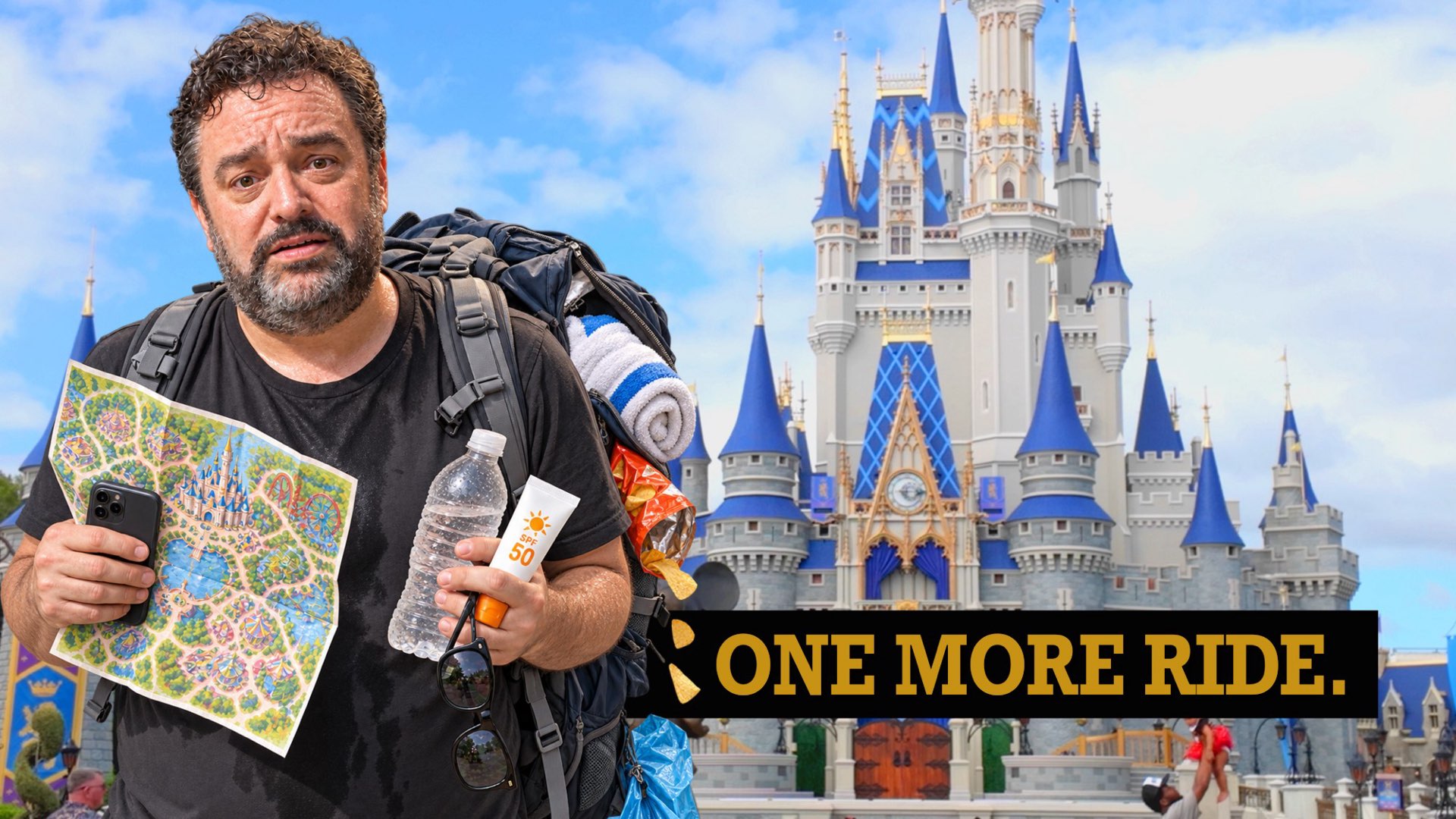
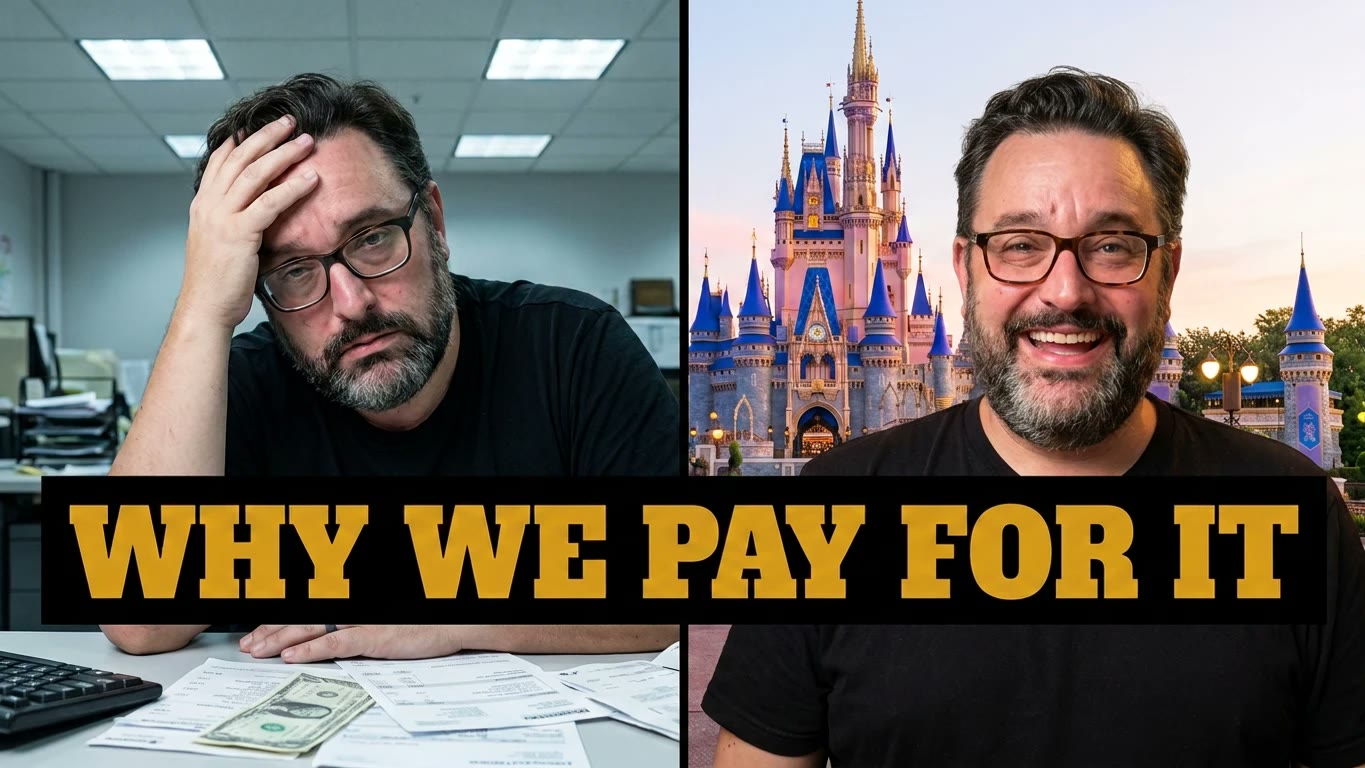
Why do Disney fanatics pay thousands of their hard-earned dollars to visit a world they know is not real? Why do some of them go into debt to return to a place they have already been several times?
Look at what they are paying for. The castle is phony. The pirates are antiquated robots with limited movement and sometimes bad lip-sync. Nobody has ever lived in the Swiss Family Treehouse. The monkeys on the Jungle Cruise are dated and everybody can tell.
And the parks keep filling up.
People do not go to Disney because they are tricked by the illusions. They go because inside those artificial borders, an overstimulated mind finally gets permission to do something adult life rarely allows.
Stop worrying and start playing.
I want to work out how a built environment manages that, and why it is so much harder to do at home.
A test you can take right now
Look at an ordinary office. Drop ceiling, fluorescent light, a desk.
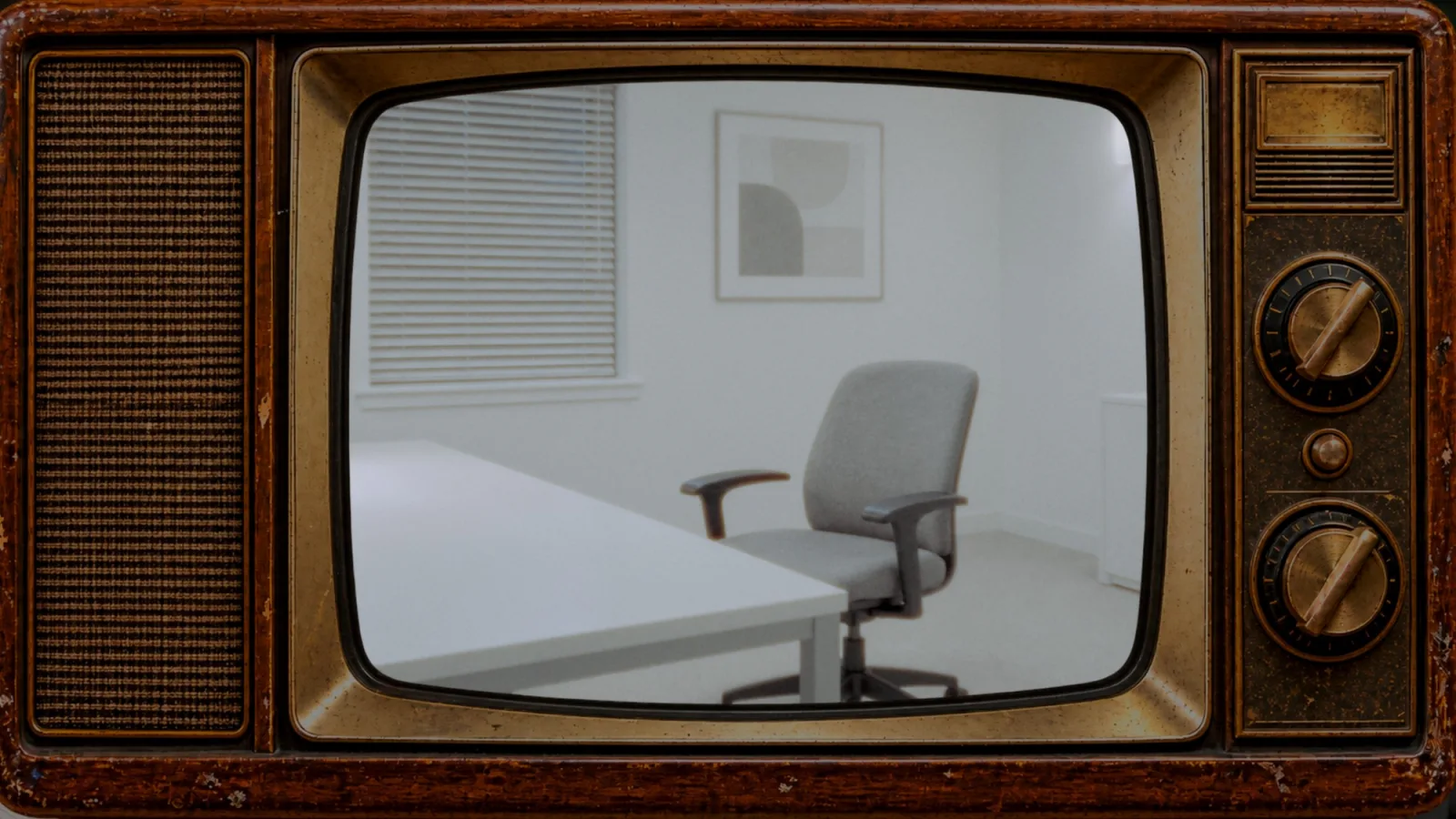 Room one. Who uses it, and what happened here?
Who uses it? What happened here?
Hold on to that first impression, and now look at a second room. A map. A compass. A chair pushed back from the desk.
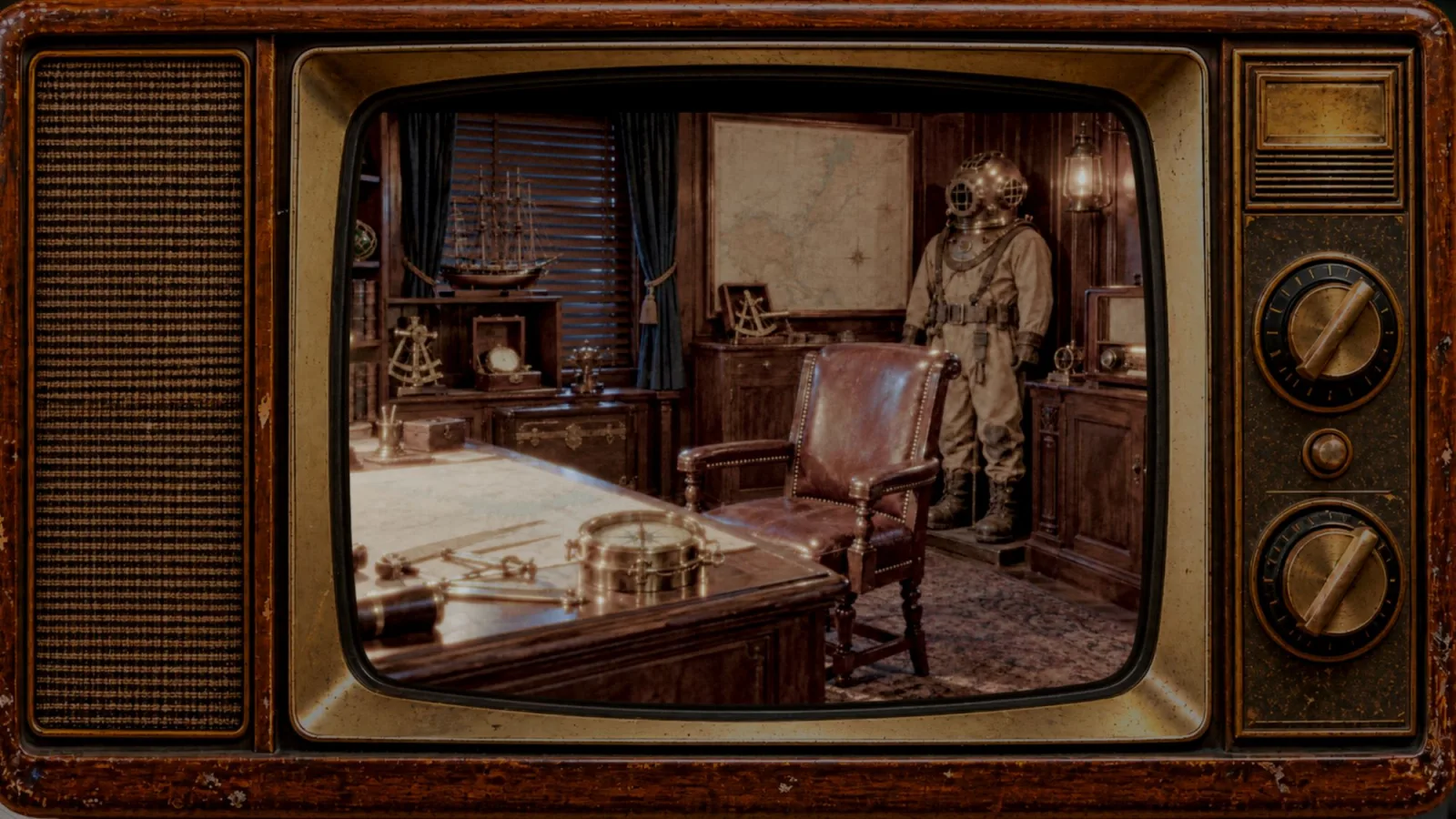 Room two. Same questions.
Same questions. Who uses it, and what just happened?
Maybe you pictured an old sea captain. Maybe somebody left in a hurry. Maybe there was an emergency. Maybe it is just an expensive desk.
But if a person appeared in your mind, notice something. I never showed you one. I never said anything about a person. You supplied them entirely on your own.
No character introduced himself. No narrator explained a shipwreck. All you had was a handful of objects arranged as if they belonged to somebody's unfinished day.
Now add one more thing. A radio, playing a bulletin about an expedition that has found a wreck twelve fathoms beneath Blackwater Sound.
With that radio on, the room stops being a room. There is a bigger world outside it now, and weather in that world, and somebody out there deciding what to do next.
Between those two rooms I changed the props, the lighting and the sound. That is the whole trick. Disney does it on a scale of several hundred acres.
The treehouse where nobody has ever lived
My favorite example is a home for a family that never existed.
The Swiss Family Treehouse at Magic Kingdom is based on a film about a shipwrecked family building a house on an island. You do not need to have seen the film. You understand the problem by walking through the thing and looking at what is lying around.
There is a whole water system built around a wheel. Household possessions have been hauled up into the branches. You start following the solutions. What did they save from the wreck? How on earth did they carry that up here? This actually looks like it might have been fun to live in.
Because I used to run a cocktail lounge, I also notice the operational problems. Who maintains that water wheel when it breaks? What happens once the wood starts to rot?
And even that gives the imaginary family another day of life. Somebody has a chore. Somebody is avoiding it. Somebody is tired of reminding them.
The designers did not build that argument. You did.
They built enough evidence for you to imagine it and keep it running. That is the remarkable thing about an empty chair in a convincing room: you start caring about the person who was sitting in it.
The cup that is still steaming
Go back to the captain's desk. Same map, same compass, same chair pushed back. Add one object: a cup of coffee, still steaming.
Watch what that does to the timeline.
The map suggested a journey. The chair suggested somebody was sitting here. The steam says they left moments ago, and that changes the tense of the whole room from history to right now.
closure, and why you cannot switch it offHere is the mechanism underneath it. Look at a curve with a small gap in it and most people will tell you it is a circle. Your mind closed the gap before you decided you wanted to. Psychologists call that closure: we complete unfinished shapes without being asked.
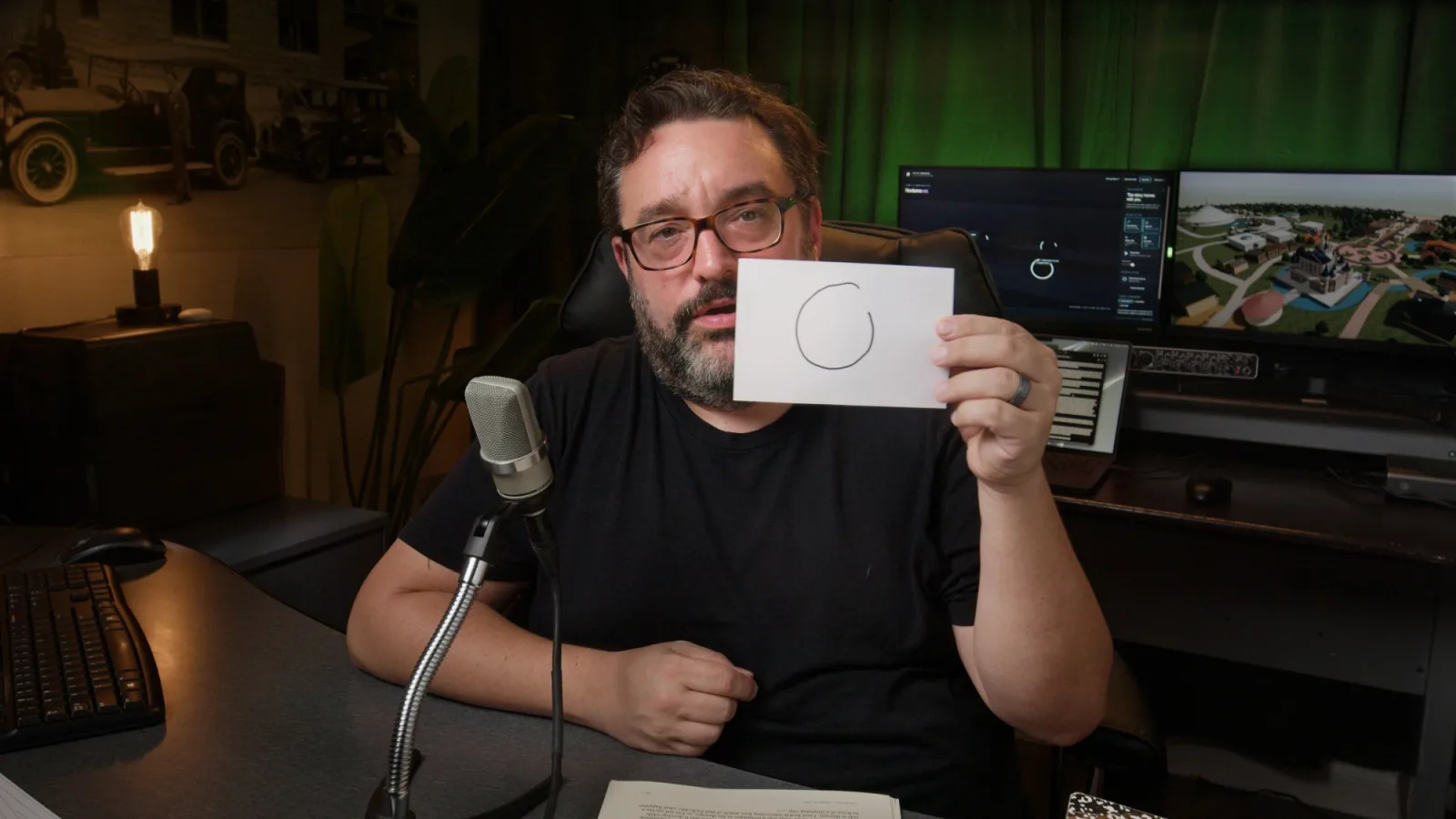 Most people say circle. It is a curve with a gap in it.
The steam is a gap too. It is a story with the ending missing, and your mind goes to work filling it in. Your brain cannot resist completing the picture.
That same reflex is the reason a grown adult can put on mouse ears in public and stop feeling ridiculous. I will come back to that.
Why build the room at all
Why go to the trouble and expense of a physical place you can walk into?
A novel lets you imagine a whole world. A film lets you see and hear it. A physical environment lets you walk around inside it with all of your senses at once. Taste, touch, sound, sight, smell.
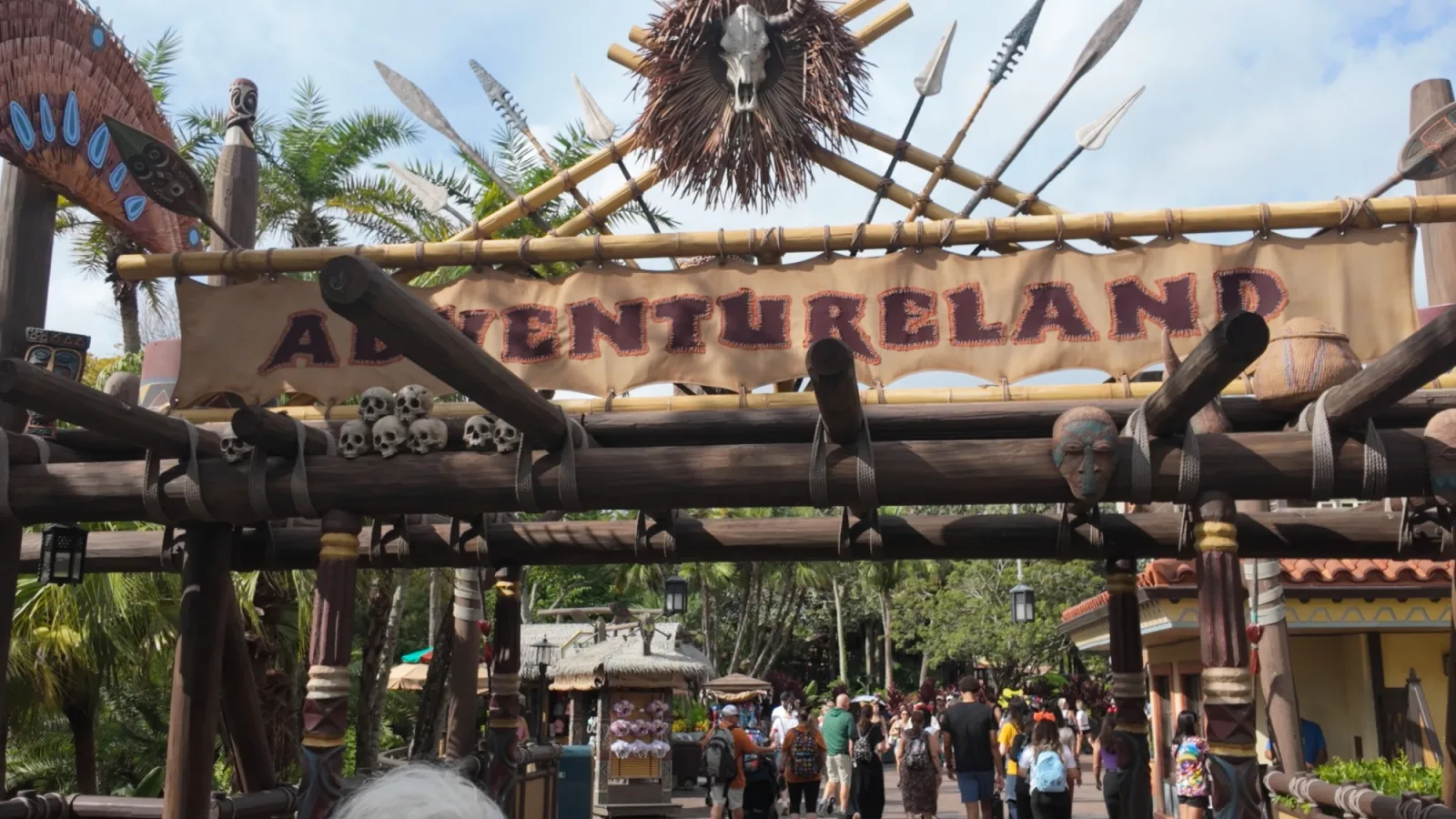 A threshold you physically walk under.
It also lets the designers work in a way a novel cannot. Big Thunder Mountain is not a drop with scenery bolted on; the runaway train is the reason there is a drop. On a standard roller coaster, the climb is just the delay before the fall. In Big Thunder, the climb is a scene.
Some of it is physical rather than narrative. Climbing a staircase. The G-force of a coaster and that feeling in your stomach. You can feel small in a room built to make you feel small.
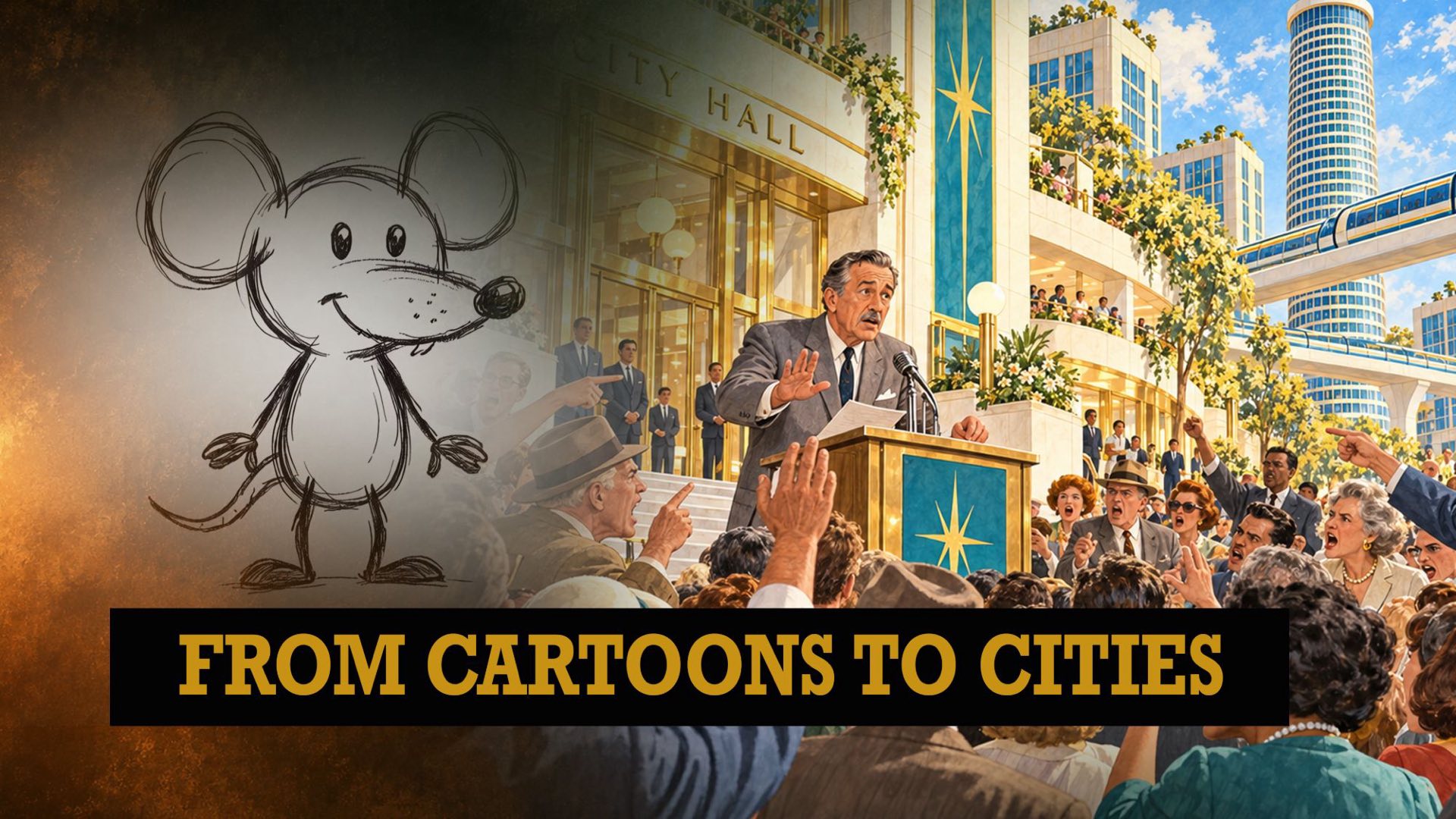
Walt Disney described Disneyland's scenery as half real and half movie set, and said the buildings were reduced in scale because miniaturization lends another dimension to fantasy. He also described the experience in the language of his day job: a long shot as you come in, then a medium shot, and then you walk up and touch something and you are in close-up.
None of this makes a park better than a book. It changes your relationship to the setting.
You can of course travel to extraordinary real places, and they have real history and real people in them, which a theme park cannot replace. But you cannot book a flight into a ghost story. An invented place can put you inside a situation that is not possible, and let you feel reasonably safe about it.
Which raises a more personal question. Why does that feel like such a relief?
The bank of earth
Nothing about my life changes when I walk through the gate. The bills are the same. Every day-to-day problem is still there.
The first thing that goes is the noise.
The parks are built for that. Many of them are ringed by raised banks of earth called berms, usually described as a way to keep the outside world from showing up in the view. Disney's own framing was that they had shut out the high-rise buildings, the freeway interchange and the power transmission poles, so that what you see when you come in is what Walt wanted you to see.
An English doctor named Donald Winnicott had a strikingly similar idea. He worked with children and their parents in London, and he wrote that children play best when they feel held. He meant more than being picked up. He meant a setting that feels safe and reliable, where nothing is being demanded of them.
He did not think play was only for children. He argued that a place where a person gets to be creative is a place where they get to find out who they are.
My reading is that the berm around the park does that job. It is a protective boundary where you are allowed to put your worries down for a few hours.
That is the real relief, and I think it is most of what people mean when they talk about Disney adults. Being inside a space where nothing is being demanded of you.
What imagination does when nobody built it a boundary
To see why that boundary feels necessary, look at what imagination does all day when it is left unprotected.
You get a text that says "Can we talk?"
Three words, and within five seconds your mind has written a five-act tragedy complete with the argument, the fallout and the apology. All of it before you know what the conversation is even about.
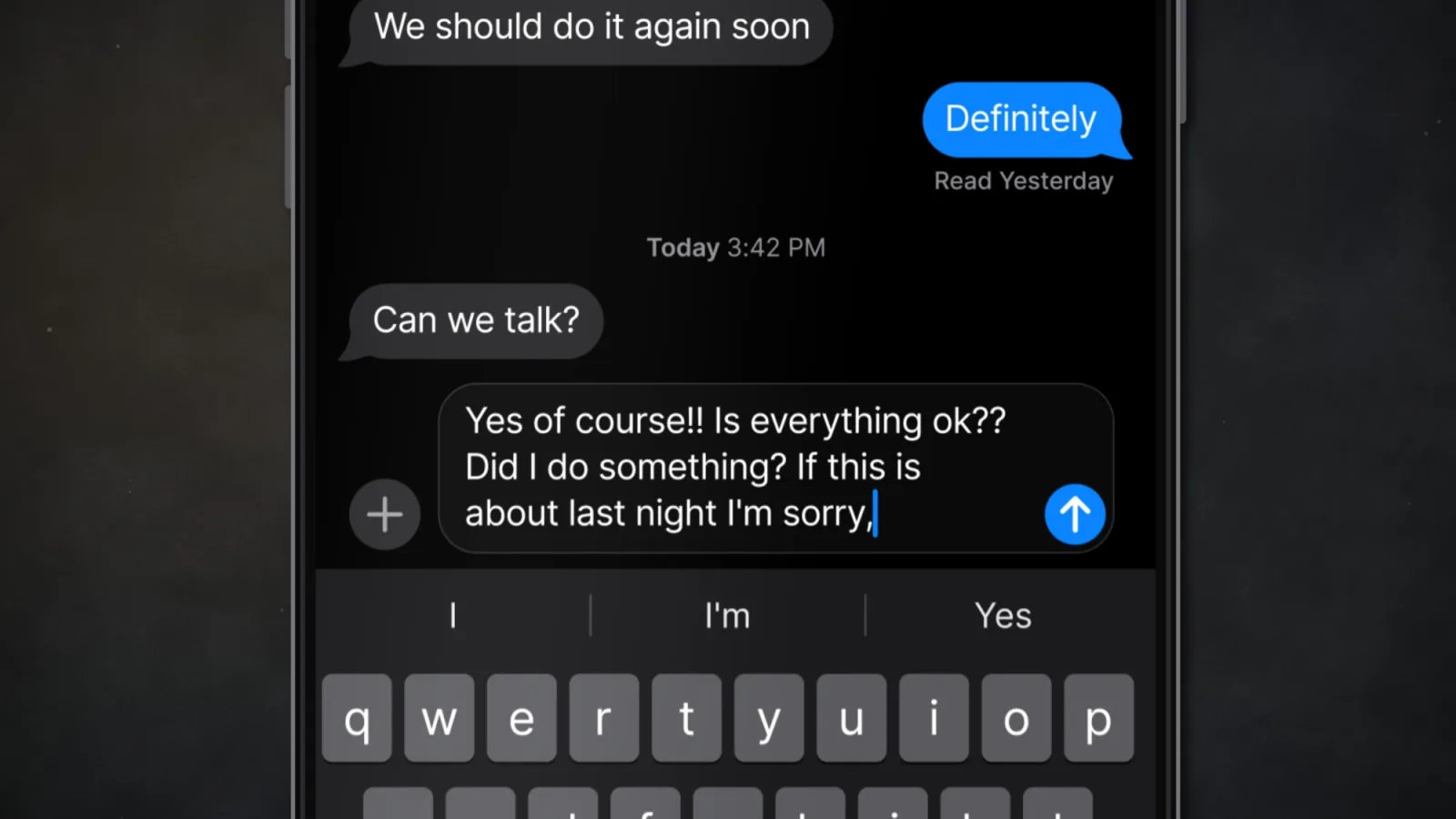 Nobody asked for any of that.
Alan Watts put the general version of this well: moving your hand is perfectly easy because you do not have to think about it, and things become complicated only when we start thinking about them, because we are translating them into a system far simpler and cruder than the thing itself.
So we check the phone. Did I get a text. Did I get a work email. Did anyone like the post.
Researchers describe remembering an experience and imagining a possible future as running on overlapping systems, which is a tidy way of saying the machine that replays your past is the same machine that invents your future. These things are narrative prediction engines. When daily life leaves a blank space, the survival instinct fills it with worst cases and social anxiety, purely to protect itself.
We spend all day weaponizing our imagination against ourselves.
A place like Disney hijacks that same machinery and points it at curiosity instead of dread.
That is the whole move. Same faculty, different target.
Jung described it from the inside. When you observe the world you see people, houses, the sky, tangible objects. When you observe yourself you see moving images, a world of images generally known as fantasies — and, he insisted, those fantasies are facts. It is a fact that a man has such and such a fantasy.
Rollo May went further and tied it to anxiety directly. He thought anxiety was associated with creativity: that it is as though the world is knocking at your door, and you need to create, to make something, to do something. For people who have found their own heart and their own soul, he said, it is a stimulus toward creativity and toward courage. It is what makes us human beings.
A collection of mirrors
May explored boredom, emptiness and a person's sense of value in a book called Man's Search for Himself, and one line from it does a lot of work here.
I am just a collection of mirrors reflecting what everyone else expects of me.
If you have ever answered a question with what you thought the other person wanted to hear, you recognize that feeling.
Here is the question it opens up. When so much of a day is spent being useful, responsible or acceptable to somebody else, how much attention is left over for whatever actually interests you?
This is how a grown adult ends up genuinely wondering how a fictional family got water up into a tree, or how the early Disney designers arrived at the Enchanted Tiki Room. And the best part is that none of that future thinking has consequences attached to it. That sounds small until you count how many questions in an ordinary day arrive with an obligation stapled to them.
Disappearing, or exploring
When psychologists look at escapism they tend to find two very different motivations.
On one side there is numbing out: running away from your problems to shut your brain off. On the other there is stepping into an environment that makes you feel more open, more capable and more curious.
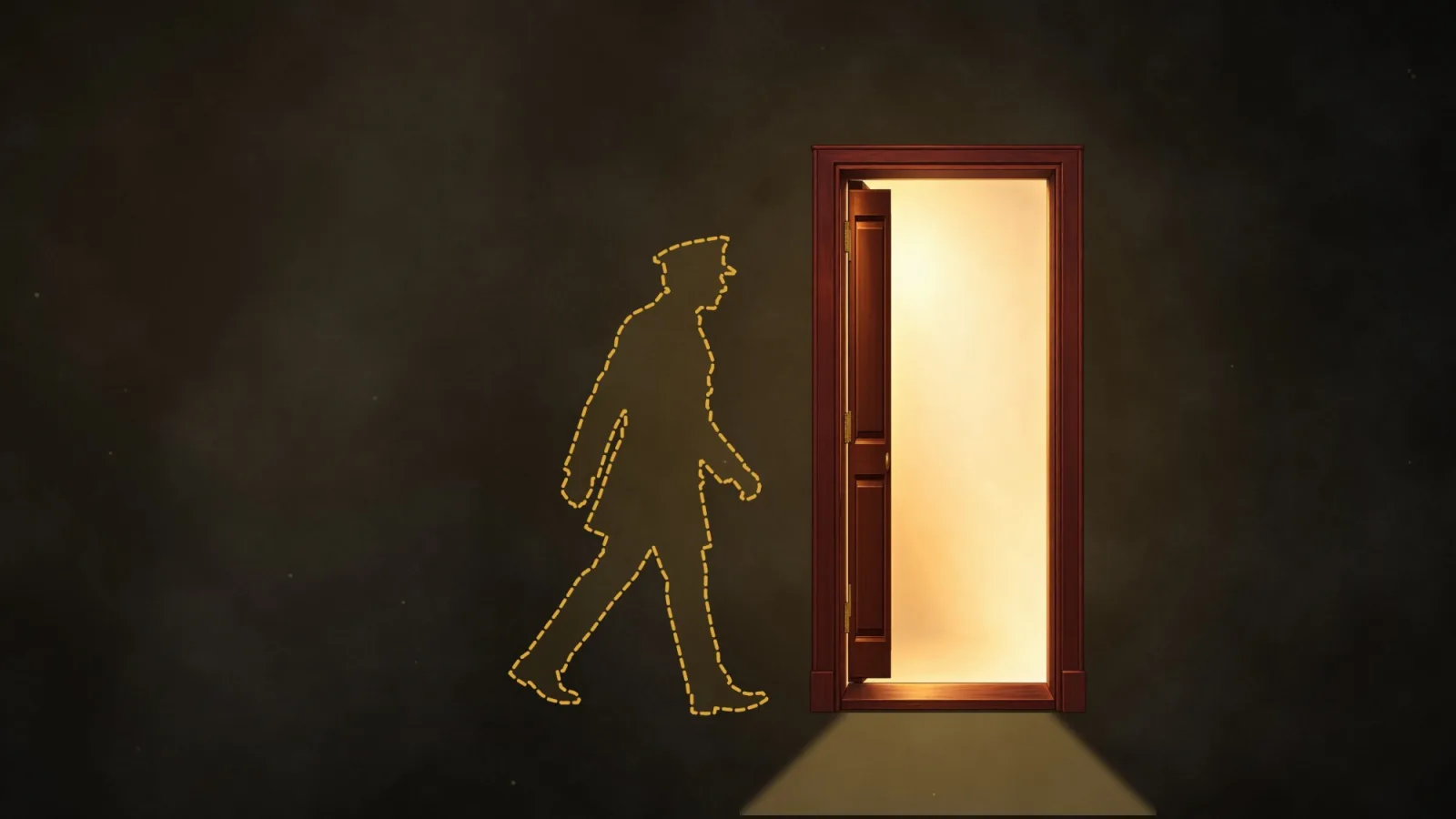 The same door, two different reasons for walking through it.
So the real question is not whether we are escaping. It is whether we are trying to disappear, or trying to give ourselves permission to explore.
It can honestly be both. And a good afternoon will not settle whatever is waiting at home or at the office on Monday. May was clear-eyed about that: life is difficult and full of conflicts and challenges, and without them it would not be interesting.
But curiosity does not have to solve your problems to deserve a bit of room. You might leave with a question, an idea, or a new interest you want to carry back into ordinary life.
The mask everyone can see
Sometimes what helps you follow that interest is seeing that everybody around you has agreed to play along.
You see a forty-year-old man in a Winnie the Pooh shirt and suddenly the day is not so bad. It is alright to drop your guard and use your imagination without being judged for it.
A grown adult wearing mouse ears in a bank is making a fairly strong statement. At Disney they might be the most conservatively dressed person in the line. The setting changes what counts as ordinary.
Most of us carry a different face for different rooms. One for work, one for family, one for strangers. Jung gave that set of faces a name: the persona, borrowed from Greco-Roman theatre, where it was the physical mask an actor wore.
He described it as partly the result of the demands society makes, and partly a compromise with what one would like to be, or would like to appear to be. He did not think it was a lie. People have to get through the day and please certain people in certain ways. The doctor has good bedside manner and behaves the way a doctor is expected to behave.
The performance is quite all right, Jung said, as long as you know you are not identical with the way in which you appear. The trouble starts when somebody forgets there is an actual person underneath the masks and identifies only with the one they adopted to fit the group.
Mouse ears are a mask too. The difference is that everyone around you is wearing one and everyone knows it is a mask. You watch other adults laugh, get startled, stop to examine something ridiculous. Joining in feels less exposed, because you are part of the group and everybody is playing.
Disney does not own this. Concerts, sports, theatre, museums, even a well-designed tiki bar can make room for it. A park just does the scenery, the sights, the sounds and the social setting all at once.
The audience that needs no signal
Except there is a complication. You can be surrounded by people happily playing along and still feel judged.
The reaction you are worried about is probably not in the park at all.
You could imagine a person in an empty room from a map and a compass. Now imagine the person who might see your photographs later. Will they think this looks fun? Wasteful? Impressive? A little embarrassing?
Suddenly you are standing in a room with an audience nobody else can see.
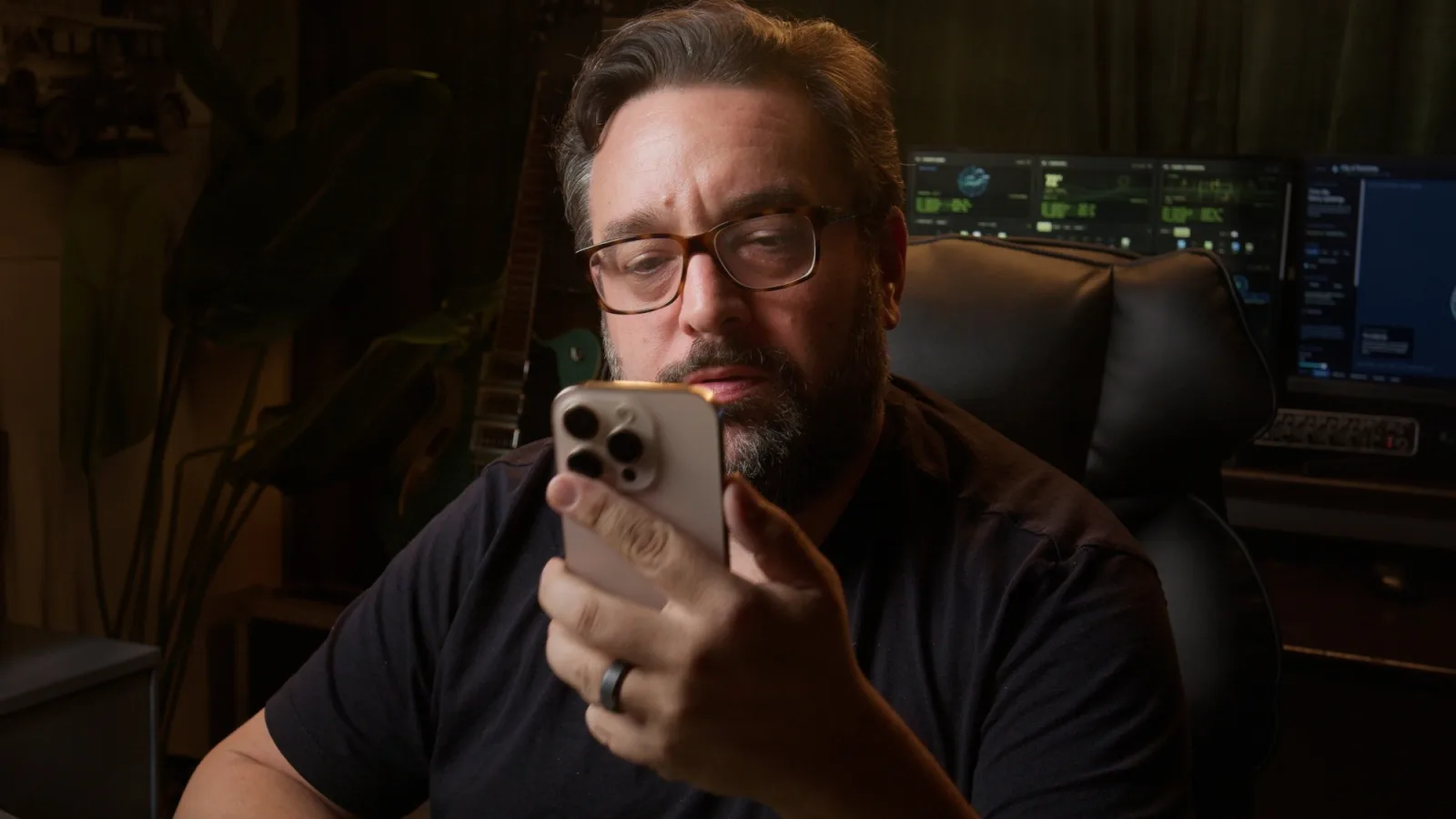 An audience that needs no signal.
Turn the phone off. Put it in a Faraday cage. You can still picture the person looking at the photo. This audience does not need a signal.
There is an old phrase for it: keeping up with the Joneses. It comes from a newspaper comic strip that began in 1913, following a family trying to match their neighbours. Here is the part I like. The Joneses were mentioned constantly and the artist never drew them.
The whole strip was about an audience that was never on the page. That is the audience in your pocket. No face, nobody else can see them, and they still get a vote on whether your holiday was worth it.
For me, money gets tangled up in it. I can picture somebody looking at a photo from a trip and thinking, why is he spending all that money? I do not know that they are thinking it. I supplied the reaction myself.
Watts thought the basic mistake was confusing a system of symbols with the world itself, the way we confuse money with wealth. Plenty of people are in business to make money rather than wealth, and when they make it they do not know what to do with it. May said much the same from the other direction: you can own the world and still be without the inner sense of pleasure, of joy, of courage, of creation.
Researchers have looked at this with photographs. In one set of studies, people who took photos in order to share them enjoyed the experience less than people who took photos for themselves, which the researchers put down to self-presentation — worrying about how you will come across. Other work found that the act of taking photos can keep you more engaged with what is in front of you.
It is the same faculty either way. The one that put the captain in the chair.
That is what brings me back to May's concern with a sense of personal value, and my application of it is simple. I want to notice when other people's possible reactions start deciding what an experience is worth. The map and the compass invite me to imagine a life. Then I start imagining what my followers will make of it, and the room has not changed at all. How I see myself in the room has.
Putting it down
The last part of the cycle is dropping the mask.
Watts described our whole model of life as a journey with a serious purpose at the end — success, or heaven afterwards — and said we missed the point the entire way along, because it was a musical thing, and you were supposed to sing or dance while the music was playing. We never learned to simply inhabit the present.
May's version is darker and lands in the same place. We are the only creatures that know we are going to die, and out of that comes what he called normal anxiety: the thing that says make the most of these years you are alive.
So part of my answer to why people pay to enter these invented places, alongside the rides and the memories and the time with people they love, is that some of them are paying for an unusually rich invitation to be curious. To dance with life instead of worrying about it. To live in the moment, get a thrill, or imagine a nonsensical world of tomorrow.
Jung was right that a fantasy has a proper reality. It is not a tangible object and it is a fact nevertheless, a manifestation of something.
Main Street was built to represent the nostalgia of Americana, because Walt was a boy in Missouri and to him the small Midwestern town was Americana. The place is invented. The interest it wakes up in you is real.
And you can make room for that without buying another ticket. In a book. At a museum. On a walk. In a small detail you usually hurry past.
So the next time you are somewhere that catches your imagination, try asking this.
If nobody back home ever knew I stood here, what would I still want to look at?
Questions people ask
Why do adults pay to visit a place they know is fake?
Not because they are fooled. The film's argument is that inside a bounded, invented space, imagination gets pointed at curiosity instead of at worry, and that most adults rarely get permission to do that anywhere else.
What is environmental storytelling?
Arranging props, lighting and sound so that a space implies a story the visitor completes themselves. The Swiss Family Treehouse never tells you what happened; it leaves enough evidence for you to work it out and keep the family alive in your head.
What is a berm at a theme park?
A raised bank of earth around the edge of the park that blocks the outside world from view — high-rises, freeway interchanges, power lines. Beyond sightlines, it works as a boundary, which is the part this essay is interested in.
What did Winnicott mean by holding?
Not being picked up. A setting that feels safe and reliable, where nothing is being demanded of you, which is where he thought real play becomes possible — and he did not think play was only for children.
What is the persona in Jung's psychology?
The social mask, named after the physical mask worn by actors in Greco-Roman theatre. Jung thought wearing one was perfectly healthy as long as you know you are not identical with it. The problem starts when you forget there is a person underneath.
Is escapism bad for you?
The research describes two different motivations: numbing out to shut your brain off, and stepping into something that makes you feel more open and curious. The useful question is not whether you are escaping, but which of the two you are doing.

What would this look like in your business?
Turn ideas about atmosphere, service, storytelling, and customer experience into a practical plan.
Explore ConsultingWatch the next idea unfold.
Subscribe for films and ideas about hospitality, creativity, and the experiences businesses create.
Subscribe on YouTube (opens on YouTube in a new tab)