Why You Love Disney Even When You're Miserable
Twelve rides, sore feet, and a tiny bottle of Vaseline that turned out to be the best thing we bought all day. On park design, the two selves keeping score, and the difference between a good day and a good memory.
At home, I will not walk ten minutes to get a coffee. I will find my keys, get in the car, and drive a distance a reasonable person would stroll.
Put me in a theme park and I will walk for twelve hours. In Florida. In the heat. Through crowds. I will queue for an hour to sit in a moving vehicle for ninety seconds, and then I will do it again.
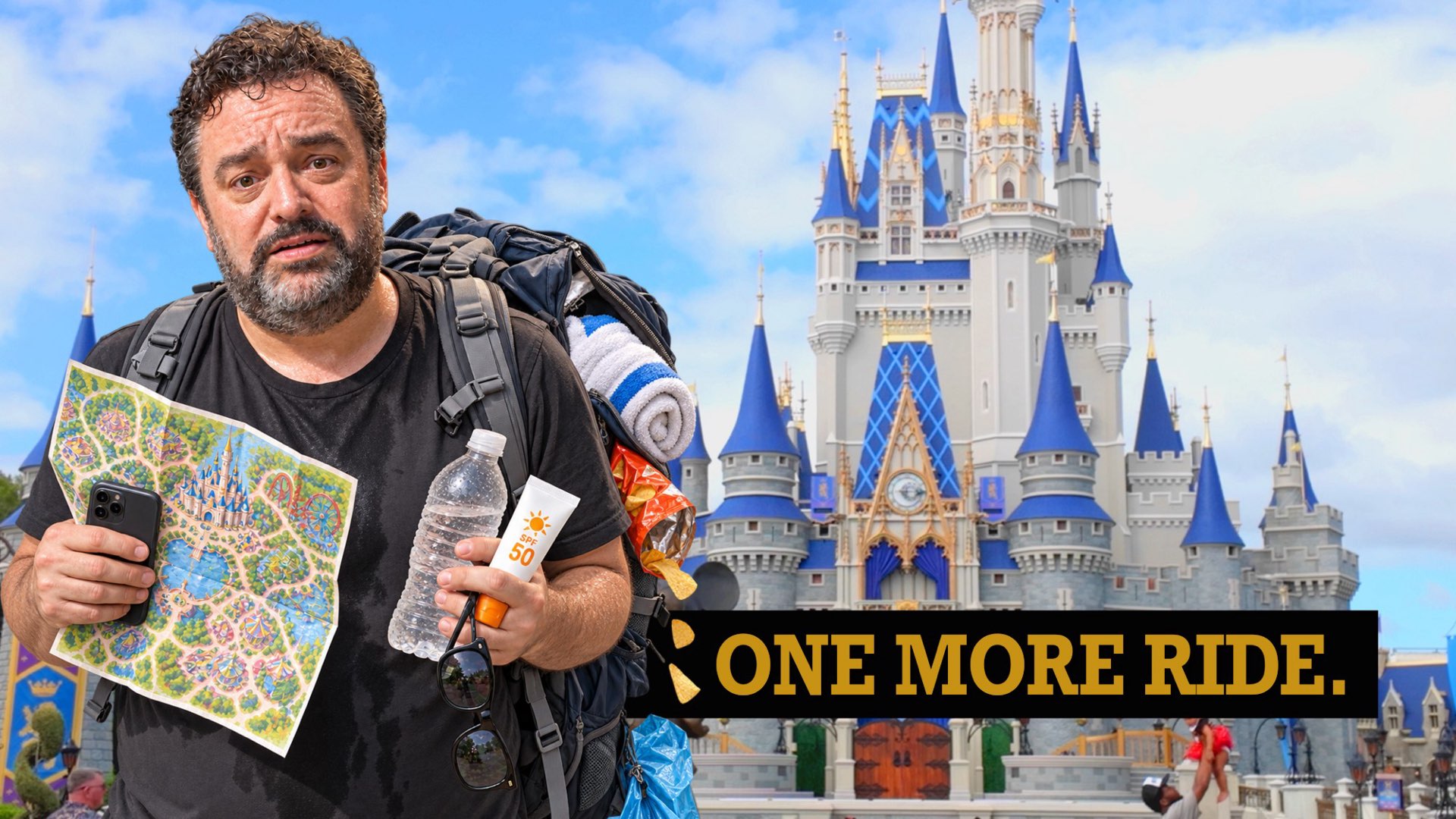
We did exactly this recently as a family at the Magic Kingdom. Rope drop to the last firework. Twelve rides, which is genuinely brutal. By the end of the night some of us had chafing, all of us had sore feet, and every one of us was soaked through with sweat.
That was our holiday. We paid for that.
And it is also one of our favourite memories.
The part we still talk about is not a ride. It is the cheapest thing we bought in the entire resort: a small bottle of Vaseline, purchased in a state of real desperation, because the chafing had crossed from uncomfortable into unbearable.
So I want to work out two things. How does a day that physically miserable turn into a favourite memory? And how do you know when getting your money's worth is quietly ruining your holiday?
Part of the answer is in how the park is built. Part of it is in what we carry through the gates.
Main Street is a sequence of shots
 Motion graphic from the film
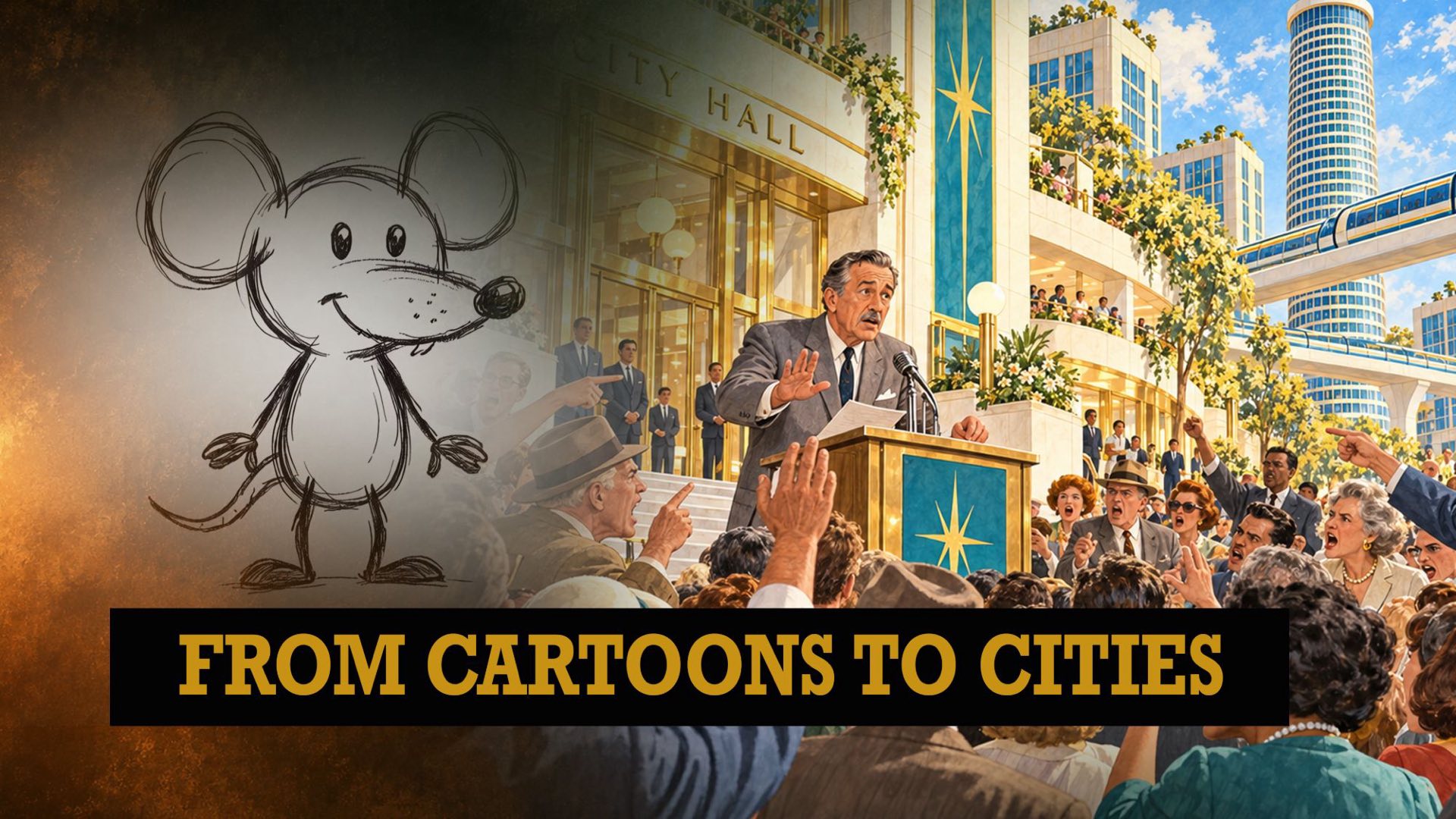
I make films for a living, so I cannot walk down Main Street, U.S.A. without seeing it cut together.
Town Square is the wide shot. Before you have taken twenty steps you can see the whole street, which means you know where you are and where you are going. No anxiety, no map.
Then the castle, which Walt Disney reportedly called a weenie. The story goes that the name came from his dog, who would follow him anywhere if he was holding a hot dog. The castle is the hot dog. You do not need directions when there is something that size pulling you forward.
As you move down the street, the wide shot breaks into close-ups. Storefront after storefront, so there is something new every few paces. A window display worth stopping for. A side street offering a choice you did not have a moment ago.
In a film, a scene works when every shot makes you want the next one. Main Street does something a film cannot: it lets you decide where to look, where to go, and where to stop. You are directing your own sequence.
The walk is not the price you pay to reach the fun. A great deal of the time, the walk is the fun.
Except you are not entirely in control, because the buildings are running a camera trick on you. The upper floors are built shorter than the ground floors, a technique called forced perspective, and it makes the street read as taller and grander than it is. You choose your shots. Disney chooses the lens.
So that is the first half of the answer. The walk is not the price you pay to reach the fun. A great deal of the time the walk is the fun, and it was designed that way, on purpose, by people who thought very hard about your experience and your feet.
But that only explains why walking there is pleasant. It does not explain why a day that ended in chafing is a day we are fond of.
The two of you keeping score
Daniel Kahneman argued that each of us is really two people.
There is the experiencing self: the one living through the moment. Three in the afternoon, forty minutes into a queue, sweating.
And there is the remembering self: the one who looks back afterwards, keeps score, and tells the story.
The uncomfortable part is that these two do not agree about what happened, and only one of them gets a vote. In Kahneman's framing, we do not choose between experiences. We choose between memories of experiences.
the ending writes the reviewThe study that makes this concrete is from 1993. People held a hand in painfully cold water, about 57 degrees Fahrenheit, for sixty seconds. In a second trial they did the same sixty seconds, then kept their hand in for thirty seconds more while the water was warmed by roughly two degrees.
Objectively the second trial is worse. It is the same cold, plus an additional half minute of cold. But asked which they would rather repeat, 22 of 32 chose the longer one.
Because the remembering self does not add up minutes. It pays an enormous amount of attention to how things ended.
My experiencing self remembers the chafing. My remembering self remembers laughing in a shop at eleven at night.
Which reframes our twelve-ride day entirely. My experiencing self remembers the chafing, and has notes. My remembering self remembers laughing in a shop at eleven at night over a bottle of Vaseline, with the people I went there with.
My remembering self got a comedic ending. And the remembering self is the one who writes the review.
The queue is the part I actually admire
 Motion graphic from the film
Strangers stand inches apart in the heat for an hour, sometimes longer, to ride something for a few minutes. Framed that way it is absurd. It is also the part of park operations I respect most.
Disney has a word for studying guests, which is guestology, and a lot of what the parks do lines up with what researchers understand about waiting.
 Guestology, the in-house term for studying guests
In 1985 a business school professor named David Maister wrote a paper on the psychology of waiting lines that is still quoted. A few of his principles:
Occupied time feels shorter than unoccupied time. Uncertain waits feel longer than known waits. Waiting alone feels longer than waiting in a group. He pointed at amusement parks as an example at the time.
Now look at the park. The wait is posted at the entrance, so it is not uncertain, and you know what you are agreeing to. When Magic Kingdom rebuilt the Haunted Mansion queue in 2011 it added things to touch and play with, including a tomb that plays music when you press it. A queue where you have something to do is a shorter queue than one where you stand still, even when the clock disagrees.
None of that is decoration. It is maintenance on the experiencing self, who is the one actually standing there.
Designing the ending
The remembering self cares most about how things end. So how does the Magic Kingdom end its day? With fireworks. A loud, emotional full stop.
And then, after the fireworks, there is a quieter ritual called the Kiss Goodnight, in which music plays over the castle and a voice thanks everyone for coming and wishes them a safe trip home. It has not run consistently since the parks reopened in 2020, so I would not promise it will be waiting for you. But as a piece of design it is worth looking at.
Think about what that sequence does. People have been walking for twelve hours. Their feet hurt and their children are coming apart at the seams. And the last two things that happen are the biggest moment of the day, followed by somebody being kind to them on the way out.
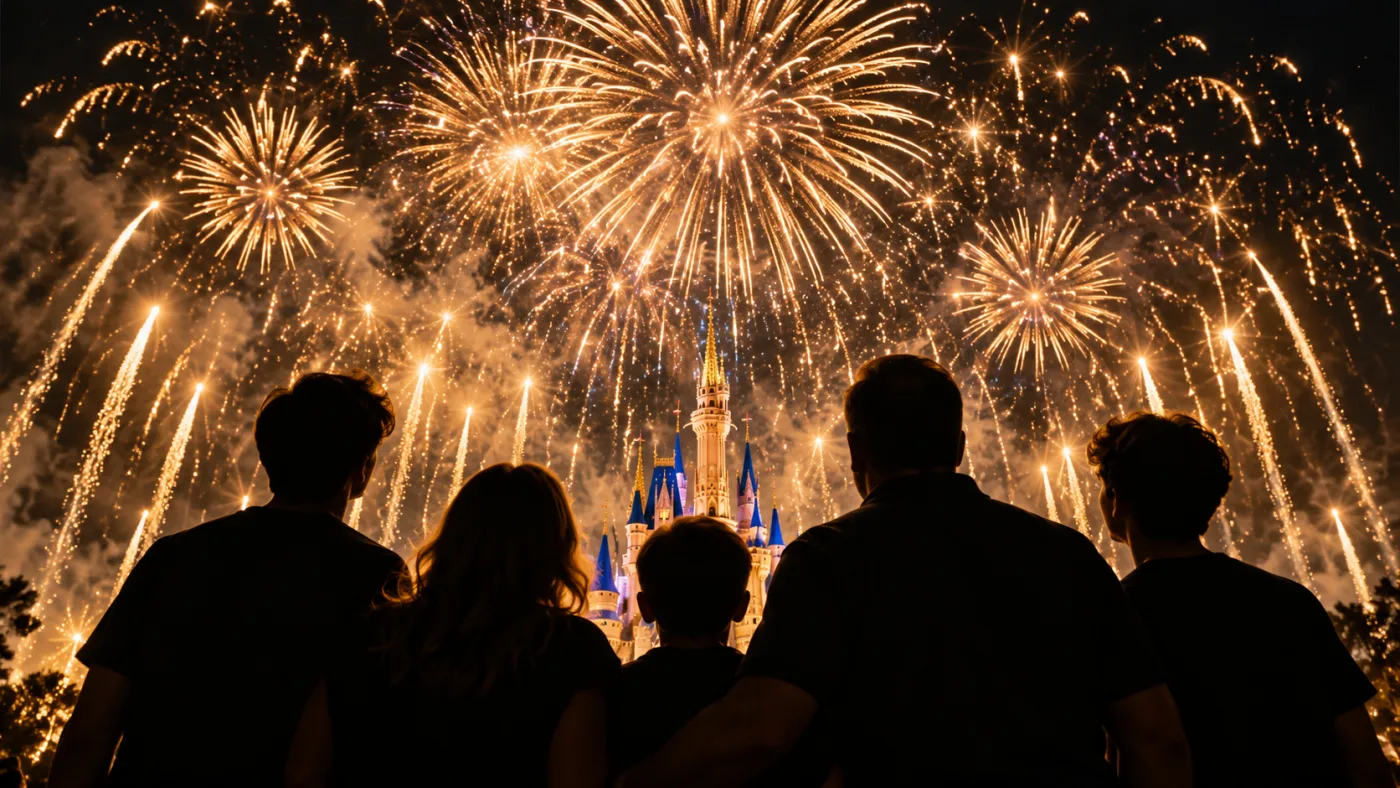 The day is designed to end on its biggest moment
I cannot tell you what is in Disney's internal planning documents. But if you sat down to design a day specifically to be remembered well, it would look a great deal like fireworks followed by a thank you.
They will also sell you the memory directly. The photo package is called Memory Maker, and photographers are stationed at more than a hundred spots across the parks.
So the division of labour is clear enough. The experiencing self gets shade, a posted wait time, and something to look at in the queue. The remembering self gets fireworks, a thank you, and the photographs.
Yesterday is the first land you enter
 Motion graphic from the film
Above the tunnel into the park is a line attributed to Walt Disney: "Here you leave today and enter the world of yesterday, tomorrow and fantasy."
Notice which one comes first. The first thing you walk into at the Magic Kingdom is somebody's memory. Not yours, necessarily, and not anybody's exactly, but a feeling of what a perfect yesterday ought to have been.
That feeling has a name, and psychologists who study nostalgia have found that when people describe a nostalgic memory it is usually built around the people they were with rather than the place or the things. A lot of those memories share a shape too: something went wrong, and then it turned into something good.
Which is, more or less, my Magic Kingdom story.
Here is where it gets interesting for your wallet. In a 2014 study, researchers had people recall either a nostalgic memory or an ordinary one, then measured how they felt about money. The detail I love: asked to draw coins from memory, the nostalgia group drew them smaller. The researchers' explanation is that nostalgia makes us feel connected to other people, and when we feel connected, money matters less.
Which is a remarkable thing to be true inside a business that sells nostalgia.
feel connected, spend freelySix people you might be before lunch
The same park feels completely different depending on what you need from the day. I see six familiar patterns. These are observations rather than research categories, and you can be several of them before lunch.
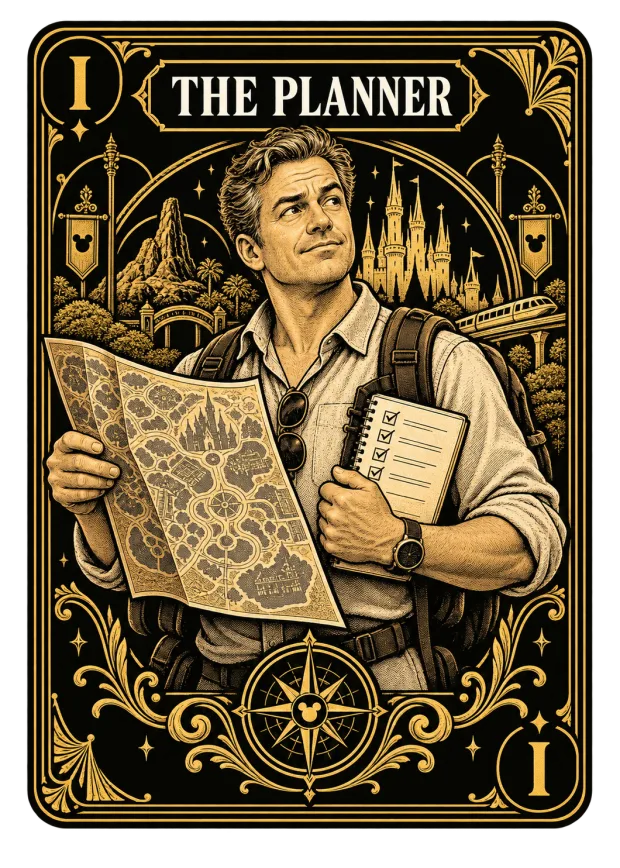 From the film
The planner treats the day as a mission. They know which rides build the longest queues and exactly when to be standing at them. They rope drop. They may pay for Lightning Lane. For the planner the holiday starts weeks before the trip, and all that plotting is not a chore, it is the first chapter. It can produce a genuinely great day.
Psychologists call that mindset maximising: always hunting the best possible option rather than one that is good enough. Doing better and feeling worse. It peaks at three in the afternoon, when somebody wants to sit down and the planner is looking at a list with things still on it. I know this persona well, because on our twelve-ride day I was it.
Part of what the planner feels in that moment is the price. Economists call it sunk cost. The tickets cost the same whether you stay for the fireworks or leave at four, so logically the money should not change what you do next. It does anyway.
The question worth asking: did you enjoy that many rides, or did you enjoy getting your money's worth?
 From the film
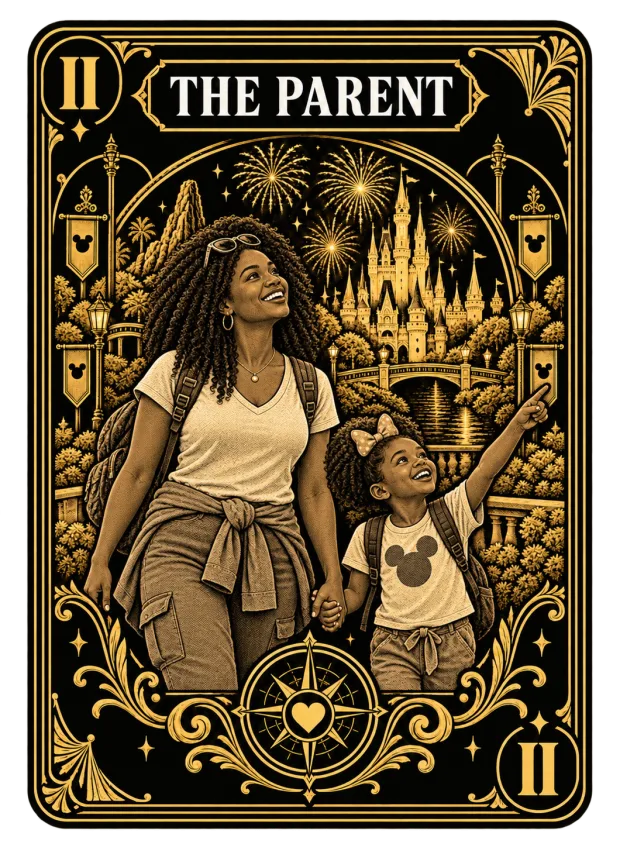
The parent is not there for themselves. They will queue for a ride they do not care about, in heat they hate, for the look on a child's face at the end of it.
Krystine Batcho has a name for part of what they are feeling: anticipatory nostalgia, which is missing the present before it is over. If you have stood on Main Street thinking they will never be this small again, that is the feeling. And if this might be the trip your children remember for life, every ride you skip can feel like a memory you failed to give them. That is a lot of weight for a Tuesday.
 From the film
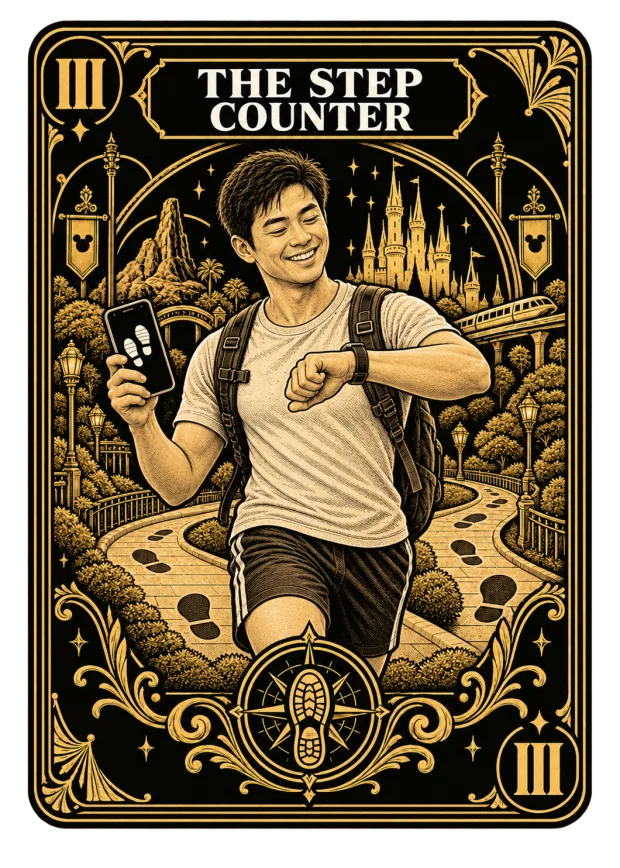
The step counter measures the day in steps. At the end of the night out comes the phone and the total goes up like a medal. It works because it gives you a finish line, and finish lines are powerful. In experiments published in 2016, Jordan Etkin at Duke found that when people tracked an activity like walking they did more of it and enjoyed it less. Counting turned the walk into a job. The step count is a receipt for the remembering self, and the experiencing self pays it.
 From the film
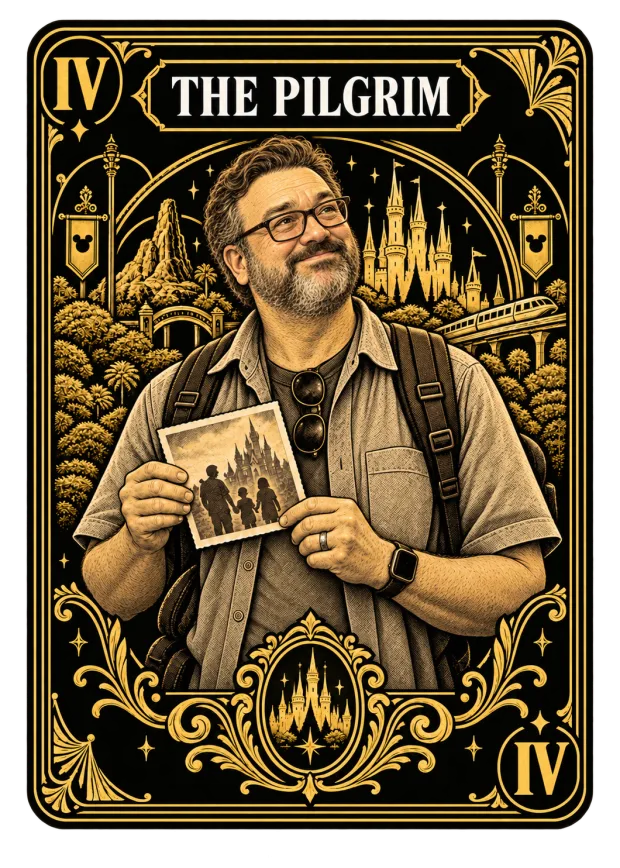
The pilgrim came as a child and keeps coming back. Same photograph in front of the castle, same rides, every trip. It is not a holiday, it is a return, and nostalgia makes the money feel smaller and the day feel more meaningful. The risk is that they are chasing a feeling attached to a specific moment in their own life. Rides close, the park changes, and so does the pilgrim. You can return to a place. You cannot return to it as the person you were.
 From the film
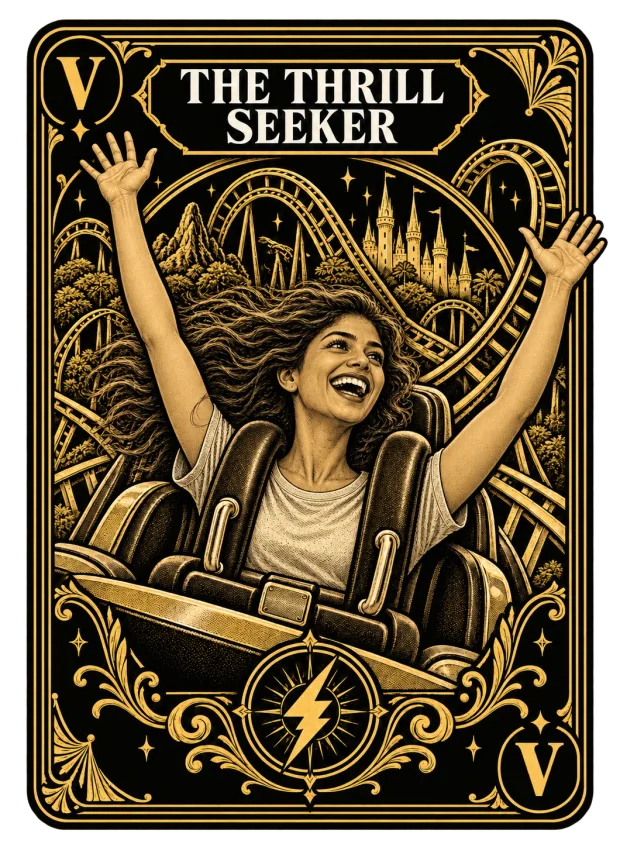
The thrill seeker is here for drops and speed, and will wait an hour to be terrified for two minutes. Paul Rozin's term for this is benign masochism: enjoying something your body reads as a threat while your mind knows you are safe. Chilli peppers, sad films, haunted houses. In a 2013 survey, 59 percent agreed that their favourite roller coaster is the scariest they can put up with.
But that pleasure depends on two conditions: you chose it, and you are actually safe. The hour in the sun beforehand meets neither. Your body reads the heat and the standing as a problem, and your body is correct. Nobody is enjoying that part.
 From the film
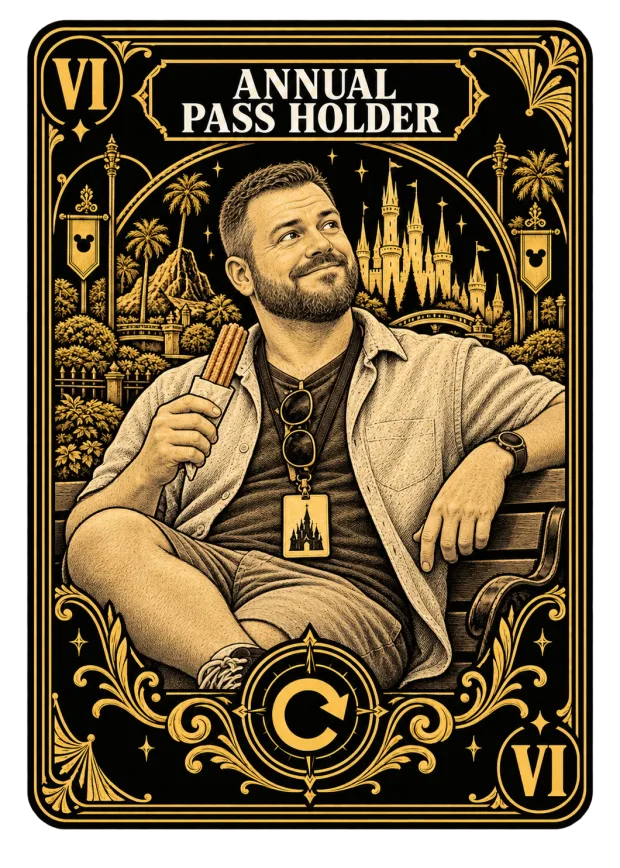
The annual pass holder paid months ago and can come back whenever. Same street, same heat, but they can wander in for a churro, sit in the shade, ride one thing and go home before lunch. Researchers call part of this payment depreciation: the pull of a payment fades the further away it gets. Today does not owe anybody anything. They also are not trying to construct a perfect memory, so they get to live in the experiencing self. The risk is the opposite one. If you can always come back, you stop noticing. The castle becomes background.
What actually makes the suffering worth it
Line those six up and a pattern appears. The walking, the waiting and the spending tend to pay off under a few conditions.
You have to choose it, the way the thrill seeker chooses the fear and knows they are safe. That is a very different thing from being blasted by the sun for six hours because the schedule says so.
It helps when it is shared, because suffering through something together is a kind of glue.
It helps when it means something: the parent spending the day on somebody else, the pilgrim keeping a ritual alive.
And it helps enormously when it ends well. The warmer water at the end of the cold. The fireworks. The joke about the Vaseline.
It goes wrong when the day gets run by numbers instead of people. The price of the ticket, the step count, the number of rides.
I ran a cocktail lounge for four years, so I have watched this from behind the counter too. You are never only selling the night. You are selling the story people tell about it the next day.
But you do not get to use that as cover for a bad night. No business gets to tell a miserable guest not to worry, they will love this in a year. That is why the unglamorous things matter: shade, somewhere to sit, clear signs, a posted wait, somebody competent being kind to you. All of it takes care of the experiencing self so the remembering self has something worth keeping.
So at three in the afternoon, try asking everyone what would make the next hour good. Another ride. Something to eat. Twenty minutes sitting down. The ticket is already paid for either way. You still get to choose how to spend the afternoon.
I was the twelve-ride planner. Next time I want to check on the people before I check off the list.
Back to the Vaseline
The castle does not know how many rides you did. It does not know what you paid, whether your feet hurt, or whether you were happy.
In the end we do not keep the whole day. We keep a few seconds of it. A laugh. A small absurd purchase at eleven at night. Out of those few seconds we build the story of who we were there with.
Looking back, I think I finally understand our twelve-ride Magic Kingdom day. A hard middle. The struggle, shared. And that ridiculous chafing we will apparently be bringing up for the rest of our lives.
The number on my phone tells me how far I walked. It cannot tell me whether the day was worth it.
check the people, not the listThe goal was never to prove how much we did. It is to make sure both versions of you, the one doing the walking and the one who will remember it, agree that it was worth doing.
FAQ
Why is it easier to walk on holiday than at home?
Partly because the walk is designed to be the experience rather than the cost of it. Main Street, U.S.A. is built like a film sequence: a wide establishing view of the whole street, a landmark big enough to orient you without a map, then a run of close-ups in the form of shop fronts and side streets so there is something new every few paces. Forced perspective on the upper floors makes it read as grander than it is.
What is the difference between the experiencing self and the remembering self?
Daniel Kahneman's distinction. The experiencing self lives through the moment, including the queue and the heat. The remembering self looks back afterwards and tells the story. They often disagree, and the remembering self is the one that decides what you do next, because we choose between memories of experiences rather than between experiences.
Why does a miserable day become a good memory?
Because the remembering self weights endings far more heavily than duration. In Kahneman's 1993 cold-water study, a trial that added thirty extra seconds of cold, with the water warmed slightly at the end, was preferred by 22 of 32 participants over a shorter, objectively less painful one.
How do theme parks make queues feel shorter?
By applying what David Maister described in 1985. Occupied time feels shorter than unoccupied time, so queues get things to look at and touch. Uncertain waits feel longer than known ones, so wait times are posted at the entrance. Waiting with other people feels shorter than waiting alone.
Am I ruining my own holiday by trying to get my money's worth?
You might be. The tickets cost the same whether you leave at four or stay for the fireworks, so the money already spent should not dictate the afternoon. Economists call that sunk cost. A useful test at three in the afternoon is to ask the group what would make the next hour good, rather than consulting the list.
What are the six park personas?
The planner, the parent, the step counter, the pilgrim, the thrill seeker, and the annual pass holder. They are observations rather than research categories, and most people are several of them in a single day.

What would this look like in your business?
Turn ideas about atmosphere, service, storytelling, and customer experience into a practical plan.
Explore ConsultingWatch the next idea unfold.
Subscribe for films and ideas about hospitality, creativity, and the experiences businesses create.
Subscribe on YouTube (opens on YouTube in a new tab)