A Bar Is a Stage: What 20 Years of Filmmaking Taught Me About Hospitality
Lighting, pacing, framing, reveal, sound design. The disciplines that shape what an audience feels on a screen also shape what a guest feels in a room.
The render finished a little after two in the morning. This was decades ago, in an edit bay in Vermont, in the kind of winter where the parking lot ice has geological layers. The room was dark except for two monitors and a small constellation of LEDs on the drive arrays, which hummed at a pitch I can still hear if I make the mistake of thinking about it. There was a couch with a history. There was coffee that had stopped being coffee around eleven and was now just a dark, honest liquid. And there was a scene on the timeline that did not work.
Two actors. A doorway. One of them says the thing they can't take back, and the other one has to receive it. On paper the scene was fine. The performances were good. Assembled, the moment landed with all the emotional force of a weather report. I had cut it maybe forty different ways. I tried playing the line in a two-shot. I tried holding on the speaker. I tried arriving at the listener late. Every version was technically correct, and none of them made you feel anything, and at two in the morning, alone in a building, that starts to feel like a personal insult.
So you do the ritual every editor knows. You scrub back and forth across the same four seconds until the dialogue stops being words and turns into sounds, and the sounds turn into shapes, and you stop hearing the scene and start seeing it. Somewhere in there I tried the one thing I hadn't tried, which was cutting to the listener before the line instead of after it. Two frames early. A twelfth of a second. Now you see her face begin to understand what's coming, and then you hear it arrive.
I played it back twenty times, the way you keep touching a sore tooth, except the opposite. It worked. The scene was suddenly about the person being hurt instead of the person doing the hurting, which is what it had been about all along; I just hadn't put the audience's attention where the meaning was. Nothing in the footage changed. Two frames moved, and the meaning moved with them.
Months later I sat in the back of a screening and watched that scene play for an audience. At the cut, the room went still in that specific way rooms go still, a couple hundred people arriving at the same feeling in the same second. Not one of them knew a cut had happened. Which is the job. If the audience can see the mechanics, you've failed. If they feel the result without ever seeing the mechanics, you've disappeared correctly.
I spent about twenty years disappearing like that. Film editing and visual effects, most of it as lead film editor and VFX supervisor at Edgewood Studios, then on my own after founding RetroMotion Creative in 2009, a couple hundred video projects for clients of every imaginable description. Two decades of moving invisible frames. Then in August of 2022 I opened Venetian Soda Lounge in Burlington, Vermont, and discovered, slowly and then all at once, that I had not changed careers. I had changed screens.
What the cutting room actually teaches
People think filmmaking is directors, cameras, and actors emoting in the rain. Those exist. But the education, the part you can pack up and carry into any other room of your life, is quieter than that. Spend enough thousands of hours at a timeline and you get drilled, whether you want it or not, in a short curriculum nobody frames on a wall.
You learn attention: where the audience is looking, why they're looking there, and what it costs to move it. You learn pacing: how long a shot can hold before boredom arrives, how fast you can cut before disorientation does, and the way both limits shift depending on how much the audience cares about the people on screen. You learn withholding: that a reveal is only ever worth what the withholding paid for it, and that showing something too early is just an elaborate way of throwing it away. You learn framing: the edge of the frame is a decision, and what you exclude changes the meaning of everything you include.
You learn sound, which is the humbling one. Somewhere around year two you discover that the audio is carrying more of a scene's emotion than the picture is. The room tone, the score, the half-second of silence before a line: they do the heavy lifting while the pretty images take the credit. No audience will ever know this. They simply feel the scene work and assume they watched it work.
And you learn point of view, which is the deep one. Whose experience is the audience living inside? Change that, and you've changed everything else without touching a single shot.
Nobody understood point of view like Hitchcock, and nobody was more open about the fact that the audience, not the film, was the actual instrument he played. He had a famous way of explaining suspense, laid out in his long interviews with François Truffaut, and I'm paraphrasing here: if two people are chatting at a table and a bomb suddenly goes off, the audience gets fifteen seconds of surprise. If the audience knows the bomb is under the table and the characters don't, the same dull conversation becomes unbearable for five straight minutes. Nothing on the screen changed. What the audience knows changed, and the feeling lives in the audience, not in the film.
Vertigo has been my favorite film for most of my life, and part of the reason is a single shot. Hitchcock needed the audience to feel what Scottie feels looking down a stairwell. Not observe it. Feel it. So his crew built a shot where the camera physically pulls back while the lens zooms in, and the stairwell stretches, sickeningly, without anything in the frame actually moving. Film people call it the dolly zoom now, and it has been borrowed a thousand times since. But the trick was never the point. The point is that Hitchcock refused to settle for showing you a dizzy man when the camera could make you the dizzy man.
That's the entire discipline, compressed into one sentence: don't show the feeling. Cause it.
Every one of those lessons has a twin in a hospitality room. It took me an embarrassingly long time to notice this, considering I was standing in the room I owned.
The room is a movie you're standing in
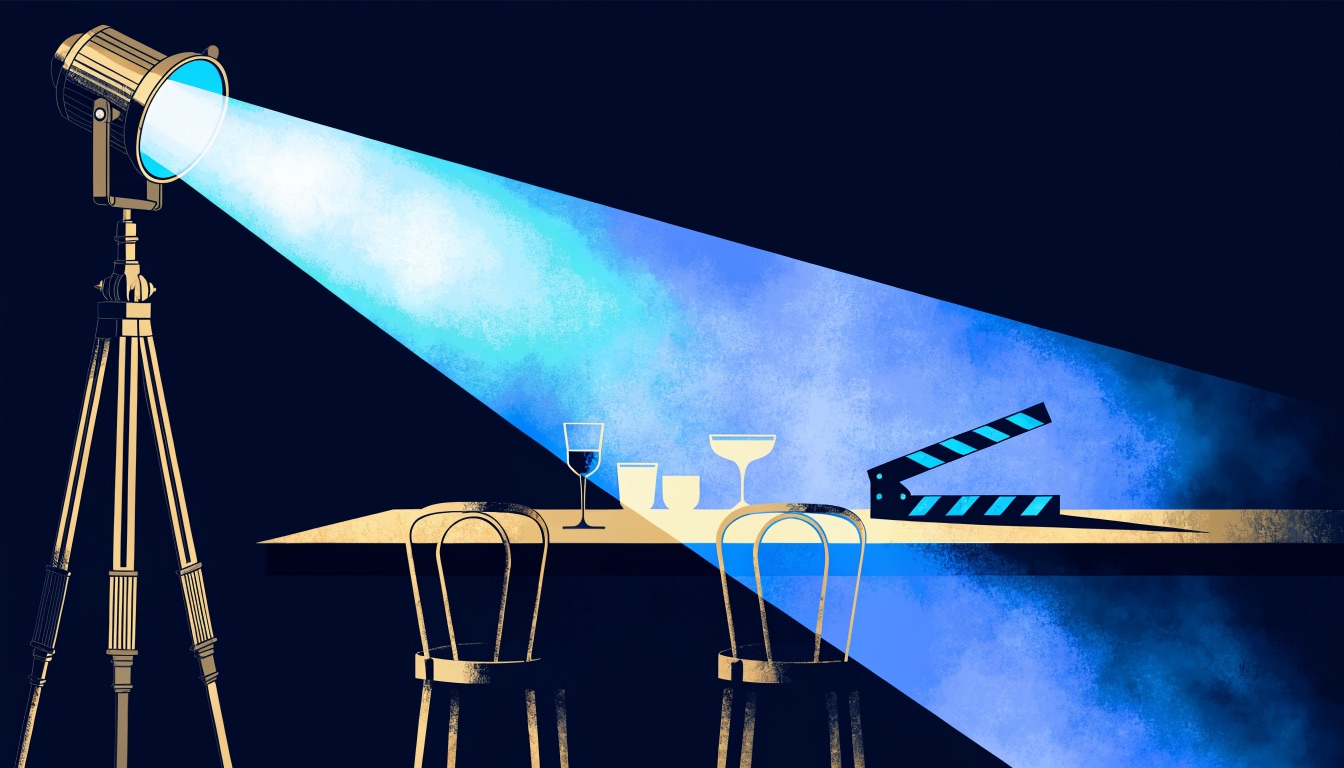
Walk into any bar or restaurant and the establishing shot happens whether anyone designed it or not. The first five seconds decide most of the night: what you see, what you hear, what the air smells like, who looks up, whether the light makes the room feel like a secret or a cafeteria. In film you'd storyboard that shot. You'd argue about it for a week. In hospitality, most rooms let it happen by accident, which is like letting the first scene of your movie be whatever the camera happened to be pointing at when someone bumped the tripod.
Lighting is the cinematography. It decides what a guest looks at, how the food reads, and whether the person across the table looks like someone worth leaning toward. Every room I've ever walked into and felt inexplicably good in, I later realized the light was doing most of the work. At Venetian I have opinions about the dimmer schedule that my staff tolerate with real grace. The light at 6:00 PM and the light at 10:00 PM are two different scenes, because they are two different scenes.
Music is the score, and the score is emotional pacing. The shift from the early-evening playlist to the late-night one is the same craft decision as scoring a slow build versus a third act. Get the score wrong and the scene is wrong, even when every other element is perfect. A menu is a screenplay: it tells you what kind of story you're in, and whether it was written by a person with a point of view or by a committee with a liability lawyer. A drink arriving at the table is a beat: setup, build, payoff. The pour is a reveal. Rush the beat and the drink lands flat, even though it tastes exactly the same.
Sound design is the sneaky one, in rooms exactly as in films. Every room has a mix whether anyone is mixing it or not: the ice in the shaker, the espresso machine, the door, the hum of the coolers, the particular frequency of forty conversations layered on top of each other. Most operators never listen to their own room the way an editor listens to a scene, which is to say with their eyes closed, asking what the loudest element is and whether it has earned that position in the mix. I do this at Venetian more often than is probably dignified. The staff have learned not to ask.
And withholding works in a room the same way it works in a cut. A room shouldn't show you everything from the doorway. There should be a corner you only discover on your second visit, a thing that isn't on the menu, a detail the bartender only mentions once the night has earned it. Film taught me that a reveal is worth exactly what the withholding paid for it, and the same ledger applies here. A room that gives everything away in the first five seconds has nothing left to hand you at hour two, and hour two is where loyalty gets decided.
The layout of the room is blocking. Where guests naturally drift, where their eyes go, which seats feel like the center of the story and which feel like storage. Rooms that have thought about this feel different within seconds of the door. Rooms that haven't feel like real estate with chairs in it.
And the people are the point of view. A film without a clear POV character is confusing, and a room without a clear human way in is confusing in exactly the same register. Guests instinctively look for the person who is the door into this world: a host, a bartender, an owner who is visibly somewhere. When they find that person, they relax the way an audience relaxes when a movie finally tells them whose story this is.
Most rooms are not built like any of this, which isn't a scandal, just a fact. They're designed as real estate first: covers, throughput, lighting bright enough to clean by, music from a licensing service, décor from whichever vendor answered the phone. Each choice is individually defensible. The sum is a neutral movie. And the thing about a neutral movie is that nobody hates it. They just can't remember it, which for a business that runs on people choosing to come back is a quieter kind of death.
Then there are the rooms that are unmistakably somebody's. Composed frame, chosen sound, loved light, pacing that changes with the hour, a clear point of view. You feel a person behind the room the way you feel a director behind a film, even if you couldn't name a single specific choice they made. You just know the difference between being served and being told a story.
Hitchcock's rule holds in a room even more than it holds on a screen: don't show the feeling, cause it. A room that hangs a sign saying COZY is showing. A room where the light and the sound and the third bar stool quietly conspire until your shoulders drop two inches without your permission is causing. Guests can't see the mechanics. They can only feel the result. If I've done my job, I've disappeared correctly, which after twenty years in the edit bay feels less like a new skill and more like a homecoming.
The part film can't do
Here's where the analogy stops being an analogy and turns into something better.
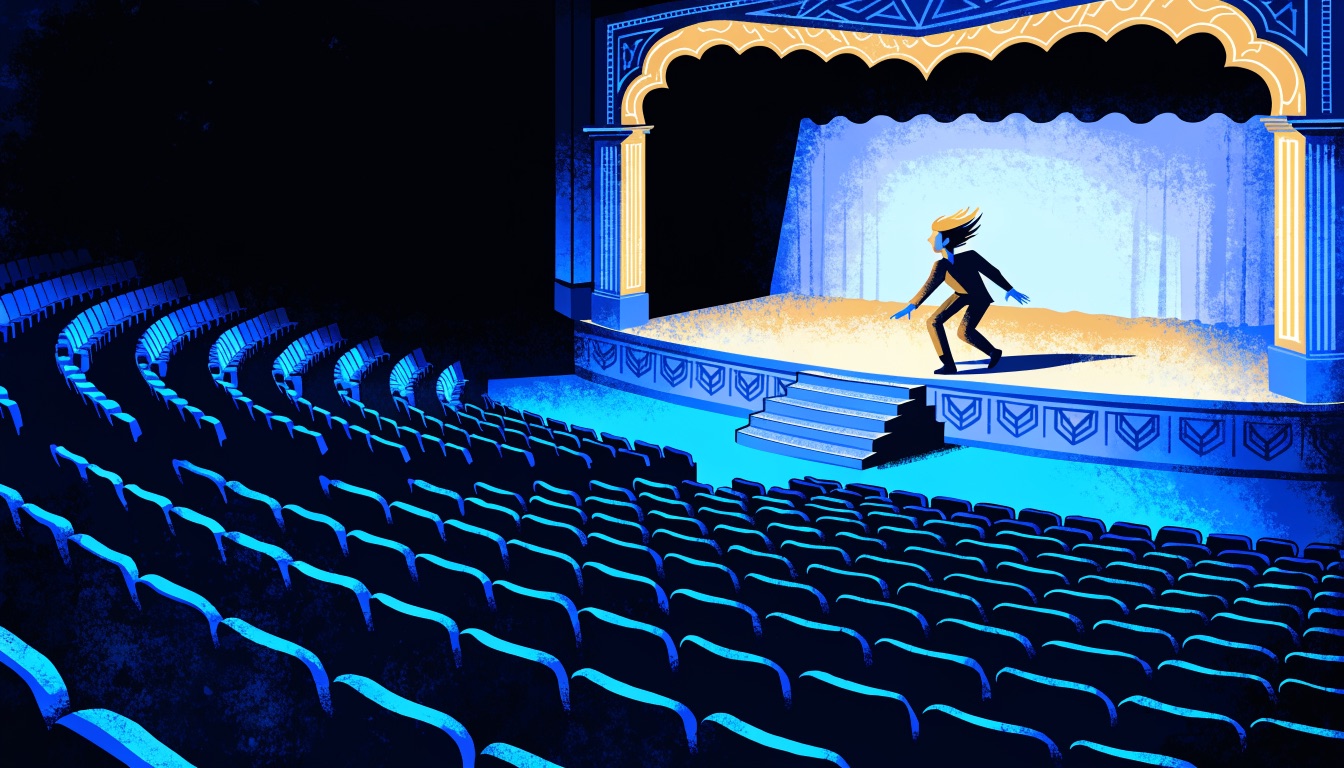
Film assumes the audience is on the other side of the screen. That's the deal of the medium. I control the frame, you receive the frame, and no matter how completely Vertigo swallows you, you cannot climb into the stairwell. Identification is as far as film can go. It goes gloriously far. It goes no farther.
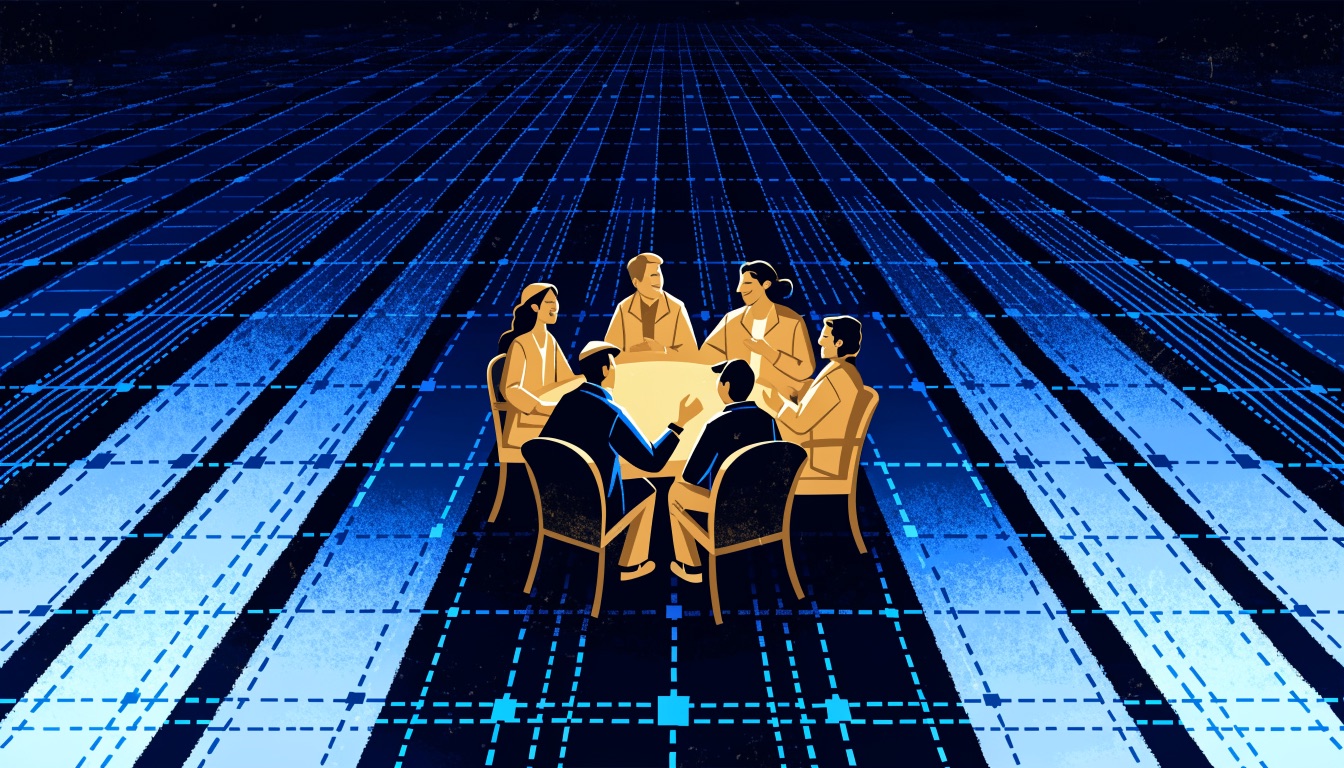
Hospitality has no screen. The audience is in the room. They can move. They can talk to the characters. They can change the story, and if the room lets them, they can become the story. The couple who gets engaged at a corner table isn't watching content. They're in the scene, and the room is now permanently part of their life's footage. The medium of hospitality includes the audience physically, which is a capability any filmmaker would trade an arm for, and most rooms use it to serve nachos.
Run a room like a movie theater, a show staged for spectators, and you can still do good work. Plenty of great rooms operate that way. But you're leaving the medium's best feature untouched. The lesson I keep relearning at Venetian, and expect to keep relearning for years, is that the guest is not the audience. The guest is the character. I've written a separate piece on that idea, The Guest Is Not the Audience. The Guest Is the Character, because it deserves more than a paragraph.
Filmmaking taught me how to shape what an audience sees and feels. Hospitality taught me that the audience can step through the screen. That sentence is going to end up in a keynote deck someday, and I'm going to feel a little corny about it, and it will still be true.
Some nights, after close, I stand about where the performers set up and run the evening back like footage. There was a moment around nine when a table burst out laughing at the exact second the song turned, and the whole room seemed to lift an inch. Nobody planned that cut. But everything about the room made it possible: the light level, the sound level, the pacing of the service, a hundred invisible frames placed months in advance so that one moment could land tonight.
Back in that edit bay, at two in the morning, I moved two frames and changed what a scene meant, and nobody ever saw the seam. The room is the same work. Nobody who was in the lounge that night will ever know why it felt the way it felt. They'll just remember that it did. Two frames, moved in the dark, by somebody who cared what a stranger was about to feel. That was the job then. It's the job now. The only difference is that now the audience gets to walk around inside the cut.
Related: The Guest Is Not the Audience. The Guest Is the Character, The Five Layers of Immersive Hospitality, Storyworld Hospitality.