The Five Layers of Immersive Hospitality
A working model for how a hospitality experience actually lands on a guest, from the first frame they read to the last feeling they carry out the door.
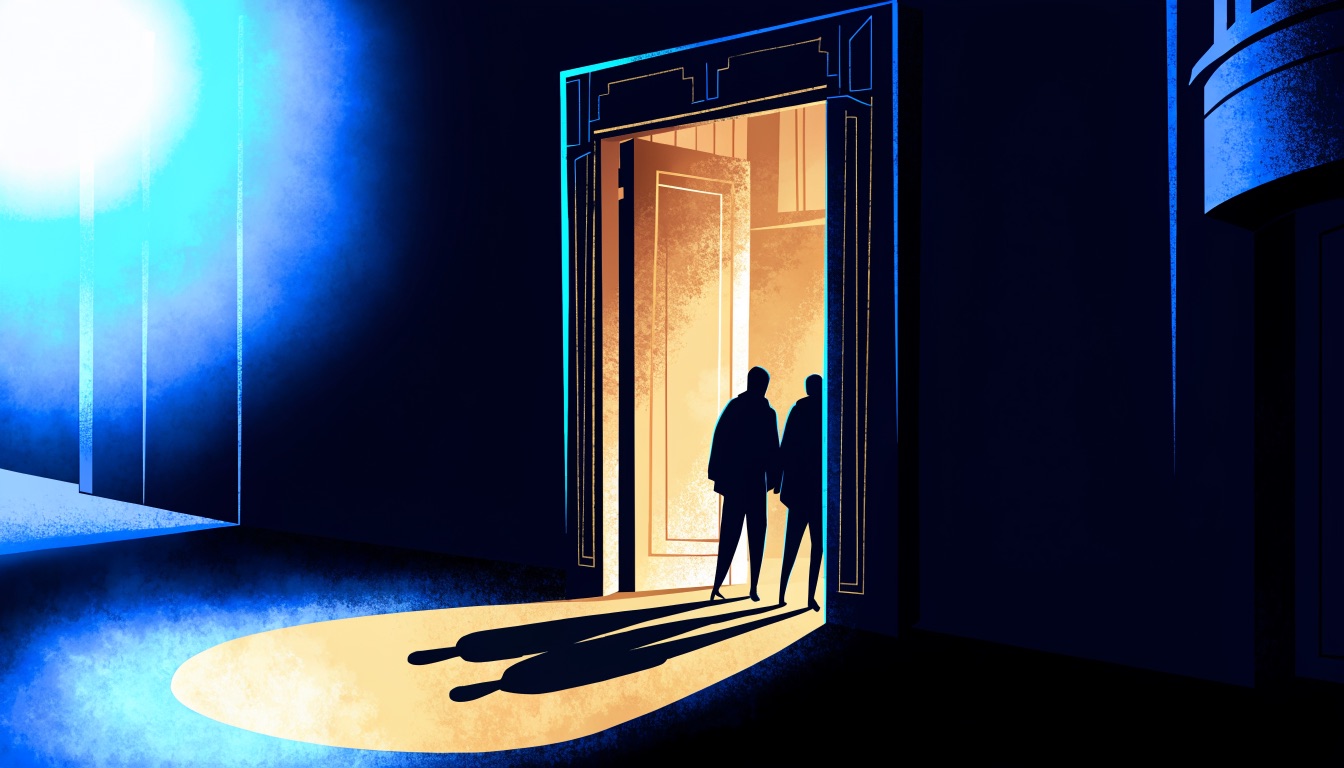
An hour before the doors open, the room is at its worst, and it's my favorite hour to be in it.
The lights are off except for whatever Burlington is doing through the front windows. The loudest thing in the building is refrigeration, a hum you stop hearing the second anything else exists. The chairs are still finding their places. The stage in the corner holds last night's cable runs like evidence of a crime everyone enjoyed. The bar smells like citrus and clean towels. And I'm walking a slow lap through all of it, alone, in a way that would look, to anyone passing on the sidewalk, like a man casing his own business.
Which, in a sense, I am.
Almost nothing I check on this lap appears on a checklist. Checklists exist, and they matter, and people far better at them than I am make sure the ice is made and the wells are stocked. My lap checks different things. Whether the lamp over the corner table is throwing light at the angle that makes that table the one people ask for. Which playlist is cued for the first hour, and whether it fits the particular weather of the day. Whether the two-top by the window has drifted out of its sightline to the stage. Whether the room, standing empty, still reads like somewhere, or has quietly slid back into being a rectangle with furniture in it.
I did a version of this walk for years before I owned a room, in a different industry. Two decades of film editing and visual effects teaches you to run the cut one more time before the audience sees it: alone, in the dark, hunting for the frame that's wrong. The pre-open lap is the same ritual with worse lighting.
One of our bartenders once asked me, entirely reasonably, why we were fussing over a detail this small an hour before service. I heard myself say "trust me," which is the answer you give when you have a conviction and no organized argument. Bartenders deserve better than trust me. So does the business, honestly, because a conviction you can't explain is a conviction you can't teach, and a thing you can't teach dies the moment you stop personally hovering over it.
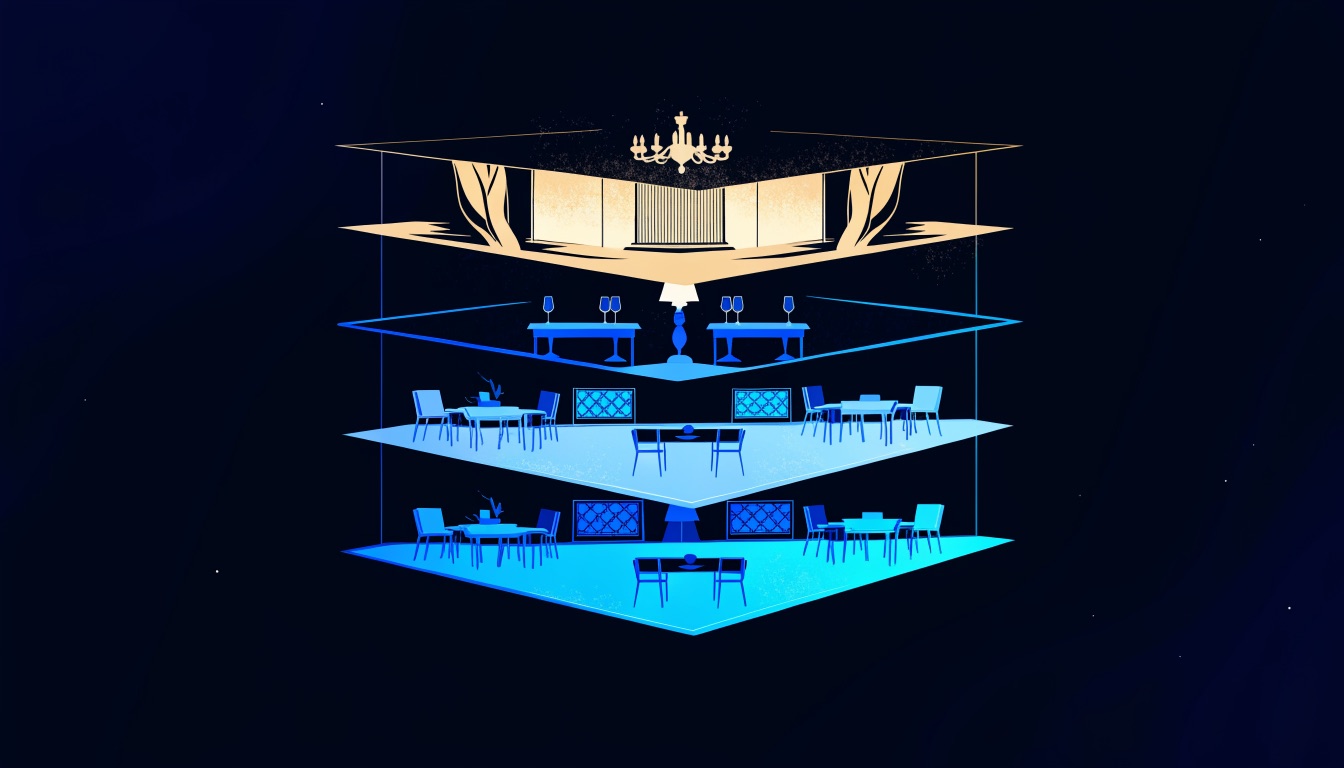
So this is the organized argument. I think about rooms in five layers: story, environment, interaction, recognition, transformation. It's a working model, which is a polite way of saying I keep changing it. I've been sharpening it against a real business since the Venetian Soda Lounge opened in Burlington in August of 2022, which means it gets reviewed continuously by the toughest panel available: actual guests, on actual nights, voting with their evenings.
The layers stack. Each one depends on the ones beneath it. Skip a layer and the whole thing wobbles in a way guests can feel even when they can't name it.
The stack
Layer one is story: what world am I entering?
Story is the frame everything else hangs on. It's the reason the room exists, the era it's referencing, the point of view of the person behind it. Not every venue needs fictional lore. A neighborhood diner has a story, and the story is: we are the neighborhood diner. If you walk in expecting anything else, that's a you problem.
The story can be explicit, meaning a guest can say it out loud after five minutes ("this is a 1920s soda parlor with a modern cocktail program"), or implicit, meaning the guest simply knows this is the right place for a certain kind of night without being able to explain why. Both work. Implicit is harder to design, because it has to arrive without any of the obvious cues doing the talking.
The failure mode is the committee-designed restaurant, where the story is "everyone will like this." That is not a story. That is a compromise, and guests can feel the difference in about six seconds. Nobody has ever driven across town for a compromise.
Layer two is environment: what do I see, hear, smell, touch, and taste?
Environment is the physical channel that carries the story into the guest's nervous system. It is not decoration. Decoration is decoration. Environment is the full sensory bandwidth of the experience, and most of it operates below conscious attention, which is exactly where you want it operating.
Light first, always. Slightly warm, slightly low. Almost every restaurant is lit too brightly, and people look better under a 2700K bulb than under an office ceiling. How a guest believes they look in your room is directly wired to how much they enjoy being in it, which sounds shallow right up until you admit it's true of you too. Then music, which should change with the hour, because the six o'clock guest and the ten o'clock guest are different people, sometimes literally, sometimes just chemically. Then materials with some history in them: wood that has actually been used, brass that has actually been touched, fabric that has been sat on. Guests register this even when they can't articulate what they registered. Then sonic space: enough absorption that two people can talk at conversational volume without leaning in, and enough life around them that a solo guest doesn't feel exposed at a table for one. And somewhere in all of it, the one specific smell every strong room has, which is usually the bar or the kitchen doing its job and almost never something you sprayed.
Environment is the layer operators spend the most money on and think about the least. The classic failure is a room where every element is individually correct and collectively arbitrary. The pieces don't tell the story from layer one. They tell a different story, which is "we bought expensive things."
Layer three is interaction: what can I participate in, not just observe?
This is where an experience stops being atmosphere you receive and becomes something you're inside of. Participation doesn't need to be big. It usually shouldn't be. Nobody wants a scavenger hunt clipboard with their Manhattan on a Tuesday.
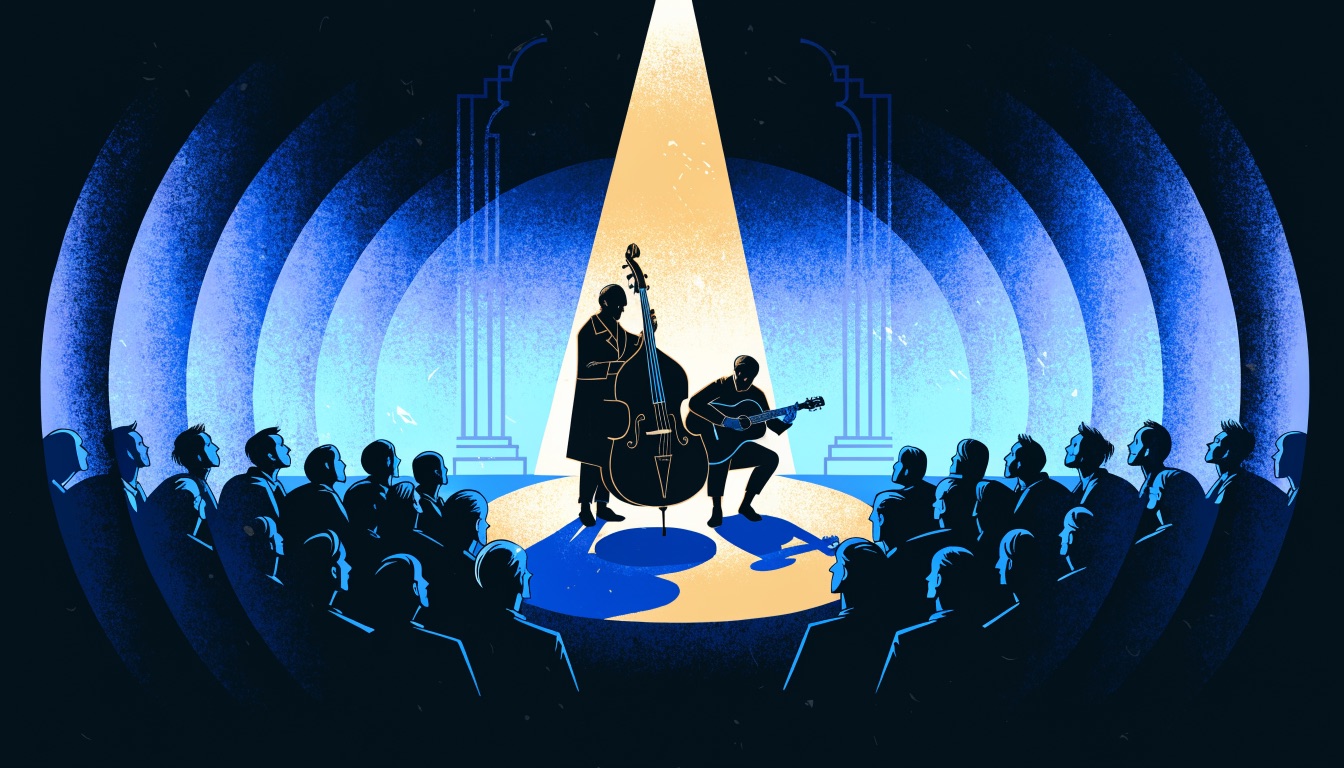
Interaction can be a ritual that only makes sense in this room: the way a specific drink gets built in front of you, the candle that gets lit after a certain hour. It can be an object worth holding: a menu that behaves like an artifact instead of a laminated placemat, a coaster with a small joke on it. It can be a moment of chosen surprise, the bartender who asks what mood you're in and builds accordingly. And it can be live performance that expects the room's attention and actually gets it. At Venetian we run about a hundred live shows and events a year, so this layer is load-bearing for us, but the principle scales all the way down to a single candle. The question is only whether the guest got to do anything, or merely had things done near them.
Interaction is the difference between "I had a meal there" and "I was inside a place for a while." The first is a transaction. The second is a memory.
Layer four is recognition: does this experience acknowledge me as an individual?
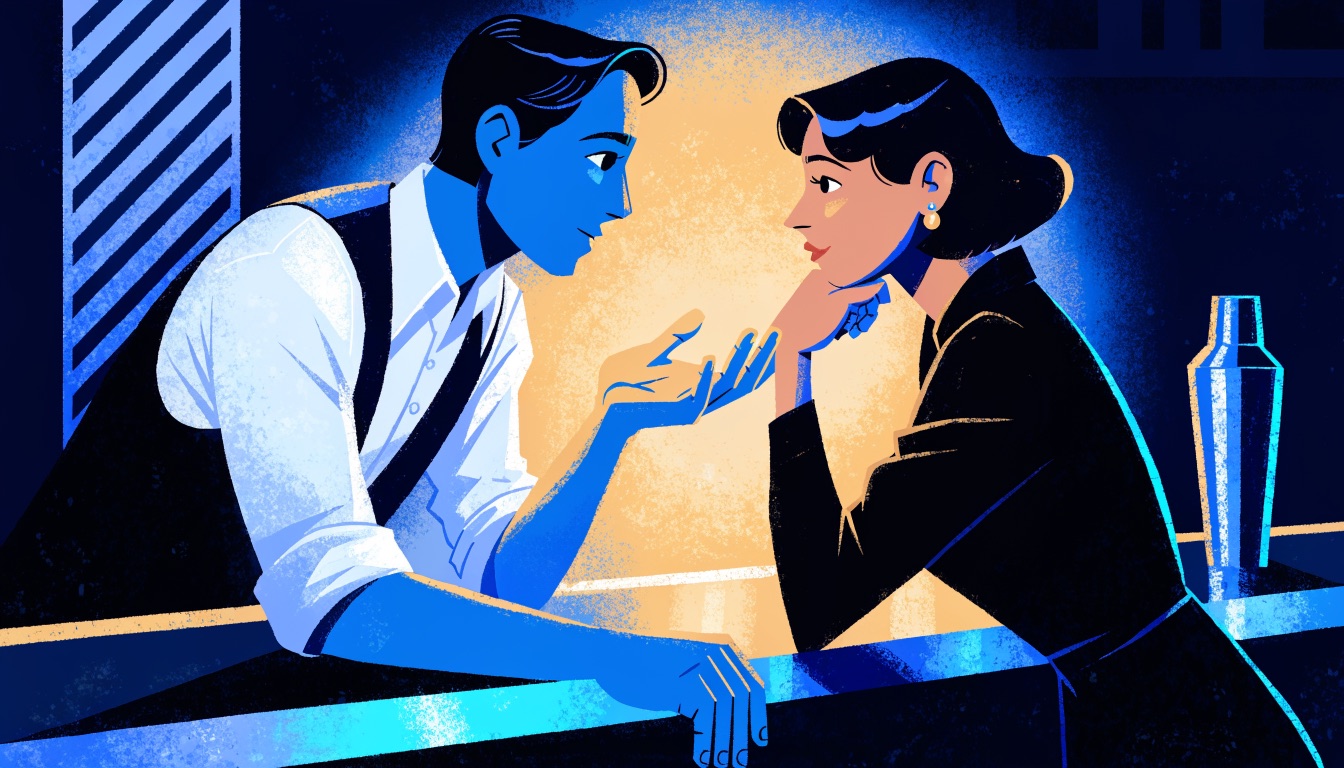
Recognition is the moment the room stops treating the guest as a generic human and starts treating them as this specific one. It's the layer most tightly connected to what hospitality psychologically is. Dale Carnegie built a century-old argument on the observation that people want, above almost anything else, to feel important to another person. Recognition is the operational form of that observation, and it matters enough that I've given it a full essay of its own in The Best Hospitality Makes People Feel Important.
The short version: the obvious move is remembering names, the less obvious move is remembering preferences, and the advanced move is noticing a returning guest without making a scene about it. There is a real difference between being greeted like a regular and being announced like a regular. Everybody enjoys the first. Nobody enjoys the second, including the person being announced.
Technology now offers to help with all of this, and some of it genuinely does, which I've written about in Automate the Invisible, Humanize the Visible. A system can tell your host that this is a guest's third visit, that their partner has a shellfish allergy, that last time they loved the Pineapple Old Fashioned. What no system can tell your host is how to act on that information without making it weird. That's judgment, and judgment is still a human product. The failure mode here is over-personalization sliding into surveillance. When a guest can tell you're reading a database at them, you've lost the layer. When they simply feel known, you've hit it.
Layer five is transformation: how do I feel when I leave, compared with how I felt when I arrived?
This is the layer the whole system exists for, and the one nobody measures, because it doesn't fit on a comment card.
Transformation doesn't need to be profound, and it usually isn't. The bar is not "did the guest have a religious experience over a sandwich." The bar is: did they carry something out of the room they didn't have on the way in. Sometimes they actually relaxed, which is different from putting their phone face down for twenty seconds. Sometimes they liked themselves a little more, because the light or the treatment or the moment made them feel like a more interesting version of themselves. Sometimes they connected with the person across the table in a way the rest of the day hadn't allowed. Sometimes they discovered a musician they'll still be listening to in a decade. Sometimes they just felt like they belonged somewhere, which is not a small thing to hand a person on a weeknight.
The failure mode is forcing it. An operator chasing transformation directly, instead of building the four layers underneath it, produces something you can feel straining at you. It becomes a performance rather than an outcome. Transformation is not an input. It's the emergent property of the stack doing its job. You don't build the feeling. You build the conditions, and the feeling shows up or it doesn't, one guest at a time.
Running the diagnostic
Here's how the framework earns its keep. Pick a room, yours or somebody else's, and walk the five questions in order, out loud, from the guest's side of the bar.
What world am I entering? If the answer takes more than a sentence, layer one is fuzzy. What do I see, hear, smell, touch, taste? Any sense that comes back neutral is a neutral layer. What can I participate in? If the honest answer is "sit and consume," layer three is missing. Does this place know I'm here? If not, layer four is off, and if it knows me too loudly, layer four is also off. And finally: how am I different walking out? If the answer is "same," the room did nothing, which is survivable, but worth knowing.
An empty layer is not an indictment. Plenty of rooms are competent transactions, and there's nothing dishonorable about a competent transaction; most of my favorite lunches are exactly that. But every empty layer is headroom. It's a place where the room could be doing more than it currently is, usually for less money than the owner assumes.
The diagnostic is more fun in rooms that aren't mine. I run it in hotel lobbies, other people's restaurants, and airport bars, partly out of professional curiosity and partly because it's the only way I've found to eat dinner and feel productive at the same time. Airport bars are the great control group, by the way: pure transaction, every layer empty, and weirdly honest about it. Nobody at gate B12 is pretending to offer transformation. There's something almost restful about a room that makes no claims at all.
You can also run the exercise in reverse, on rooms that half work, and this is where the stacking becomes visible. A themed bar with a gorgeous story and staff who process you like a ticket number is layers one and two with a hole at four, and the hole is what you remember on the drive home. A beloved dive with no story to speak of and perfect recognition is the opposite: layers four and five balanced on almost nothing, which is why nobody can quite explain why they love it, and why the owner could never franchise it if they tried.
I run this at Venetian every week, and what I like most about it is how small the decisions it produces are. It decides whether we push a playlist harder or let it breathe. Whether a live booking is worth the disruption to the room. Whether the way a bartender introduces a specific drink is landing or performing. Whether a returning guest was actually recognized last night or just efficiently seated. None of these are strategy. All of them are the actual product, one small call at a time. That's the only reason the framework is on this site at all. It isn't a theory of hospitality. It's a tool that gets used, and it has the dents to prove it.
Which brings me back to the dark.
That lap I take an hour before opening, the one that looks like a man casing his own business, is the diagnostic running. I walk in as a guest and ask what world this is tonight. I stand in the environment and listen to what the room says before anyone's in it. I look at the stage and the corner table and think about what a guest will get to touch, do, join. I think about who's likely to come through the door and which of us will know them. Four questions, all answerable in an empty room.
The fifth one isn't. Transformation doesn't exist at this hour. An empty room is all setup and no payoff, a film that hasn't met its audience, a punchline still waiting on its straight man. For twenty years my work ended at the final cut, and the audience took it from there in some theater I'd never sit in. Now the audience walks directly into the frame, orders a drink, and answers the fifth question to my face, every single night.
The room in the dark used to look finished to me. It doesn't anymore. It looks like a promise: five stacked claims about somebody's evening, waiting to be tested. Then the lights come on, the doors open, and the guests spend the whole night telling us whether we kept it.
Related: Why Hospitality Should Change How You Feel, The Best Hospitality Makes People Feel Important, Storyworld Hospitality.