The Slow Death of the Third Place
Americans are spending more on going out than at any point in recorded history, and enjoying it less. The room was engineered that way on purpose, by a number its own inventors later called mythical.
 Justin Bunnell23 min read
Some links in this piece go to Amazon. If you buy through one I may earn a commission, at no extra cost to you. It does not change what I recommend or what I think of it.
In 2025, Americans spent about $1.4 trillion eating and drinking away from home. That is more than the $1.1 trillion that went to food eaten at home. Adjusted for inflation, it is the most on record.
 We have never spent more on going out. Ask anyone how it felt.
And if you ask almost anyone how it felt, you get the same answer. Going out has never felt worse.
You know the routine, because it has become the default. The table is the size of a cutting board. The chair was designed by someone with a grudge against spines. The menu is a QR code on a laminated card with the corner peeling up. The room is loud enough that you have gotten quietly good at lip reading, which is not a skill you asked for and not one you would list on a resume. And right around the forty-minute mark, before the second drink has landed, somebody hands you a glowing screen with three tip buttons on it and then stands there, watching you, while you decide in public what kind of person you are.
The natural read is that this is bad service. Corners cut. Lazy design. A business that stopped caring.
It is not. Almost every detail of that night was engineered. Not by a chef. By a spreadsheet.
And here is the part that this whole piece is about, the part I cannot stop turning over: the spreadsheet was mostly wrong.
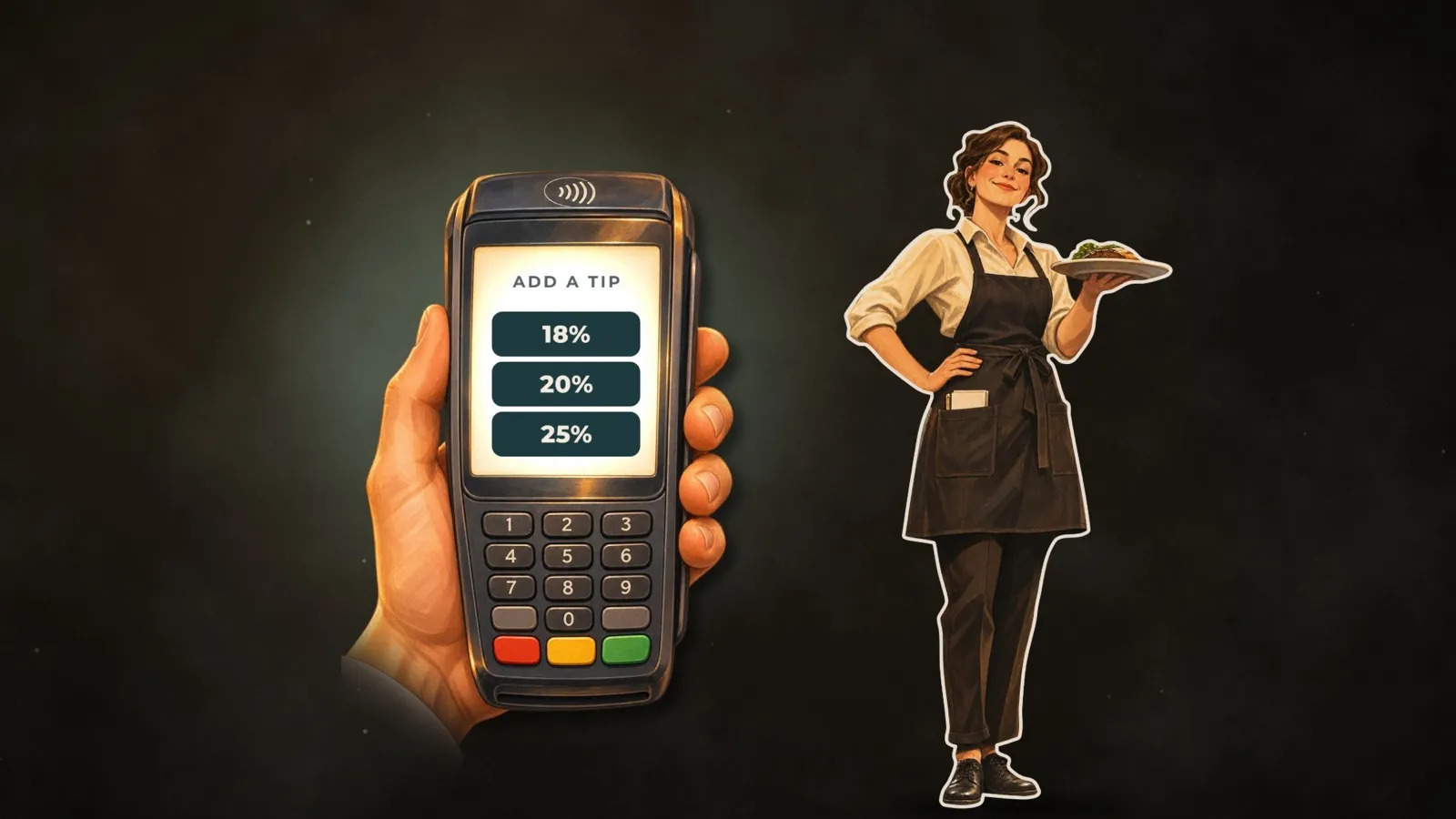 The screen arrives before you have decided you are finished. That is not an accident either.
This is the story of how restaurants spent a hundred years learning how to make you stay, thirty years learning how to make you leave, and are now spending a fortune trying to remember the first part.
What a restaurant was actually for
To understand what got lost, you have to understand what a restaurant was for in the first place. And for that we need a sociologist from Pensacola.
In 1989, Ray Oldenburg, a professor at the University of West Florida, published a book called The Great Good Place. In it he coined a phrase that would eventually get printed on a billion coffee cups: the third place.
Your first place is home. Your second place is work. Your third place is everywhere else you go on purpose, voluntarily, regularly, and happily. The bar. The diner. The barbershop. The corner cafe where the same six people have argued about the same three things every morning for eleven years.
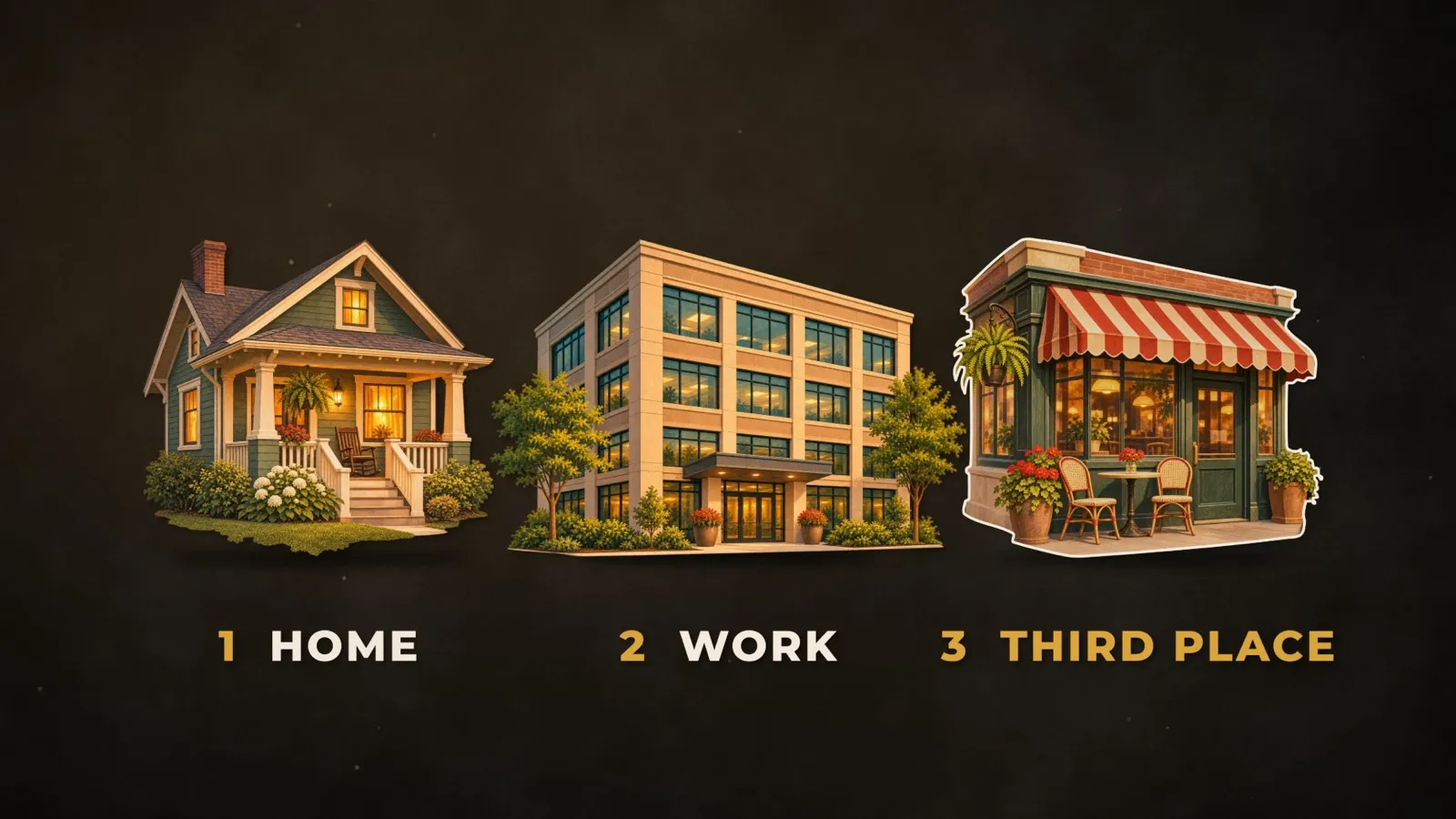 Oldenburg's framing, 1989. The third place is the one you choose.
Oldenburg laid out what makes a third place work, and the list reads like an inventory of everything a modern restaurant has quietly removed. Neutral ground, so nobody is the host and nobody is the guest. A leveler, so your job title stays at the door. Conversation as the main activity, not a side effect of being seated near someone. Easy to get to. A core of regulars. A low profile, meaning plain, unpretentious, not photographed. And a playful mood.
Notice what is not on that list. The food.
Oldenburg thought food and drink were nice to have and not the point. The point was that you were staying somewhere.
And here is why that matters on the business side, which is the half of this that nobody put on a coffee cup. For most of the twentieth century, the thing a good restaurant actually sold was not the plate. It was the time. The longer you sat, the more you drank. The more you drank, the more you came back. The more you came back, the more that room became part of the shape of your life. That model was not throughput. It was loyalty.
For most of the twentieth century, the thing a good restaurant actually sold was not the plate. It was the time.
Oldenburg died in 2022 at ninety. He lived long enough to watch his idea get adopted by the biggest coffee company on earth, and then long enough to watch that same company start pulling out the armchairs.
But we are getting ahead of it. Because the truth is that this industry has been arguing with itself about whether you should stay or go for far longer than you would guess.
The uncomfortable chair is older than the Model T
Everyone assumes the punishing chair is a modern invention, a symptom of some recent collapse in manners. It is not.
Around 1900, American cities filled up with quick lunchrooms built for office workers. They sat you in a wooden chair with one wide flattened arm, like a school desk. There was no coat rack, so you ate with your coat on. The rooms were jammed into high-rent corners where every square foot had to pay, and every chair had to turn fast.
Restaurant historian Jan Whitaker notes that one function of those seats was explicitly to discourage lingering. The one-armed chair was patented by a man named James Whitcomb, who designed fixtures for the Baltimore Dairy Lunch chain. Whitcomb was from Vermont, so as a former Vermonter I would like to formally apologize, on behalf of the entire state, for the non-lingering chair.
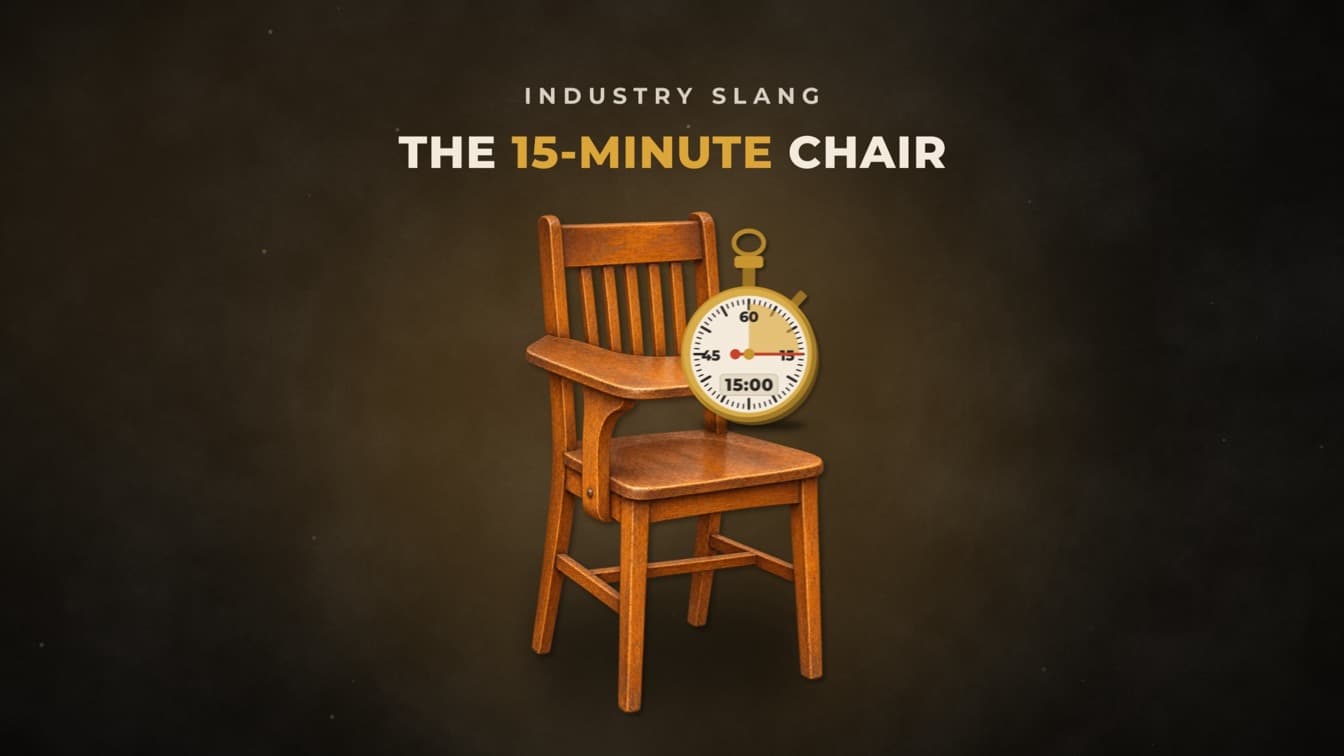
By the 1920s managers understood plainly that turning tables faster meant more money, and the industry had developed its own slang for seating that hurries you along. They called it the fifteen-minute chair.
the hostile chair is 125 years oldSo the instinct to move you along was always in the building. What changed after the Second World War was that a different model started winning. Rising incomes, longer vacations, a family culture that ate out as an event. By 1955 the trade press was telling owners that the social and economic winds were at their backs.
And the places that grew were the ones built for staying. Family restaurants. Coffee shops. Themed rooms. Deep booths, carpet, low lighting. Rooms that absorbed sound instead of flinging it back at you.
A federal study of restaurant noise in 1993 found levels peaking around 68 decibels. That is the range of an ordinary conversation.
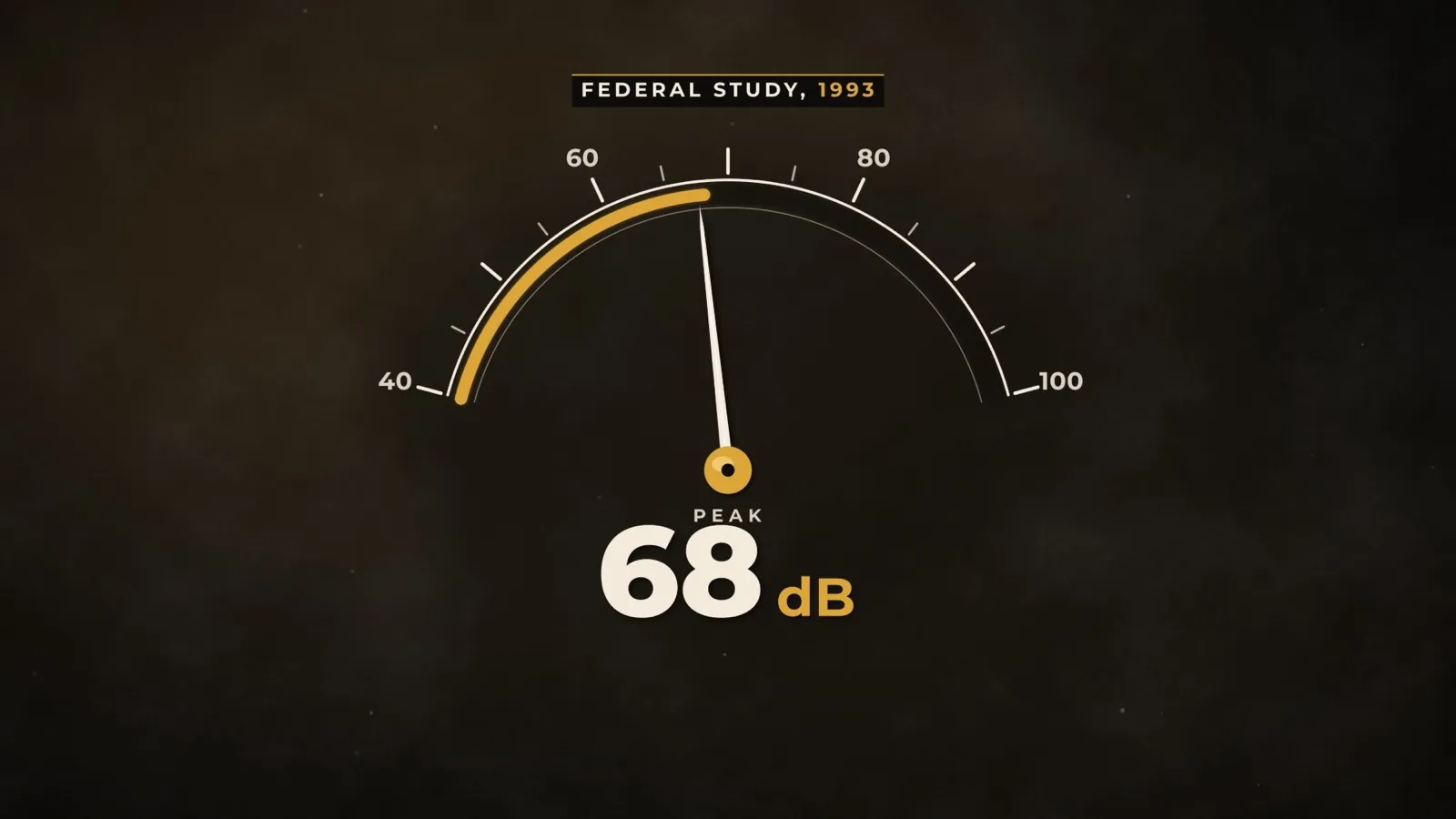 Hold on to this number. It does not stay here.
Hold on to that number. We are going to come back for it.
Then came the purest expression of the stay-all-day model. In the late 1980s and early 1990s, Howard Schultz built Starbucks around a room people wanted to sit in, and he borrowed Oldenburg's phrase to describe what he was selling. Starbucks did not just sell coffee. It sold the armchair.
The nickel
Here is the catch that explains everything that follows, and it is the thing most people outside this business never really absorb.
Hospitality runs on terrifyingly thin margins. The National Restaurant Association puts a typical pre-tax margin at three to five percent.
Before the pandemic, the arithmetic for a typical independent restaurant looked roughly like this. Thirty-three cents of every dollar went to food. Thirty-three cents went to labor. Twenty-nine cents went to rent, utilities, supplies, repairs and card fees.
Which leaves five cents. On a good year.
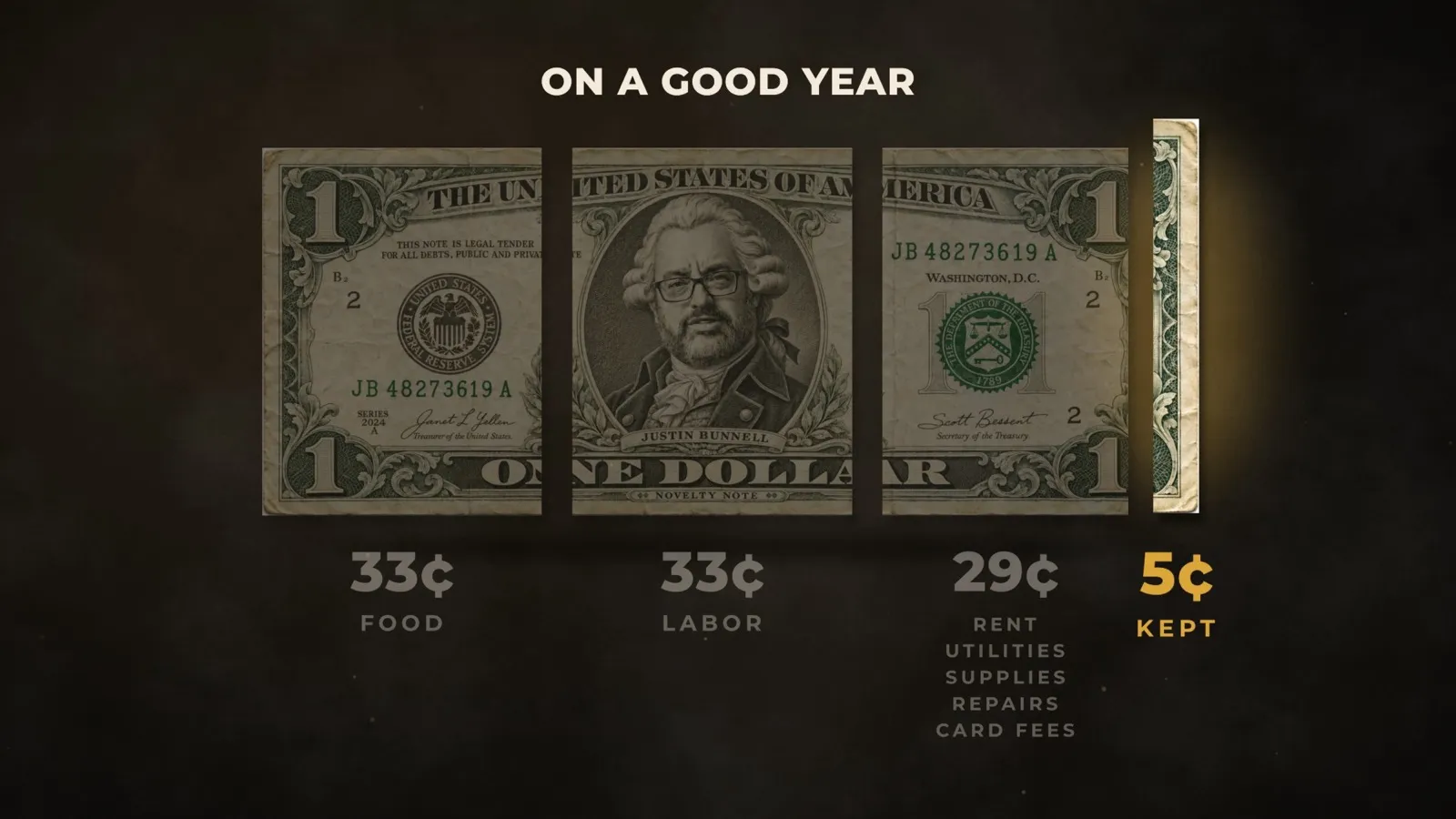 The whole business of hospitality, balanced on a nickel.
Every booth, every yard of carpet, every hour you were allowed to linger: all of it balanced on a single nickel per dollar. Passion covered the spread. It still does, right up until something breaks.
Which also means the industry has always been exactly one persuasive idea away from trying to squeeze more out of the same chairs.
In 1998, a professor at Cornell handed them that idea.
The number that rebuilt every room in America
It came from the airlines first. In the 1980s American Airlines worked out that an empty seat on a departing plane is worth exactly nothing, forever, and that the real game is pricing and managing every seat on every flight. They called it yield management and it made them a fortune. Every hotel chain copied it.
Then, in June 1998, Sheryl Kimes and four colleagues published a paper in the Cornell Hotel and Restaurant Administration Quarterly with a very dry title: Restaurant Revenue Management: Applying Yield Management to the Restaurant Industry. Cornell has the whole thing online, and it is worth twenty minutes if you run a room.
As far as anyone can tell it is the first time the phrase restaurant revenue management appears in print. It is also the paper that introduced the metric that would go on to reshape every room you eat in.
RevPASH. Revenue per available seat-hour.
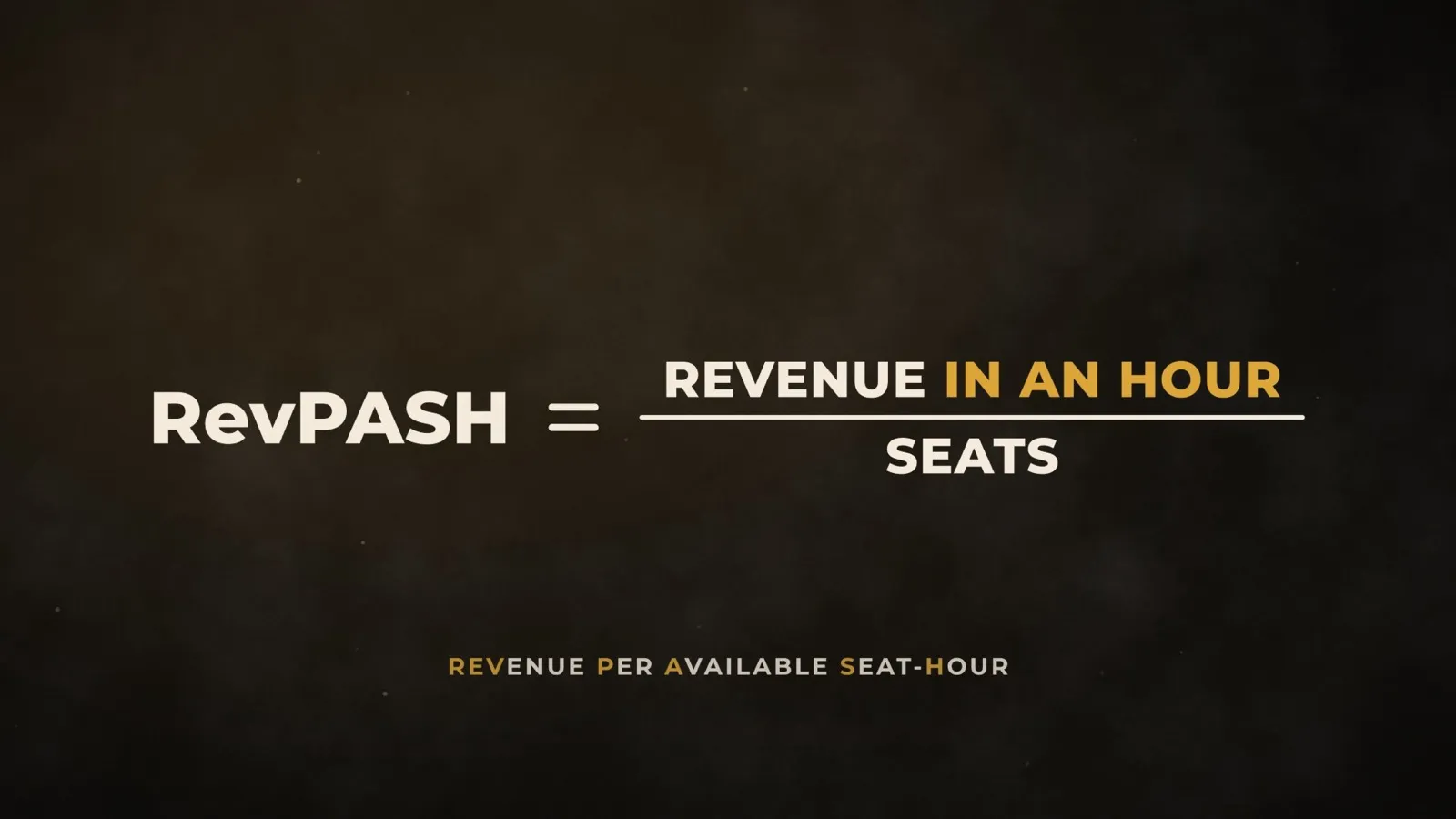 Revenue per available seat-hour. Simple arithmetic, enormous consequences.
The formula is simple. Take the money a restaurant made in an hour. Divide it by the number of seats. That is what one chair is worth per hour, whether or not anyone is sitting in it.
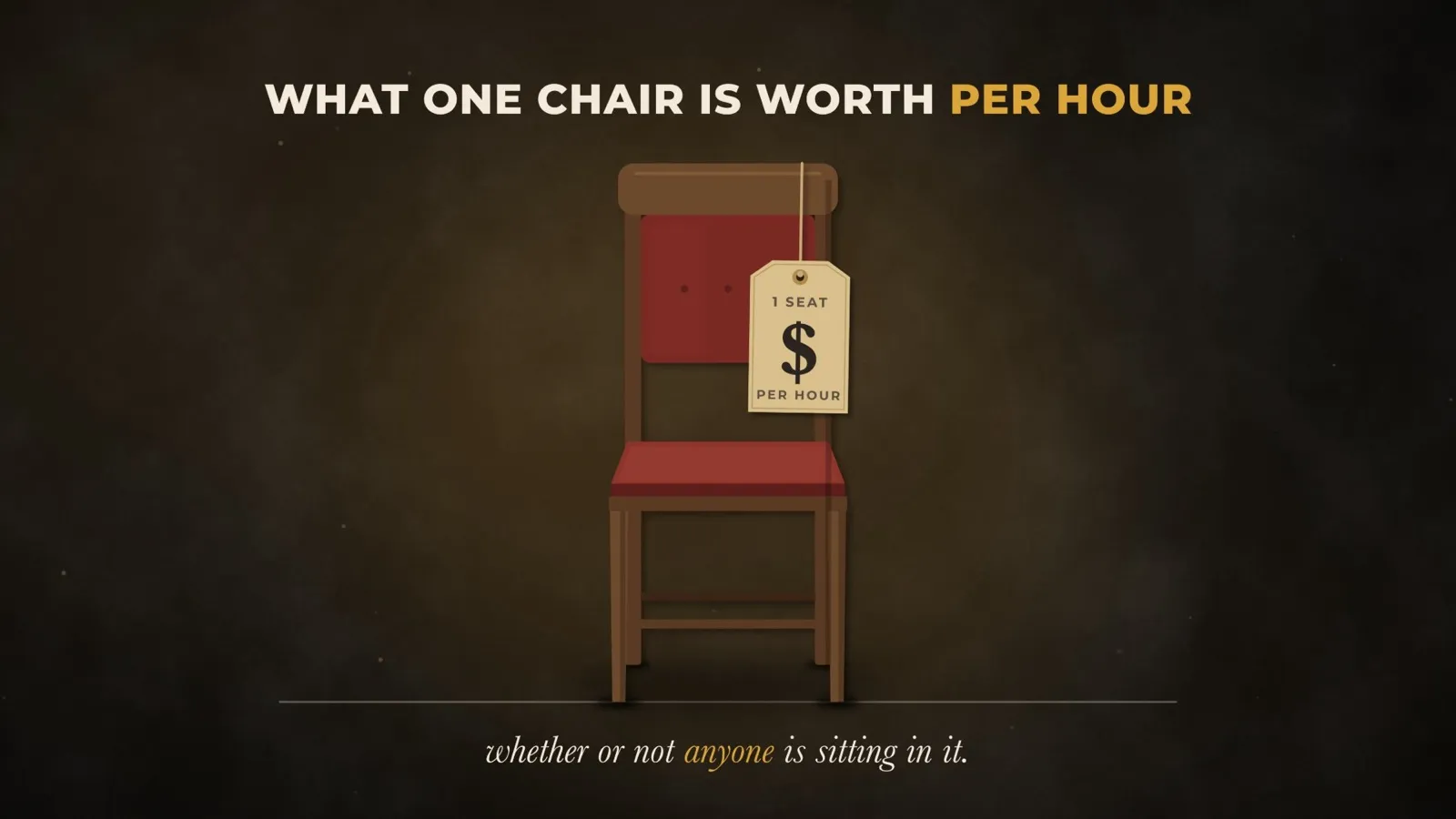 Under RevPASH, a chair is inventory. So is the person in it.
Kimes was not a villain. She was an operations professor trying to help an industry living on that nickel. But a metric is never only a measurement. It carries a worldview, and this one carries a sharp one.
Under RevPASH, a chair is inventory. A guest who has finished dinner and ordered nothing else is not a loyal regular having a nice time. They are unsold inventory, occupying a unit of capacity that is quietly expiring.
The work identified two levers for raising the number: manage price, and manage duration.
Duration is where it got loose. The early material came with a worked example that moved through the industry like a rumor. Picture a hundred-seat restaurant, a four-hour dinner rush, an average meal running about sixty minutes. Shave it to fifty-nine and you serve a handful more people a night. Shave it to fifty, and revenue goes up twenty percent.
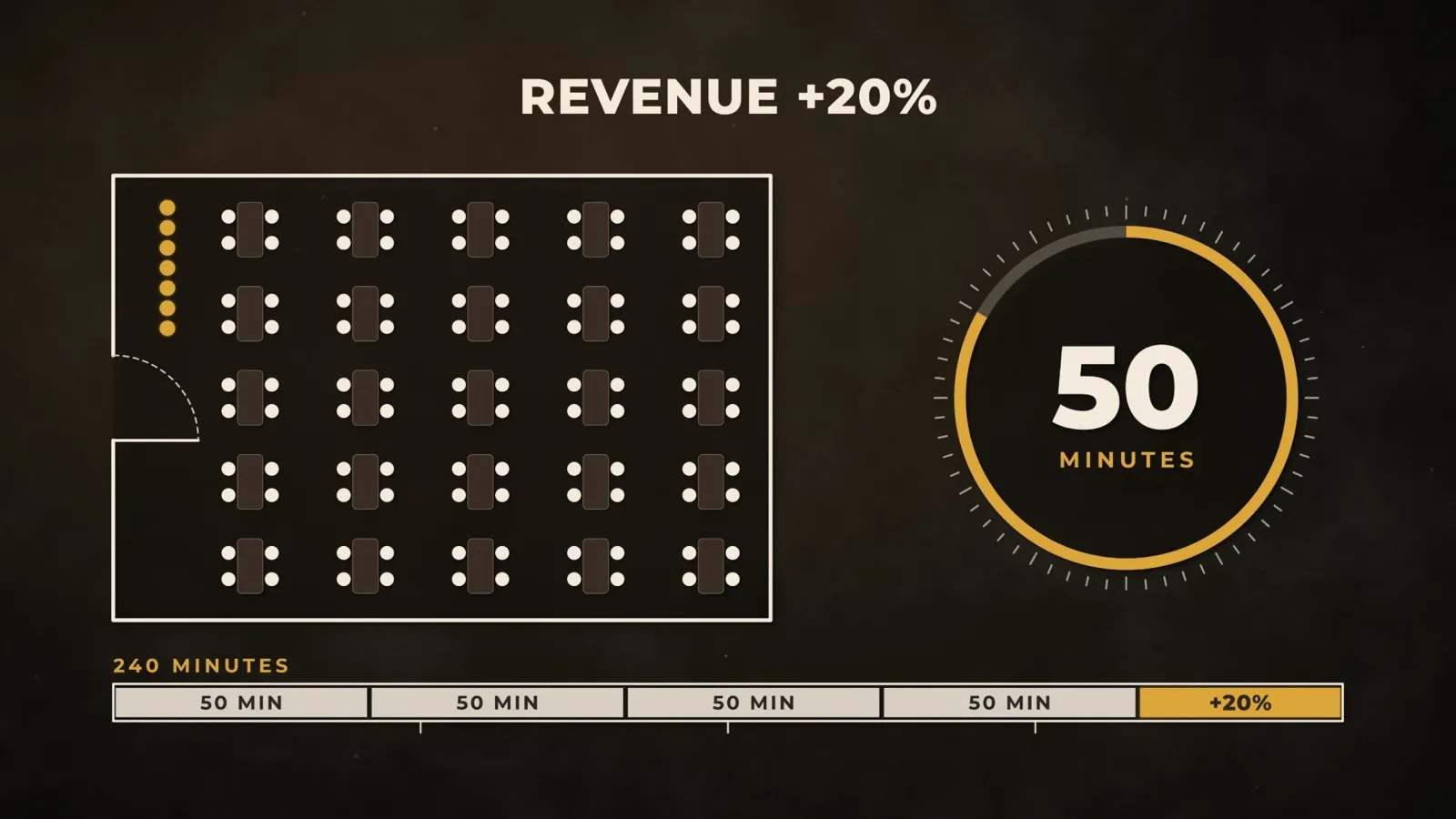 Ten minutes off the meal, twenty percent on the top line. That was the promise.
Twenty percent is a staggering number on a business that keeps five. You can see exactly why every operator in America suddenly became very interested in how long it takes you to eat.
And the timing was perfect, because the computerized point-of-sale system arrived in the same window. For the first time an owner could see precisely when your check opened and precisely when it closed. Your dinner became a timestamp. Cornell researchers started publishing work with titles like how long should dinner take, and measuring how table shape and table location changed how fast you left.
Hospitality now had a number, a lever, and a stopwatch.
a number, a lever, and a stopwatchAnd if you do not want to tell your customers to get up and leave, you build a room that convinces their bodies to do it before the thought ever reaches them.
Over the next twenty years, three levers got pulled.
Lever one: sound
Remember the 68 decibels from 1993.
In 2018, researchers using a crowdsourced app called SoundPrint measured more than 2,250 restaurants and bars across Manhattan during prime hours. The average restaurant came in at 78 decibels. The average bar, 81.
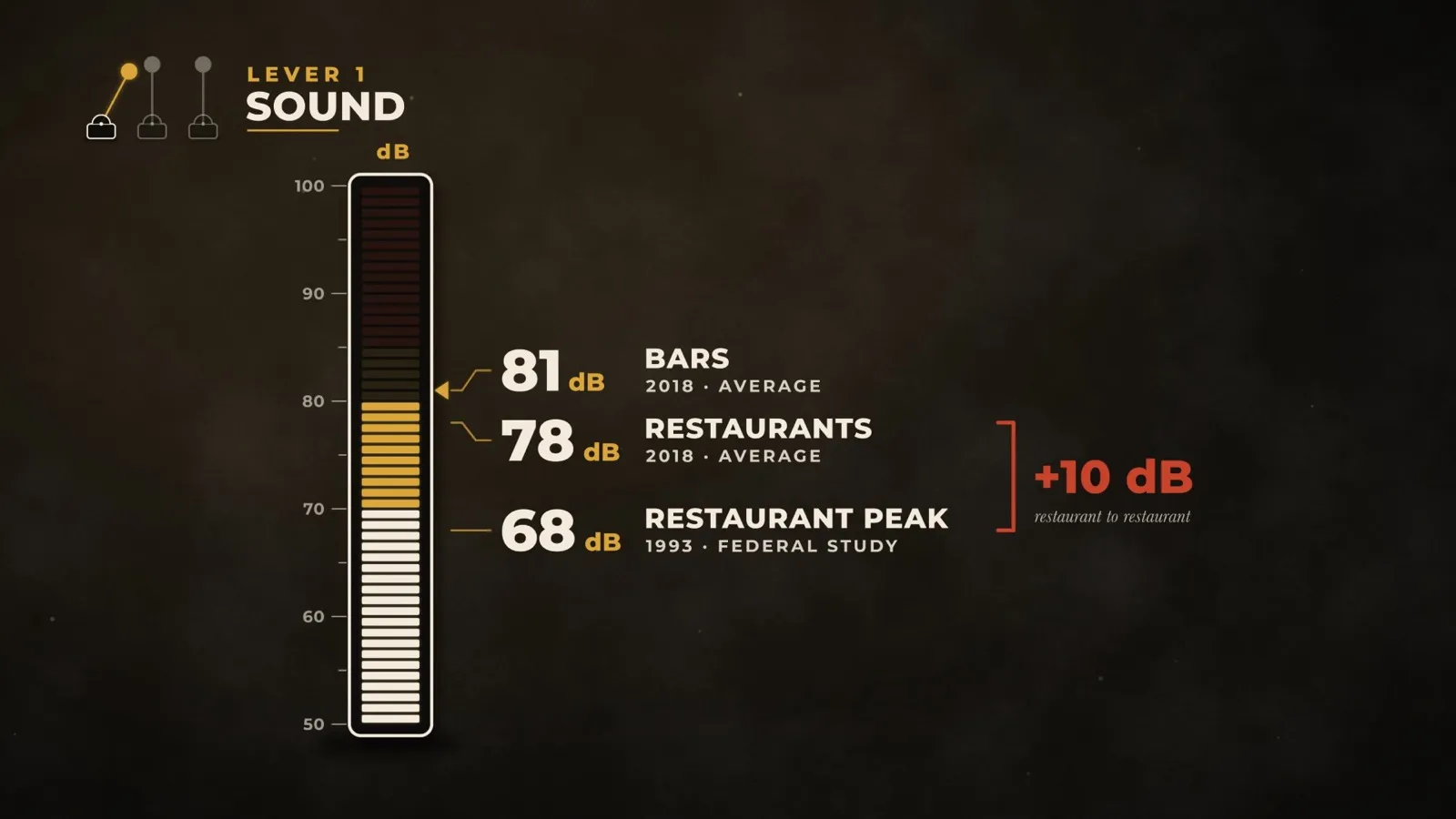 Decibels are logarithmic. Ten up is not a rounding error.
Those are not rounding errors. Decibels are logarithmic. That is a different room.
That same year, architecture critic Kate Wagner carried a calibrated meter around for The Atlantic and was getting 86 decibels at brunch and 90 in a brew pub on a Friday night.
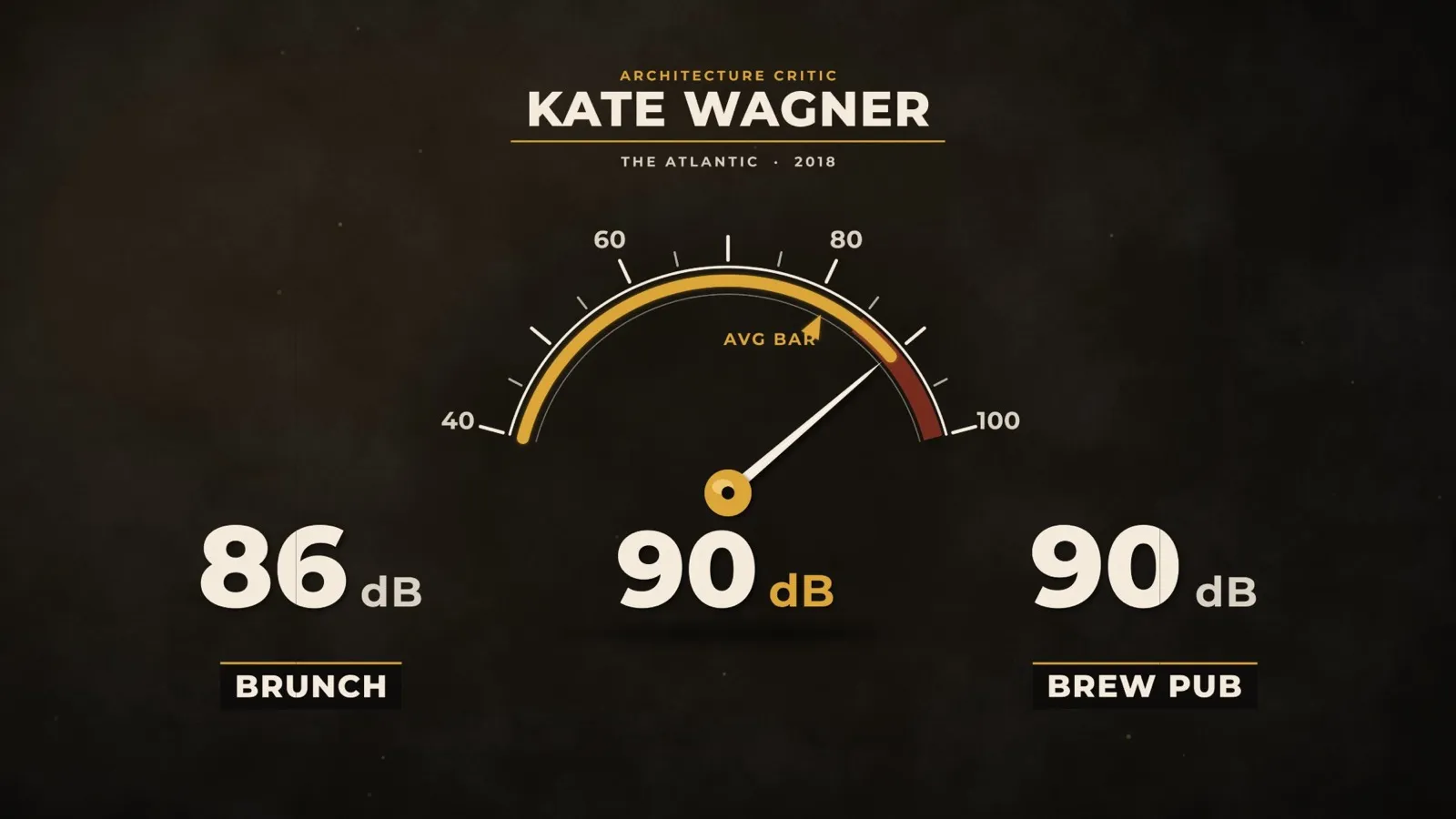 Kate Wagner's readings, 2018. Ninety decibels is a room you cannot talk in.
Her diagnosis fit on one line: fashionable minimalism replaced plush opulence.
The carpets went. The curtains went. The upholstered booth went. In came polished concrete, subway tile, exposed ductwork, and an open kitchen banging sheet pans directly into the dining room.
Some of that was fashion. Some of it was simply cheaper, because hard surfaces do not need replacing and do not hold a stain. And some of it was on purpose, because loud reads as busy, busy reads as popular, and nobody settles into a long unhurried conversation when ordering a second drink requires shouting.
By 2018 a national survey had noise as the single most common complaint about American restaurants. Not the food. Not the prices. The sound.
Lever two: the chair
The fifteen-minute chair never went away. It got a rebrand.
The galvanized French cafe chair. The backless stool at a communal table. The bench with one inch of foam on a plywood deck.
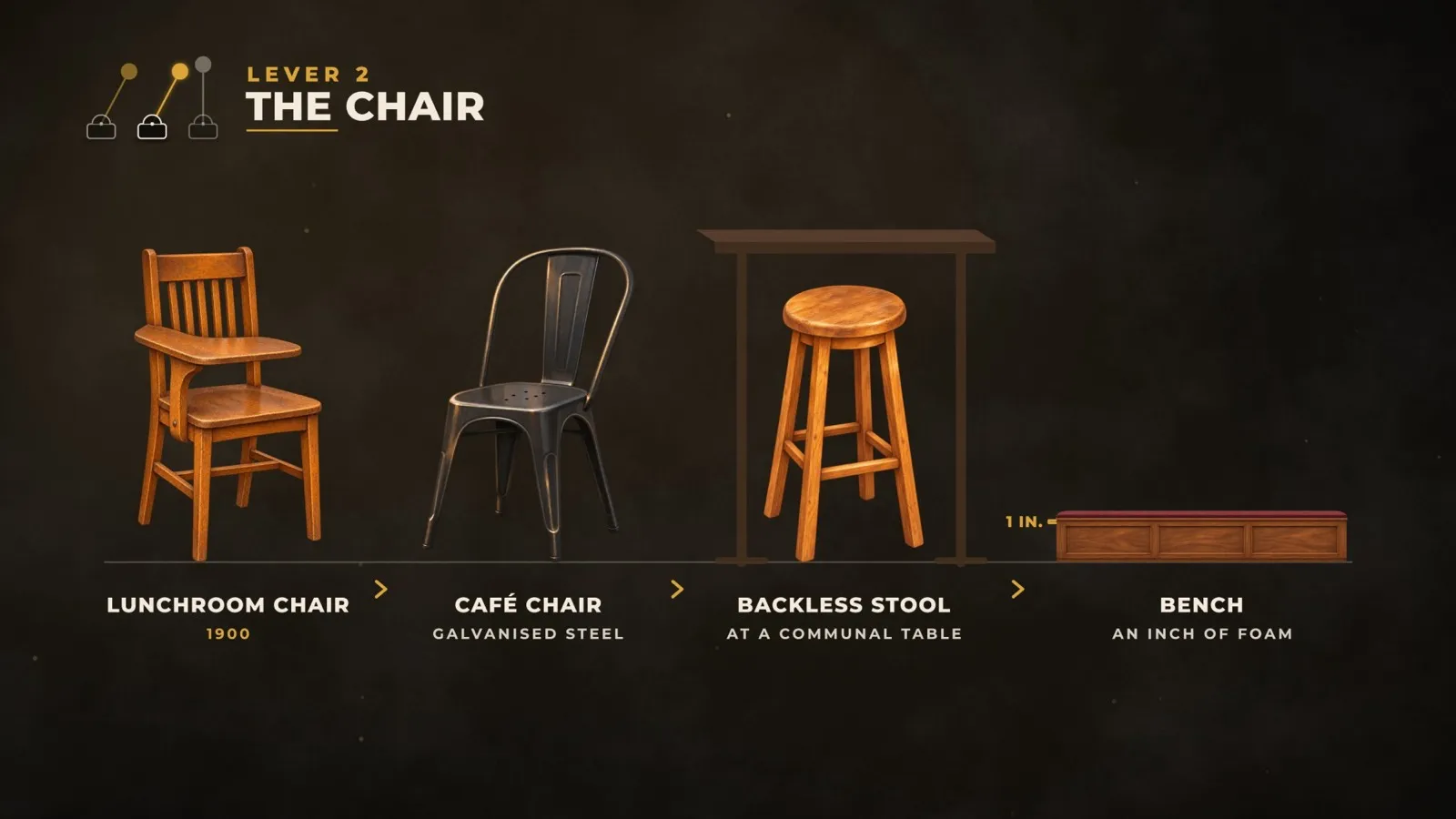 A hundred and twenty-five years of the same idea, resold as an aesthetic.
Every one of them is a redesign of that 1900 lunchroom seat, rediscovered and sold back to you as taste.
And when the chair alone is not enough, there is policy. McDonald's locations have posted twenty-minute seating limits for years. In January 2014 a franchise in Flushing, Queens started calling the police on a group of elderly Korean regulars who arrived around five in the morning, bought a cup of coffee, and stayed. After four police visits and a boycott, a state assemblyman had to broker a truce: one hour of seating, except during the lunch rush.
Those regulars were not freeloading. They were doing precisely what Oldenburg said a third place is for. The building just was not built to be one anymore.
Lever three: friction
The QR code menu and the handheld terminal did not arrive to make your evening easier. They arrived to cut labor hours.
They turn your server into a payment courier. They put the bill in front of you before you have decided you are finished. And the human being who used to read the table, who could tell the difference between a table that wanted the check and a table that wanted one more round, got replaced by a device that cannot tell the difference and was never asked to.
Then money arrived that did not care about any of this, because it did not intend to be around long enough to care.
In 2014 Darden sold Red Lobster, headquartered right here in Orlando, to the private equity firm Golden Gate Capital for $2.1 billion. To fund the deal, Golden Gate sold the land under the restaurants for about $1.5 billion and leased it back. The chain went from owning its buildings to renting them, at rents that climbed every year.
Ten years later, in May 2024, Red Lobster filed for bankruptcy and closed roughly one in five of its restaurants. Everybody blamed the endless shrimp. The endless shrimp did not help. The court filings pointed at the leases.
That is the full machine. A metric that treats you as inventory. A room engineered to make your body want to leave. A screen that asks for money before you are done. And an ownership model that needs the number to go up this quarter rather than this decade.
Then the costs came for the nickel
The pandemic did not invent hostile design. It gave it an alibi.
According to the National Restaurant Association, since 2019 average hourly earnings for restaurant workers have climbed 41 percent. Wholesale food prices are up 35 percent. Total expenses for a typical restaurant are up 36 percent.
Run those through the old five-cent model against 2019 sales and the typical restaurant swings from a five percent profit to a pre-tax loss of nearly 29 percent.
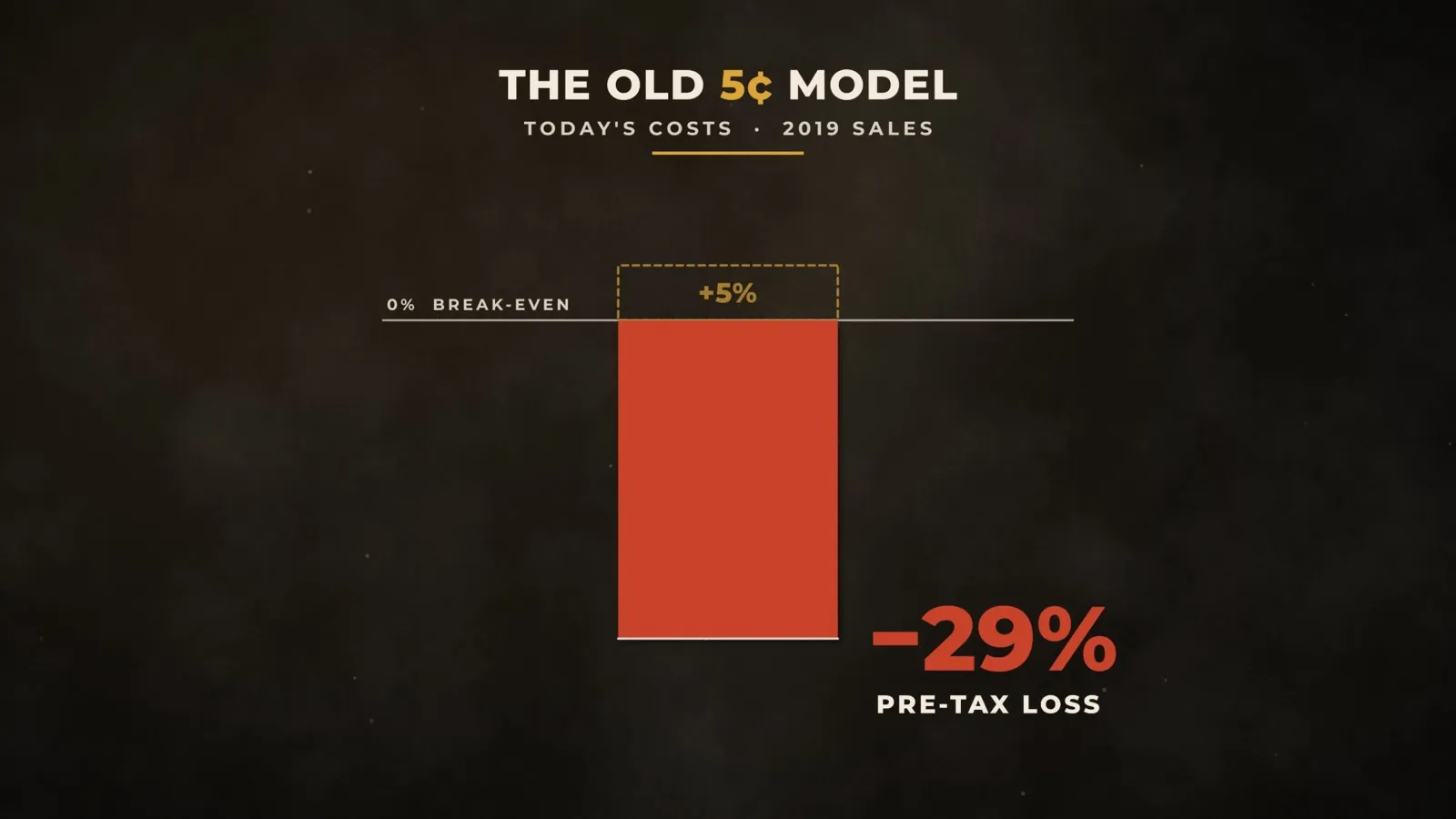 The same business, the same sales, today's costs. The nickel is gone.
So owners did the only thing available. They raised prices. Menu prices rose about 36 percent between February 2020 and May 2026.
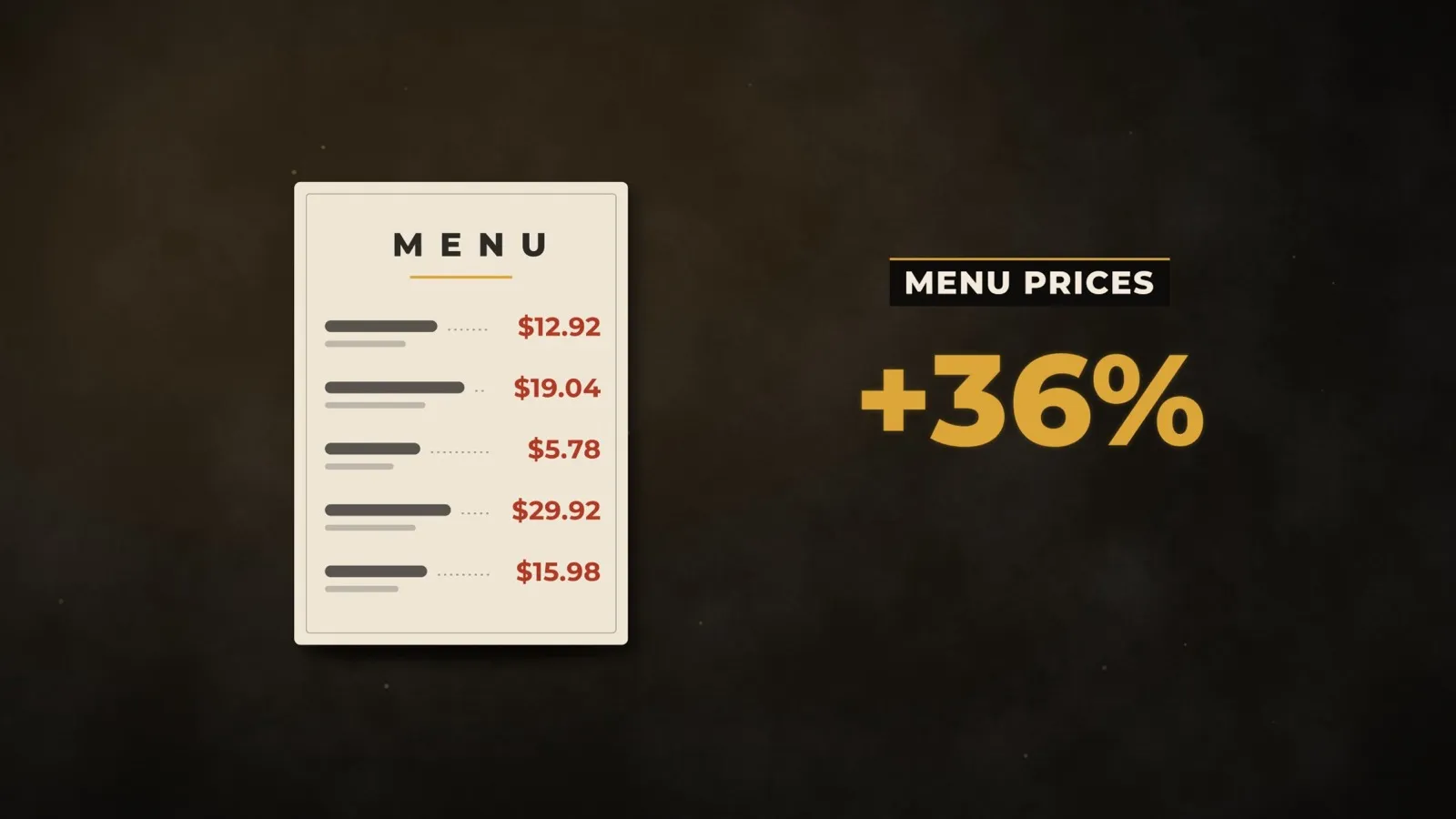 And even then, 42 percent of operators said 2025 was not profitable.
Even then, 42 percent of operators said they were not profitable in 2025.
This is the honest part of the story, and I want to sit on it for a second, because it is the part that gets flattened whenever this conversation happens online. The operator with the loud room and the QR code is usually not the villain here. They are the person who was promised, by research from a respected institution, that if they got you in and out faster the business would work. They believed it because the people whose job it is to know told them it was true.
The part nobody in the industry likes to talk about
In 2009, Gary Thompson, an operations professor at the same Cornell hotel school that produced RevPASH, decided to actually test the twenty percent promise.
He built a simulation across 1,296 scenarios. Big rooms and small. Slammed nights and quiet ones. Patient customers and impatient ones.
The title of the paper tells you how it went. It is called, and I am not making this up, The (Mythical) Revenue Benefits of Reducing Dining Duration in Restaurants.
His finding: cut your average meal time by five percent and revenue goes up about one percent.
Not five. One.
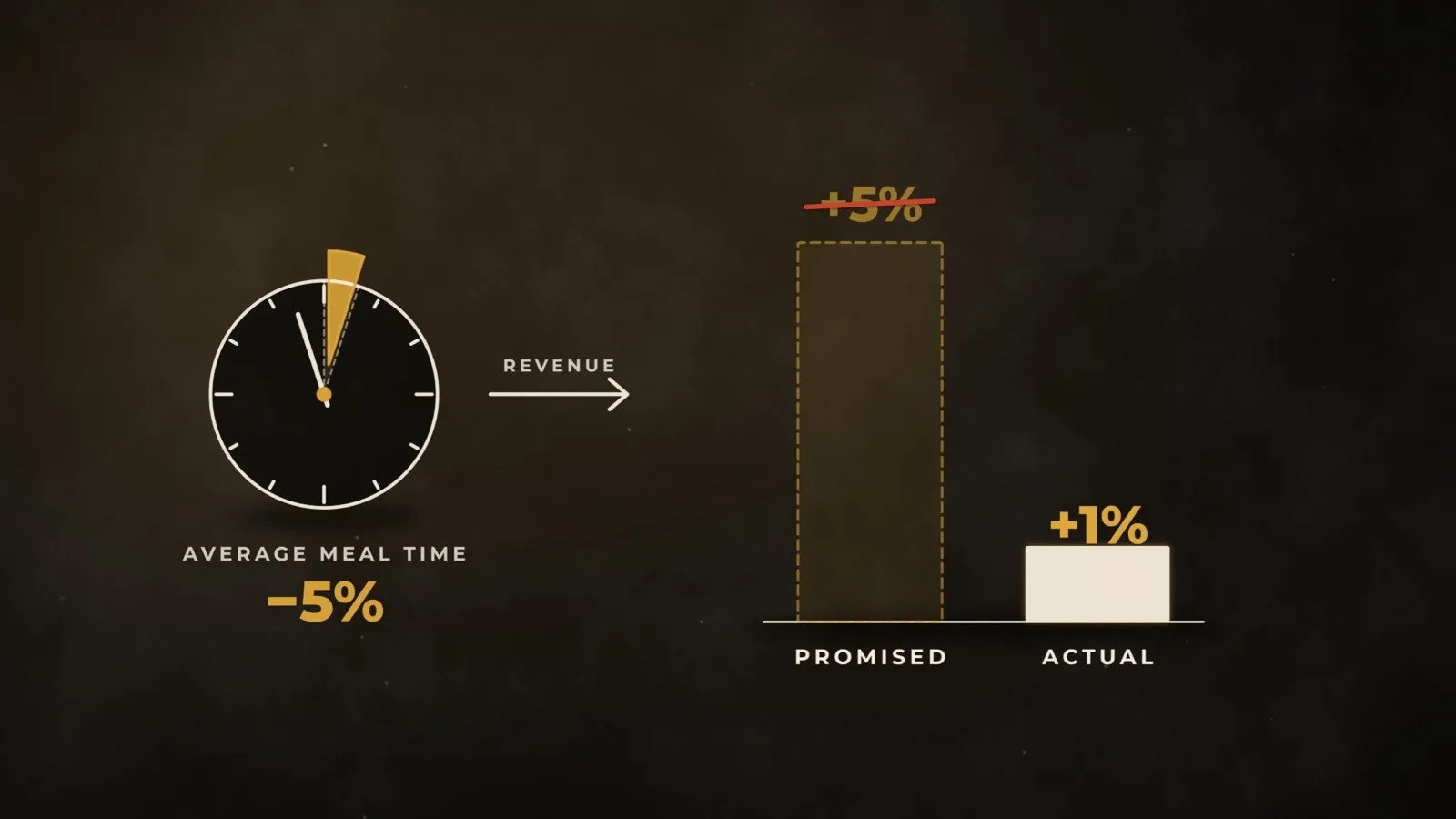 Across 1,296 simulated scenarios, the gain was under a quarter of what the industry had been told.
On average the real gain was less than a quarter of what the industry had been sold. Even in the single best case he could construct, a small room with a long, heaving dinner rush, the gain was less than half the promise.
Why? Because the formula quietly assumes there is always another party waiting for that seat. In the real world there usually is not. Shaving ten minutes off a table at 8:50 on a Tuesday does not conjure a couple into existence at the door. Thompson's own conclusion was that he could not see how duration management worked as a revenue tactic at all.
The industry made rooms louder, chairs harder and checkouts colder in pursuit of a revenue bump its own researchers showed was mostly imaginary.
Then there is the seating itself, and this one is messier than I would like. In 2004 Kimes, working with designer Stephani Robson, timed more than 1,400 meals at a 210-seat casual restaurant to see which tables earned the most per minute. The study is The Impact of Restaurant Table Characteristics on Meal Duration and Spending.
The booth came in slightly above average. The banquette came in below it. And tables in supposedly bad spots, exposed and out in the traffic, earned more per minute than the good ones, because people hurried through them instead of settling in. Average checks were about the same either way. The thing that moved was time.
I am not going to dress that up as a clean vindication of the comfortable room, because it is not one. Read narrowly it even supports the duration argument: rush somebody and their seat earns more per minute. But per minute is the entire sleight of hand, and we are right back at Thompson. A seat that earns more per minute only becomes money if somebody is standing there waiting to take it. The authors' own recommendation was that designers reconsider the banquette and stop worrying so much about the bad table, and they were careful to say this was one restaurant and the implications were tentative.
The noise does not hold up either. A 2024 study found diner complaints start climbing around 70 decibels, and that online reviews mentioning loudness run about a full star lower. In the SoundPrint data, 72 percent of New York diners said they actively avoid places that are too loud.
And the little screen is backfiring on the people holding it. In 2025 Bankrate found 41 percent of Americans think tipping culture has gotten out of control. Nearly four in ten are annoyed by preset tipping screens. About a quarter say they tip less, not more, when the buttons come up. The share who always tip at a sit-down restaurant has fallen from 77 percent in 2019 to around 70.
So: the rooms got louder, the chairs got harder, the checkout got colder, the costs went up anyway, and the customers walked out feeling like inventory, because that is exactly what they had been designed to be.
The largest third place on earth reverses course
The clearest sign the model is cracking came from the company that built the biggest one.
During the pandemic Starbucks pulled out seating and leaned into mobile ordering. The stores became pickup counters with a logo on them. By late 2024 the company had posted four straight quarters of decline, with same-store sales down 7 percent.
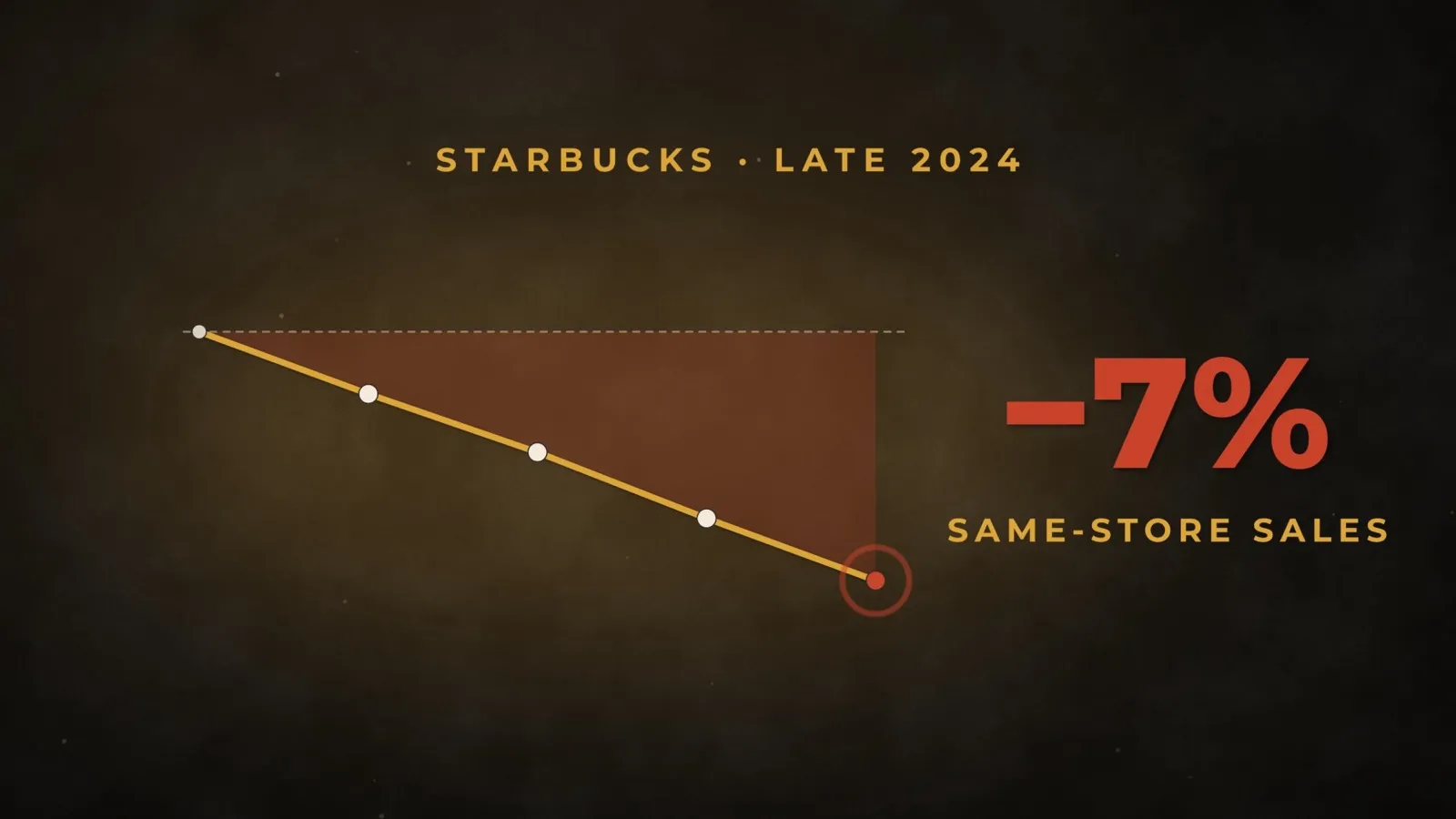 Four straight quarters of decline. The armchair had been load-bearing.
In September 2024 a new chief executive, Brian Niccol, arrived with a plan he called Back to Starbucks. On January 27, 2025, the chain brought back ceramic mugs for anyone drinking in. It brought back free refills. It brought back the condiment bar. It brought back baristas writing your name on the cup with a Sharpie.
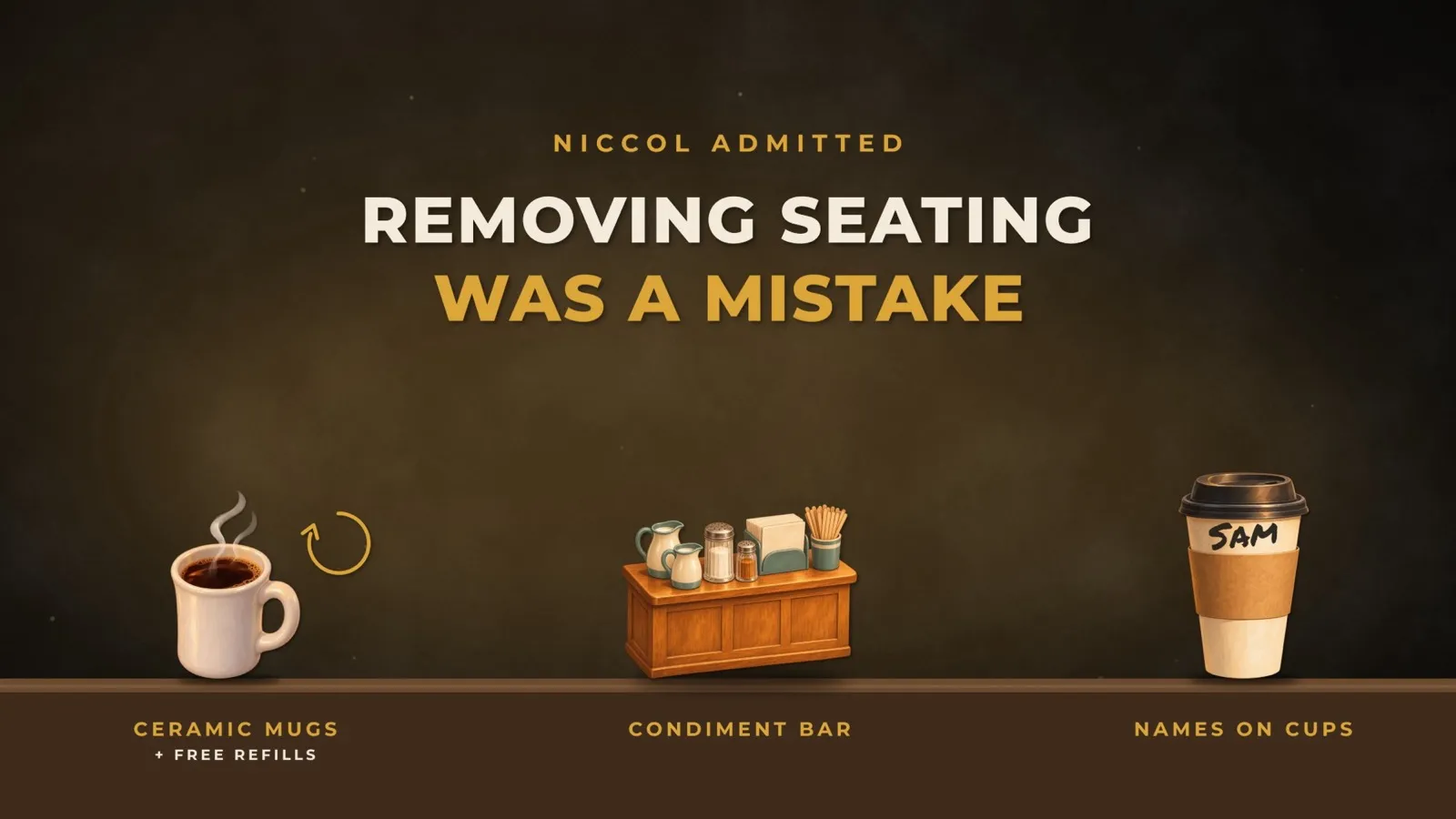 A hundred-billion-dollar company spent a year rediscovering the booth.
Niccol has said outright that removing the seating was a mistake.
A hundred-billion-dollar company spent a year rediscovering the booth.
In fairness, the same month it also reversed its 2018 open-door policy and now requires a purchase to sit or use the restroom. So even the comeback has a turnstile in it. The third place is back, and it has a cover charge.
What is growing instead
Underneath the correction, something stranger is happening.
In September 2025, chef Rock Harper opened a bar in Washington, DC called Hush Harbor. At the door a host takes your phone and seals it in a locking pouch, the same kind schools use. Inside: books, board games, Polaroids instead of selfies. If you want to give someone your number there is a pen. If someone needs to reach you, they call the bar's landline.
I should be straight about how that story is going, because it matters for the argument. In May 2026 Harper said he is closing that location and moving the concept to phone-free pop-ups around DC, while saying the move was not really about the phone-free idea. Which is the whole tension of this piece in one business: the demand is clearly there, and the rent still does not care.
Phone-free rooms are opening in Austin, Phoenix and Charlotte. Supper clubs with a table limit. Listening bars where sitting still is the entire proposition. Cocktail rooms with carpet on the floor and a dimmer on the wall, which in 2026 somehow counts as innovation.
They are all selling the one thing the spreadsheet could never price. Presence.
I have a dog in this fight, and I should say so plainly. At Venetian Soda Lounge we built a listening room on purpose, and it costs us. We keep the room below what the fire code would happily allow, because packing a listening room ruins the listening. Bar sales dip during a set. Total throughput on a music night is lower than if we treated the band as background. I have written about what that actually buys you, and the short version is that the return does not show up in the numbers for the night it happened. It shows up over the following six months, in who books, who comes back, and which artists call because they heard the room takes them seriously.
That is the real problem with RevPASH, and it is not that the arithmetic is wrong. The arithmetic is fine. The problem is that it can only see one hour at a time, and loyalty does not happen in an hour.
The honest risks
I am not going to pretend the warm room is a free lunch.
The costs are real. You cannot carpet your way out of a 36 percent increase in expenses. A cozy room with no table limit and a real server on the floor is a more expensive room to run, and the people telling you otherwise are not the ones making payroll on Friday.
And the market is splitting. On one end, fully automated pickup counters that do not pretend to be hospitality and are honest about it. On the other, slow rooms that charge for the privilege. It is the middle that is dying, the ordinary casual place that tried to be a factory and a living room at the same time and ended up bad at both. Red Lobster. Hooters. TGI Fridays.
So the question for the next decade is not whether the third place survives. It is whether it survives as a place for everyone, or as a luxury good for people who can afford to be unhurried.
The test
For a century this industry knew exactly what it was selling, and it was not food. It was the right to sit in a room with other people and not be in a hurry.
Then it got handed a metric, a stopwatch, and a worked example that promised twenty percent, and it rebuilt every room in America around a number its own professors later put the word mythical in front of.
Hospitality was never an engineering problem. When you optimize out the friction, you optimize out the reason anybody came.
So the next time you sit down somewhere, run the test. Look at the floor. Check the lights. Feel the chair. Listen to how loud it is before the drinks even arrive.
Then ask yourself one question. Are you being welcomed in, or are you being quietly moved toward the door?
Related: What a Listening Room Taught Me About Human Attention, Why Hospitality Should Change How You Feel, and The Five Layers of Immersive Hospitality.

What would this look like in your business?
Turn ideas about atmosphere, service, storytelling, and customer experience into a practical plan.
Explore ConsultingWatch the next idea unfold.
Subscribe for films and ideas about hospitality, creativity, and the experiences businesses create.
Subscribe on YouTube (opens on YouTube in a new tab)