What a Listening Room Taught Me About Human Attention
Attention is the most valuable thing a room can give another human being. Field notes from a listening-room experiment at Venetian.
Venetian Field Notes, 2025 to 2026.
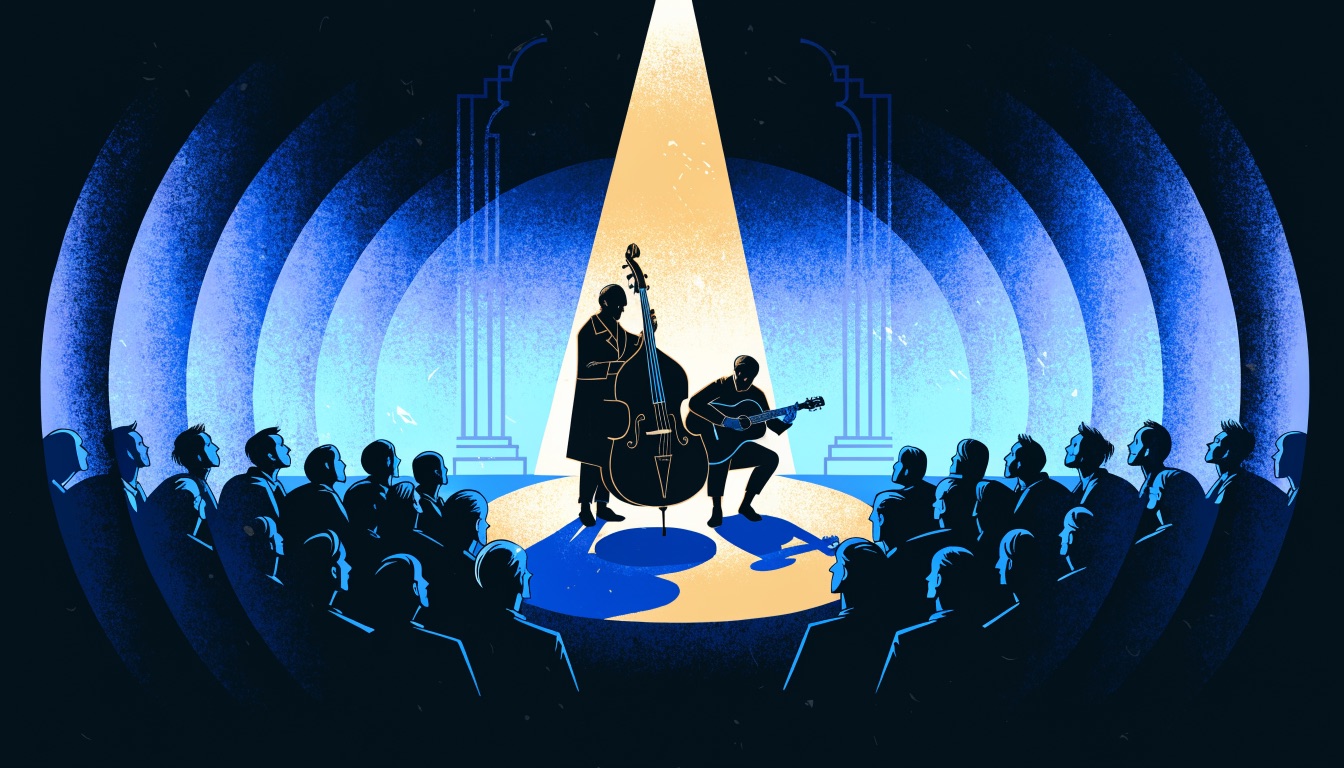
Mid-set, on a full night at Venetian. All Night Boogie Band is up: Jess and Brennan, two people producing an amount of rhythm that seems statistically improbable for two people. Our stage is not really a stage. It's a corner of the room that has agreed to behave like one, close enough to the front tables that a performer could read a cocktail menu over a guest's shoulder if the mood struck. The house lights are down at the level where faces become warm suggestions. The back bar glows. Glassware catches the stage light and throws little flecks of it at the ceiling, a thing I have never once regretted.
Maybe forty minutes in, the band eases out of a stomper and into something slow. And the room does the thing.
I don't know a better way to describe it than a change in pressure. The conversations don't stop; they dampen, like somebody eased a fader down. A couple by the window stops mid-sentence, and neither of them finishes the thought, and neither of them minds. The bartender sets a coupe on the rail without a click, which is a skill no manual teaches. Shoulders half-turn toward the corner, a few degrees at a time, mostly without their owners noticing they've done it. Nobody shushed anyone. No sign went up. Sixty-some people quietly agreed, without exchanging a word, to point themselves at the same thing at the same time.
And here's the part I did not expect when we built this place: the band feels it arrive. You can watch it land on them. A note gets held a beat longer than it strictly needs to be, just because it can be. The space between phrases opens up. The two of them trade a look, the kind musicians trade when the night has changed categories. The song stretches out to its full length, the length it probably always wanted to be, the length it never gets to be in rooms where it's competing with a hockey game. The audience is listening. The band knows the audience is listening. The audience knows the band knows. Once that loop closes, it is the whole show. Everything else in the room is furniture.
I was standing at the end of the bar doing what I apparently now do even at concerts I've paid to attend, which is watch the room instead of the stage. And I remember thinking, with the specific clarity you only get in the middle of your own experiment: this is the product. Not the drinks. Not the décor. Not even, strictly speaking, the music. The attention. The room just manufactured an hour of concentrated human attention, and everyone in here, on both sides of the microphone, is walking out with a share of it.
Most rooms can't make this. Not because the people running them are careless, but because the room was never asked to.
What most rooms ask for
The average bar treats live music as decoration, and that's not really a criticism of the bar. It's a description of physics. If a room was built for volume and revenue per square foot, live music is just another audio channel competing with the televisions, the dishwasher, the espresso machine, and forty simultaneous conversations. The musicians show up, do the work, and become atmosphere. The audience doesn't so much listen as tolerate. I've spent enough nights in rooms like that, on both the paying side and the operating side, to know the shape of it precisely. The musicians aren't bad. The room is simply not asking anything of the audience, and audiences, in my experience, deliver almost exactly what a room asks of them. No more, rarely less.
And the competition has gotten so much worse than the dishwasher. The televisions were always there, but now every guest carries an infinite feed in their pocket, professionally engineered to win any idle half-second of any human life. A musician on a small stage tonight is not really competing with the espresso machine. They're competing, in some fair-fight sense, with everything ever made. Which is exactly why a room that can genuinely deliver an audience, a whole room of actual sustained attention, has quietly become something close to precious.
Which raises the interesting question: what happens if you ask?
The person who taught me that silence is a design material was, no surprise, a film director. The opening of Sergio Leone's Once Upon a Time in the West runs somewhere around ten minutes and contains almost no dialogue. Three men wait at a train station. A windmill creaks. A fly harasses a man's face. Water drips, one drop at a time, onto the brim of a hat. Leone shot waiting as if waiting were the event, and he mixed those tiny sounds so far forward that they became the score. Audiences in 1968 sat in dark theaters giving their complete attention to a squeaking windmill, and the tension was unbearable, and nothing was happening. That's the trick. Silence isn't an absence. It's a frame. Lower everything else, and whatever remains becomes enormous. Quiet doesn't reduce attention; it concentrates it, the way a narrow doorway concentrates a crowd.
A bar is not a Leone film. Nobody at Venetian is being stalked by a man with a harmonica, as far as I know. But the mechanism transfers completely. If you want a room to make something feel enormous, you don't turn that thing up. You turn everything else down.
The experiment
We opened Venetian in August of 2022 with the listening-room idea already built into the walls, and we run somewhere around a hundred shows and events a year, which means the experiment gets a lot of trials.
The setup is not complicated. The room is small on purpose. The stage sits close to the audience. When a set starts, the lights drop, and the volume of the room drops with them, because light is doing more of that work than most people realize. Film taught me this one directly. Dim the house and brighten one point, and every mammal in the room understands the grammar instantly: something is about to happen there. You don't have to announce the set. The light announces it. Announcing it anyway, over a microphone, is how you turn a moment into a transaction. Bar service continues, but the pace visibly changes. Staff are trained not to cross in front of the performers during a song. And we keep the number of people in the room below what the fire code would cheerfully allow, because packing a listening room ruins the listening.
Every one of those decisions has a cost, and I want to be honest about the costs, because this is where most operators reasonably get off the bus. The room takes fewer covers than it could. Bar sales slow during the set. The total throughput of the night is lower than it would be if we treated the music as background. What we buy with all of that is one thing: the room asks something of the audience. Specifically, it asks them to pay attention for a while.
Most nights, they do. And I would have told you, going in, that the point of all this was to change what the audience feels. That is happening. But the change I didn't fully anticipate, the one that has taught me the most, happens on the stage.
I'm not going to put words in anybody's mouth. [JUSTIN: VERIFY / EXPAND: if there are on-record quotes from Jess or Brennan or other musicians about the specific feeling of playing the listening room, they belong here. I don't want to fabricate them.]
What I can tell you is what I've observed, that night with All Night Boogie Band and on a lot of nights since, with a lot of different artists. Longer holds. Slower builds. More space in the arrangements. A willingness to try the quiet song, the new song, the strange song, the one that wouldn't survive a room that was half listening. And underneath the musical choices, something harder to name but completely visible from the end of the bar: the effect on a performer of being taken seriously.
You underestimate, until you run a room that does it, how rare that is. Most professional musicians spend most of their working lives playing for rooms that are half listening, and they develop a whole defensive craft for it: play the familiar stuff, keep the energy up, survive the hockey game. A listening room quietly retires all of that. It isn't just a better product for the audience. It's a different product for the performer: a place where the work is being received, on purpose, by people who chose to receive it. That changes what they play and how they play it. And on the best nights, the set that happens is one that nobody could have booked in advance, because it didn't exist until the room and the band manufactured it together.
What the room gives back
The bigger idea underneath all these field notes is that attention is a hospitality product. I don't mean that as a metaphor. I mean that a room holds a finite pool of collective attention, and the design of the room decides whether that pool gets distributed or concentrated, and both choices have value, and only one of them is rare.
Most rooms distribute. Everyone can talk over everyone else, order at any moment, watch whichever screen is nearest, and treat the environment as a backdrop for whatever they walked in with. That's efficient, and for plenty of occasions it's correct. A workday lunch spot should not be a listening room. A cocktail bar at peak Friday service should not be a listening room. Concentration is not a virtue; it's a tool.
But there are hours of the night, and there are certain rooms, where the right move is to gather all that scattered attention and aim it at one point, and let something happen inside the beam. Music makes this obvious, but the same physics run underneath moments that have nothing to do with a stage. The couple at dinner because it's their anniversary, who need the room's attention discreetly and completely. The regular who got difficult news this week and needs a quiet hour in a corner where somebody knows his name and doesn't make a production of it. The booth that hosts the same two people every Tuesday at five, hashing out one of their businesses, which is a listening room without ever being called one. None of those moments involve a stage, and none of them appear on a run sheet. They require somebody in the building, usually behind the bar, reading the room the way an engineer reads a mix: noticing which table needs the room turned down around them, and having the tools to do it quietly. Some of the tools are literal, a dimmer and a volume knob. Most of them are human.
Attention can be spent, scattered, or concentrated. Rooms that know how to concentrate it, deliberately, for the right occasion, are practicing a different trade than rooms that don't. It looks like the same trade. It has the same glassware. It isn't.
One more field note I didn't expect to be filing: on the sets that really land, the phones stay down. Nobody asked. There's no sign, and there never will be. But sixty people in a dim room voluntarily ignoring the most sophisticated attention-capture machinery ever built, in favor of two humans and their instruments, is about the most encouraging thing I've witnessed in three years of running this place.
The one operational rule I keep coming back to is this: the room's attention has to feel voluntary, not enforced. If you're shushing your guests, you don't have a listening room, you have a class. Guests need to feel that they chose to focus, because they did, because the light and the sound and the staff behavior and the room's own quiet social gravity made focusing the easy, obvious default. You get there through design, never through rules. Anybody can hire a musician. Building a room where sixty strangers voluntarily hand an hour of their full attention to two people in a corner is a completely different discipline, and it's mostly invisible, which is how you know it's working.
Does it pay? There are days I've done the math on the covers we don't take and the bar sales that dip during a set, and thought hard about turning the whole experiment down, or off. Then I look at what the room produces on the nights it works. The performers play the best sets they've played in months. The audience walks out carrying a shared memory the room manufactured out of nothing but arrangement and restraint. And we get the one form of marketing money can't buy: musicians telling other musicians, and guests telling other guests, that there's a room in Burlington that actually listens. None of that appears in the numbers for the night it happened. It appears over the following six months, in who books, who comes back, and which artists reach out because they've heard the room takes them seriously. The room that gives attention gets attention back. That's not a slogan. It's the actual mechanism, and it compounds.
That slow song, the one that made the room change pressure, did eventually end. There was a half-second of held silence afterward, that little vacuum a room only makes when it was genuinely listening, and then the applause came in warmer than volume alone explains. Jess and Brennan rolled straight into a stomper, because they know exactly what to do with a room that's been sitting still. People turned back to their tables and their drinks and their interrupted sentences, all of them very slightly different than they'd been an hour earlier.
I used to think we built the quiet for the audience. I now think the quiet was for everybody in the building. The band got a room that received them. The audience got the strange modern luxury of pointing themselves at one thing. The couple by the window got their unfinished sentence back with something extra folded inside it. And I got the closest thing I have to proof that attention is the most valuable thing a room can give a human being. I'm still learning how to give it. Every set is a small experiment. This one, I'm keeping.
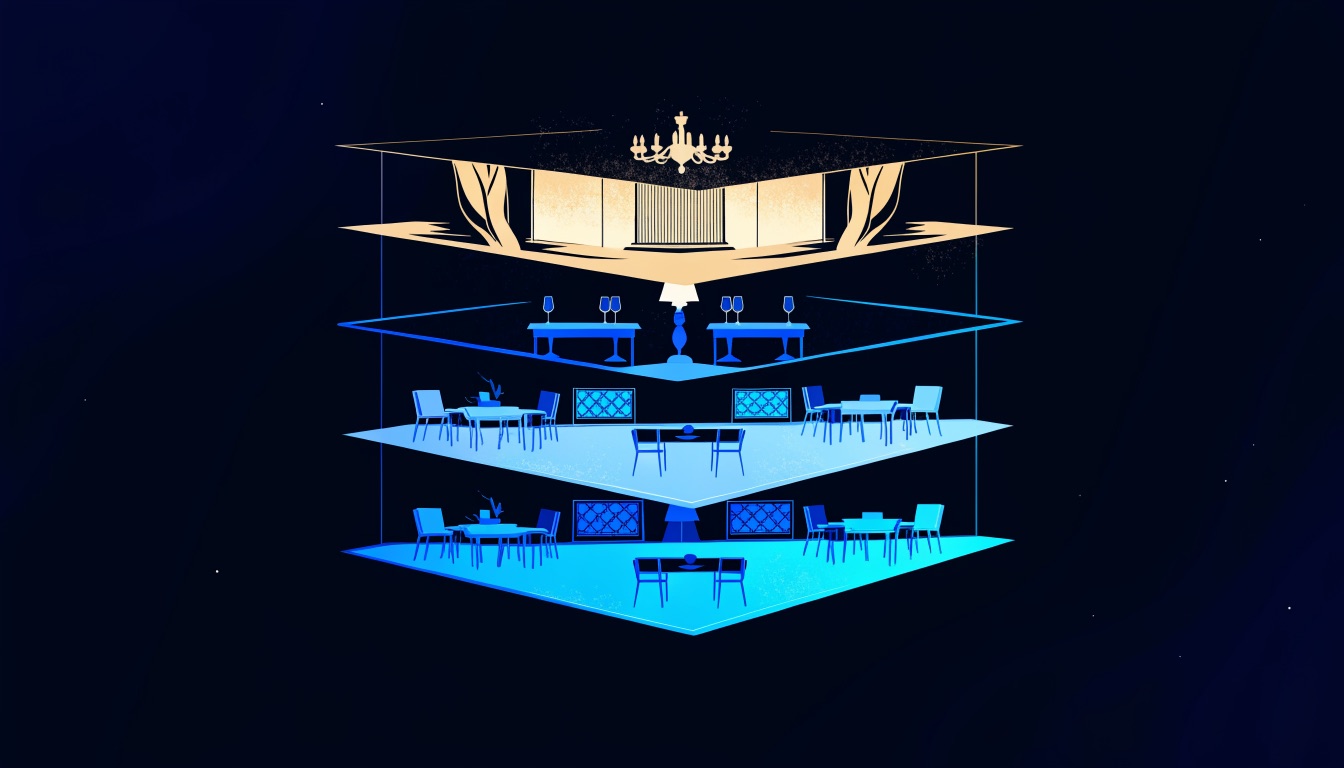
Related: Why Hospitality Should Change How You Feel, The Best Hospitality Makes People Feel Important, and The Five Layers of Immersive Hospitality.