The Best Hospitality Makes People Feel Important
Recognition is the operational form of a very old idea. On remembering names, forgetting one, and the difference between being greeted and being announced.
There is a very specific kind of warmth you deploy when you've forgotten the name of someone you like, and it runs about fifteen percent hotter than the real thing.
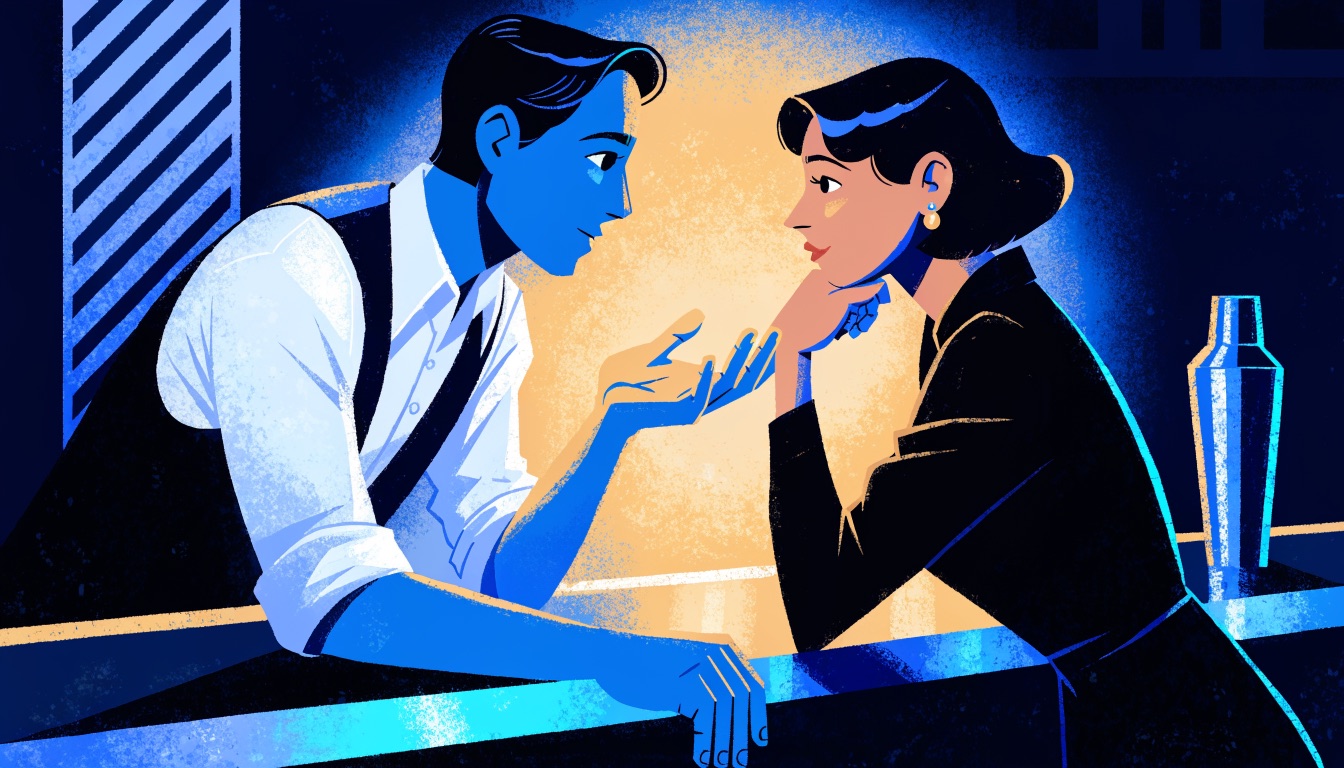
I know this because I've deployed it. He came in on a quiet night, a guest I'd served enough times that we were long past introductions. I knew things about him. I knew his drink. I knew where he liked to sit, close enough to the stage to be inside the music and far enough back to keep talking. I knew the way he'd wave off a menu he had memorized. What I did not know, suddenly and completely, was his name.
I want to describe the interior experience of this, because if you've ever worked a floor you already know it, and if you haven't, it's worth seeing once. The name had been there. I had used it before, out loud, successfully, on multiple occasions. And now, mid-greeting, with my hand already out and my face already lit up, I reached into the filing cabinet and the drawer was empty. Not mislabeled. Empty. I ran the alphabet like a man spinning a combination lock on a safe he owns. Nothing at B. Nothing at C. A distant flicker around M that turned out, on inspection, to belong to a different regular entirely.
So I did what people do. I went warm. "Hey! Good to see you, man." Man. The word you lean on when a name has abandoned you. For the rest of that visit I performed a full choreography of avoidance, and anyone who has done this knows every move: the sentence quietly rebuilt in real time so it never requires a name, the introduction conveniently not made when another regular drifted over, the slightly-too-long eye contact meant to broadcast connection while communicating, to anyone actually paying attention, mild panic.
He knew. I'm nearly sure he knew. There's a particular polite flicker that crosses a person's face when they realize they're unnamed, and it isn't anger. It's something quieter. A small subtraction. I knew he knew, and he knew I knew he knew, and neither of us said anything, because there is no graceful sentence for it and no line item on a receipt for "your identity briefly fell out of my head."
Here's the part that matters. The drink was right. I had that much. The seat he liked was open and I steered him toward it without being asked. The service was, by any measurable standard, fine. Five stars available across the board. And the visit was worse. Not ruined, just dimmer, run through a filter, fifteen percent too warm in exactly the way that reads as distance. No metric we track would have caught it. The single most important piece of information in the building that night was the one I'd dropped, and it wasn't really a word at all. It was proof of where he stood in my memory.
I'm not going to tell you his name here. Courtesy, partly. But also: for the length of one full evening, I couldn't. That's the story.
The oldest observation in the field
Dale Carnegie wrote How to Win Friends and Influence People in 1936, and most of it has aged the way you'd expect a 1936 self-improvement book to age. But one core observation has aged perfectly, and I'd argue it's the closest thing hospitality has to a law of physics: human beings want, above almost anything else, to feel important to another person. Not important in the corner-office sense. Important in the specific sense of being noticed, remembered, and mattering to somebody who didn't have to bother. Carnegie also had plenty to say about names in particular. Paraphrasing him: a person's own name is about the sweetest sound available to them. I spent years thinking that was a cute line from an old book. Then I watched a man's face perform a small subtraction over a missing one, and I stopped thinking it was cute.
Steve Wynn spent decades running the American hospitality industry on what amounts to the same idea, scaled up and handed a budget. His public argument, and I'm paraphrasing his position rather than quoting him, was that the true output of a hospitality business is a guest with higher self-esteem than they walked in with. The rooms, the amenities, the spectacle: infrastructure. The feeling a guest has about themselves at the door on the way out: product.
[JUSTIN: VERIFY: if you have on-record Steve Wynn quotes you'd like to include here on employee pride, guest recognition, or the self-esteem argument, they can go in this section. I don't want to paraphrase him as a direct quote.]
Neither of these is a new insight, and that's what I find quietly funny about the whole field. The most valuable idea in hospitality has been in print since 1936, freely available, frequently assigned, and almost never operationalized. Everybody nods along to "make people feel important" and then goes back to optimizing ticket times.
I don't think the industry ignores it out of cynicism. I think it ignores it because importance doesn't scale the way throughput does. You can systematize ticket times. You can put them on a dashboard and yell about them in a Tuesday meeting. You cannot dashboard the moment a host's face changes because somebody they genuinely like just walked in. So the measurable thing gets managed, the valuable thing gets left to chance, and everyone stands around wondering why the place down the street with worse food and slower service is full.
What recognition looks like on a floor
Operationalizing it turns out to be a stack of small behaviors. None of them is dramatic on its own. Together, they are the entire product.
Names first, obviously. And here's the counterintuitive part I had to learn the hard way: attempting a name, imperfectly and warmly, is worth more than a database that knows it exactly. The attempt is the message. It says this specific guest was worth effort. Watch it happen sometime. A bartender reaches for a name, misses, lands it on the second try, and the guest lights up more than they would have for instant recall, because they got to watch the effort spend itself on them. A database can't do that. A database can only be correct, and correct was never the point. Which means my failure that night wasn't quite the failure I thought it was, but I'll get back to that.
Preferences, minus the weirdness. A returning guest whose usual is quietly offered as "the one you had last time" feels seen. The same guest informed that "our records indicate you are a Pineapple Old Fashioned customer" feels catalogued. Same data. Different species of moment.
The greeting versus the announcement. There's a real difference between being greeted like a regular and being paraded as one. Both are recognition. Only one is comfortable. The loud version is a performance staged for the benefit of the other guests, which converts a private warmth into theater, and everyone in the room can feel the conversion happen.
Eye contact inside the first ten seconds of entry. This one is boring, and it is the whole business. Every room I've ever loved got it right. Every room I've found forgettable got it wrong. It costs nothing, and it's somehow the rarest item on this list.
Then the quieter craft. Milestones acknowledged without spectacle, because a birthday handled with a quiet extra dessert lands differently than a light-up hat and a conscripted singalong. Compliments given rarely, sincerely, and specifically, because a generic compliment reads as service theater while a specific one reads as attention. Anticipation: the refill before the ask, the check appearing at the exact moment the guest was about to look around for it, a rhythm of service in which the guest never has to hunt for anything. Listening without rushing, because a guest can feel the difference between a server who's listening and a server who's waiting for them to stop talking, and the entire difference lives in a half-second gap. And underneath all of it, authority: staff empowered to actually solve the problem in front of them. Recognition collapses the instant a guest's complaint has to climb a ladder through a shift lead and a manager to a policy manual. An empowered employee is the strongest signal a business can send that it takes its guests seriously, because it means somebody decided, in advance, that the person in front of you matters more than the procedure behind you.
One more, easy to miss because it isn't about any single guest: introductions. Recognition isn't purely individual. A room that helps its regulars notice each other, the right introduction made at the right moment between two people who have been nodding at each other across the bar for months, produces a kind of belonging that no one-on-one interaction can. Somewhere past that point, a bar stops being a business with customers and starts being a place with people in it, and introductions are how it crosses over.
Notice that nothing on this list is technical. All of it is hired for and trained. Some people carry the instinct natively, some can build it, and a small number will read a database at a guest forever no matter what you do. Recognition is a hiring problem and a training problem long before it's anything else.
The database and the instinct
Which brings us to the technology, because modern hospitality software would very much like to solve this layer for me.
Some of it genuinely helps. We keep notes: regulars, allergies, past orders, the things a host should be able to glance at before service starts. I've written about where machines belong in this business in Automate the Invisible, Humanize the Visible, and the short version is that the invisible layer is exactly where this stuff shines. A system that remembers so a human doesn't have to is a system buying back human attention.
But it's worth being precise about the boundary. Personalization technology can tell you a guest's favorite drink. It cannot tell you what to do with that information. Hand the data to a host with no instinct and the interaction reads as surveillance: the guest gets addressed by name, offered their usual, and leaves feeling vaguely scanned. Hand the same data to a host with instinct and it reads as care: the same facts, offered as a suggestion by a person who seems genuinely glad they came back. The information is identical. The conduct is the product.
The failure modes of this layer are all behavioral too, which is how you know it's a human layer. Over-recognition: a second-visit guest engaged like a returning war hero feels crowded, because recognition should be a gentle pressure, not a bear hug. Uneven recognition: a room that's warm to its regulars while processing first-timers like booking numbers is announcing exactly who matters, and the first-timers hear the announcement clearly. Performative recognition: warmth that's acted rather than felt reads as fake within about eight seconds, which appears to be the frame rate at which humans detect other humans pretending. And delayed recognition: being recognized at the check instead of at the door. By then it's a receipt, not a welcome. Recognition has to arrive early enough to shape the night it belongs to.
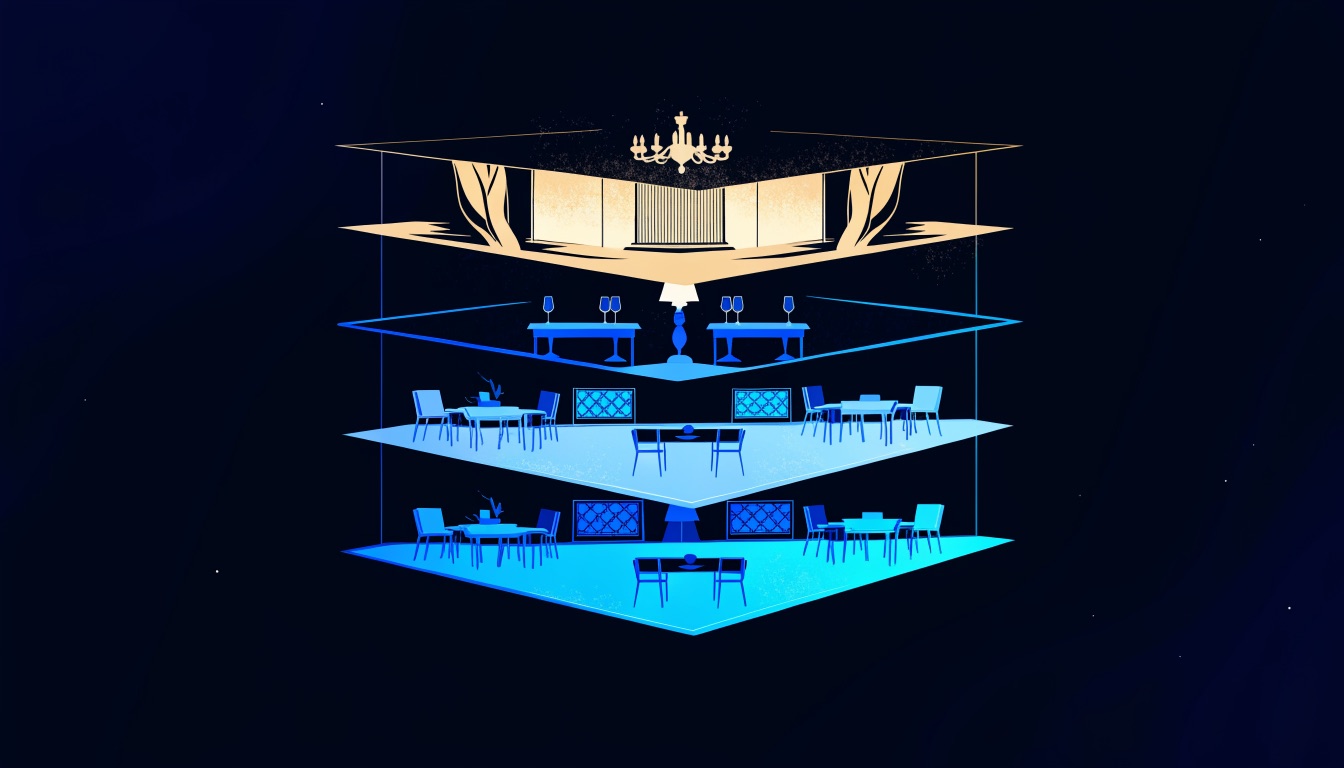
In the Five Layers framework I use to run Venetian, recognition is layer four, and it has a job none of the other layers can do. It's the layer that tells a guest the story, the environment, and everything else in the building were built for them specifically, and not for a customer profile that merely resembles them.
So. The name I lost.
For a long time I filed that night under embarrassment and tried not to replay it. When I finally did replay it honestly, the lesson wasn't where I'd assumed it was. I had been treating recognition as a memory feat. Names as inventory: hold enough of them and you're a professional, drop one and you've failed. But the forgetting wasn't the failure. Memory drops things. Every adult on earth knows this. No reasonable guest expects a bar owner to function as a census.
The failure was the cover-up. The extra fifteen percent. The choreography. Every move I made that night was designed to protect my performance, and not one of them was designed to honor his importance. He didn't need me to be good at names. He needed to matter, and for one evening I quietly made the whole exchange about whether I looked good at my job.
Which is the Carnegie observation turned exactly inside out, if you look at it squarely. The entire premise of recognition is that the guest's importance is the point. The dodge reverses the roles: suddenly the guest is a hazard to be managed and my reputation is the thing being protected. Hospitality with the polarity flipped. From across the room the two versions look nearly identical. From inside the conversation they feel nothing alike.
What I do about it now is unglamorous on both ends. I write names down, because the invisible layer can carry the inventory so the human in the room can carry the person. And when a name is gone anyway, because it will be, I say so. Some version of: I know exactly who you are, I know your drink, I know where you like to sit, and your name has fallen straight out of my head, please rescue me. It lands warmer than the dodge every single time. Not because it's charming, but because it's the attempt made visible, and the attempt is the product. Carnegie never promised anyone would be good at this. He just noticed what people are actually there for.
The drink was right that night. The seat was right. The lighting, the music, the whole machine I'd built around him: right. And the visit still ran fifteen percent too warm, because warmth was standing in for the one thing it can't replace. These days, when the door opens and a familiar face comes through, I still sometimes reach for a name and find the drawer empty. The difference is what happens in the next five seconds. Honestly, that might be the whole job. The next five seconds, and the decision, made well in advance, about whose moment this is.
Related: The Five Layers of Immersive Hospitality, Automate the Invisible, Humanize the Visible, Why Hospitality Should Change How You Feel.