The Mall Was Supposed to Be a Town
The man who invented the shopping mall spent the rest of his life explaining that everyone had copied the wrong part. A story about an architect from Red Vienna, a tax deduction, and what happens when the host is replaced by an accountant.
 Justin Bunnell18 min read
Some links in this piece go to Amazon. If you buy through one I may earn a commission, at no extra cost to you. It does not change what I recommend or what I think of it.
Why did we stop going to malls?
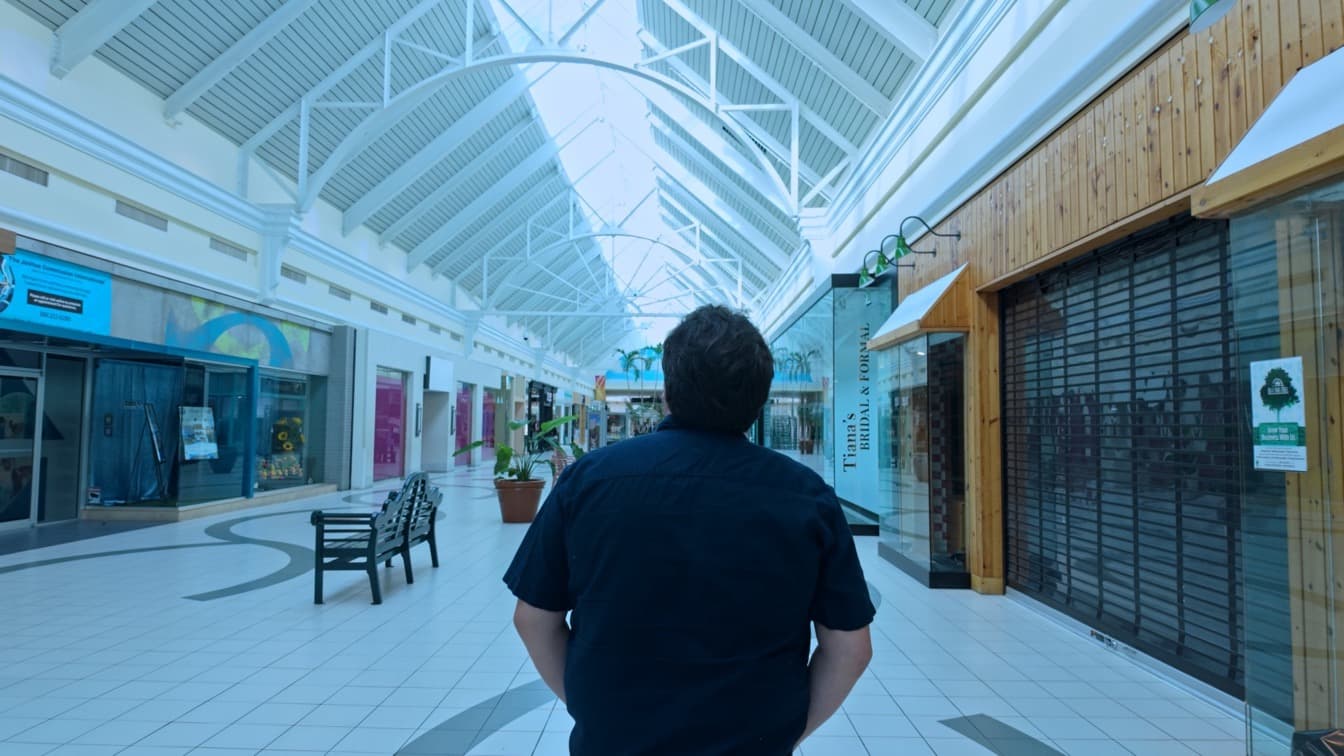
I keep coming at this one sideways, because I ran a cocktail lounge for years and I cannot look at a room any other way. And walking through a half-empty mall now, the thing I notice is not the vacancy. It is that the building does not seem to want me in it.
Look around one of these places. Dated decor. Papered-over storefronts. Almost nowhere to sit that is not the food court, and the food court is its own punishment. Pink and teal tile still on the walls from 1994, which at this point is less a design choice than a fossil record.
That is not how I remember them.
The mall I remember had toy stores. It had a fountain you threw coins into, and the one in Savannah had a merry-go-round in the middle of it. I went shopping with my mom and it was a treat, a whole afternoon, not an errand. Later I remember standing in the video store and the CD shop just reading the backs of boxes, running into somebody from school, talking to the kid working the counter about nothing.
Which is to say: a place to hang out.
That is what people mean by a third place. Somewhere outside home and work where you go on purpose, repeatedly, for no stated reason. I wrote about what happened to that idea in restaurants in The Slow Death of the Third Place, and this is the stranger sequel, because the mall is the case where somebody tried to build a third place deliberately, at enormous scale, and watched the good part get value-engineered out of the drawing before the concrete cured.
So I went looking for whether malls could have leaned into being somewhere to gather as the shopping drained online. And what I found was that gathering was the entire point from the very beginning.
The man who drew a town
The original mall concept belonged to Victor Gruen: a Viennese architect, a committed socialist, and a Jewish refugee who got out of Austria weeks ahead of the people who wanted him dead.
He got rich designing malls. He then spent most of the rest of his life trying to explain to everyone that they had copied the wrong part.
That story does not start in a store. It starts in Vienna, a hundred years ago.
Vienna in the 1920s was, in the most literal sense, a hospitality machine. In a Viennese coffee house one cup bought you the rights to a table for as long as you cared to sit at it. Hours. Every newspaper in the city was clipped to a wooden rod and free to read. No waiter would dream of bringing the check until you asked for it.
The coffee house was a public living room for people whose apartments were too small and too cold to spend the day in. The whole civic arrangement assumed you were supposed to stay.
One cup bought you the rights to a table for as long as you cared to sit at it.
And Vienna in the 1920s was something else as well. It was run by socialists. For fifteen years the city built enormous blocks of public housing, and built into them kindergartens, clinics, libraries and courtyards, on a premise that still sounds foreign in America: that a city owes its people somewhere to be that does not cost money. The most famous of those blocks, the Karl-Marx-Hof, runs more than half a mile and still houses people today.
Here is young Gruen in the middle of all that. By day he designed shop interiors. By night he ran a political cabaret in the back rooms of the city's cafes, satire and songs at the expense of the powerful, for an audience paying nearly nothing to sit there.
Before he ever drew a building, he already believed a city owed its people somewhere cheap to gather.
Then in March 1938 Germany annexed Austria. Gruen was Jewish, a known socialist, and ran a cabaret mocking precisely the people who had just taken charge. In Vienna that spring that was a death sentence.
A friend put on an SS uniform, drove Gruen and his wife to the airport, and walked them past the checkpoints onto a flight to Zurich. Zurich to England. England by ship to New York. He arrived, by his own telling, with an architecture degree, eight dollars and no English. He traded the family name Gruenbaum for something Americans could pronounce.
Southdale, and the part that got built
In 1952 the Dayton's department store family bought 500 acres of Minnesota farmland and asked Gruen to design a shopping centre.
Gruen drew them an entire town.
Apartments. Houses. Schools. A medical centre. A park. A lake. And at the heart of it a two-level square with a roof over it, so that people in Minnesota could have a Viennese afternoon in January. Red Vienna, redrawn for a cornfield outside Minneapolis, with a department store paying for the whole thing.
He said it plainly in print in 1960: the shopping centre should do what the agora, the town square, once did.
The point of the place was the agora. Not the register.
Southdale opened on October 8, 1956. Outside was a grey Minnesota October. Inside was 75 degrees, a skylight over the court, a goldfish pond, a 21-foot cage of tropical birds, and cafe tables with umbrellas on them — indoors, under a roof, for no reason except that Gruen wanted it to feel like a plaza.
That is a host spending money on your behalf. Nobody pays for a bird cage because the birds convert.
A month later Frank Lloyd Wright walked through it at 89 and said it had all the evils of a village street and none of its charm. Which is funny, and also not the problem.
The problem is what happened to the other 450 acres.
Officially Southdale Center was a shopping mall, the first enclosed climate-controlled one in the country. Of everything in Gruen's drawing, they built the shopping centre and the medical centre. In 1965 the rest of the land was sold off. Houses did go up on it, but not his houses. His plan had apartments and homes within walking distance of the square. What got built were ordinary subdivisions separated by a four-lane road, so you still had to drive there.
The agora survived. Everything that would have given it a population within walking distance did not.
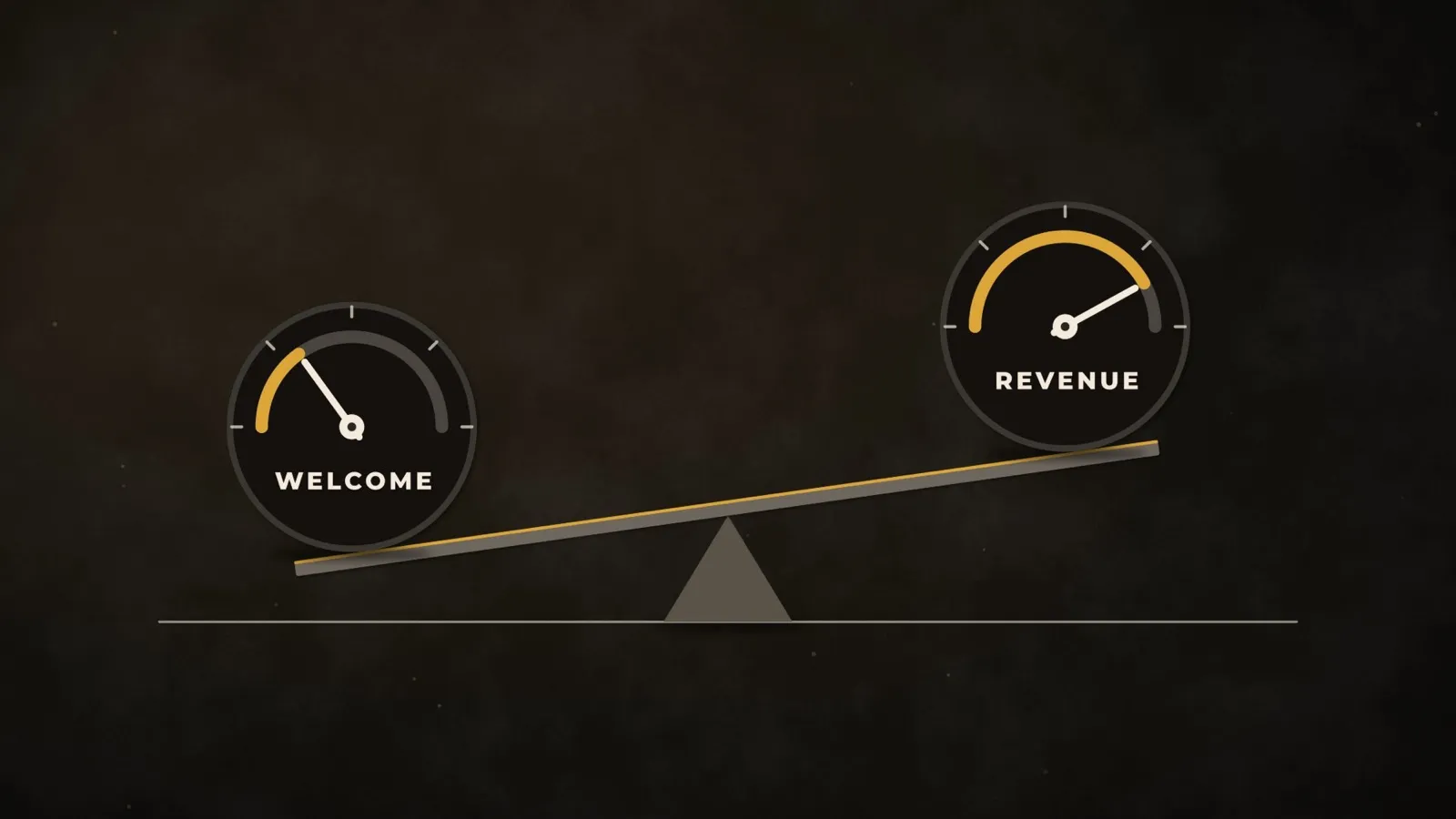 The question underneath all of this, and the one I have never fully solved myself.
The deduction that built the boom
There is a reason the stores got built and the clinic did not, and it is less about architecture than about the tax code.
If you own a building, the IRS treats it as slowly wearing out, and every year you subtract a slice of its cost from your taxable income. That is depreciation. In 1954, Congress expanded a provision called accelerated depreciation, letting owners of new commercial buildings claim a much larger share of that cost in the early years.
Which produces an arrangement that sounds like a typo. Year one, the mall collects two million in rent. You subtract three million in depreciation. On paper the building lost a million dollars, and the loss shelters other income.
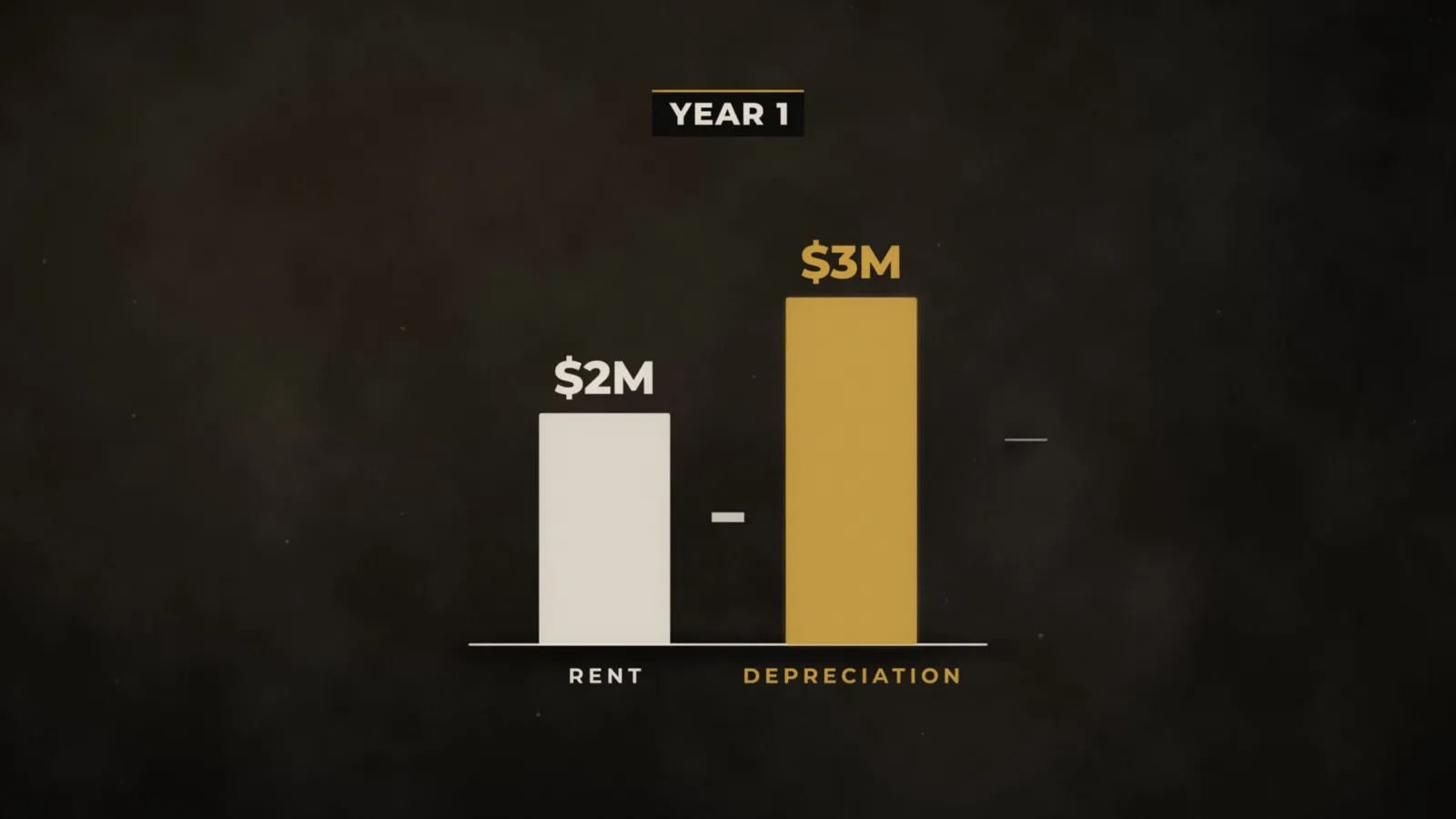 On paper, the building lost money. That was the point.
The historian Thomas Hanchett made this argument in the American Historical Review in 1996, in a paper called U.S. Tax Policy and the Shopping-Center Boom of the 1950s and 1960s. His case is that accelerated depreciation turned real estate development into a tax shelter, and that because the break applied to new construction and not to renovating what already existed, it pointed every dollar away from existing downtowns and toward raw suburban land.
I want to flag the counterargument, because it ran in the same forum and it is a fair one. Kenneth Jackson's response was essentially that Hanchett pushes it too far: downtowns were already emptying, and the tax code accelerated a departure that was happening anyway. That reads right to me. A tax break does not invent a desire. It decides how fast and in what shape the desire gets built.
Either way, look for the guest on that business plan.
There is no line for the pond. No line for the birds. No line for whether the fourteen-year-old has anywhere to go on a Saturday. The host has been replaced by an accountant, and the accountant is not a villain, he just has a spreadsheet with no row for welcome on it.
Twenty-five shopping centres opened in 1956 and Southdale was one of them. Gruen's firm designed more than fifty malls over the next twenty years, with imitators behind them. The peak came in 1973: forty-three new malls in a single year.
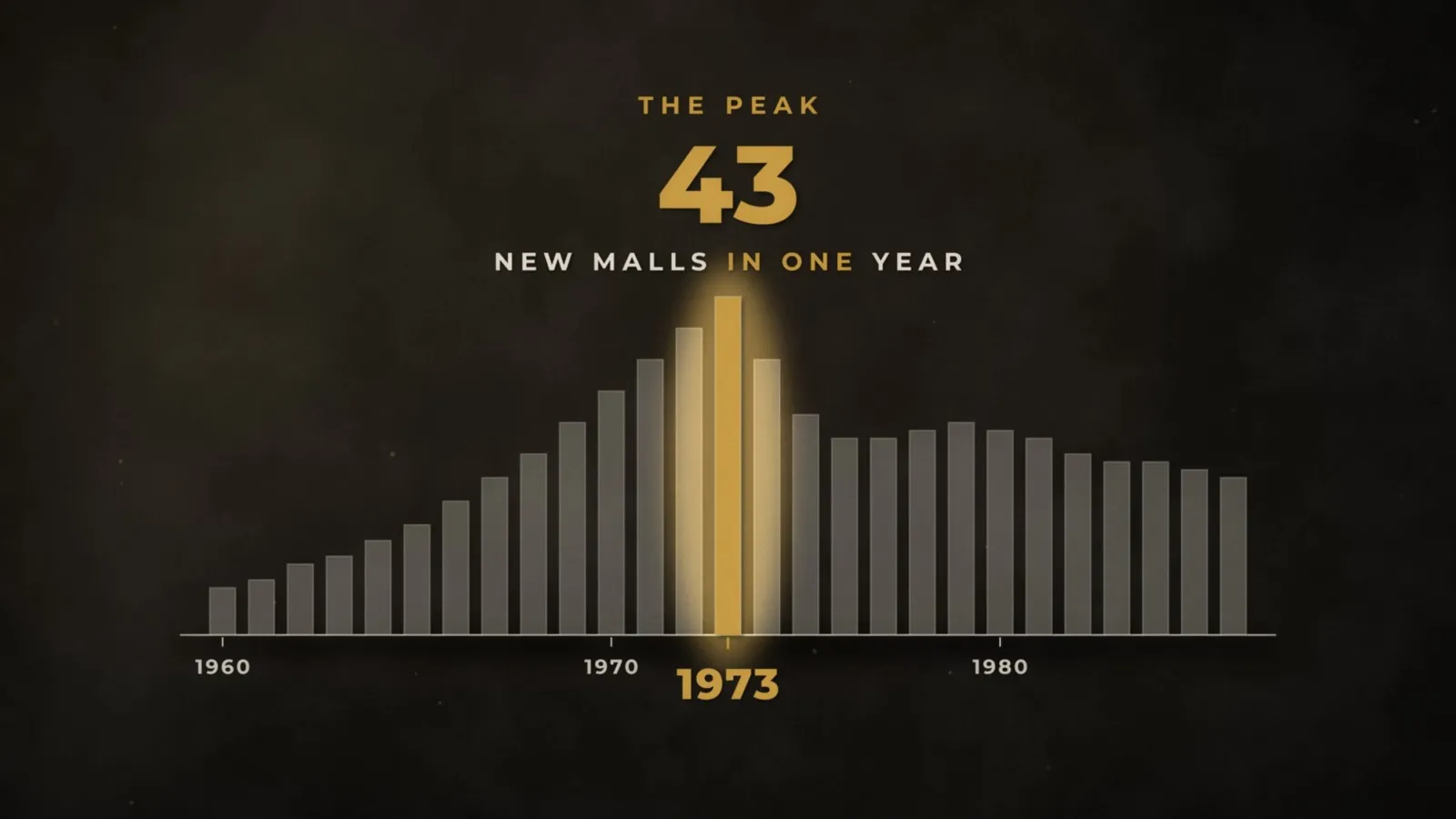 Forty-three in one year. Then the line starts coming down and never goes back up.
How the building learned to keep you
To keep collecting rent you needed stores that stayed in business, and those stores needed people walking past them.
So you put a department store at either end and the small shops in between, and anyone travelling from one anchor to the other has to walk the whole gauntlet. The industry calls it a dumbbell. It is a machine for manufacturing footfall out of errands.
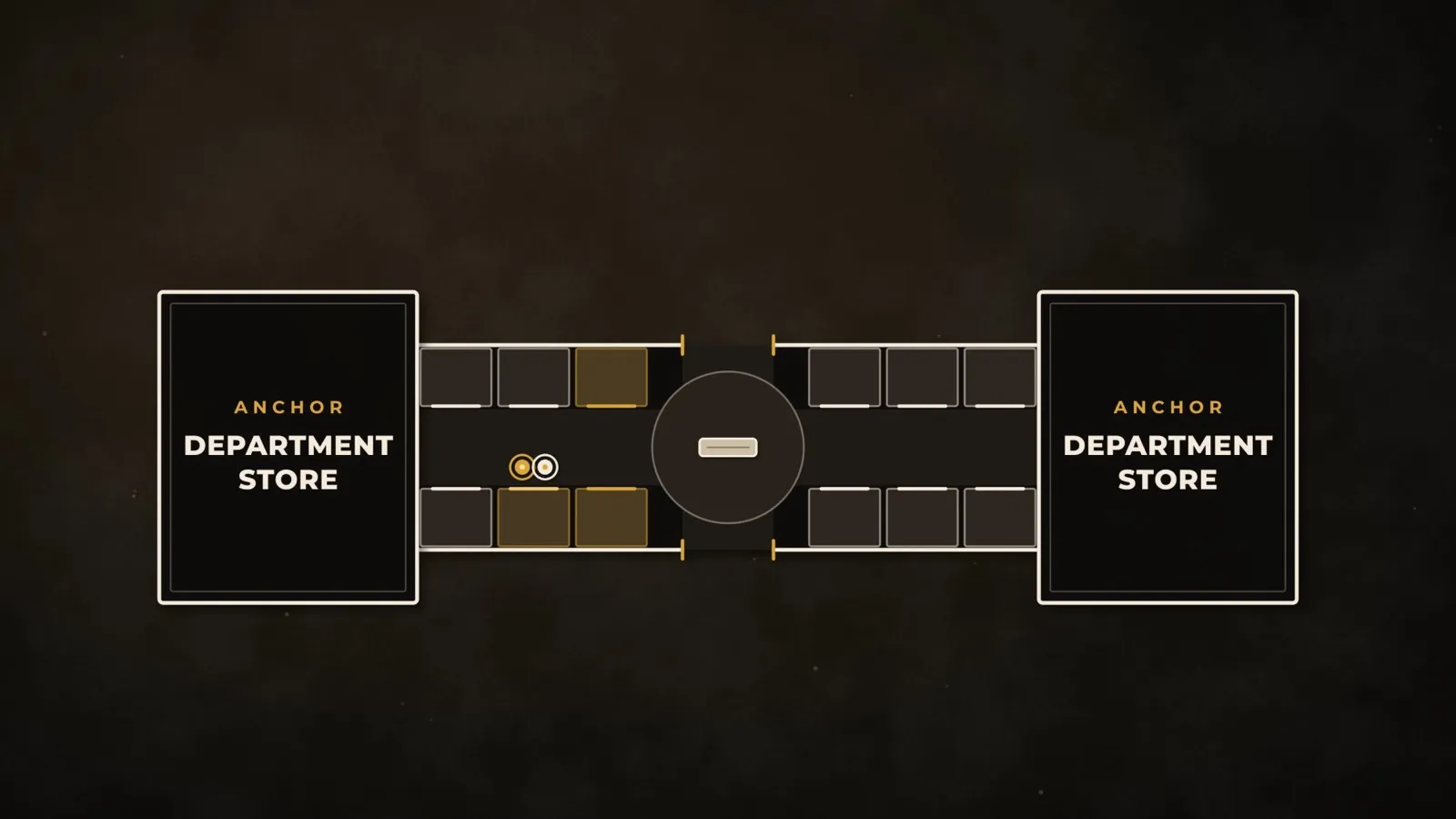 The dumbbell. Two anchors, and everything else in the walk between them.
And years later the industry named something after Gruen that he would not have chosen: the moment a building becomes so absorbing that you forget what you came in for.
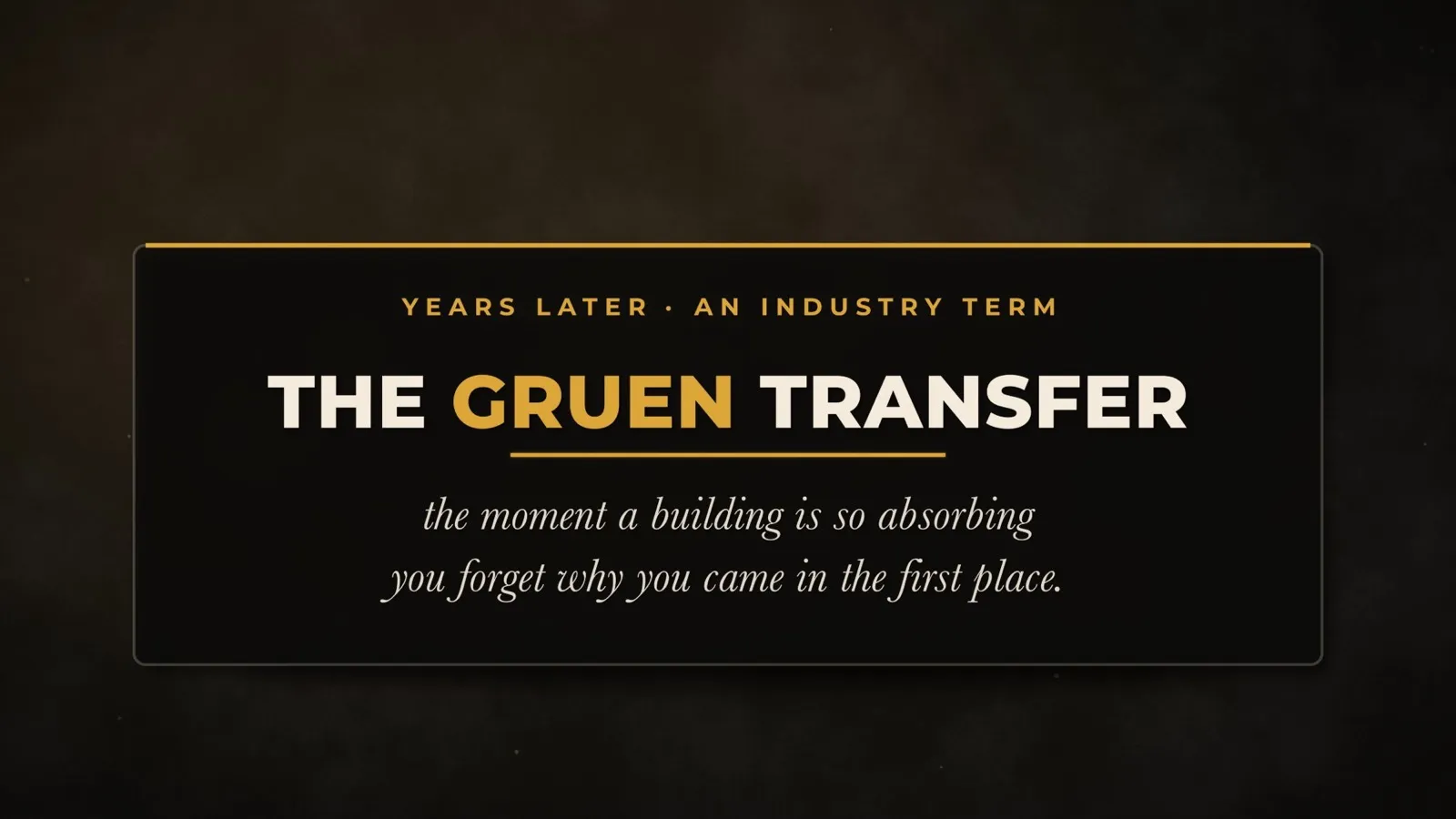 Named for the man who wanted the opposite of it.
The Gruen transfer. He wanted you to linger because lingering is good for a person. The industry kept the lingering and attached it to a register.
Then there is what the store itself was paying, which is where the whole thing turns.
A store in a mall did not just pay rent. It paid base rent that escalated three to five percent a year whether sales went up or down. On top of that it paid its share of common areas, property taxes, a marketing fund, and often a cut of its own sales. Analysts call the total the occupancy cost, and in a mall it ran somewhere between nine and sixteen cents of every dollar that came through the till.
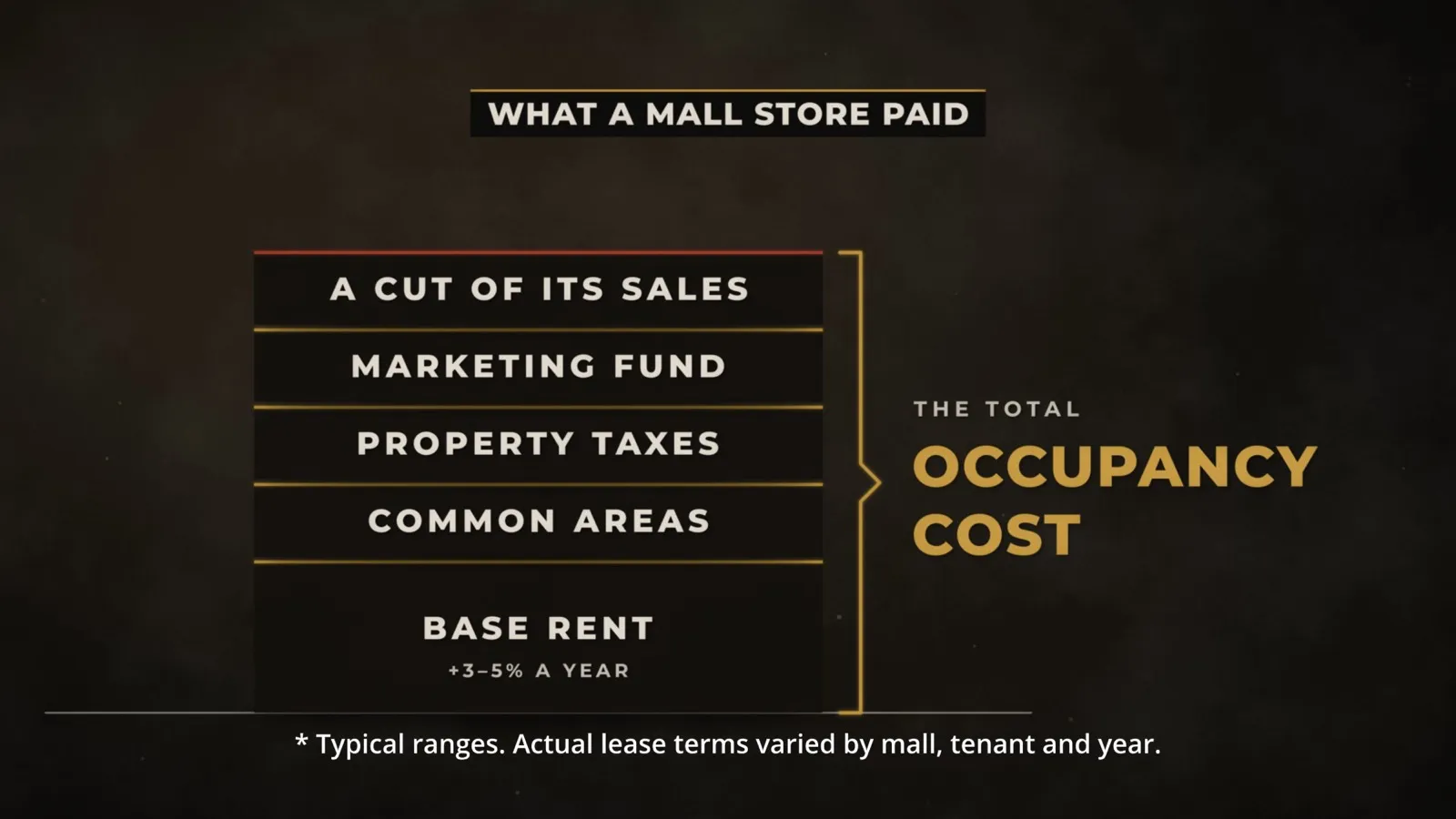 Nine to sixteen cents of every dollar, before the store has bought a single thing to sell.
So the store does not need you to browse. It needs you to spend.
And once that is the arithmetic, a visitor who does not spend stops being a guest and becomes a liability. The kid on the bench. The retiree doing laps before the stores open. The family that came in to get out of the heat. The building has no mechanism to make money from any of them, and every one of them is occupying a square foot that costs somebody something.
Gruen's position had been that the merchant should pay for the fountains, because the fountains are what made the place worth coming to in the first place. That is a hospitality argument, and it only survives as long as somebody is willing to carry a cost they cannot directly attribute to a sale.
The rules followed the arithmetic. In 1996 the Mall of America introduced a Friday and Saturday evening restriction: after six, anyone under sixteen had to be with someone twenty-one or older. That applied to kids who had done nothing wrong and simply wanted to be there. Which is a hard thing to get right, and I do not think it was done out of malice — but it is a strange destination that has to put a rule on the door against the exact behaviour it spent forty years teaching people to enjoy.
The plan that was never built
The same year Southdale opened, Gruen handed the city of Fort Worth a plan to save its downtown. A highway loop around the edge with big parking garages on it, so you park at the perimeter and walk in. Deliveries in tunnels underneath. The streets in the middle closed to cars entirely and handed back to people on foot.
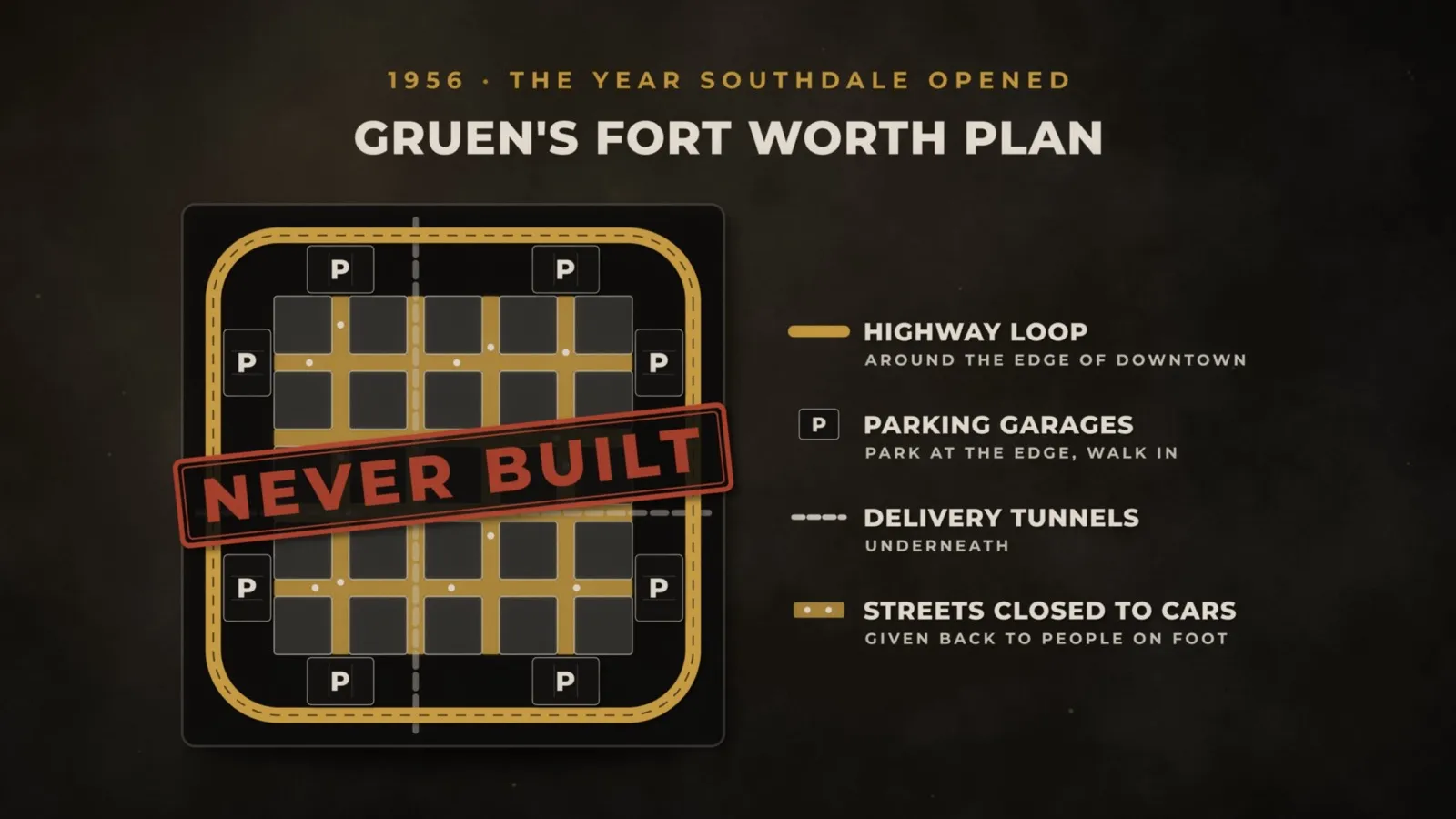 Park at the edge, walk in, deliveries underneath. 1956.
It was never built.
But if that sounds oddly familiar to anybody in the Orlando area, there is a reason. Gruen put the same ideas into a book in 1964, and Disney's design chief Marty Sklar has said Walt kept a copy of it on his desk. Two years later Walt pitched EPCOT: a road around the edge, trucks underground, an enclosed pedestrian centre.
That was not built either, which I have written about separately in Walt Disney Built Worlds. It is remarkable how consistently this particular idea gets drawn, admired, and then cut.
In 1968, at sixty-five, Gruen gave up and went home to Vienna. He helped close some European city centres to cars, and those centres are still car-free and still full of people. Meanwhile, on the edge of Vienna, a shopping mall started going up.
In 1978 he gave a speech in London to the International Council of Shopping Centers and was introduced, once again, as the father of the shopping mall. He opened by saying he would like to take the opportunity to disclaim paternity once and for all, and then delivered the line he is now mostly remembered for: that he refused to pay alimony for those bastard developments, which had destroyed American cities.
It is a great quote, and it deserves a caveat. His biographer, M. Jeffrey Hardwick, cautions taking it with a grain of salt, and I think that caution is the honest part of this story.
Because here is the uncomfortable shape of it. The man from Red Vienna made his fortune on the one part of his plan that paid: the stores. The parts he actually cared about — the housing, the school, the park, the clinic — were the first things cut, precisely because they did not pay. The developers kept the register and threw away the agora.
And Gruen cashed the check. He helped build the industry he spent his last decade denouncing. Both of those are true at once, and an essay that only tells you the second half is flattering him.
What actually happened to the money
The tax advantage went away in 1986, when the Tax Reform Act stretched commercial depreciation out to thirty-one and a half years and the shelter stopped sheltering.
Then the competition arrived from every direction at once. Big box stores took the volume. Amazon and online retail removed the reason to make the trip at all. Department stores lost business and closed locations, and in a lot of markets there was simply more retail square footage than the population could ever support.
In 2006, exactly one new enclosed mall opened in the United States: the Mall at Turtle Creek in Jonesboro, Arkansas, on March 29.
The real estate firm Green Street tracks what is left. Roughly 200 malls have closed since 2008. The top hundred are worth about as much as every other mall in the country combined. The best are around 95 percent leased; the worst sit near 72.
And the decline compounds in a way that is specifically about the dumbbell. When an anchor closes, the small shops lose the foot traffic they were renting access to. As more shops go dark, the people still showing up find fewer reasons to come back, which takes out more shops. The layout that manufactured browsing runs just as efficiently in reverse.
What I think the miss was
Picture going to a mall just to meet a friend. And because you are already there, you wander into three stores you had no intention of visiting.
That trip did not depend on any particular department store. You chose the mall because it was a good place to meet.
I wonder how many malls could have built on that as the shopping moved online — not as a marketing line, but as the actual product. Some properties have found other uses, and they are genuinely clever. At 100 Oaks in Nashville, Vanderbilt turned part of the mall into a medical campus. At Highland Mall in Austin, students started taking classes in the old JCPenney in 2014, after Austin Community College converted it into a campus with a learning lab of more than 600 computer stations. At Alderwood Mall in Lynnwood, Washington, the old Sears site was redeveloped with shops and 328 apartments.
Those are useful ways to adapt a building. But going to a class or a doctor's appointment is not quite what I mean by having somewhere to hang out. Those are errands with better architecture.
The closest thing I found to the real article is at Lake Forest Park Town Center in Washington, where Third Place Books opened in 1998 next to a gathering space with cafes and a stage. The community organiser Anne Stadler wrote about it in 2005: people met friends there, played games, listened to music. It worked, in the sense that mattered to the people using it.
She also described its financial problems.
Which is the whole question, and I am not going to pretend I have solved it. How do you make a community gathering space and make it pay at the same time? In that case, local residents eventually formed a nonprofit to support Third Place Commons, working with businesses and other partners. The place mattered enough that people organised to keep it alive. That is a wonderful outcome and it is also an admission: the room could not carry itself on its own economics.
I know this one from the inside.
We ran an open mic night at my own place. People came in to share their music, and I loved it, and it was never a busy night. Folks would buy one or two small things just to have something in front of them. Some of them brought their own food in. The room was full of exactly the people I had built the room for, and the night did not make money.
A full room does not mean a profitable room.
That is the sentence I keep coming back to, because it is the thing nobody tells you before you sign a lease. The store still needs sales. Somebody still has to cover the cost of the building. A busy room and a profitable room are two different measurements and they come apart more often than anyone admits.
But I do not think making people feel welcome and making money are competing goals. I think they are on different clocks. Welcome pays slowly, in people who come back and bring somebody, and the lease is due monthly. Most of the damage in both of these stories — the restaurants and the malls — comes from the gap between those two speeds, and from measuring with the faster one because it is the one that fits on a spreadsheet.
Amazon changed retail permanently and I am not going to claim a nicer room would have saved every mall. It would not have. But I wonder how many more of them could have adapted if somebody in the room had been arguing for the fountain.
When I think back to those afternoons with my mother, walking around a building that had been designed, by an exile from Vienna, on the theory that a city owes its people somewhere to be — I would like to see more people trying to give that to somebody. I know how hard it is. I have stood in the full, unprofitable room.
It is still worth building.
Related: The Slow Death of the Third Place, What a Listening Room Taught Me About Human Attention, and Walt Disney Built Worlds.

What would this look like in your business?
Turn ideas about atmosphere, service, storytelling, and customer experience into a practical plan.
Explore ConsultingWatch the next idea unfold.
Subscribe for films and ideas about hospitality, creativity, and the experiences businesses create.
Subscribe on YouTube (opens on YouTube in a new tab)