Vegas Stopped Betting on the Guest
The same number of people come to the Strip as in 2011, and they pay a quarter more to be there. The reason is not greed, or at least not only greed. It is underneath the buildings.
 Justin Bunnell19 min read
Some links in this piece go to Amazon. If you buy through one I may earn a commission, at no extra cost to you. It does not change what I recommend or what I think of it.
On 31 July 1969, Elvis Presley walked on stage at the biggest hotel in the world. A ticket cost fifteen dollars and dinner came with it.
In 2025 I was looking at my own receipts from the same city. Six hundred dollars a seat for a show. No dinner.
The easy read is inflation plus greed, and I wanted that to be the answer, because it is a satisfying one. Fifteen dollars in 1969 is about a hundred and thirty in today's money, so the gap is real but it is not six hundred. Somewhere in between is a decision somebody made.
I spent my life savings building a small cocktail lounge in Vermont, so I cannot look at a room like this any other way. Vegas beat up my wallet. Twenty-five dollar cocktails, parking fees, two hundred dollars gone at the craps table in about the time it takes to order a drink. What hooked me anyway was the audacity of it. Somebody built all of this in the middle of a desert.
And for a long stretch, the rule on that street was simple. Build a spectacle out front, give it away, and trust that enough people walk inside.
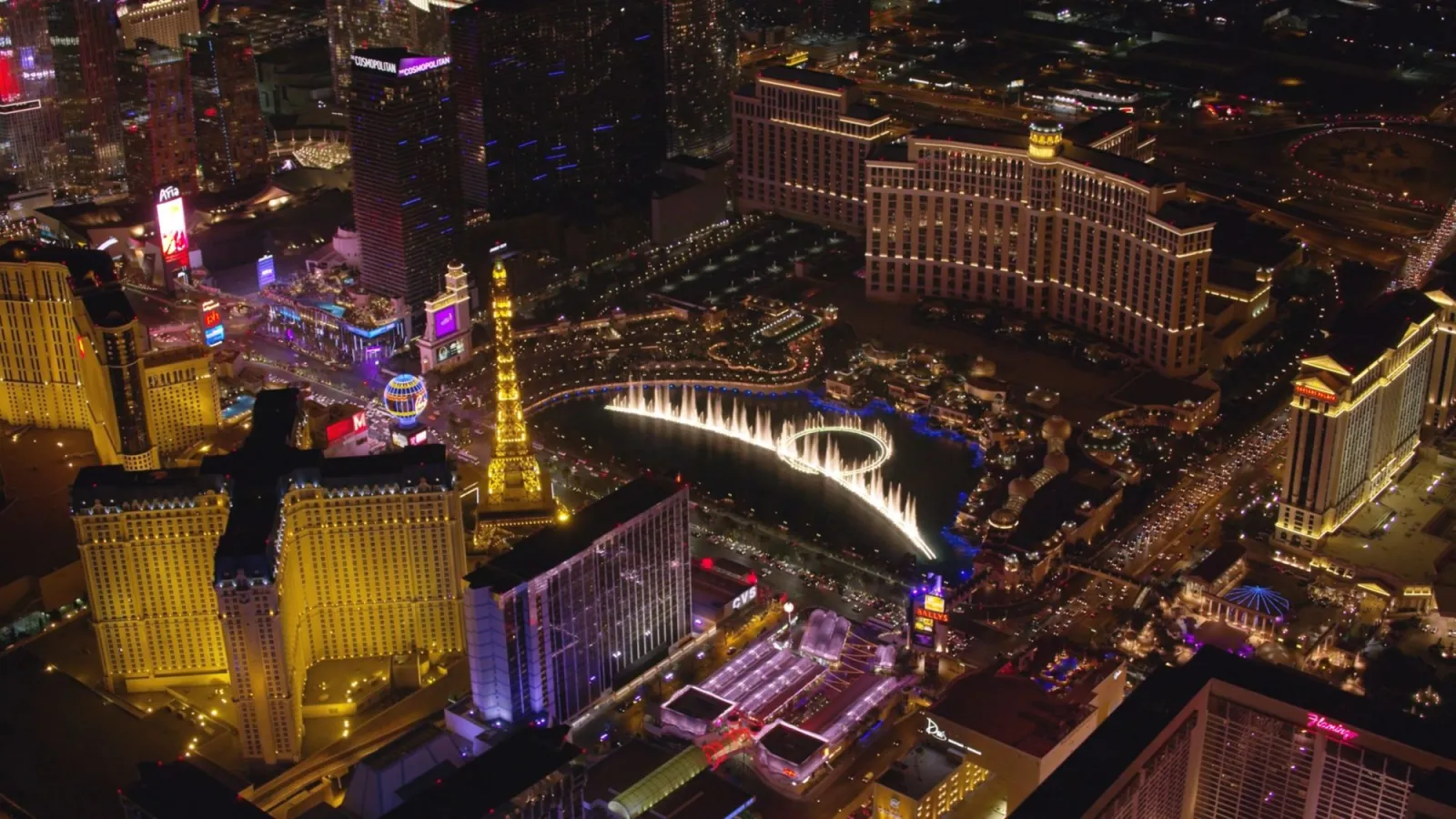 The fountains still run several times an hour, for people who are only walking past.
That rule is mostly gone now. I went looking for the greedy executive who killed it, or for COVID, and what I found instead sits underneath the buildings.
The same crowd, a quarter more money
Start with the number that made me reread the page.
In 2011, 38.9 million people visited Las Vegas. In 2025, fourteen years later, 38.5 million showed up. Nearly the same crowd. Visitors actually peaked in between, at 42.9 million in 2016, and have been coming down since.
In those fourteen years the city tore down a volcano, sank a pirate ship, started charging for parking, and collected billions more from the same number of people.
The average room was $105 a night in 2011 and $184 in 2025. Take out inflation and that is still 22% more. Food and drink per trip went from $275 to $538, which after inflation is 48% more. Everything the Strip takes in, gambling and rooms and shows together, grew about 25% after inflation between 2011 and fiscal 2024.
Same size crowd. A quarter more money.
The city stopped growing in 2016 and has been raising the price on the same visitors ever since.
Here is the part that surprised me most. Gambling barely moved. Casino winnings grew 4% after inflation in thirteen years. Room revenue grew 55%.
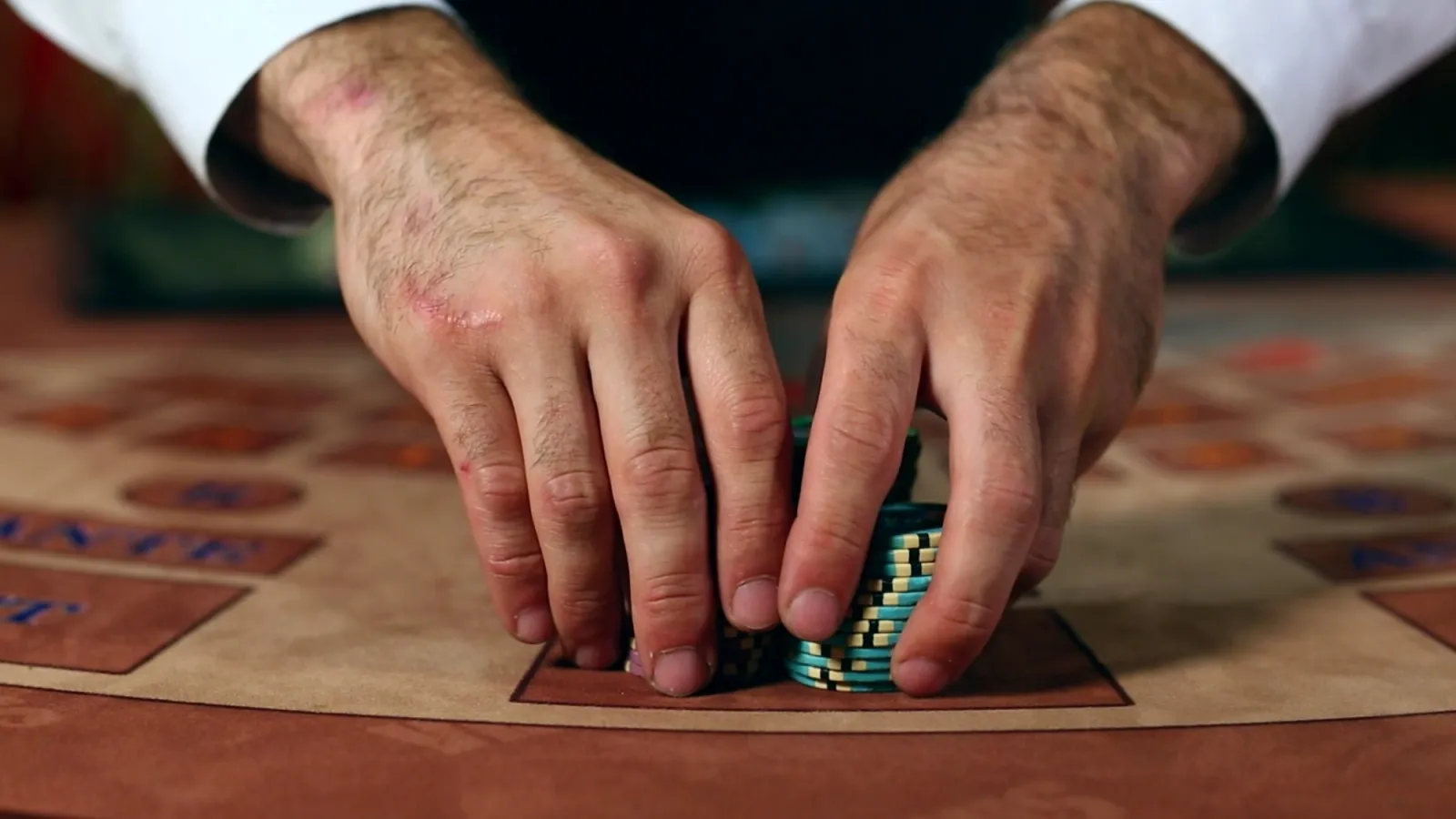 Four percent in thirteen years. The tables stopped being where the growth was.
The casino used to be the business and everything else existed to walk you past it. That is no longer what the ledger says.
The old trade
For most of its history the Strip ran on one trade: the casino made the money, and everything else was bait.
In December 1954 the Sahara put Louis Prima in its lounge, with the stage facing the casino floor on purpose. You could watch what became the hottest act in town for the price of a couple of drinks. The show was not the product. The show was the doorway.
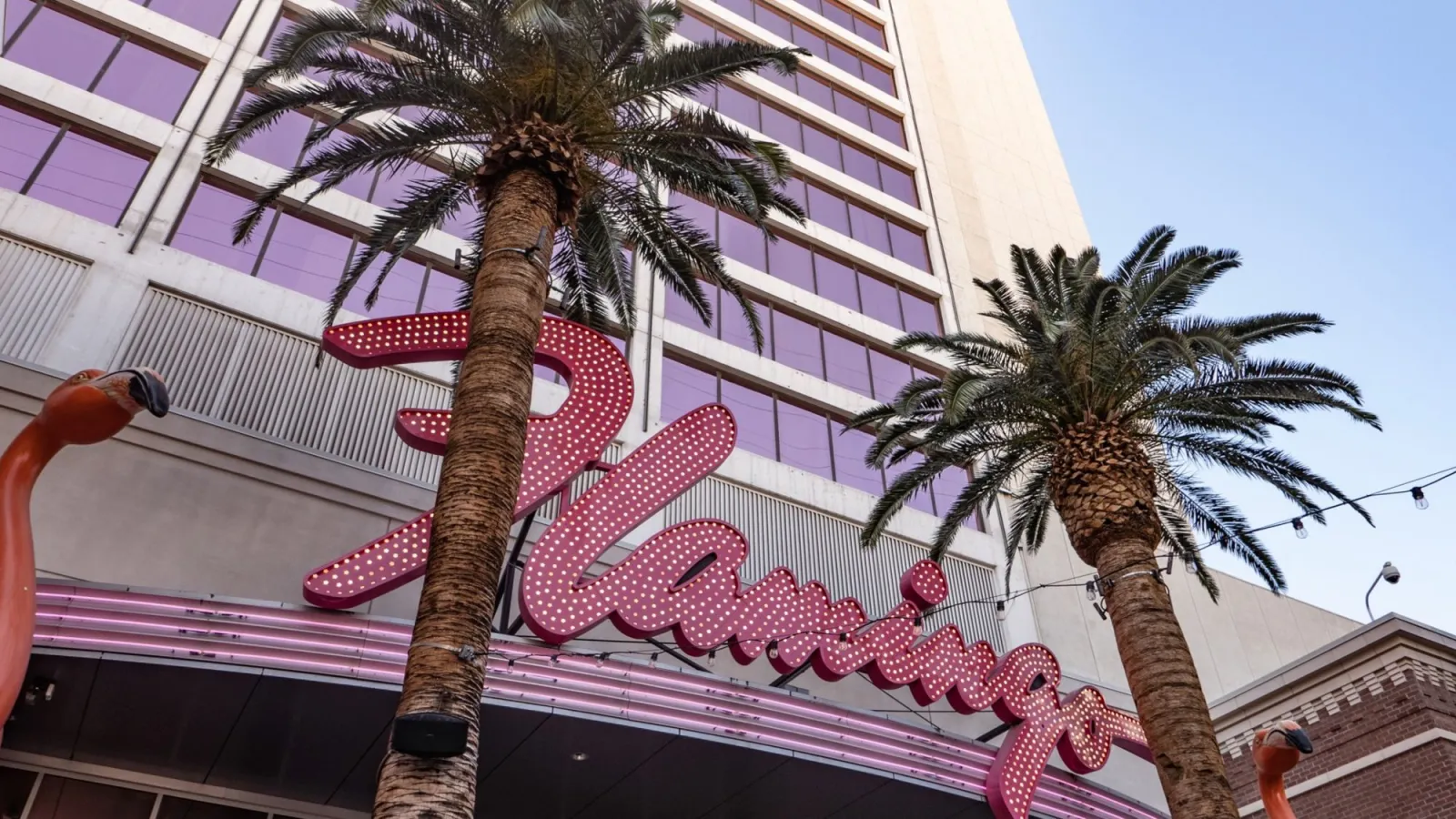 The era when the sign out front was the whole pitch.
Fifteen years later Kirk Kerkorian opened the International, the largest hotel in the world at the time, with a showroom seating about two thousand that he needed filled twice a night. He booked Elvis. Elvis played 636 shows there between 1969 and 1976 and every one sold out. Tickets started at fifteen dollars, the highest price in town. The early show came with dinner and the midnight show came with drinks.
Think about what that actually did for Kerkorian. Two thousand people walked out of that showroom into his casino at ten o'clock, and two thousand more did it again after midnight. The show brought the crowd. The casino took care of the rest.
Hold onto Kerkorian. He turns up twice more.
The man who spent money on strangers
In the last piece I wrote, about what happened to the shopping mall, the architect Victor Gruen argued that the merchants should pay for the fountains, because sometimes the fountain is the reason anybody came. We all saw what happened to the malls.
One casino owner did exactly what Gruen was talking about, and did it to the nines.
Steve Wynn was an avid Walt Disney fan and a believer in the all-American spectacle, and he built some of the best public attractions the city ever had. On 22 November 1989 he opened the Mirage. It cost $630 million, more than anyone had ever spent on a casino, and most of it was financed with junk bonds. The Mirage had to make a million dollars a day just to cover its debt, and plenty of people expected that not to work out for him.
So he took the best part of that land, the strip of it right on the sidewalk, and built a volcano. After dark it erupted every fifteen minutes. You did not have to be a guest. You did not have to walk in. Traffic on the Strip slowed down to watch.
That first December, the casino alone made about $1.3 million a day.
Then he kept going. Treasure Island in 1993, with a pirate battle out front and a ship that sank several times a night. The Bellagio in 1998, with a $40 million fountain system putting on a synchronised show, free to anybody standing on the sidewalk. To build them he hired a company called WET, started by three former Disney Imagineers, whose founder had built the leaping fountains at EPCOT.
Inside, he charged more than anybody. He signed Siegfried and Roy to a five-year, $57.5 million contract before the Mirage had even opened, and built them their own theatre. Tickets were about sixty dollars, a price the Strip had never seen. They did 5,750 shows.
Free outside. Expensive inside.
So here is a man up to his neck in debt, spending real money on strangers who have not given him a penny and some of whom never will, and the places were a massive success anyway.
That sounds like a very good host to me.
The thing a host understands that a spreadsheet does not: the free part is not charity, it is the reason the paid part has anybody in it.Why the free part stopped making sense
After the Mirage, it seemed like every new resort needed something out front. That lasted about ten years.
In 2000, Kerkorian bought Wynn's whole company for $6.4 billion. In 2005 his MGM bought Mandalay Resort Group for $7.9 billion, and with that purchase nearly half the hotels on the Strip belonged to one company. The same year, Harrah's finished buying Caesars for $9.4 billion.
Now look at the free volcano again.
When every resort has a different owner, a free spectacle out front is how you win attention away from the place next door. When two companies own the entire street, the person standing at your fountain is probably just going to wander into another one of your own properties. You are paying to move a guest from your left pocket to your right.
The first one to quit the free show was Wynn himself. He opened Wynn Las Vegas on 28 April 2005 and put a 140-foot mountain between his lake and the street. He told Time magazine: "The audience shouldn't be on the sidewalk. It should be inside, eating, drinking, gambling and shopping."
The man who invented the sidewalk show decided the sidewalk show was over.
Twenty-one billion in, a hundred and fifty-four million kept
This is the number I had to read a few times.
In the fiscal year ending June 2025, the casinos on the Strip took in $21 billion. They kept $154 million. That is seven tenths of one percent.
The casinos downtown on Fremont Street made more profit than the entire Strip.
 Downtown, where nobody sold the building.
In the piece I wrote about restaurants I said the restaurant business runs on about a nickel per dollar, which is thin enough to keep an owner awake. In fiscal 2025 the Strip ran on less than a penny.
So where does $21 billion go? Some of it went to workers, who won real raises in 2023. Over $2 billion went to interest on casino debt. And some went to a bill that barely existed before 2016.
The investor who lost and got his way anyway
That bill starts with an investor from Connecticut named Jonathan Litt.
Litt runs a firm called Land and Buildings, and the name is the whole philosophy. In early 2015 his firm owned less than 1% of MGM. He had no power to make anybody do anything. He could make his case in public and hope the shareholders listened.
What he saw was simple. Wall Street priced MGM as a casino company, and casinos are a roller coaster: one slow convention season and the profits swing. Investors do not pay much for roller coasters. But MGM also owned the ground under the Bellagio, the MGM Grand and Mandalay Bay, and the stock gave it almost no credit for that.
His pitch was to cut the company in two. One half runs the casinos. The other half owns the buildings and collects the rent. Rent on a thirty-year lease is steady, and investors pay a great deal more for steady than they do for exciting.
MGM stock was around $20. Litt said the real estate alone made each share worth at least $33.
MGM said no, and it turned into a fight, and then into an election campaign for seats on the board. Litt put up a website called Restore MGM and went after management by name. Then Kerkorian weighed in for the third time in this story. He was 97 years old, his company still owned almost a fifth of MGM, and he backed the board.
On 19 May 2015, nine days before the vote, Litt walked away.
In April 2016, eleven months after he gave up, MGM did his plan anyway. Ten properties, seven of them on the Strip, went into a new landlord company.
Caesars got to the same place the hard way. Private equity bought it in 2008 for about $30 billion, mostly borrowed. The operating company went bankrupt in 2015. When it came out of bankruptcy in October 2017 the buildings belonged to a new landlord called VICI, and Caesars Palace has paid rent ever since.
Then MGM sold more. The Bellagio went to Blackstone in November 2019 for $4.25 billion. The MGM Grand and Mandalay Bay went together in February 2020 for $4.6 billion. Aria and Vdara followed in 2021 for $3.89 billion. In April 2022, VICI bought MGM's entire real estate company for $17.2 billion.
Where a landlord finds seventeen billion dollars
I wondered where a landlord gets that kind of money so easily, and the answer is a little strange: it raises it, and a lot of it comes from ordinary people.
Blackstone bought the Bellagio through a fund that sells shares to everyday investors. By November 2019 that fund had raised $11.5 billion. The cash for the Bellagio came out of that pool and the rest was borrowed.
Investors lined up because of the rent. The Bellagio's rent started at $245 million a year against a $4.25 billion purchase, which is close to 6% a year from rent alone before anything else happens.
And the billions MGM collected? A lot of it went to buying back its own stock.
The rent comes due whether anybody shows up or not.
In the spring of 2020 every casino in Nevada was closed for 78 days. VICI's chief executive later told investors that in 2020 "we collected 100% of our rent in cash and on time."
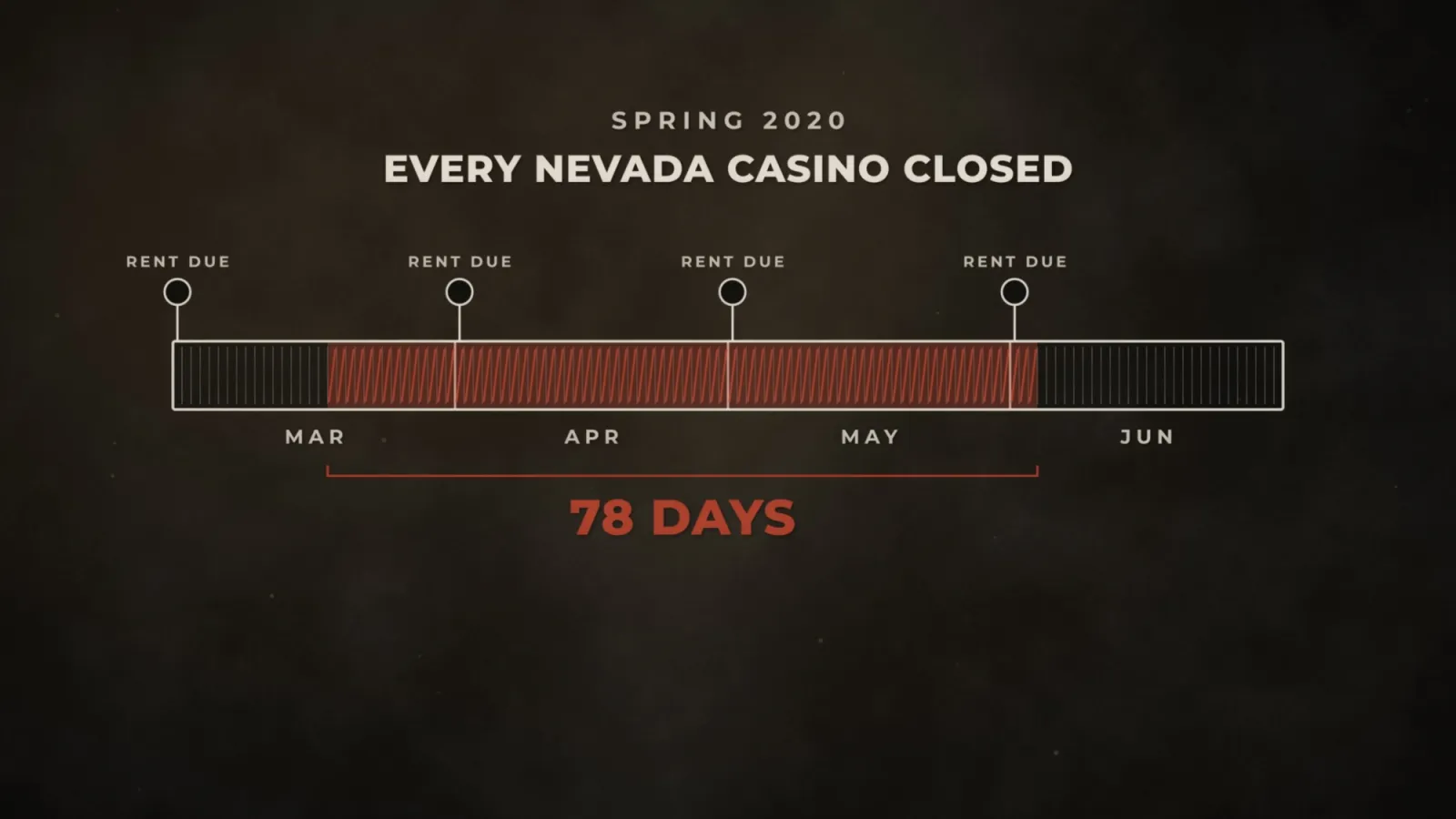 Four rent days landed inside the shutdown. All four were paid.
By the end of 2025, MGM was renting the Bellagio, Aria, Vdara, the MGM Grand, Mandalay Bay, Park MGM, New York-New York, Luxor and Excalibur, plus the Cosmopolitan, which it took over in 2022 without ever owning the building. By my count that is every resort MGM runs on the Las Vegas Strip. I could be wrong about that, and if I am, tell me.
Add the casinos in other states and MGM's own annual report says that at the end of 2025 it owed its landlords $1.8 billion in rent for the year ahead. The same report carries a warning for investors: MGM says it is required to pay a significant portion of its cash flows as rent.
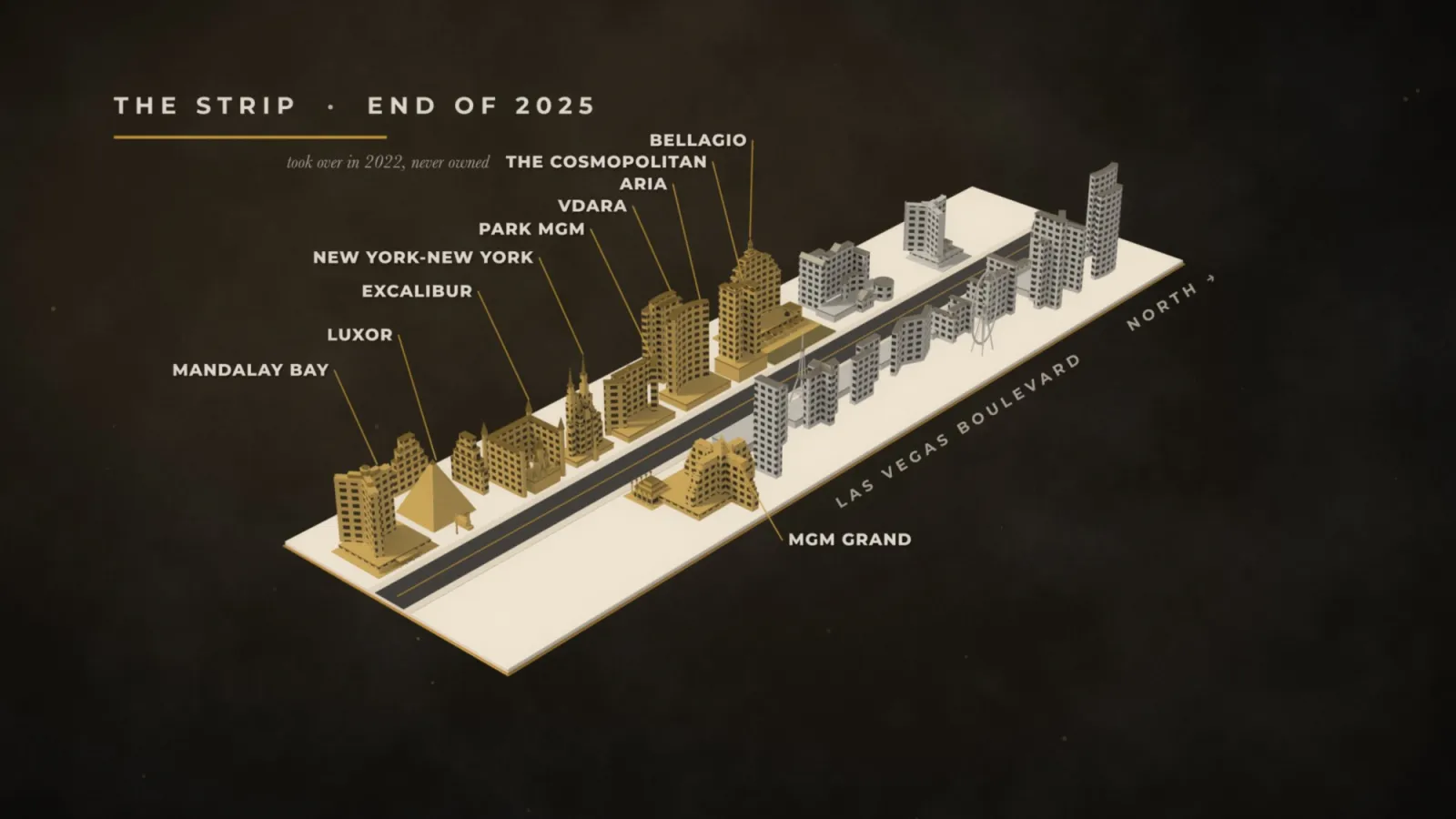 Every resort MGM runs on the Strip, and it owns the ground under none of them.
Nine billion dollars of buybacks and a stock that did not move
MGM's chief executive said the money from selling the Bellagio would go toward what he called a "fortress balance sheet," meaning pay down debt and pile up cash, and that the rest would go to shareholders.
It did. From 2021 through 2025, MGM spent over $9 billion buying its own shares and cancelling them. Fewer shares means each one is a bigger slice, so the price should go up. MGM cut its share count almost in half.
The stock barely moved. In November 2019, the week the Bellagio sold, MGM traded around $31. In November 2026 it was around $33. The whole company was worth about $8.5 billion, which is less than it had spent buying its own stock.
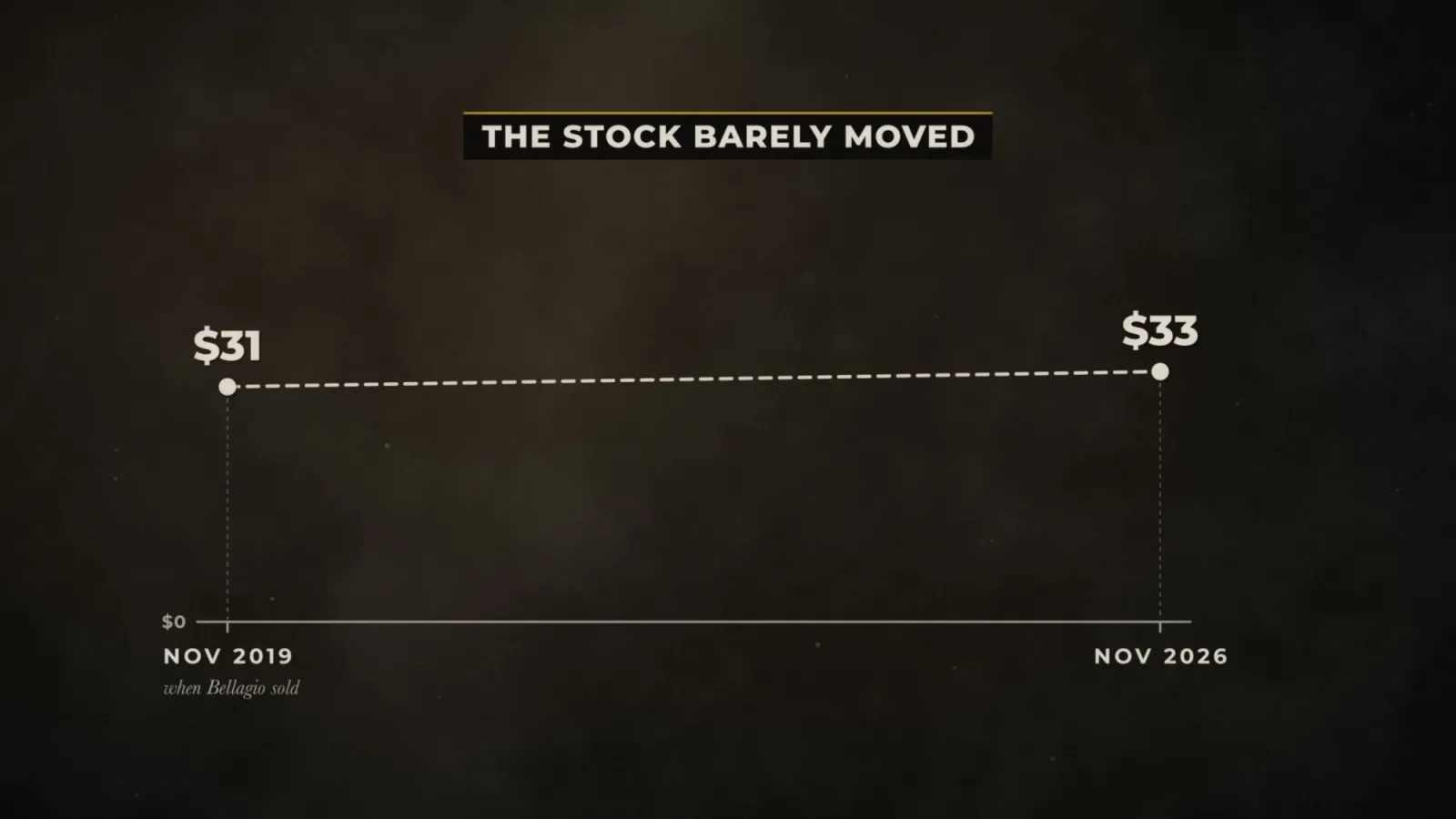 Nine billion dollars of buybacks, and this is the line.
To be fair, it jumped once. In June 2026 Barry Diller's company, which already owned about a quarter of MGM, offered $48.30 a share for the rest and to take it private. His reasoning sounded a lot like Litt's: the market was not giving MGM's assets full credit. He withdrew the offer that September and the stock fell back.
And there is a coincidence I cannot leave alone. Thirty-three dollars a share is what Litt said MGM's real estate alone was worth back in 2015. Eleven years later the real estate is sold, half the shares are gone, and the stock is sitting at thirty-three dollars.
The landlords did better. Blackstone bought the Cosmopolitan for $1.73 billion in 2014 and sold it for $5.65 billion in 2022, and called it the most profitable single asset sale in its history.
What a fountain becomes when the rent is that high
I went back through the announcements looking for the guest.
I found "fortress balance sheet" and "unlocking value," and almost nobody talking about the people checking in. I do not think anyone set out to make your trip worse. The deals were simply about something else.
Then you start thinking about what a fountain becomes when the building under it carries a rent that climbs about 2% every year.
On 22 May 2017 the columnist Robin Leach reported that MGM executives had discussed draining the Bellagio lake for shops and restaurants. MGM denied any such plan the same day, and as of November 2026 the fountains are still running. It was one column and one unnamed source, and I cannot shake the reason the column gave: it is incredibly valuable real estate that earns the hotel nothing.
That is like me pulling the stage out of my cocktail lounge to fit in more tables. I hosted performances every week and that is what drove people through the door. And at the same time, I get it. The fountains are outside. People watch them for nothing. I know exactly what it feels like when rent comes due in a bad month.
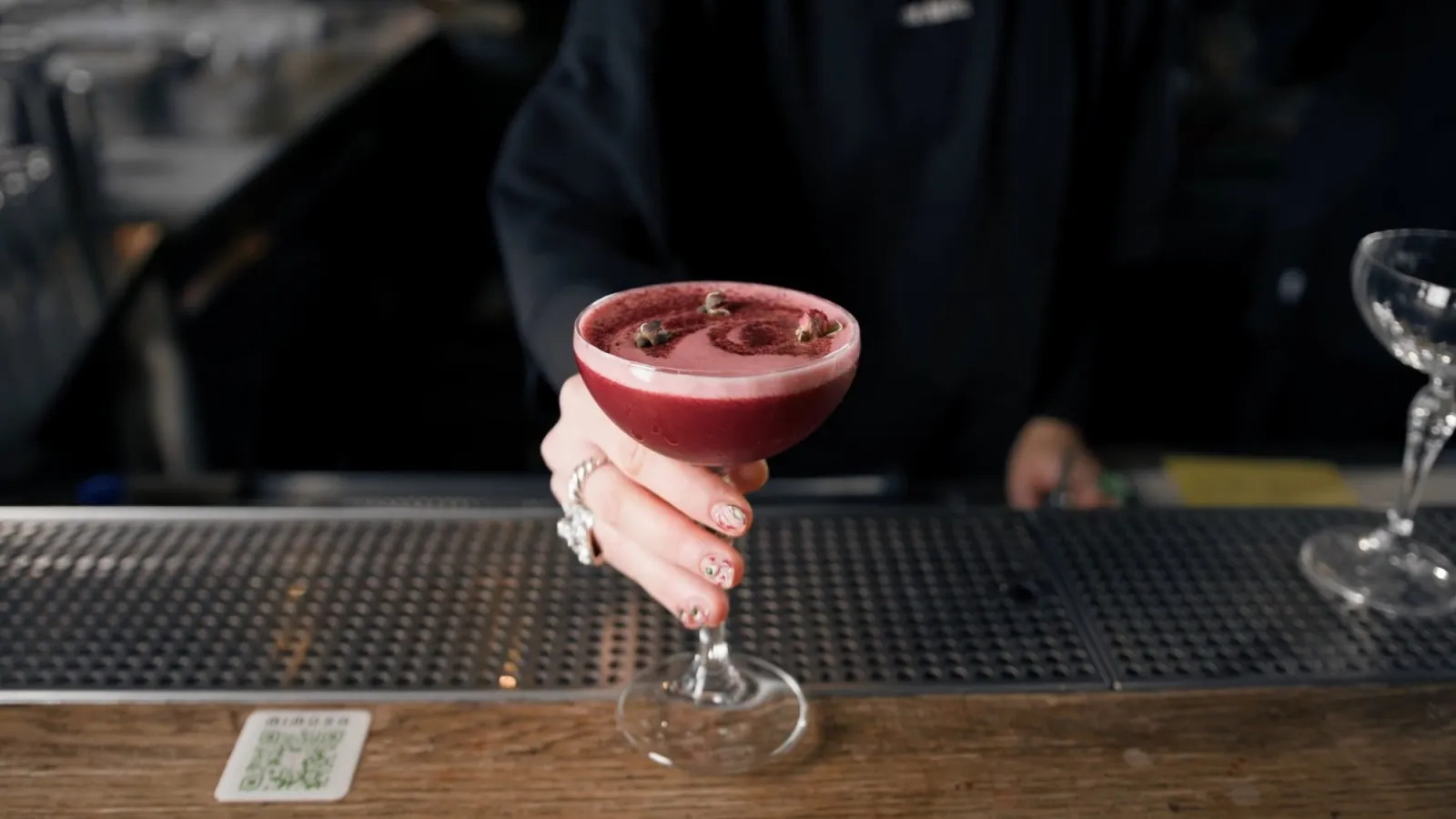 The room I actually had to pay for.
To be clear, some of this was already happening before any of these deals. Treasure Island's pirate show ended in October 2013. The cast said they were blindsided, and the lagoon was partly filled in for a CVS and a shopping centre. That owner never sold his building, so rent had nothing to do with it. The space out front earned him nothing, and that was enough to make it a target.
But the leases raised the stakes everywhere else.
The Mirage is the one that gets me
The Mirage was one of those first ten properties MGM handed to its landlord company in 2016, so from then on the Mirage was renting its own building.
In December 2022 MGM sold the business of running it to Hard Rock. VICI kept the building, and Hard Rock pays rent starting at $90 million a year.
On 17 July 2024 the Mirage closed. More than eleven thousand people had signed a petition to save the volcano. The property's president asked the crowd what the Mirage would be without one last eruption, and then they set it off one more time. By late August the crews were tearing it down.
A 660-foot hotel tower shaped like a guitar went up on that same spot. It reached full height on 1 May 2026, holds more than six hundred rooms, and is scheduled to open in late 2027.
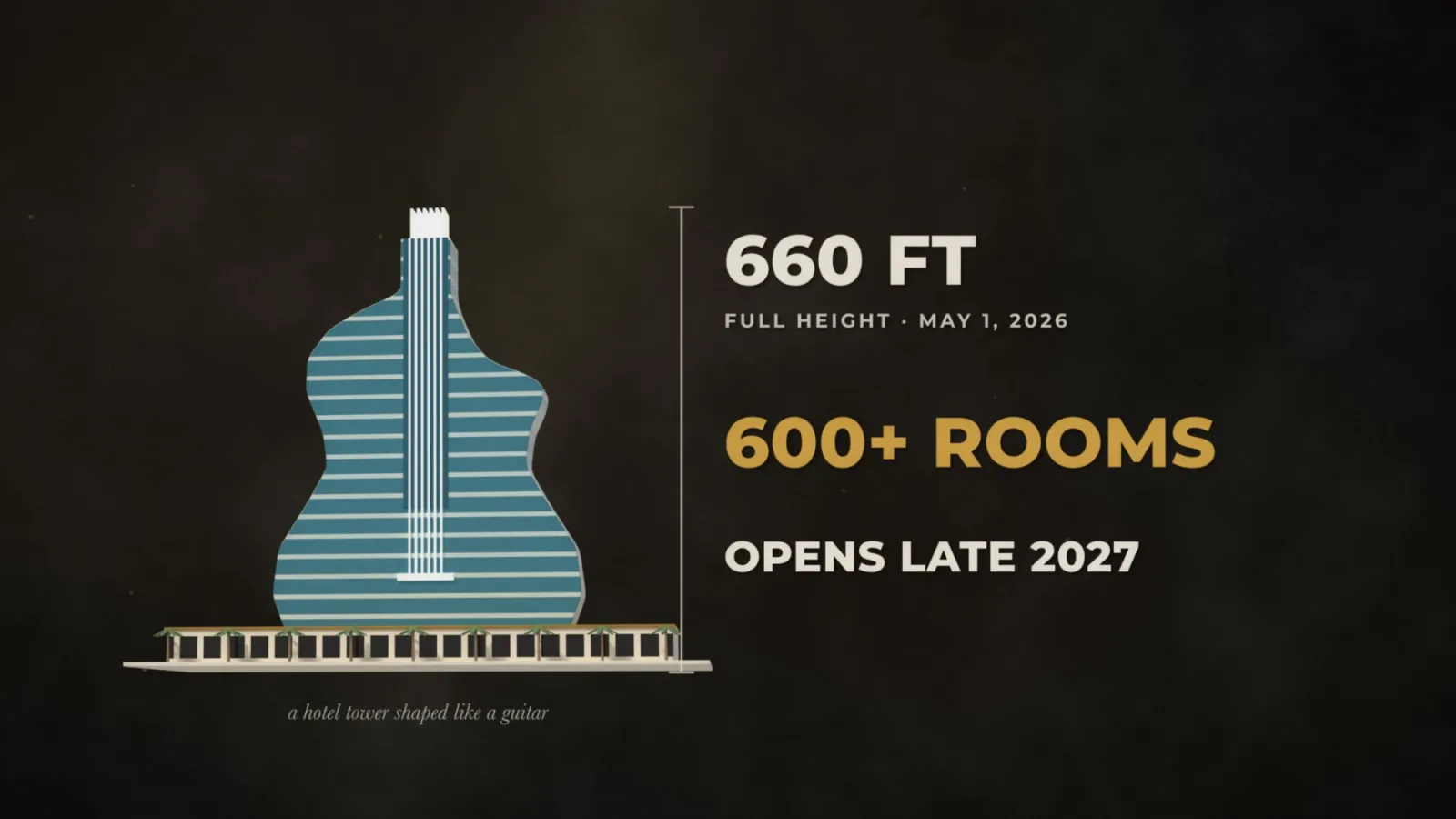 What replaced the volcano.
Six hundred rooms can cover a rent check. A volcano never could.
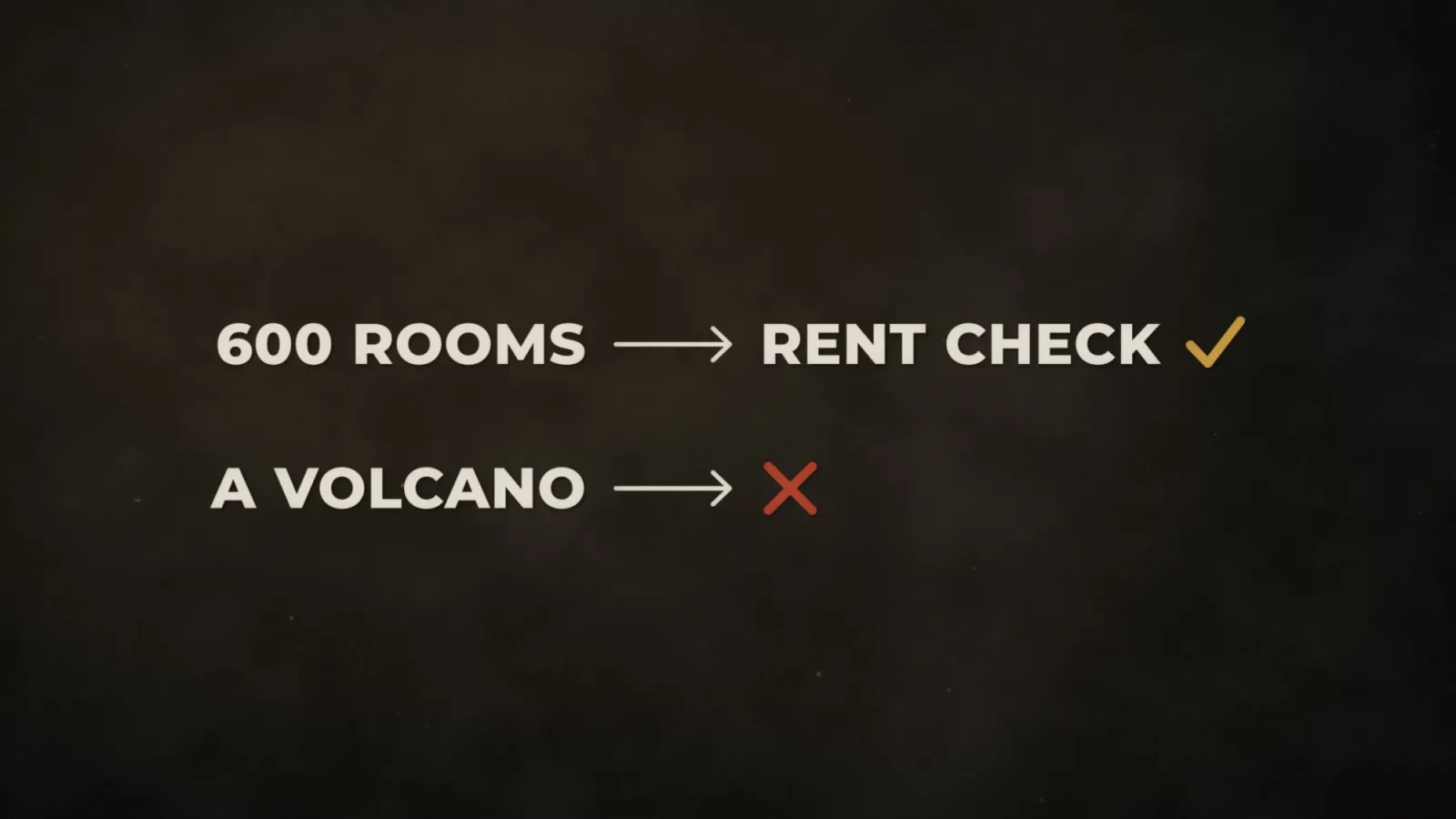 The whole decision, as a landlord would score it.
The shows changed too
Elvis was the invitation. Fifteen dollars with dinner, and the casino made its money afterward.
In 2025 the show is the product. The Sphere alone sold 1.7 million tickets for $379 million, more than any arena in the world. That is about $220 a seat.
The small things point the same way. Paid parking started in 2016. Resort fees reached around $50 a night by 2025, on top of the price you were quoted. During COVID the hotels stopped cleaning rooms every day and a lot of them never went back, until the hotel workers' union put daily cleaning back into its contract in 2023.
In 2025 the guests pushed back. Visitors fell every single month of the year and finished down 7.5%.
MGM's rent was the same either way.
The fair pushback here is Wynn Resorts. It never sold its Las Vegas buildings, and it raised prices too. Rates jumped everywhere after 2021, when hotels learned they could earn more from fewer guests. Rent is only one piece of this. But it is the piece that is hardest to undo. If you own the building you can change your mind next year. If you signed a thirty-year lease that climbs every year, the money is already promised.
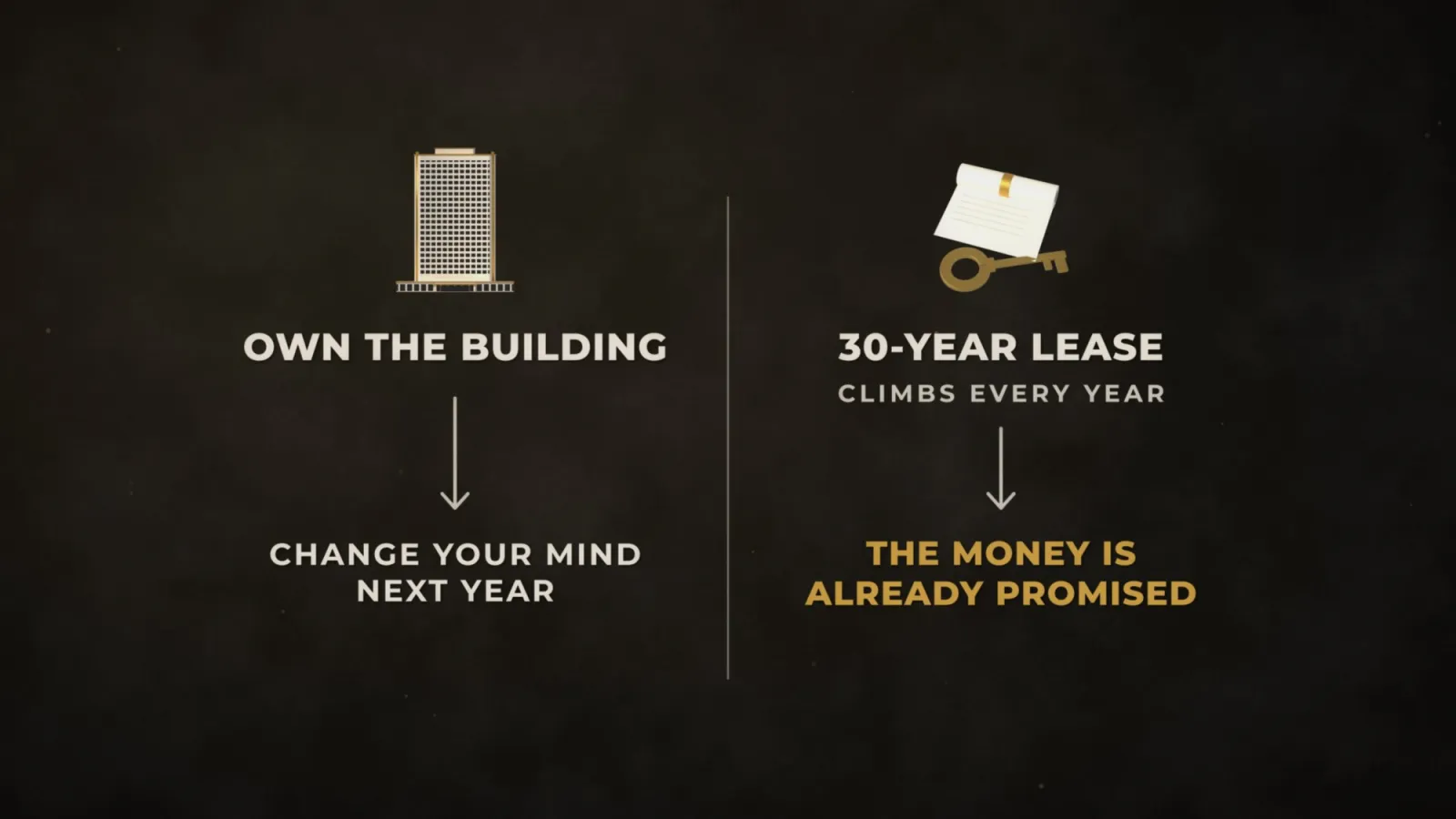 Ownership is reversible. A lease is a promise you already made.
Other people in the business are saying it out loud. In June 2026, Phil Satre, the chairman of Wynn Resorts and a former chief executive of Harrah's, told the Economic Club of Las Vegas that this rent model could threaten the city. "I'm more worried about the inability to invest because of the rent payments."
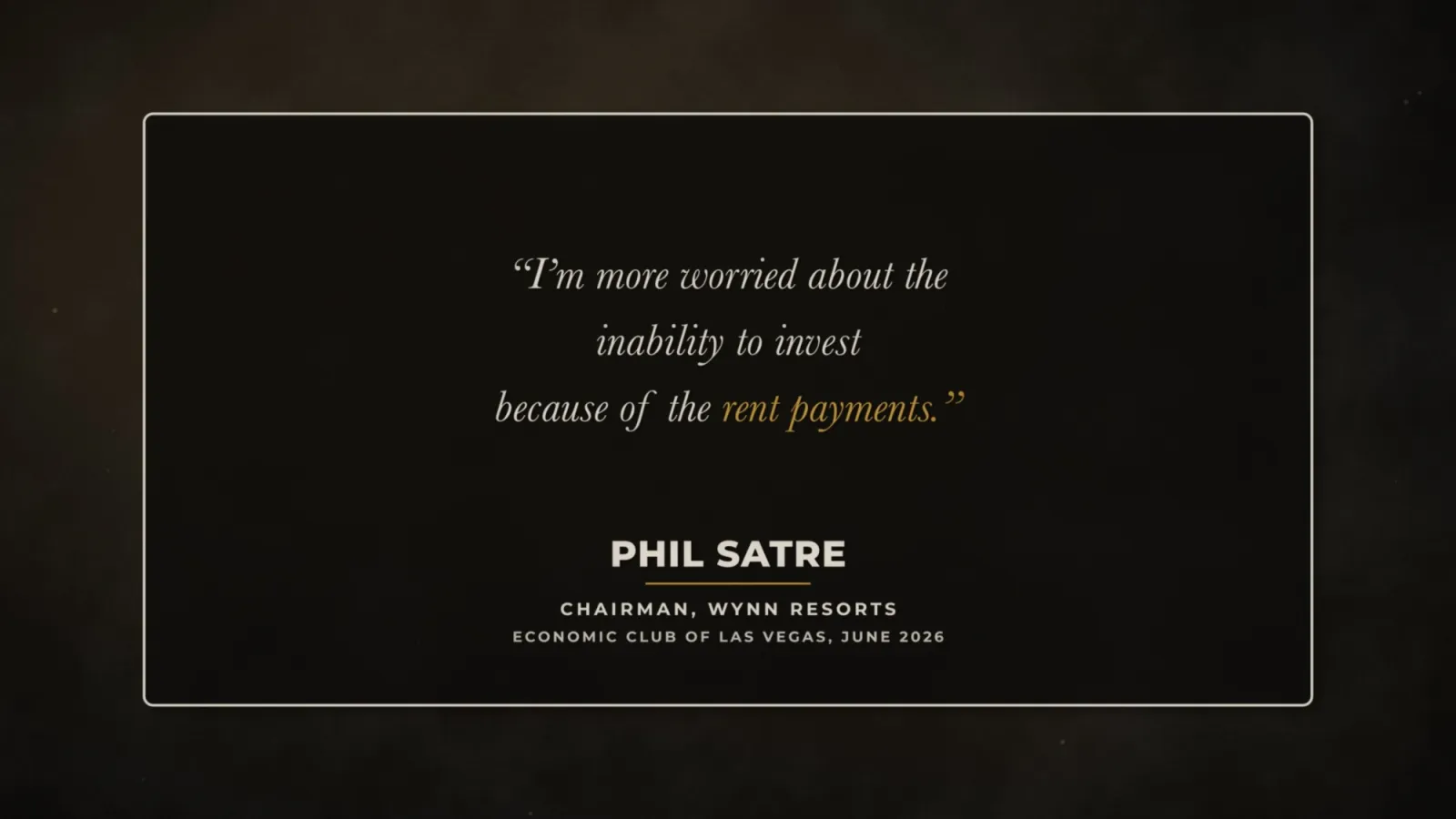 Not an outsider. The chairman of the company that kept its buildings.
Who the bet is on
In 1989 Steve Wynn owed a million dollars a day and still spent money on strangers standing on a sidewalk. He was betting on the guests.
In 2016 the Strip's biggest companies started betting on the buildings. Between 2019 and 2022, MGM alone collected more than $12 billion selling the Bellagio, Aria and its share of the landlord company.
By 2025 the crowd was the same size as 2011, the Strip kept less than a penny on the dollar, MGM's stock was where it had been the week it sold the Bellagio, and the volcano was a construction site. Twelve billion dollars changed hands and I cannot find the dollar that went into making your trip better.
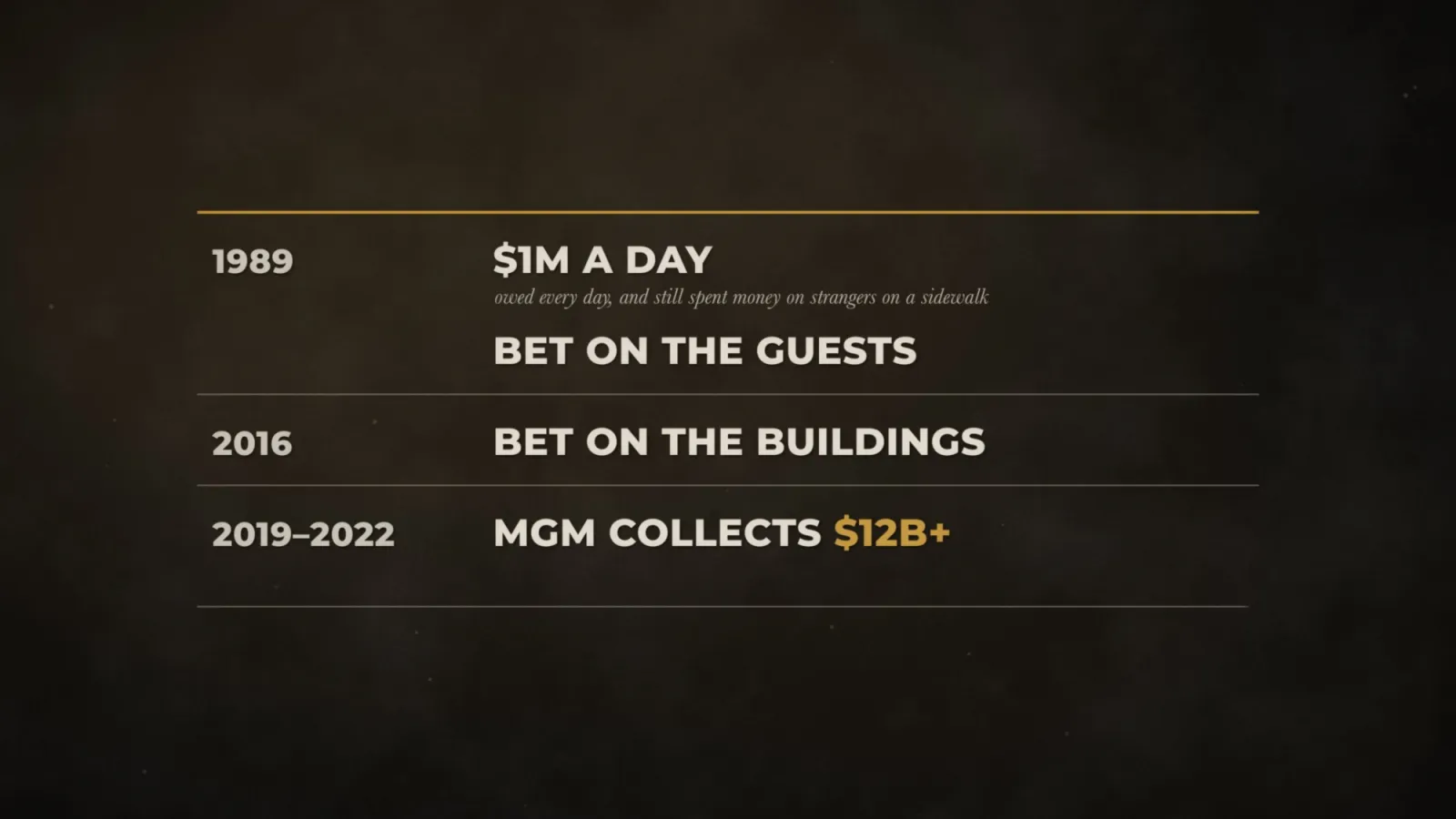 Thirty-seven years, and the thing being bet on changed.
The audacity is still out there. The Sphere opened in September 2023, and the whole outside of it is a screen anybody can see from miles away, which is the most Vegas thing built this century. But the Sphere is not owned by people who run casinos. It is run by the people who own Madison Square Garden, and VICI owns the land underneath it. The Bellagio fountains still go off several times an hour every evening, for people who are only walking past.
I have been to Vegas twice, in 2022 and again in 2025. Both times the locals told us the city had gone to pot. Uber drivers, tour guides, the same line from all of them. I had a great time and I could not see what they meant.
After all this, I am starting to.
For most of its history the people running that street were gamblers, and they bet on the guest. Most of those buildings now belong to landlords, and landlords bet on lease payments.
A landlord can be paid in full by a building nobody loves. A host cannot. That is the whole difference, and you can feel it from the sidewalk.
Related: The Mall Was Supposed to Be a Town, The Slow Death of the Third Place, and The Best Hospitality Makes People Feel Important.

What would this look like in your business?
Turn ideas about atmosphere, service, storytelling, and customer experience into a practical plan.
Explore ConsultingWatch the next idea unfold.
Subscribe for films and ideas about hospitality, creativity, and the experiences businesses create.
Subscribe on YouTube (opens on YouTube in a new tab)