Rufus Hightower Universe
Back to Selected WorldsImmersive Storytelling

Rufus Hightower Universe™

A broke charter pilot, a doctor who studies what ruins were built to do, and an idol that hums like a live wire. An original 1930s-flavored pulp adventure that runs on film, games, cocktails, and rooms you can walk into.

Rufus Hightower: Convergence Points
1930s

Era & Aesthetic

2

Playable Demos

Live

Events & Cocktail Program

Original

IP & Characters

The rent is three months overdue, the plane needs fuel, and the phone has not rung since spring. Then it rings.

On the other end is a doctor who studies what ruins were built to do, asking about a temple in the Ucayali basin that appears on no official survey. He mentions, without much ceremony, that the idol chamber is still active. That he can hear it from where he is standing. That this is not a figure of speech.

Rufus Hightower™ takes the job. He takes most jobs. That is generally where the trouble starts.

The Adventure Begins

Rufus Hightower flies anything with wings, usually on money he has already spent. Competent, broke, and allergic to the sensible option, he is exactly the man people call when the destination is not on a map. His own assessment of the career: a man with a plane and no work is just a man with an expensive parking problem.
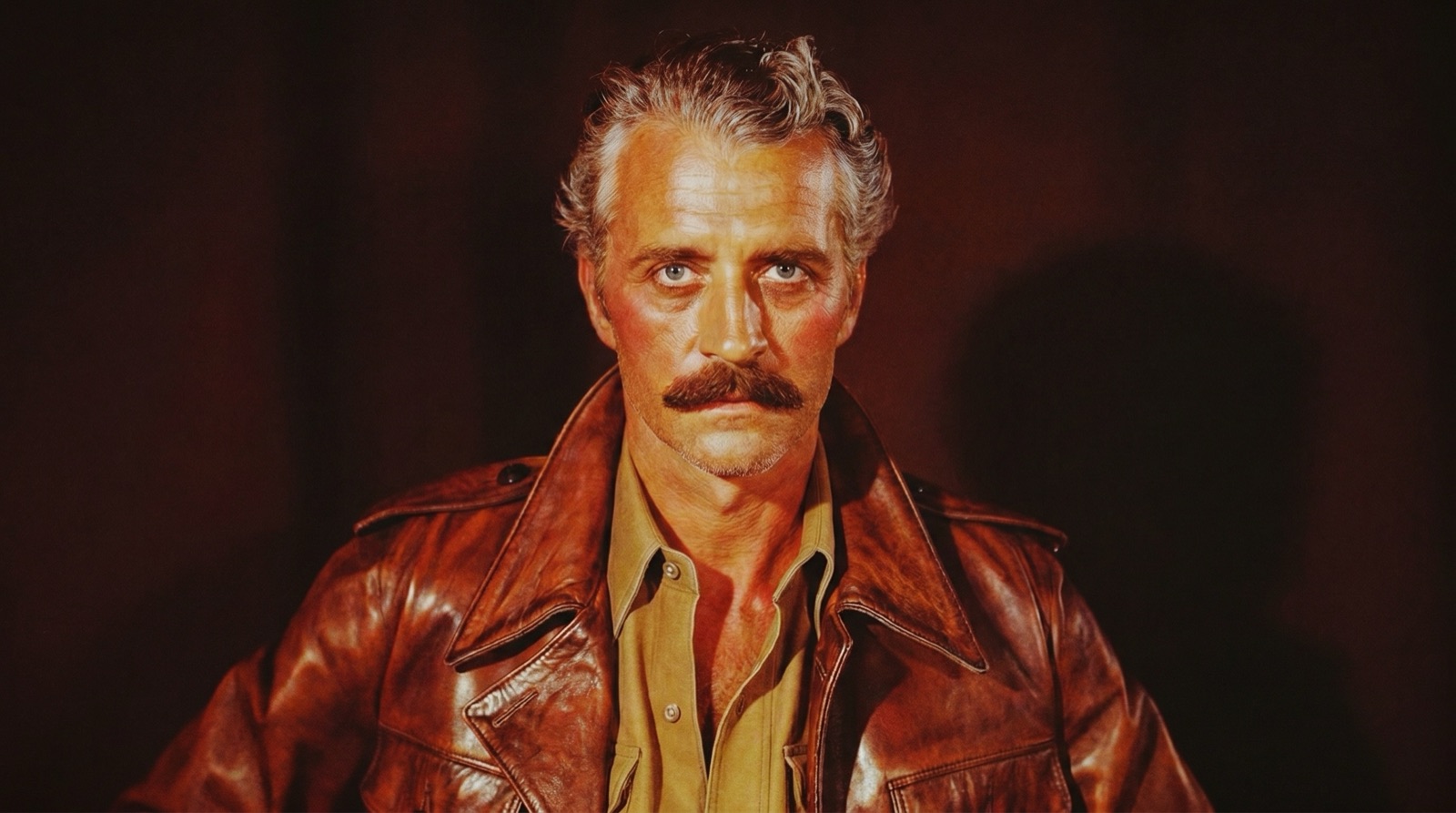
Rufus Hightower, charter pilotRufus Hightower

The world he moves through runs on one rule. Some objects resonate. A brass compass hand-made in Vienna in 1924 goes strange near magnetic stone. An obsidian fragment chipped from a temple keystone hums when you bring it close to that compass. Glyphs on its back describe offerings placed in a correct order, and an inner sanctum that opens for anyone patient enough to get the sequence right. None of this is framed as magic. It is framed as engineering nobody has bothered to explain, which is considerably more unsettling.

What sits at the far end of that resonance is the real problem. The idol is not treasure. The idol is a key, the thing on the other side of the door would like it back, and it has opinions about the people who took it.

The stakes climb the way they should in this kind of story. From unpaid rent, to a temple that objects to being robbed, to men in federal suits standing on an airfield saying the word portal like they had rehearsed it. Somewhere past all of that there is a very good drink waiting, and the crew fully intends to reach it.

Convergence Points™

Convergence Points is the continuing arc of the universe, told so far through a trailer and a playable side-scrolling demo.
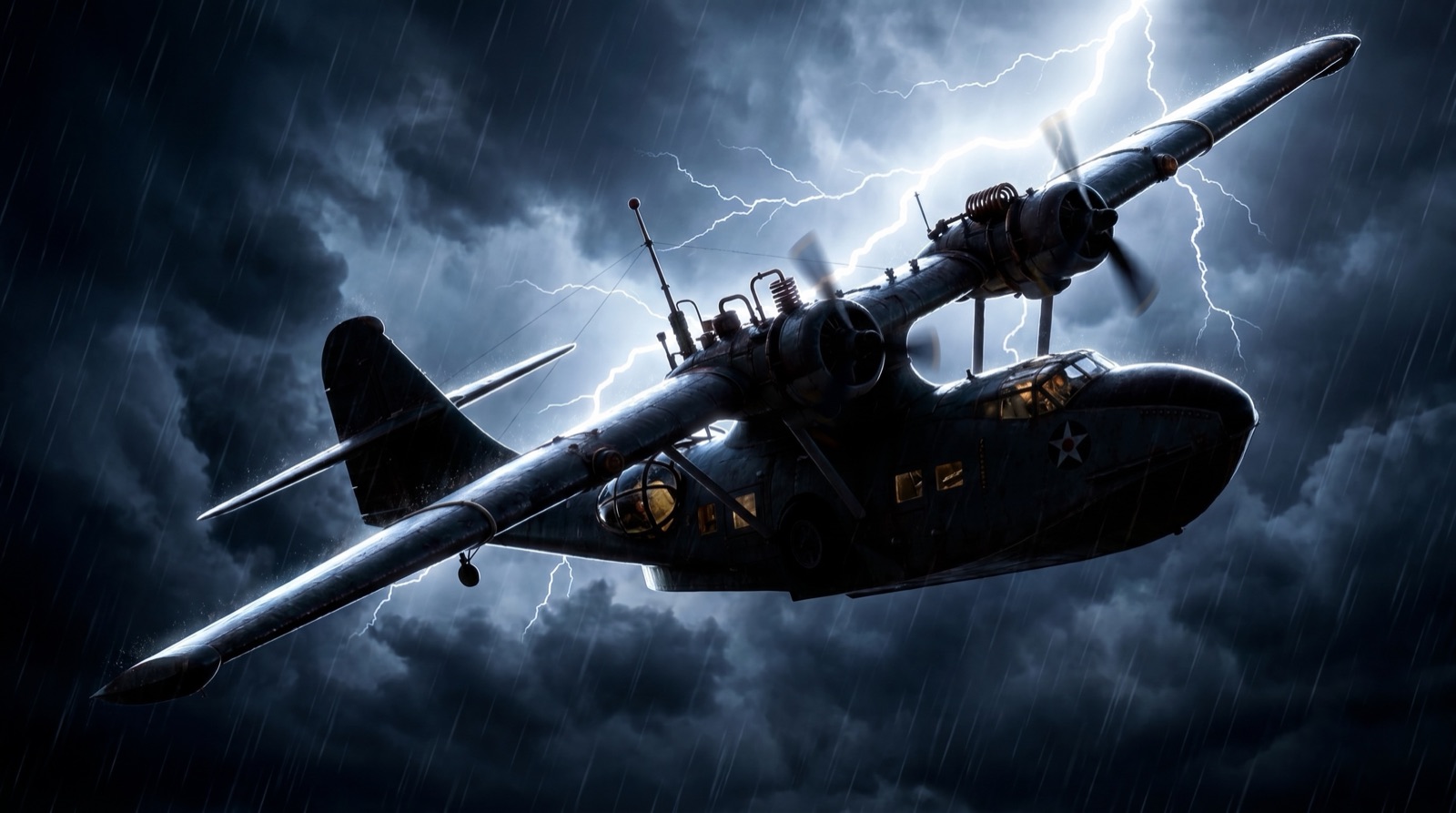
The expedition flying boat running through heavy weatherThe expedition's flying boat

A rumor comes up the coast about an idol older than the maps, sitting in a jungle tomb nobody leaves. The crew goes and takes it. They find it gold, cold, and humming like a live wire, and the moment Rufus lifts it, the tomb wakes up.

The plan was simple. Get the idol, get out, get home. Then the floor gives way.

What follows is a purple sky, wrong stars, and a city of stone that never learned about straight lines. A priest called The Second wants the idol returned and the thieves kept, permanently. He takes Dr. Funk and holds him in a stronghold, which turns a heist into a rescue, which the crew approaches with characteristic elegance: then that is where we are going, we get him back, nothing fancy.

They make it home to real stars. The idol goes quiet, like nothing happened. Then the federal agents arrive at the airfield talking about dimensional technology, and the only thing Rufus wants in the world is a drink with a paper umbrella in it, and the bar is across town, and last call waits for nobody.

Convergence points are the places where two worlds touch. Objects carry them. So, occasionally, do people.

Built byJustin Bunnell

The Expedition Letters

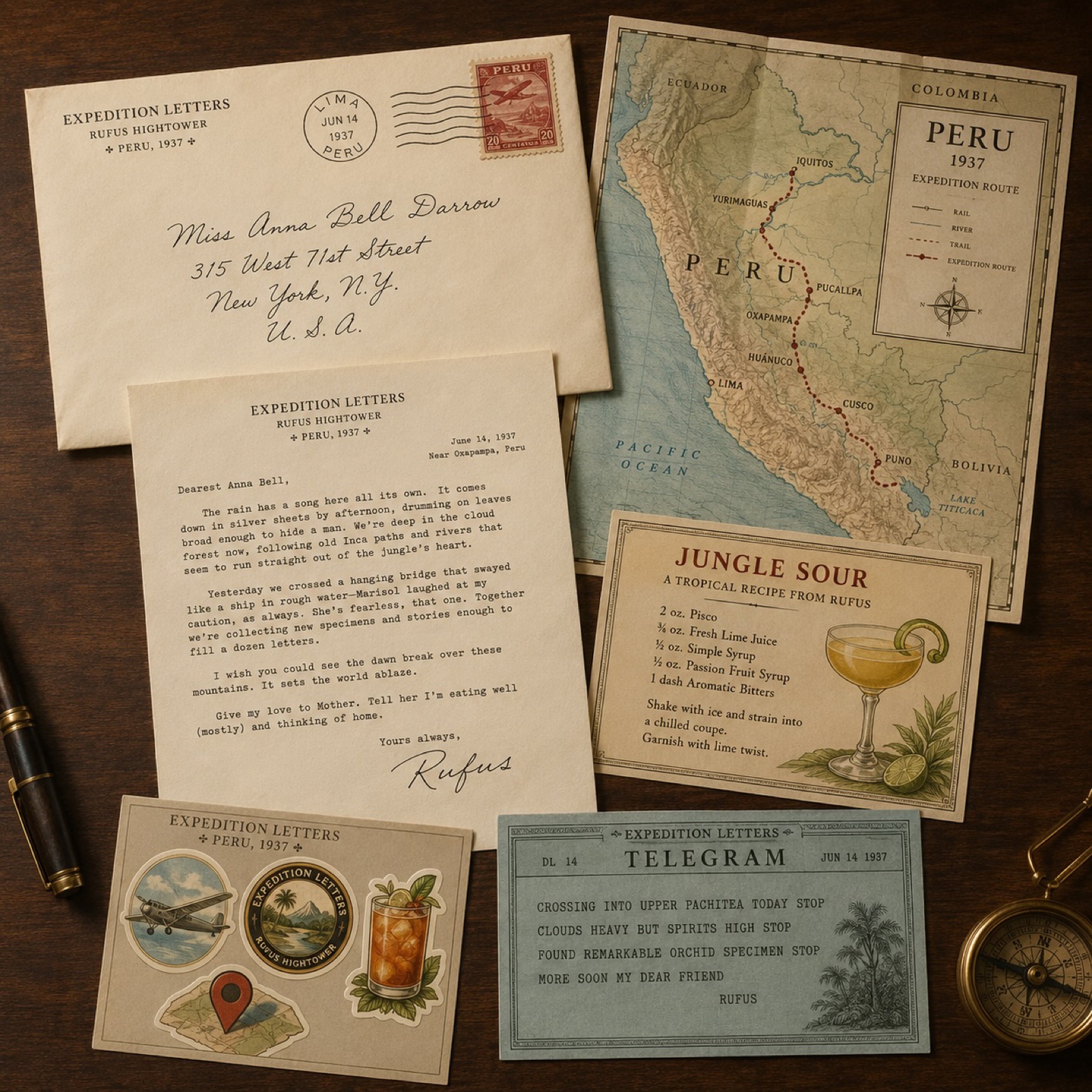
A month's Expedition Letters mailing laid out on a desk: an airmail envelope addressed to Miss Anna Bell Darrow postmarked Lima, Peru, June 1937, a typed letter signed by Rufus, an illustrated Peru expedition route map, a Jungle Sour drink recipe card, a sticker sheet, and a telegram
A single month's delivery. Letter, route map, drink recipe, stickers, and a telegram from the field.

$9.99

per month · cancel anytime

Season One · Peru · 1937
  • One physical letter each month
  • Written to Anna Bell Darrow
  • Season One: Peru, 1937
  • Cancel anytime

Expedition Letters is a physical-mail subscription from inside the Rufus Hightower Universe. Each month, subscribers receive a new letter written by Rufus Hightower and addressed to Anna Bell Darrow while Rufus travels on dangerous expeditions with the brilliant, and frequently troublesome, Dr. Archibald Funk.

These are personal letters sent home from an adventure still in progress. Rufus writes to Anna Bell about the places they have reached, the people they have encountered, the trouble Dr. Funk has caused, and the growing evidence that certain locations may be connected by something known as the Convergence Points.

Alongside Rufus's correspondence, subscribers receive a changing assortment of companion materials connected to the story. These can include illustrated maps, tropical drink recipes, stickers, telegrams, photographs, expedition documents, and other surprises from the field.

Each delivery tells a satisfying chapter while gradually contributing to a larger seasonal mystery. A map included one month may become essential later. A drink recipe may originate from a location Rufus has just visited. A name mentioned casually in one letter may return several months later with an entirely different meaning.

The first season follows Rufus and Dr. Funk through Peru in 1937. Rufus believes he is documenting another expedition. Anna Bell may be the first person to realize that he is walking toward something no map was meant to contain.

What Arrives Each Month

  • One physical letter

    Written by Rufus Hightower to Anna Bell Darrow, mailed from wherever the expedition has reached.

  • A new chapter

    Each delivery advances the continuing seasonal adventure and stands on its own.

  • Story inserts

    Maps, stickers, photographs, telegrams, and other materials from the field.

  • Drink recipes

    Tropical cocktail and zero-proof recipes tied to the places Rufus has just visited.

  • Clues worth keeping

    Recurring names and details that reward anyone reading carefully across months.

How the Subscription Works

$9.99 per month. Subscribers receive one new physical letter each month. There is no requirement to buy an entire season, and you may cancel at any time. The experience should feel like receiving ongoing correspondence from someone in the middle of an extraordinary journey, not like opening a conventional subscription box.

Follow the expedition. Read the letters. Mix the drinks. Watch the mystery unfold.

Expedition Enrollment Coming Soon

Subscriptions are not open yet. Pricing and contents shown here are the planned first season.

Open the Expedition File

Meet the Expedition

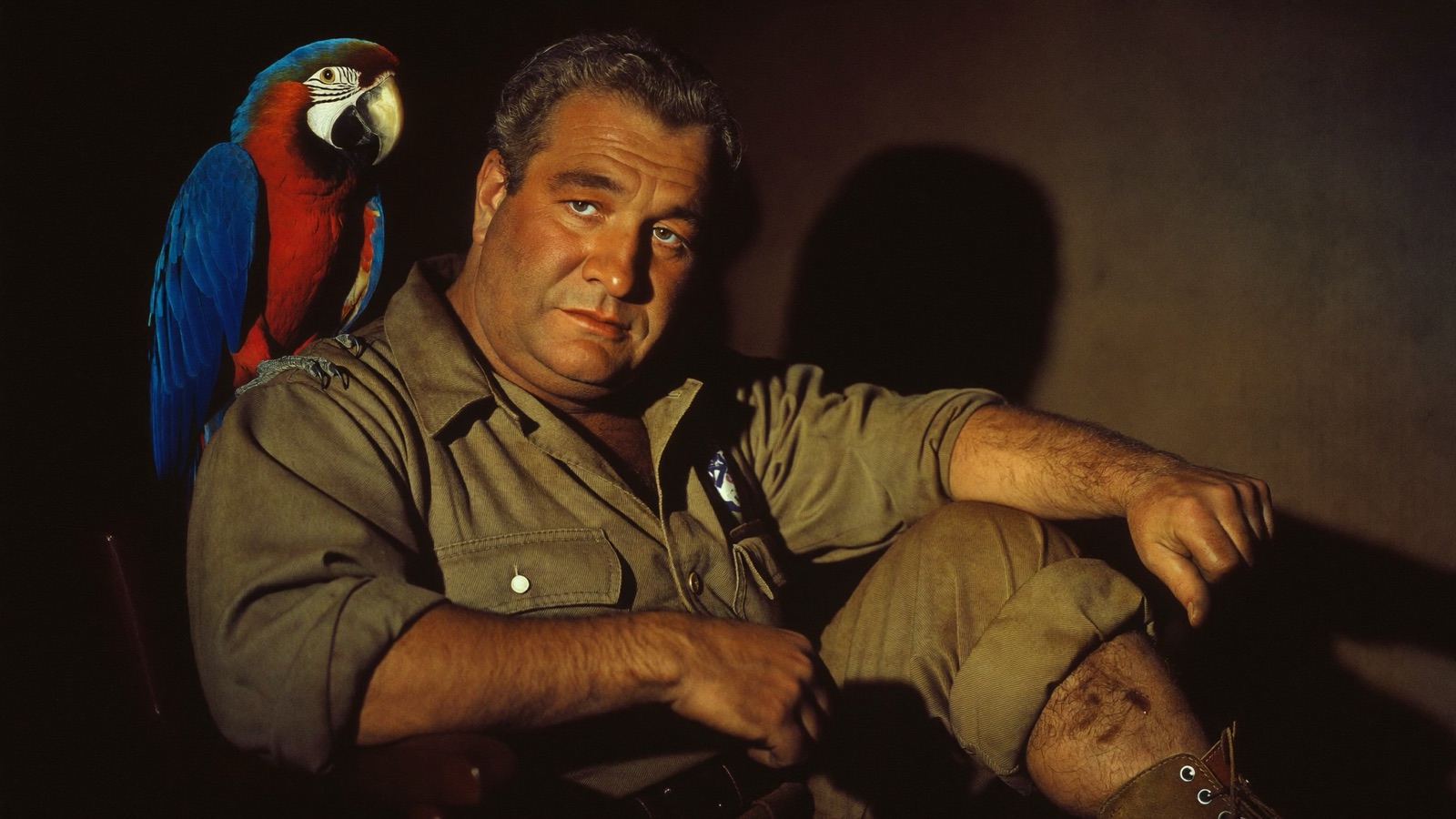
Portrait of Rufus Hightower, Charter Pilot & Expedition Lead

Rufus Hightower

Charter Pilot & Expedition Lead

Flies anything with wings, usually on credit. Competent, perpetually broke, and constitutionally unable to take the sensible job. He narrates his own bad decisions with the dry calm of a man who has survived most of them, and carries a brass compass on the theory that a man can lie to himself but a compass keeps things honest.

Portrait of Al Whitaker, Mechanic & Voice of Reason

Al Whitaker

Mechanic & Voice of Reason

Keeps the plane honest, and the books honest, in that order. Al is the one who points out they cannot afford to fly until they can afford fuel, and he is never wrong about it, which Rufus resents deeply and relies on completely.

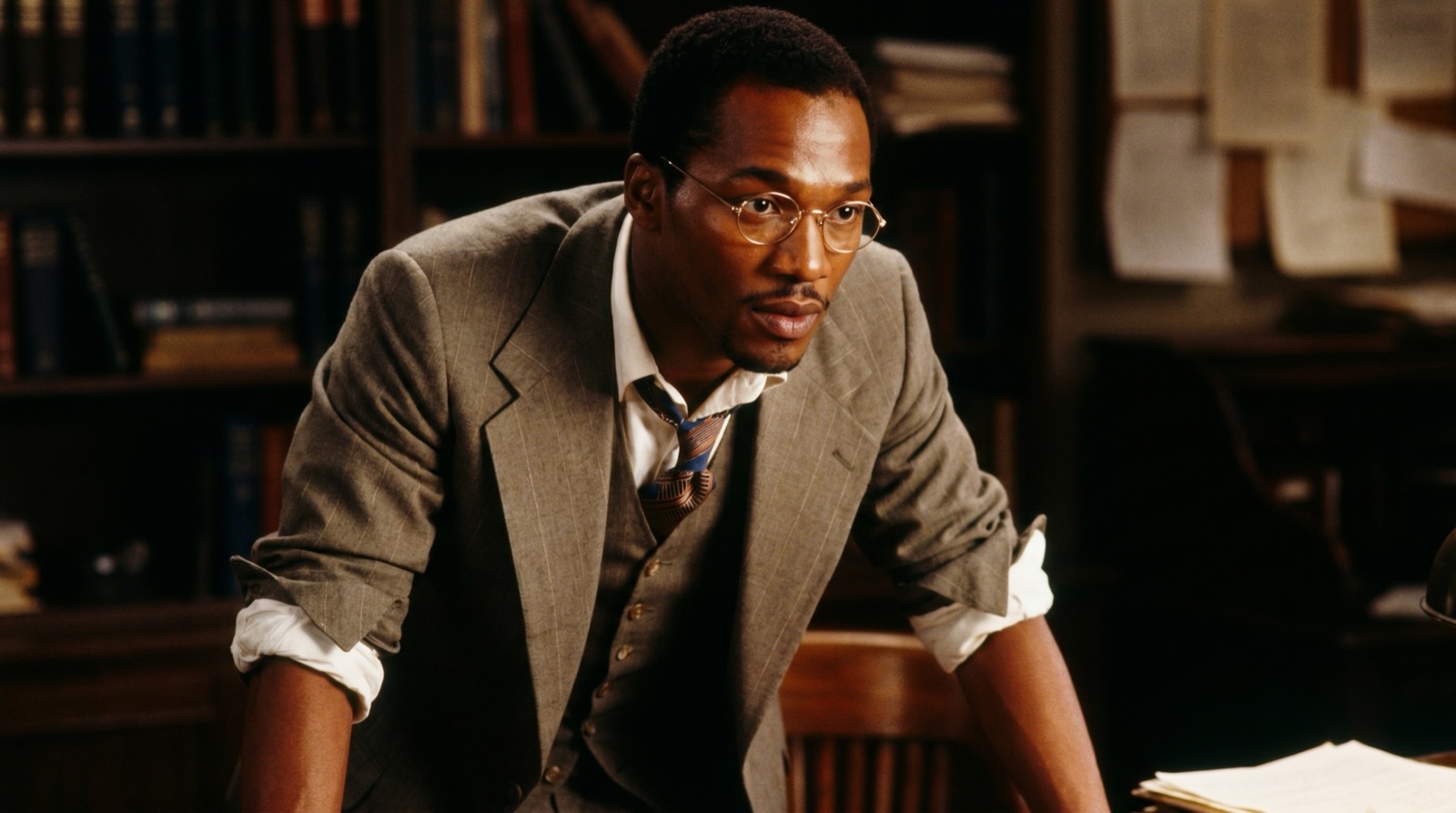
Portrait of Dr. Archibald Funk, Scholar of Dead Languages & Resonance

Dr. Archibald Funk

Scholar of Dead Languages & Resonance

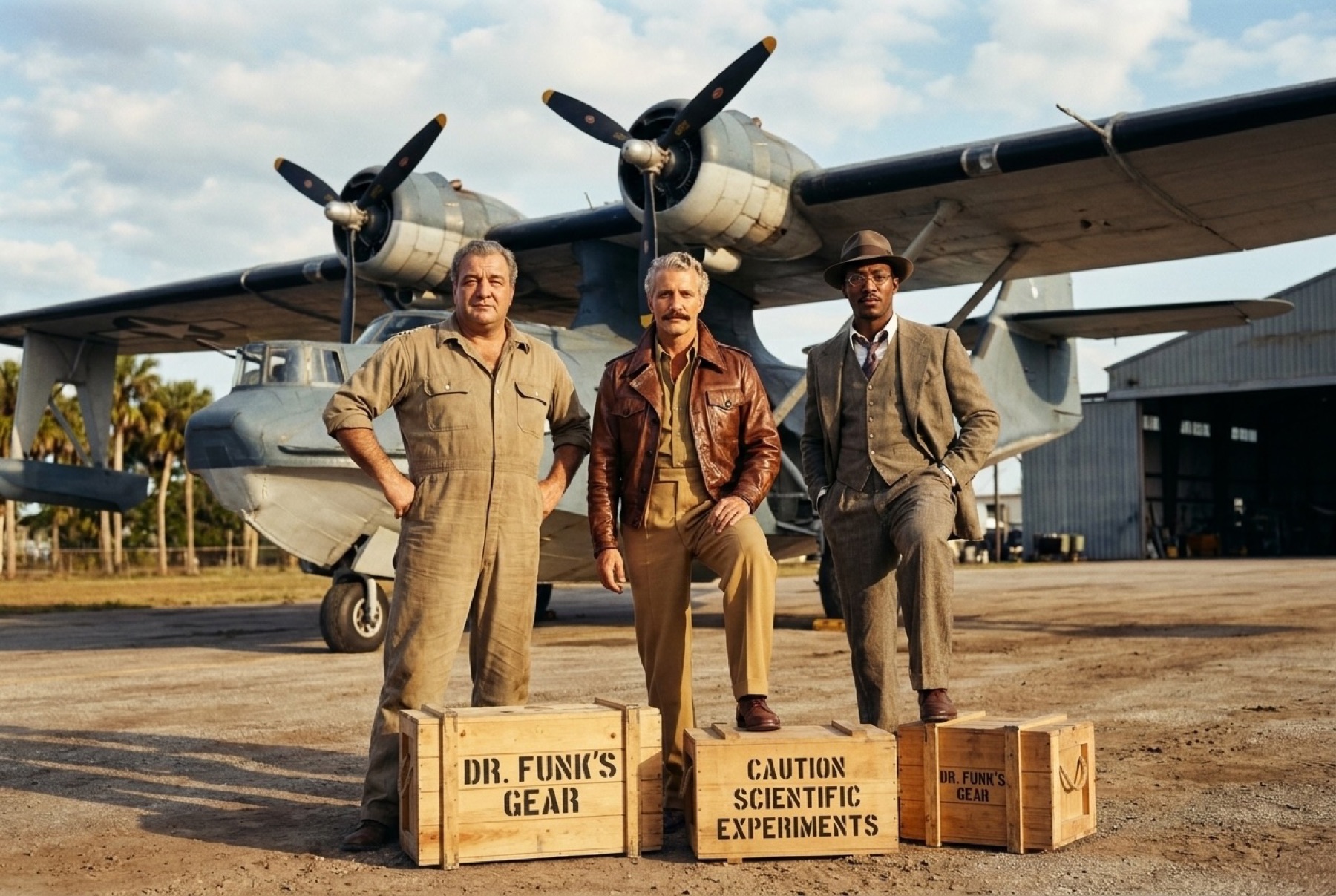
Reads the dead languages and studies what ruins were built to do rather than what they look like. He hires Rufus because the temple he needs is not on any survey. His idea of reassurance is explaining that he can hear the idol chamber from another continent, and that this is not a figure of speech.

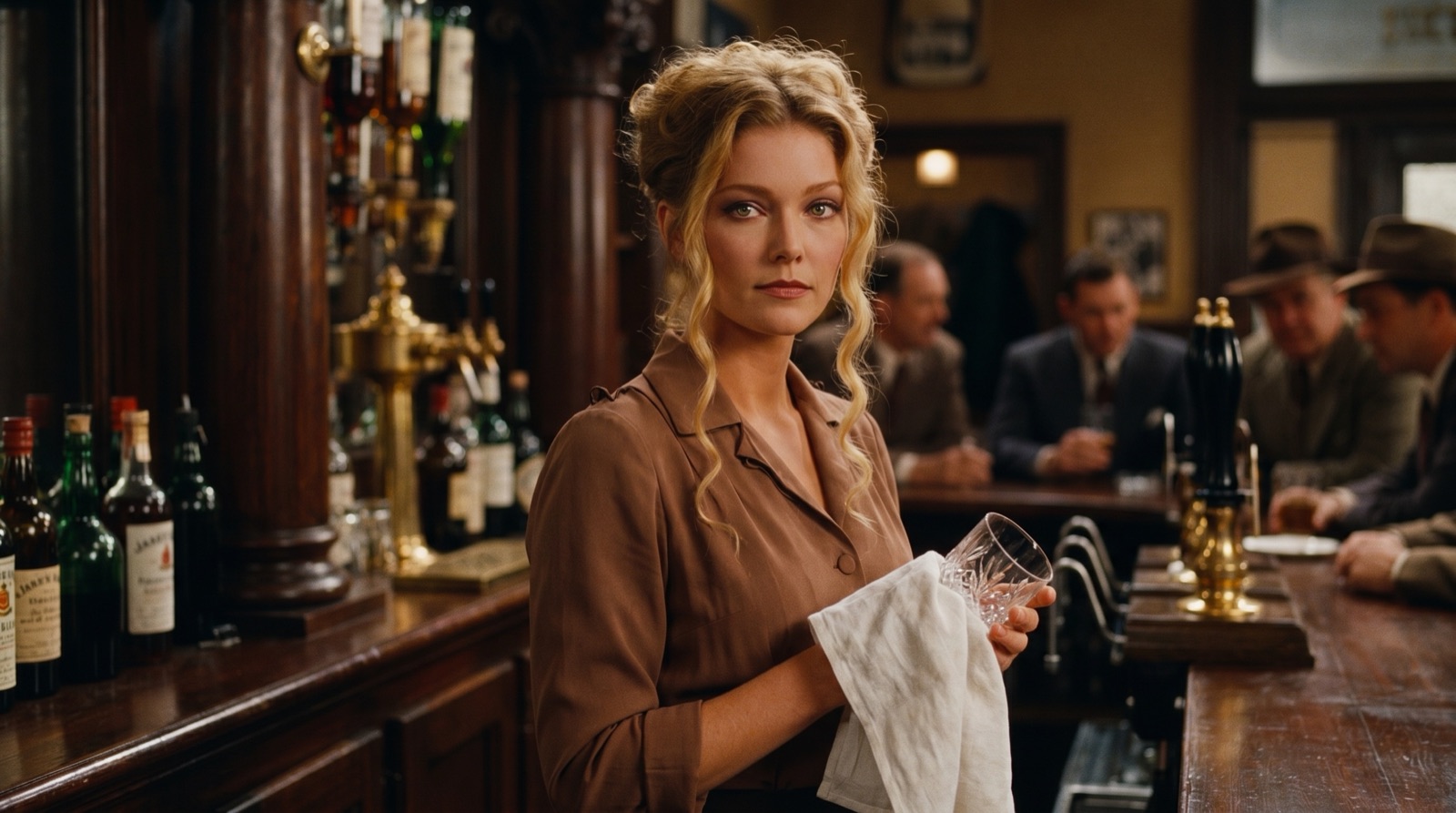
Portrait of Anna Bell Darrow, Rufus's Better Judgment

Anna Bell Darrow

Rufus's Better Judgment

Rufus's girlfriend, and the fixed point he keeps flying back toward. She has the unimpressed steadiness of someone who has heard every version of the story that begins with it was only supposed to take a week, and she is still there when the plane finally lands.

Portrait of Sir Reginald Ainsworth, Industrialist, Ainsworth Industries

Sir Reginald Ainsworth

Industrialist, Ainsworth Industries

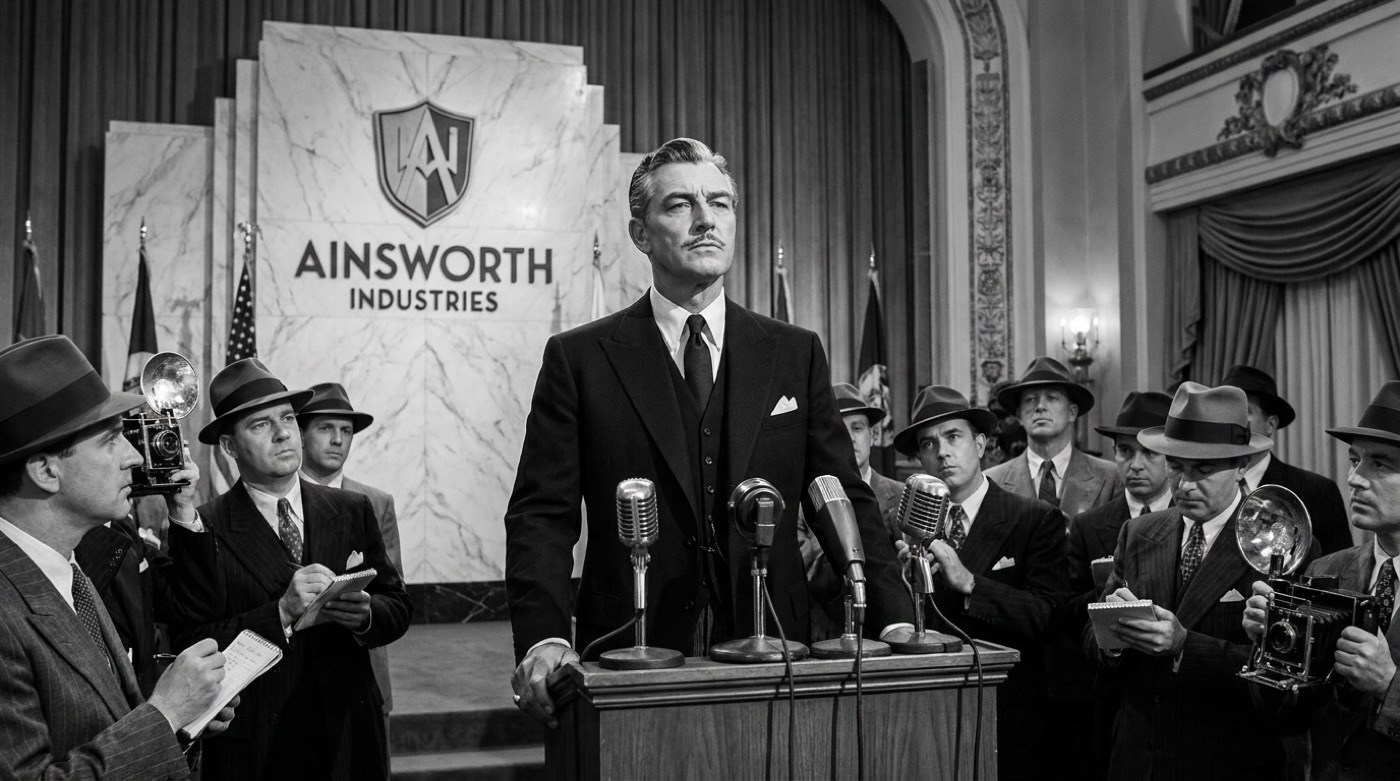
Money, marble, and a bank of microphones. Ainsworth moves through press conferences and paneled offices rather than jungles, which does not make him less dangerous to an expedition that depends on nobody important taking an interest in what it found.

Portrait of The Second, Purple Priest of the Far Side

The Second

Purple Priest of the Far Side

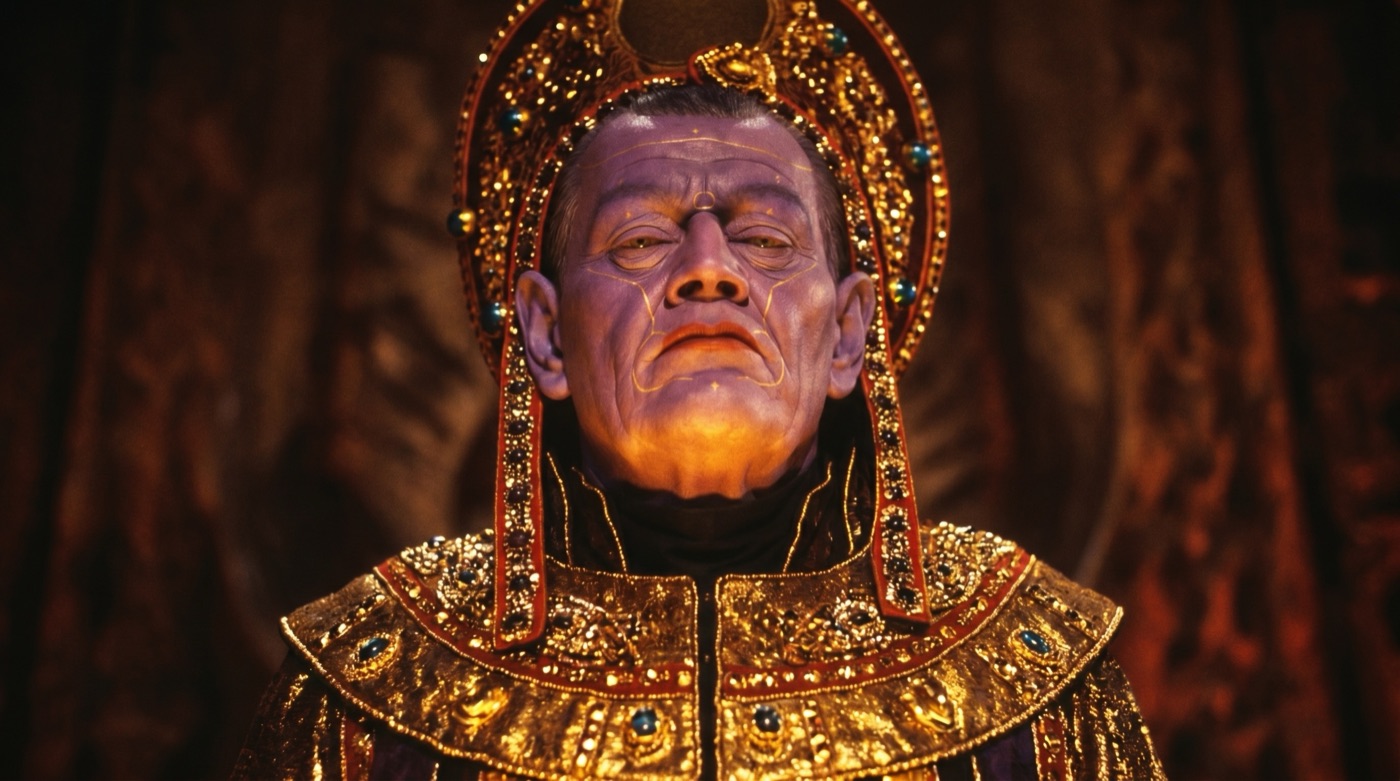
He wants the idol returned and the thieves kept, permanently. When the crew crosses into his city of stone he takes Dr. Funk and holds him in a stronghold, and when he finally goes down he does not go down for long. His fury follows them all the way home.

Portrait of The Goddess, Figure of the Other World

The Goddess

Figure of the Other World

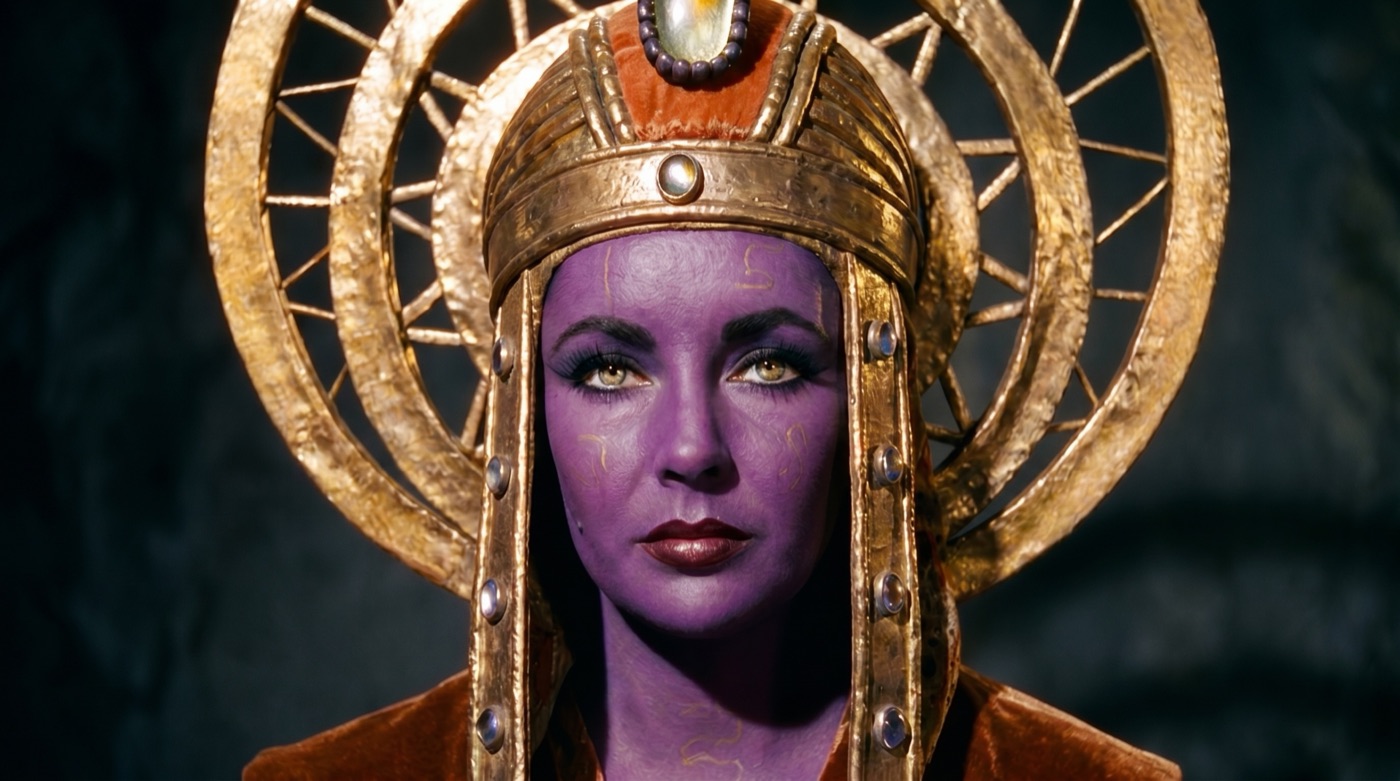
Crowned, gilded, and entirely unbothered by anyone's expedition schedule. She belongs to the world on the far side of the portal, where the sky is purple and the stars are wrong.

A World You Can Enter

Most brand worlds stop at the surface. A logo, a palette, a voice guide. A storyworld asks a stranger question, which is what happens if a business behaves as though it belongs to a larger universe.

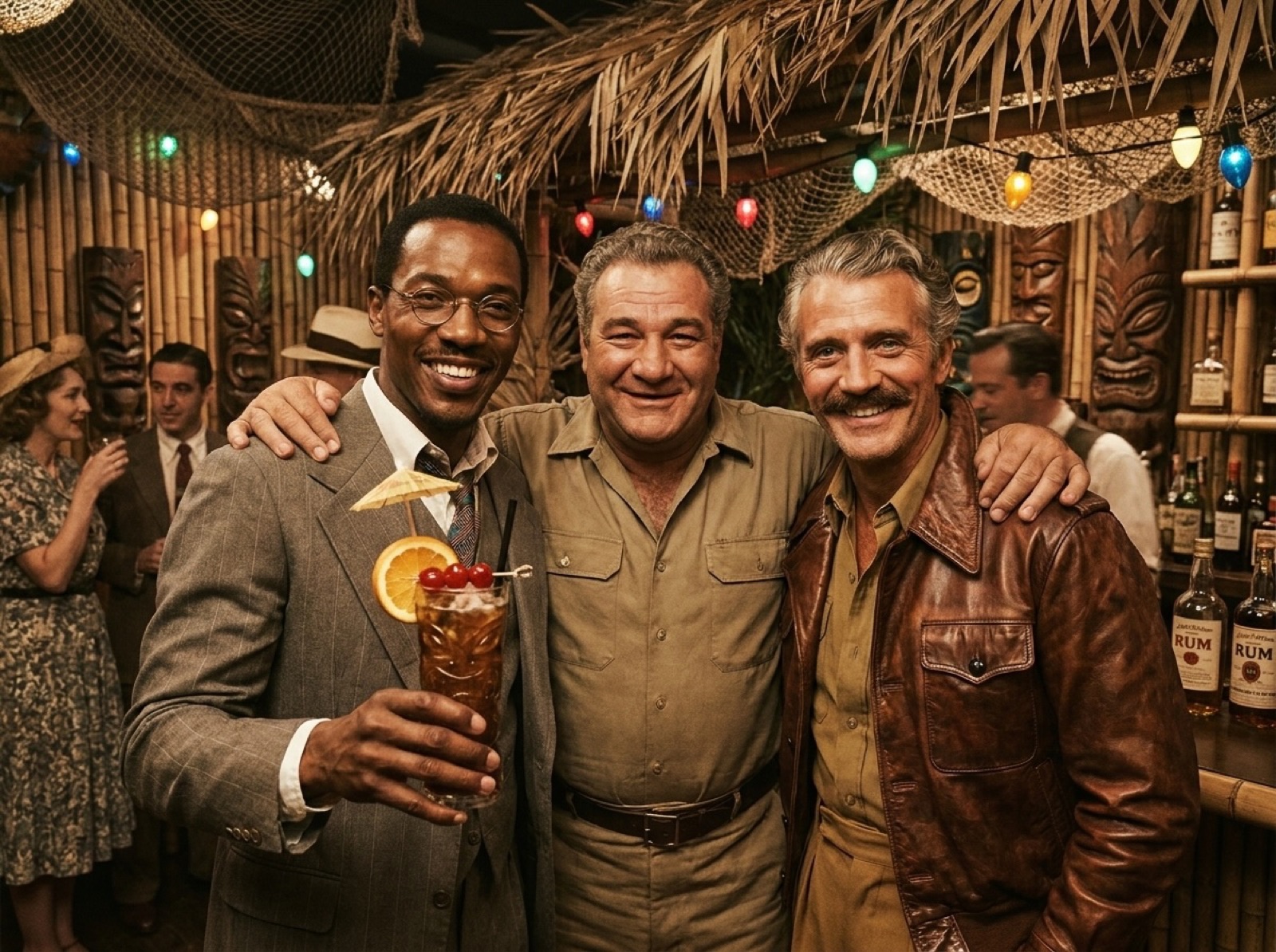
The Hightower crew at a tiki bar, drinks in handThe crew, off the clock

That question turns hospitality into a storytelling medium. A cocktail becomes an artifact recovered from an expedition. A menu implies a history nobody has fully written down. A prop on a shelf suggests something happened in this room before you arrived. A character introduced in a film turns up later in a live event, or inside a game, or behind a bar.

Anna Bell DarrowAnna Bell Darrow

The rule that keeps it from becoming homework is one I hold to hard. The goal is not to require an audience to understand the lore. The goal is to reward curiosity. A guest can walk in, have a great drink, hear a good band, and leave without ever learning that the explorer on the coaster has a name, a plane, and a mounting federal problem. Nothing was withheld from them. Another guest pulls one thread, finds the expedition dossier, plays the demo at home, and discovers the whole thing runs deeper than they expected.

Both had a good night. Only one found the door. That is the design working exactly as intended.

When it lands, the shift is the entire point. The audience is no longer only watching the world. They are standing inside it.

Hightower Hideaway™

Concept in Development

Immersive Tropical Restaurant & Adventure Bar

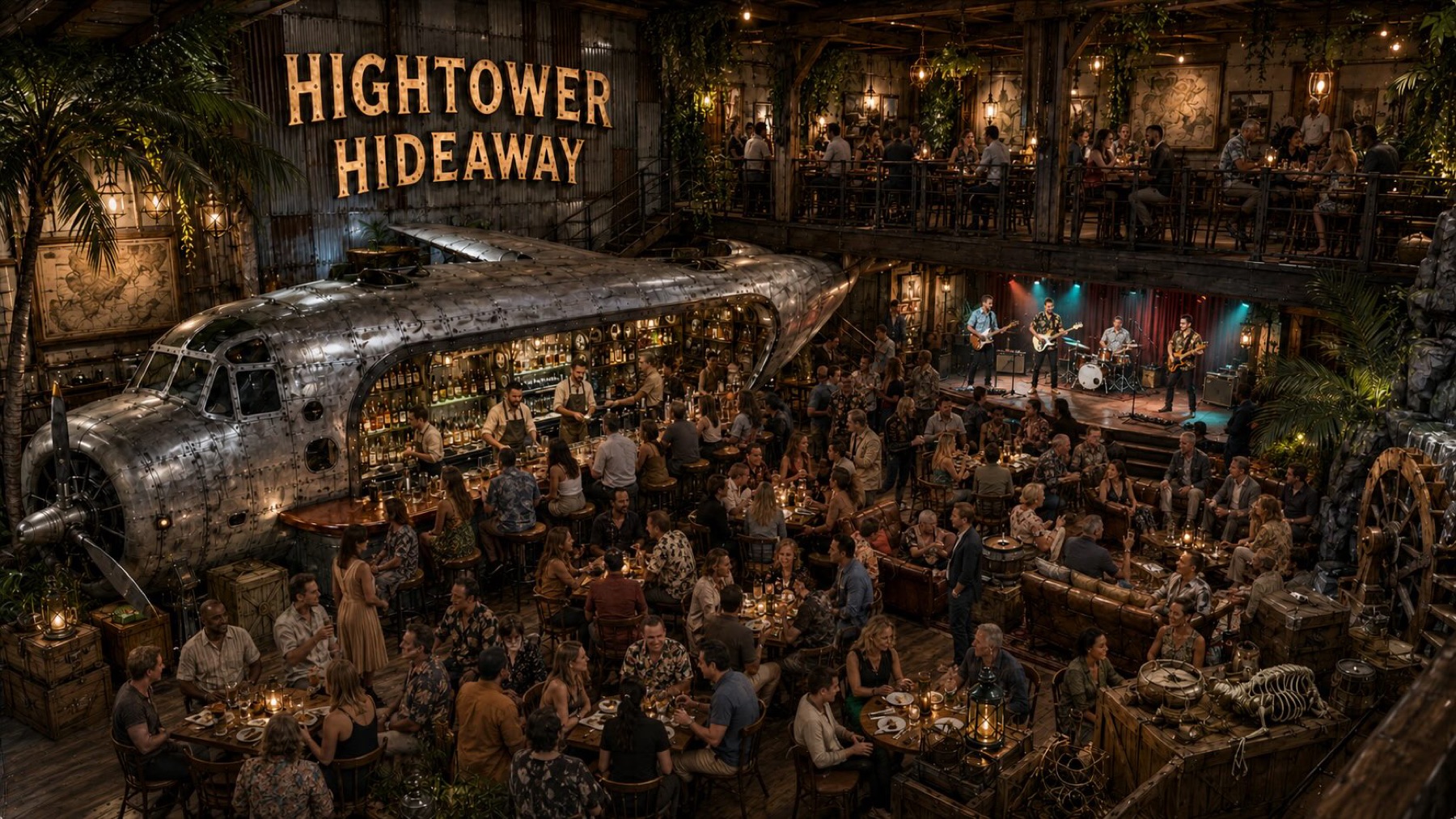
Two-story hangar interior with a 1930s expedition aircraft converted into a bar, diners at tables, and a band on a stage beneath the mezzanine

Hightower Hideaway™ is a two-story immersive restaurant, tropical cocktail bar, and live-performance venue set inside the recovered hangar of explorer Rufus Hightower.

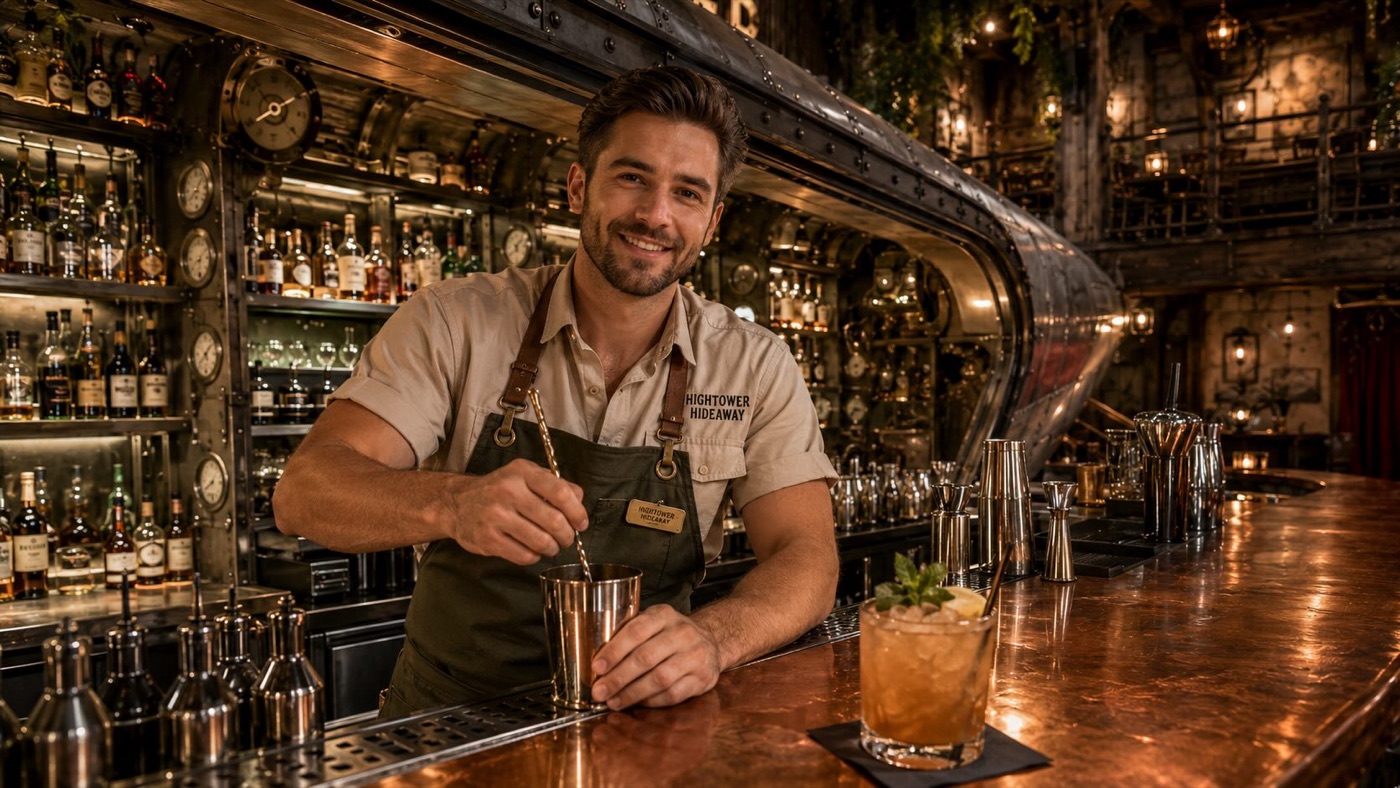
At the center of the room, the battered forward section of a 1930s expedition aircraft has been repurposed into a working bar. Its riveted aluminum fuselage, cockpit instruments, salvaged gauges, and copper service counter still carry evidence of its final, somewhat unsuccessful landing.

Dining tables, leather lounge seating, palms, expedition maps, cargo crates, radio equipment, and recovered artifacts fill the ground floor. An upper mezzanine overlooks the aircraft bar and a small stage tucked beneath the balcony. Live music, serialized performances, environmental effects, and strange transmissions from unfinished expeditions let the room's story keep changing around its guests.

The Hideaway is not meant to feel like a themed restaurant decorated after the fact. The restaurant is part of the Rufus Hightower Universe. Menus become expedition records. Drinks arrive as recovered formulas. Artifacts contain clues. The performers may be musicians, or they may be characters who know rather more about Hightower's disappearance than they initially admit.

Guests can enjoy the Hideaway without knowing any of its mythology. Those paying closer attention may work out that the crash was not an accident.

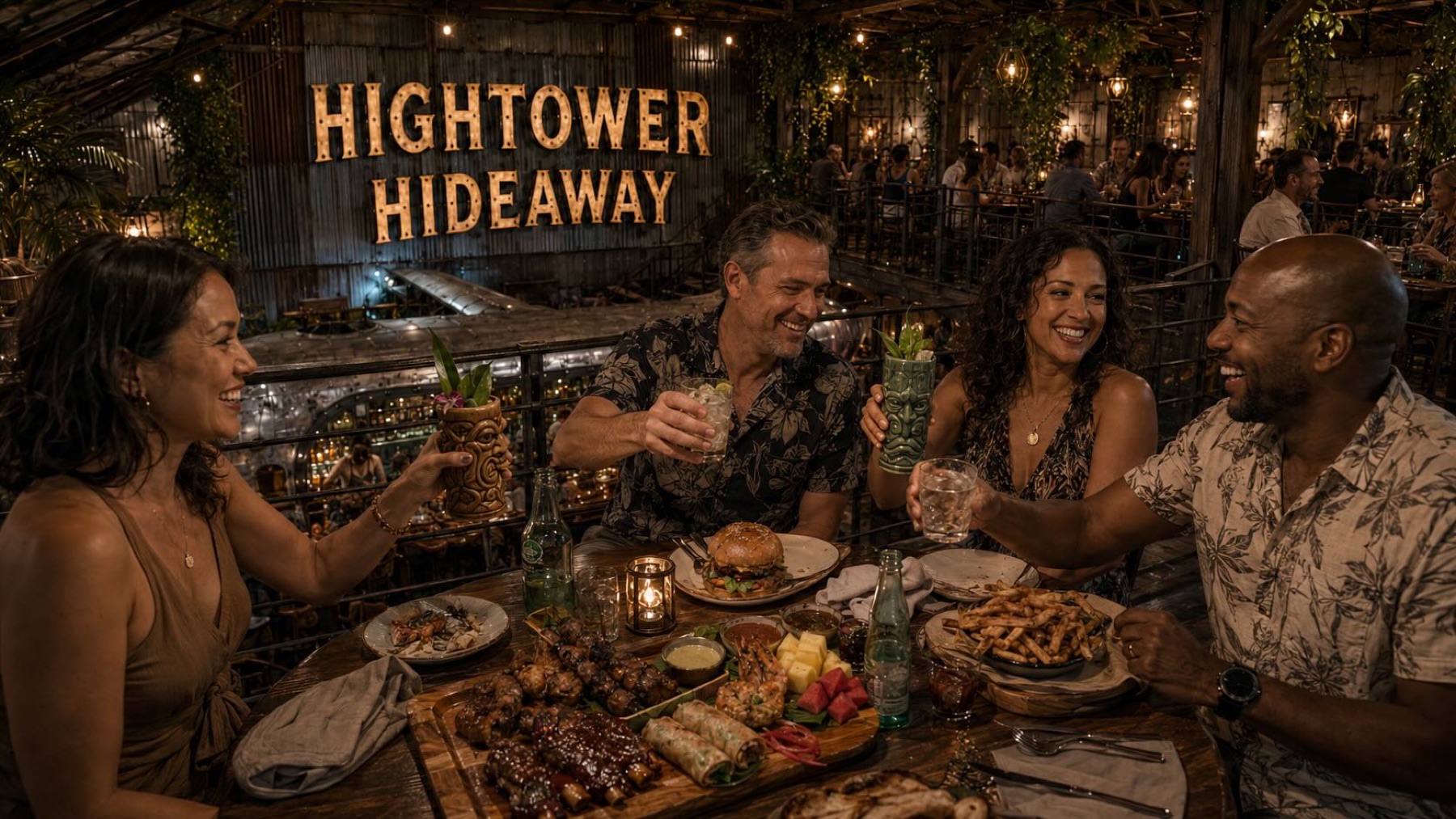
Four guests at a mezzanine table raising tiki mugs and glasses, with the illuminated Hightower Hideaway sign and the aircraft bar visible below
Mezzanine tables overlook the aircraft bar. The expedition board, the Crash-Site Burger, and a round of recovered formulas.
Bartender in a Hightower Hideaway apron stirring a drink at the copper bar built into the aircraft fuselage
The fuselage bar. Copper counter, salvaged gauges, and a service well built into the aircraft's forward section.
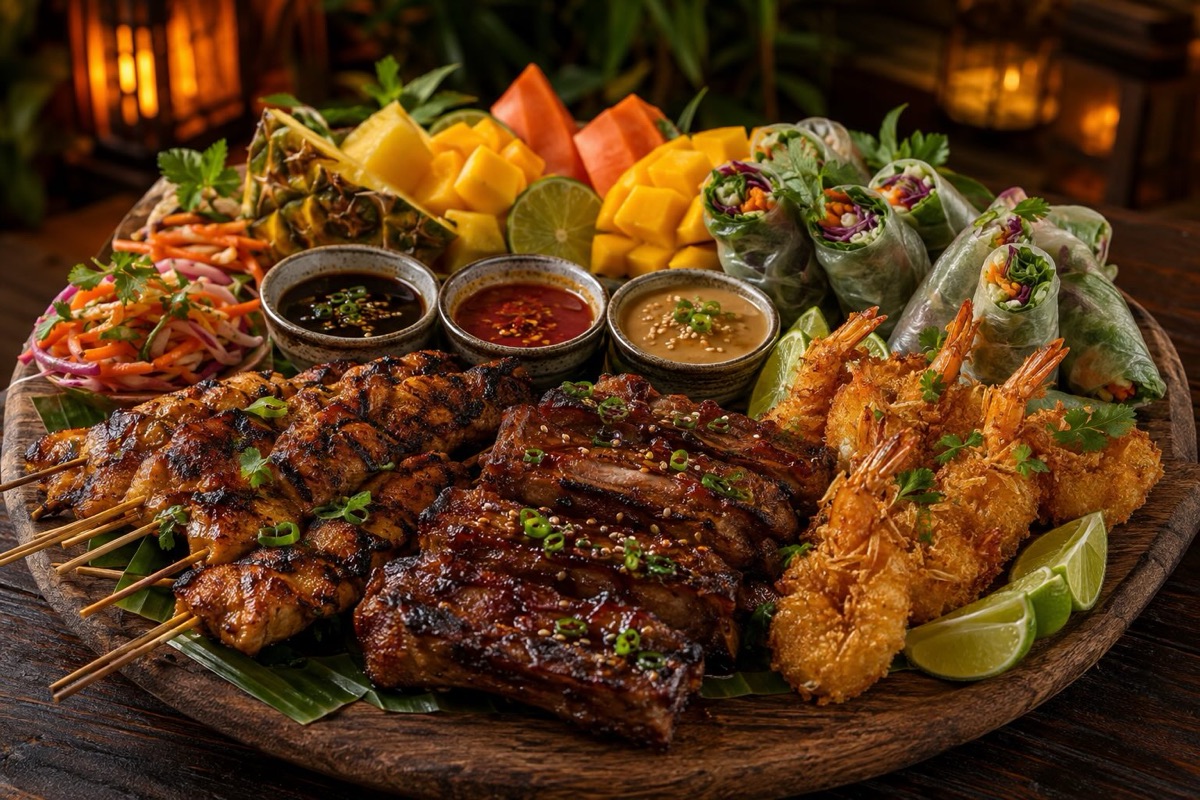
Large shared platter with grilled skewers, glazed ribs, coconut shrimp, spring rolls, tropical fruit and three dipping sauces
The Hightower Expedition Board, built for a crew of two to four.

From the Expedition Kitchen

  • The Hightower Expedition Board

    Charred chicken skewers, glazed pork ribs, coconut shrimp, vegetable spring rolls, tropical fruit, pickled vegetables, and three house sauces. Built for sharing by a crew of two to four.

  • The Crash-Site Burger

    A double smashed burger with smoked cheese, caramelized onions, pickles, shredded lettuce, and Hideaway sauce on a toasted brioche bun.

  • Whitaker's Sticky Ribs

    Slow-cooked pork ribs with tamarind, ginger, brown sugar, citrus, and toasted sesame.

Recovered Cocktail Formulas

  • The Hightower Highball

    Aged rum, Venetian Ginger Ale, lime, aromatic bitters, and a preserved citrus wheel.

  • Convergence Point

    Dark rum, overproof rum, passion fruit, lime, cinnamon, and absinthe mist. Bright tropical flavor followed by something considerably stranger.

  • Anna Bell's Alibi

    Gin, guava, grapefruit, lime, sparkling wine, and aromatic herbs. Elegant, convincing, and possibly incomplete.

Temperance Expeditions

  • Ginger Flight 9000

    Venetian Ginger Ale, lemon, honey, aromatic spice, and fresh mint.

  • The Junior Navigator

    Pineapple, passion fruit, lime, vanilla, and sparkling water.

  • The Uncharted Garden

    Cucumber, basil, lime, green tea, and tonic.

The nonalcoholic list gets the same glassware, garnish, and theater as the cocktails.

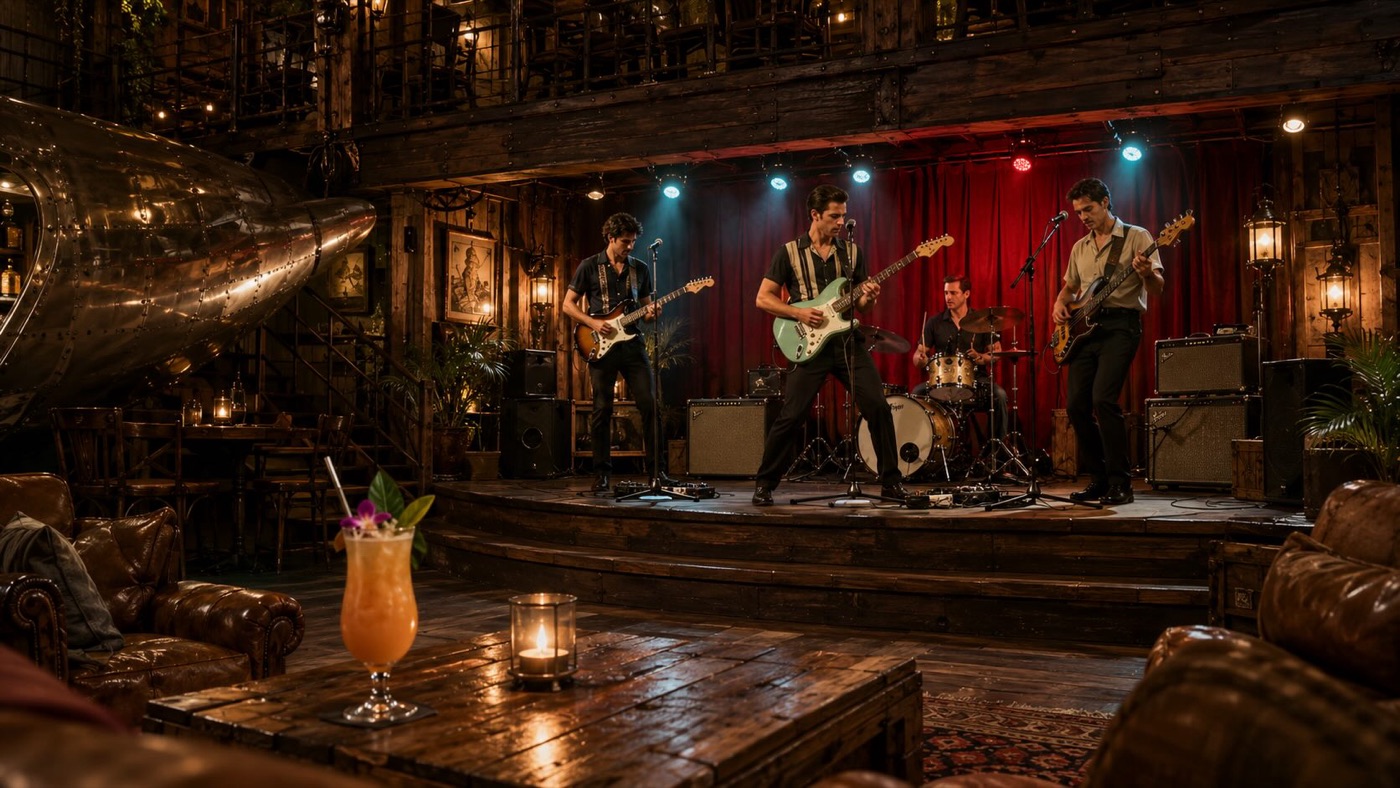
Four-piece band performing on the small stage beneath the mezzanine, with a cocktail on a crate table in the foreground

Live at the Hideaway

The stage beneath the mezzanine supports intimate live music, radio-theater performances, expedition briefings, character appearances, and serialized Hightower events. On ordinary evenings the room works as an atmospheric restaurant and listening lounge. During programmed experiences the lights shift, radios activate, aircraft instruments flicker, and performers extend the mythology without interrupting anyone who simply came for dinner and a good drink. The objective is not to make every guest perform. The objective is to make every guest wonder whether something is about to happen.

Hightower Hideaway is a proposed hospitality concept, not an operating location. Names, ingredients, and offerings shown here are conceptual and subject to development.

Explore Hightower Hideaway

The Universe So Far

What actually exists, labeled honestly. Prototypes are prototypes.

  1. Convergence Points: Episode 1 Trailer

    Produced

    Cinematic trailer establishing the crew, the idol, the portal, and the tone.

  2. Hightower Expedition live events

    Produced

    Pulp-adventure themed nights at Venetian Soda Lounge combining cocktails, storytelling, and interactive games. Running since 2022.

  3. Cocktail and hospitality integration

    Produced

    Themed drinks and expedition service that put the fiction on the bar instead of in a brochure.

  4. Expedition artifacts and dossiers

    Produced

    Fictional correspondence, field journals, maps, and props used inside live events and the games as in-world evidence.

  5. Temple of the Golden Idol: adventure demo

    Prototype

    Playable point-and-click adventure. Rufus takes the call, packs the expedition, and solves the idol sequence in the map room. A working vertical slice, not a finished commercial release.

  6. Convergence Points: side-scrolling demo

    Prototype

    Playable action platformer following the tomb, the portal, the stronghold rescue, and the flight home. Built to test the story in a second genre.

  7. Collectibles and field merch

    Concept

    Tiki mugs, enamel pins, expedition tees, cases, and pennants designed as artifacts from the world. Design concepts, not a live storefront.

  8. Expanded serialized story

    In Development

    Further episodes, characters, and locations building on the Convergence Points arc.

The World in 60 Seconds

A storyworld you can walk into

Challenge

How can an original adventure story move beyond the screen and become something guests can enter, taste, play and continue exploring after they leave?

Approach

Build one flexible storyworld across several forms of participation. Rufus Hightower begins as a cinematic adventure, continues through playable prototypes and physical correspondence, and becomes part of the environment through cocktails, props, live events and hospitality.

Design Principle

The mythology should reward curiosity without becoming homework. A guest may simply enjoy the atmosphere, food, drinks and music. Another guest may follow a clue, open a dossier, play a game and discover that the room belongs to a much larger story.

Current Result

A developing transmedia world with produced video, a completed live interactive mystery, hospitality events, playable prototypes, physical story artifacts and a complete immersive restaurant concept.

  • Film and cinematic storytelling
  • Playable interactive prototypes
  • Live events and hospitality
  • Interactive mystery design
  • Physical correspondence and artifacts
  • Environmental storytelling
  • Food, beverage and merchandise
Produced Live Experience

The completed live experience Who Killed Dr. Funk? demonstrated the world operating as a playable hospitality mystery through cocktails, physical evidence, recorded testimony, video, telegraph messages and live character interaction.

My Role

What I actually did

Rufus Hightower is an independently developed storyworld created to explore how narrative, hospitality and interactive design can operate as one connected guest experience.

Creative Direction

Created the world, characters, visual direction, tone and continuing Convergence Points mythology.

Writing and Story Development

Developed the central narrative, character relationships, environmental backstory, artifact copy, serialized story extensions and interactive mystery structure.

Film and Media Production

Produced cinematic material, promotional media, recorded testimony and story content used to introduce the characters and world.

Hospitality Experience Design

Connected menus, cocktails, service language, props, live music and environmental effects to the fiction.

Interactive Prototyping

Developed playable demonstrations to test how the story and characters translate into interactive formats.

Live Experience Production

Tested elements of the world through themed events, cocktails, games and guest interactions at Venetian Soda Lounge.

Experience and Mystery Design

Designed Who Killed Dr. Funk? as a distributed investigation involving suspects, motives, alibis, media, physical evidence, environmental clues and an evidence-based resolution.

Technical Integration

Connected recorded media, an interactive payphone, television content, printed evidence and practical environmental elements to the guest experience.

The project combines original creative work with practical experimentation and AI-assisted visualization. Concept imagery is used to communicate intent. Produced experiences and working prototypes are labeled separately.

Field Testing at Venetian Soda Lounge

Putting the world in front of people

Elements of the Rufus Hightower Universe have been tested through live events at Venetian Soda Lounge since 2022. These events explored how much story a hospitality environment can carry without interfering with the basic pleasure of having a drink, hearing music and spending time with other people.

The strongest example is Who Killed Dr. Funk?, a completed interactive hospitality mystery that turned the venue into a playable investigation inside the Rufus Hightower Universe.

Produced Live ExperienceApproximately one hour

Who Killed Dr. Funk?

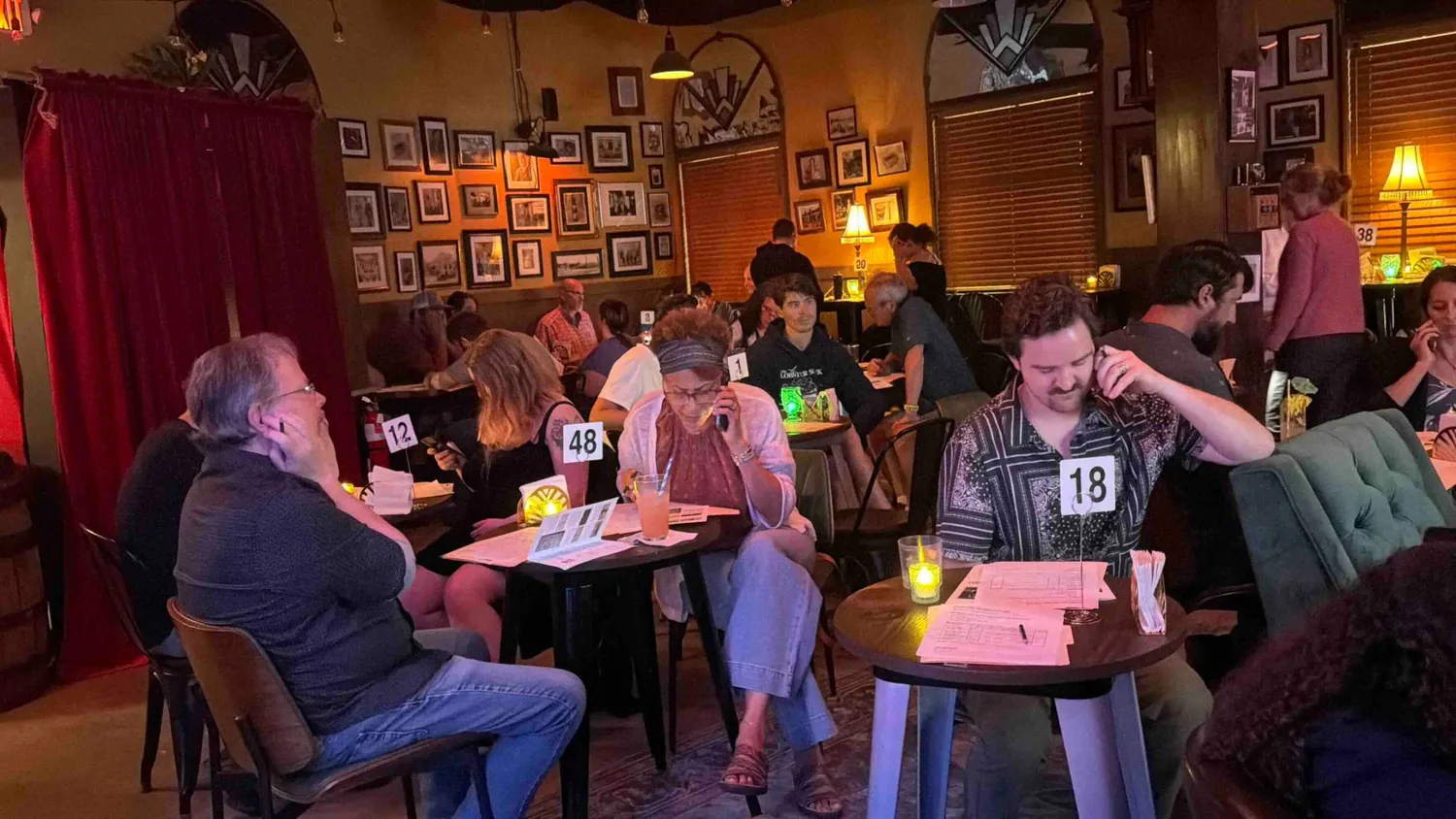
Guests at Venetian Soda Lounge holding telephone handsets to their ears while reading printed case files during Who Killed Dr. Funk?
Guests dialling for suspect testimony. Photographed during the event.

Guests investigated the apparent murder of Dr. Archibald Funk by gathering information from cocktails, physical props, recorded payphone testimony, environmental media and a live character. Rufus Hightower was missing. Four suspects were in play.

No single clue solved it. Guests had to compare accounts across different media and work out which ones agreed. The room never stopped serving drinks while they did it.

Explore the Who Killed Dr. Funk? Case Study

The broader live testing focused on

  • Whether guests understood the premise without a formal explanation
  • Which props encouraged investigation
  • How cocktails could function as story artifacts
  • How performers could extend the fiction without forcing participation
  • How much information guests wanted before curiosity became homework
  • Whether the experience still worked for someone who ignored every clue
What the Testing Established
  • Story works best when it is discovered rather than announced.
  • Guests need a satisfying ordinary experience before optional mythology is added.
  • Physical objects create stronger curiosity than explanatory signage.
  • Live moments should briefly alter the room rather than stop the room.
  • Zero-proof drinks deserve the same presentation and narrative weight as cocktails.
How Convergence Points Work

The rules the world runs on

Resonance

Certain combinations of material, location and frequency create measurable reactions between objects.

Alignment

A single object cannot create a crossing. Several components must sit in the correct physical and acoustic relationship.

Threshold

When the system reaches equilibrium, two locations briefly occupy the same physical point.

Cost

Every opening destabilises the surrounding area. Repeated crossings become less predictable and harder to close.

Human Connection

Some people keep a residual resonance after crossing. That person can become detectable to other Convergence Points even when carrying no artifact.

The phenomenon is treated as unexplained engineering rather than conventional magic. Characters may misunderstand it, but the story follows consistent rules.

What the Project Has Taught Me

Imagine, build, watch what people actually do

Rufus Hightower began as a filmed adventure character. Testing the world through hospitality, live events, games, physical artifacts and Who Killed Dr. Funk? changed how I understood it.

The most important discovery was that immersion does not require constant performance. A believable room, a useful object and one unexplained event can create more curiosity than a lengthy explanation.

Each format also revealed a different weakness. Film established tone but kept the audience outside the world. Games created agency but needed clearer rules. Live events created immediacy but demanded careful pacing. Hospitality gave the world a permanent social purpose. Who Killed Dr. Funk? proved that these formats could operate together as a single guest experience.

  1. Imagine
  2. Build
  3. Place it in front of people
  4. Observe
  5. Keep what works
  6. Rewrite what does not

Development timeline

  1. 2022 onwardRufus-themed hospitality events begin at Venetian Soda Lounge.
  2. Produced Live ExperienceWho Killed Dr. Funk? demonstrates the world operating as an interactive mystery through hospitality, physical evidence, recorded testimony, video, telegraph messages and live performance.
  3. 2023 to 2026Cinematic material, artifacts, interactive prototypes and the larger Convergence Points mythology are developed.
  4. CurrentThe Expedition Letters and Hightower Hideaway are in concept development while the playable experiences continue to evolve.

Artifacts & Field Merch

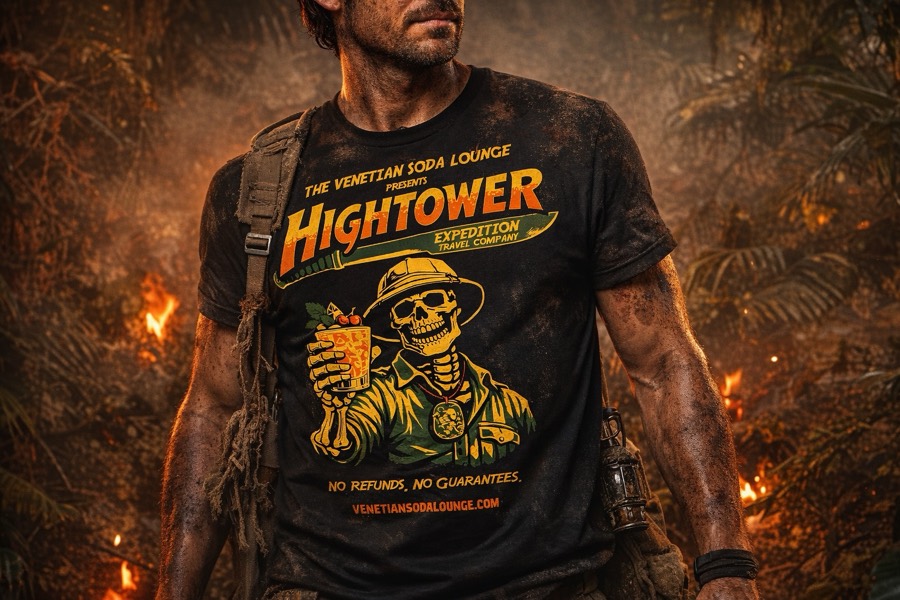
Expedition Tee

Expedition Tee

Issued to anyone foolish enough to sign on. No refunds, no guarantees.

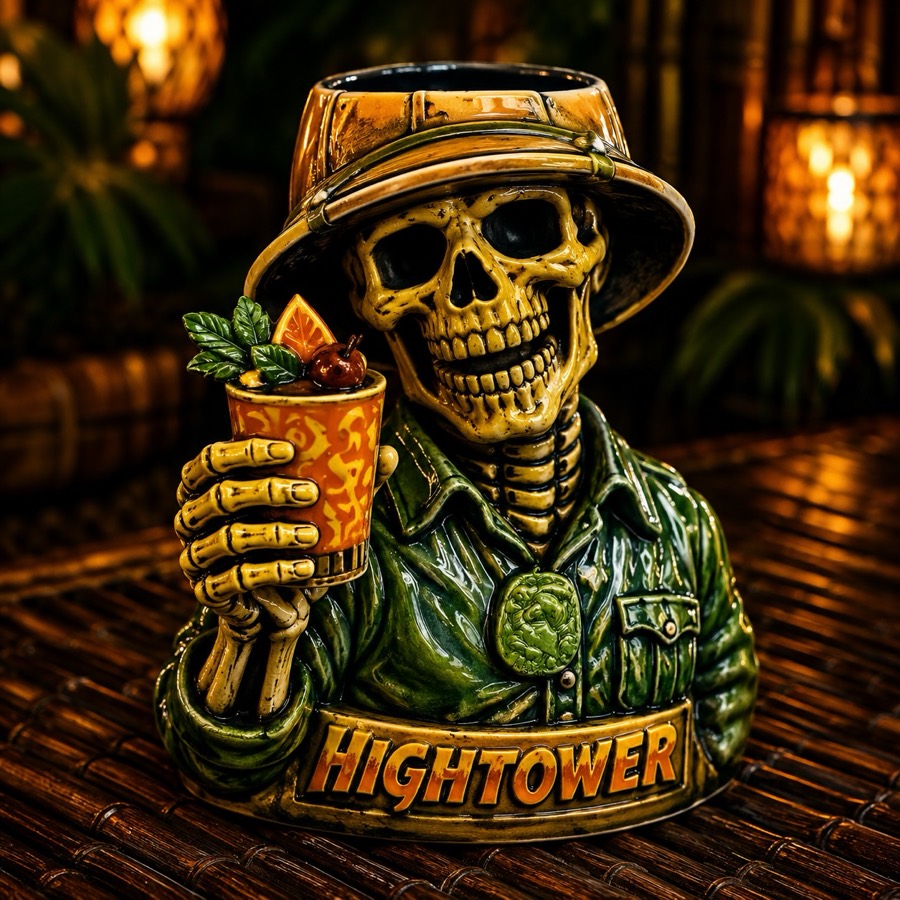
Hightower Tiki Mug

Hightower Tiki Mug

The drink waiting at the end of the story, in ceramic form.

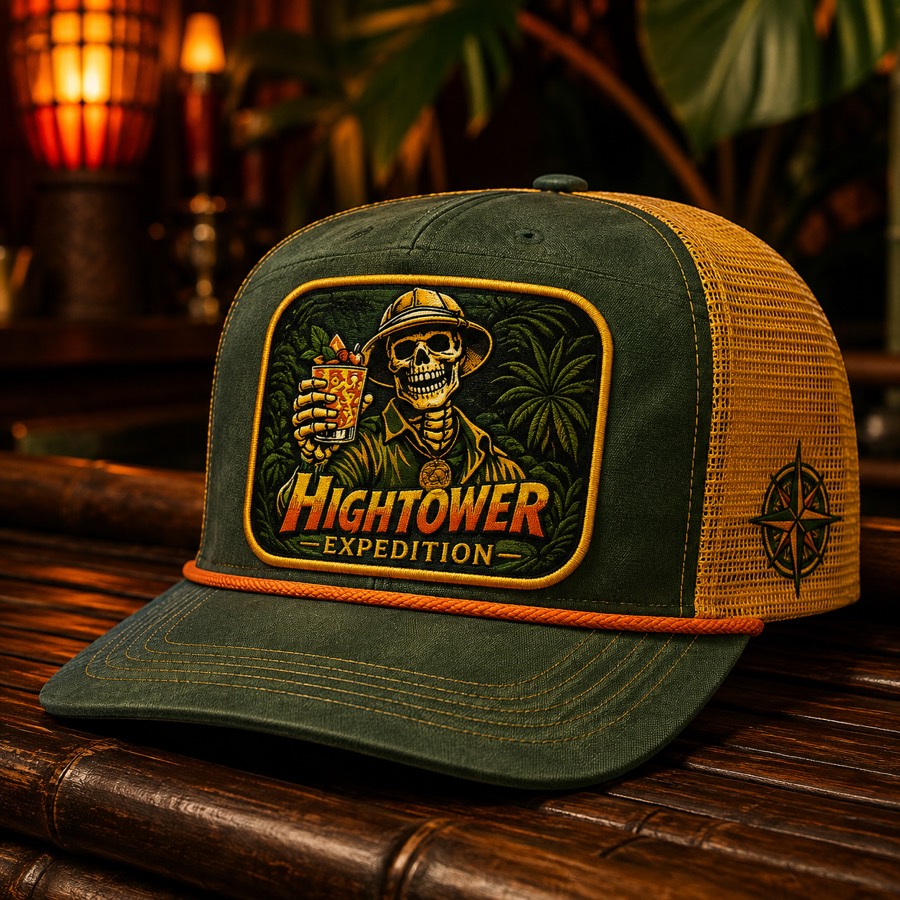
Expedition Cap

Expedition Cap

Field-issue colors, compass rose on the flank.

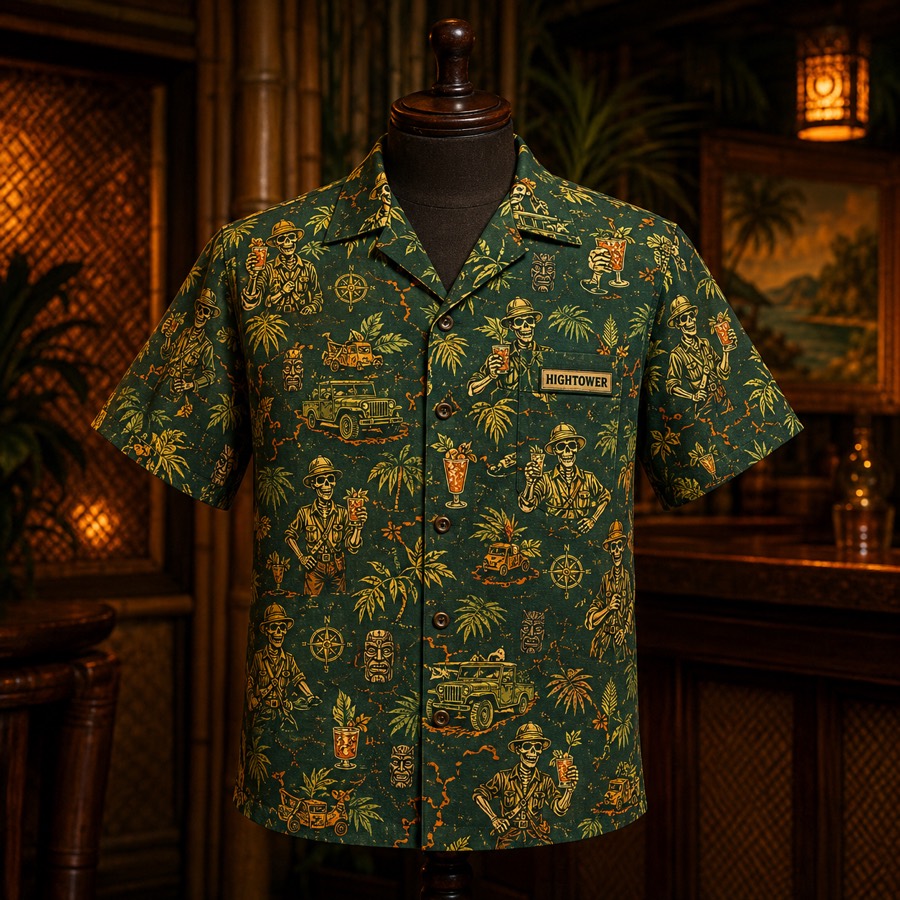
Aloha Shirt

Aloha Shirt

Standard uniform for a tropical port at midnight.

View Field Equipment and Artifacts

Rufus Hightower™ and its associated stories, characters, artwork, and original materials are © 2023–2026 Justin Bunnell. All rights reserved.