Cocktail Evidence
Details carried in the drinks helped guests identify or eliminate the possible murder weapon.
Approximately one-hour interactive hospitality mystery presented at Venetian Soda Lounge.
Who Killed Dr. Funk? turned Venetian Soda Lounge into a playable mystery inside the Rufus Hightower Universe. Guests investigated the apparent murder of Dr. Archibald Funk by gathering information from cocktails, physical props, recorded testimony, environmental media and a live character.
The experience was designed so guests could take part without being required to perform. A group could actively solve the case, follow only a few clues, or simply enjoy the atmosphere while the mystery went on around them.
Guests entered a venue in which Dr. Archibald Funk had apparently been murdered and Rufus Hightower was missing.
The room held different categories of evidence distributed across drinks, props, media and character interactions.
The investigation involved Rufus Hightower, Anna Bell Darrow, Al Whitaker and Sir Reginald Ainsworth.
No single clue solved the mystery. Guests compared information from several sources and worked out which accounts agreed and which contradicted one another.
After roughly an hour, guests presented or compared their conclusions and the solution was revealed.
Missing, person of interest
Questioned. Last known location, The Bali Hai
Questioned. Last known location, The Crooked Palm
Questioned. Last known location, Burlington Civic Hall
Printed on every guest case file. Order the five, cross out what the evidence clears.
Details carried in the drinks helped guests identify or eliminate the possible murder weapon.
Each suspect had a number. Guests dialled the venue's payphone for that account, then recorded on the case file where the suspect said they were and whether the story cleared them.
Environmental media supplied additional story information without requiring a formal presentation.
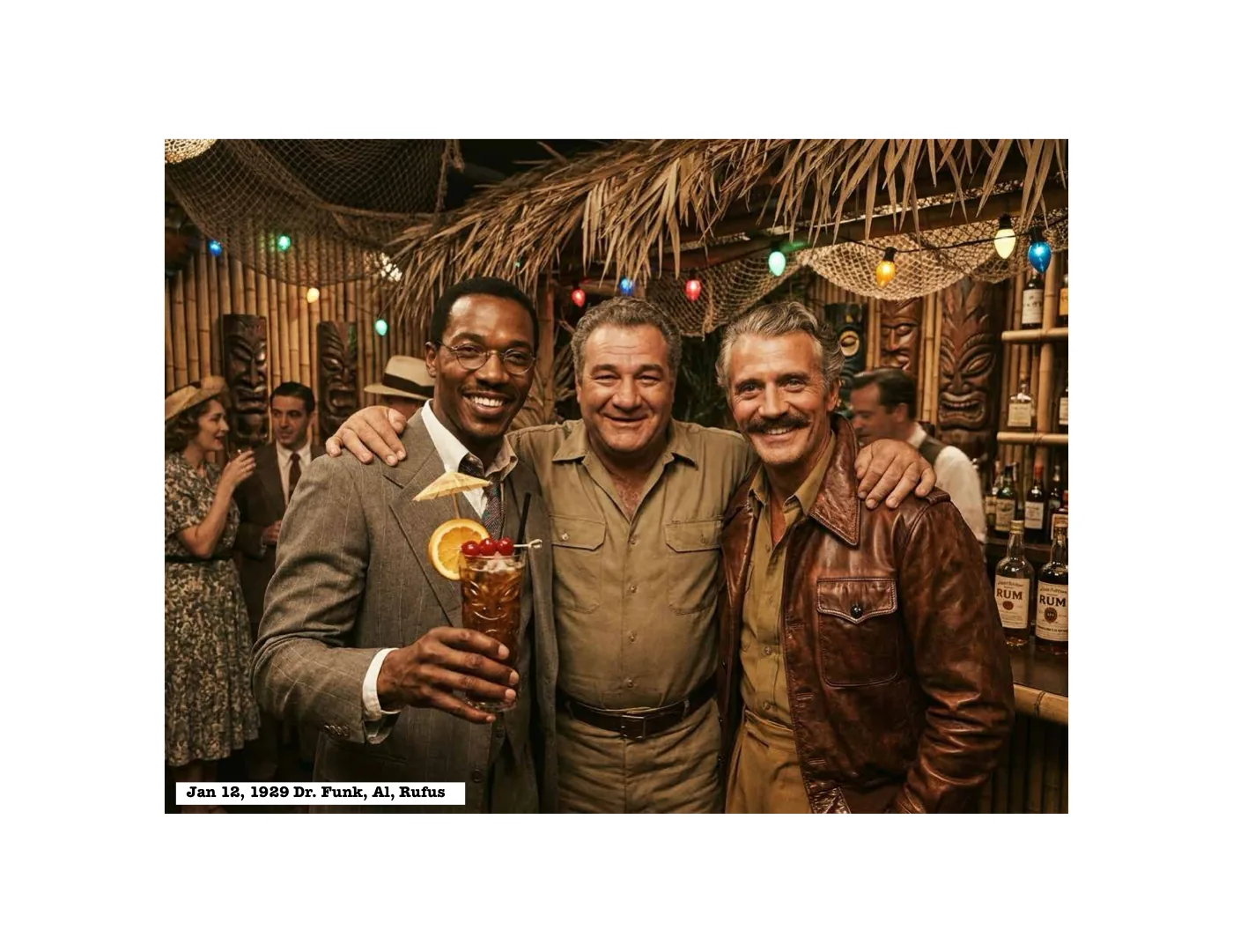
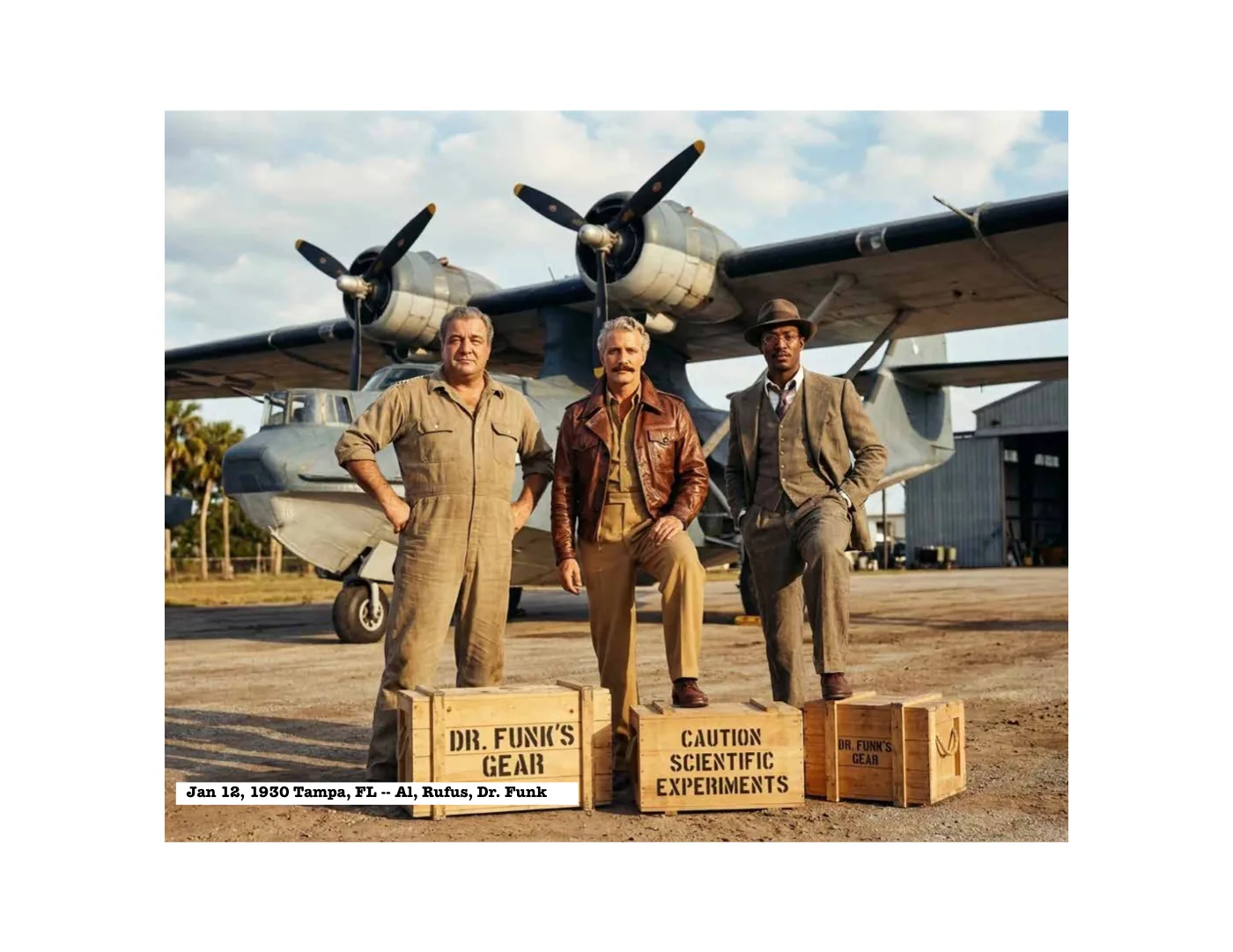
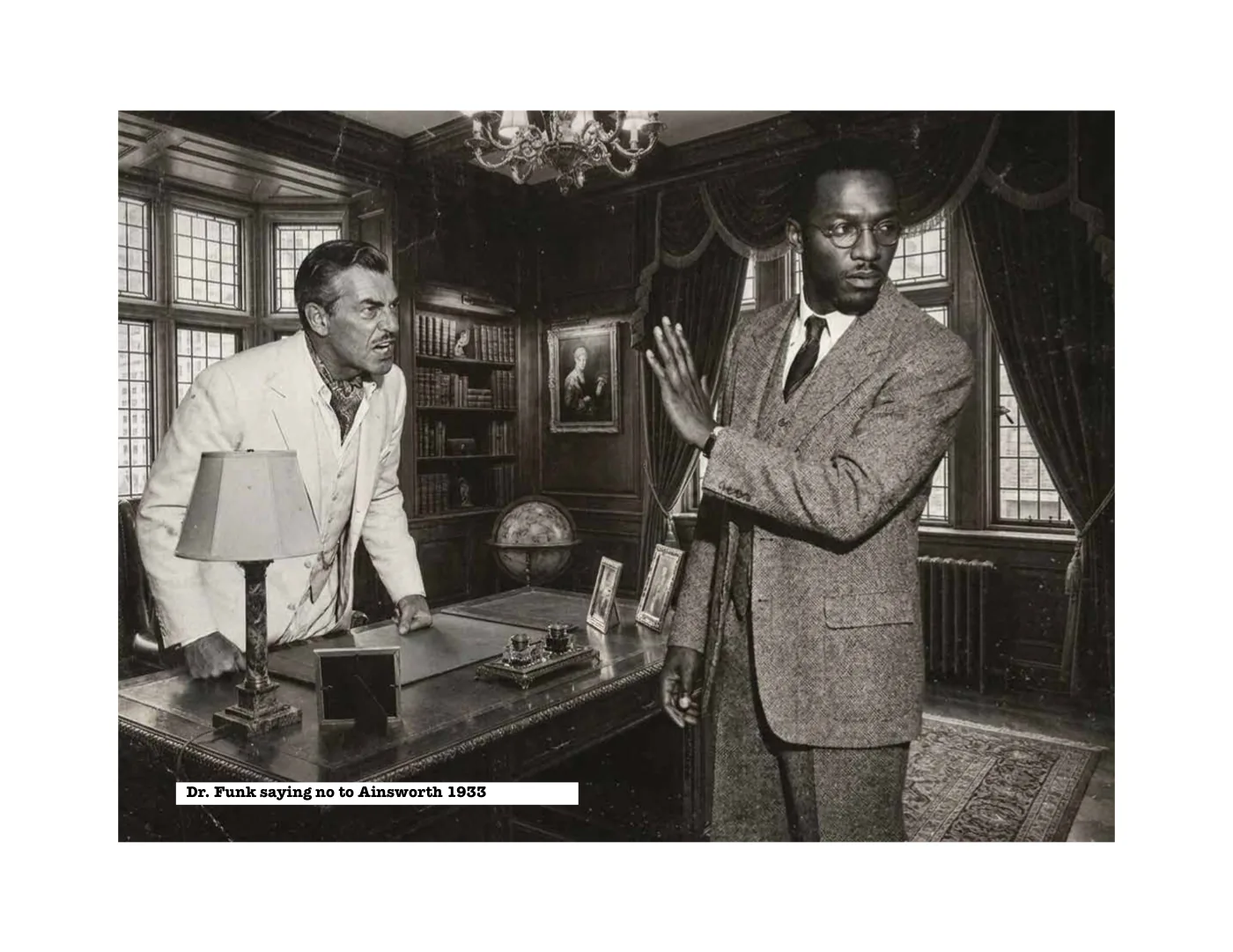
Images, correspondence and expedition records let guests establish relationships, movements and motives.
Physical objects were presented as in-world evidence rather than as decorative props.
Short transmissions introduced time-sensitive information and tied the mystery to the larger expedition mythology.
The hospitality materials themselves participated in the investigation.
An actor provided information, responded to guests and moved the experience forward without turning every guest into a performer.
The room did not pause so the story could begin. The story was already hiding inside the room.
A central murder, multiple suspects, motives, alibis, contradictions and a final evidence-based solution.
Guests decided which evidence to inspect, how deeply to participate and when they were ready to form a conclusion.
The mystery was communicated through audio, video, print, physical props, cocktails and live performance.
Story elements sat inside the existing operation rather than being staged as a separate theatrical production.
The room worked as crime scene, evidence archive and performance space at the same time.
Recorded media, the interactive payphone, television content and practical environmental elements were wired into the guest experience.
Guests dialled the phone for each suspect account, read the board, compared notes and ordered drinks, all at the same time. The bar never stopped serving.
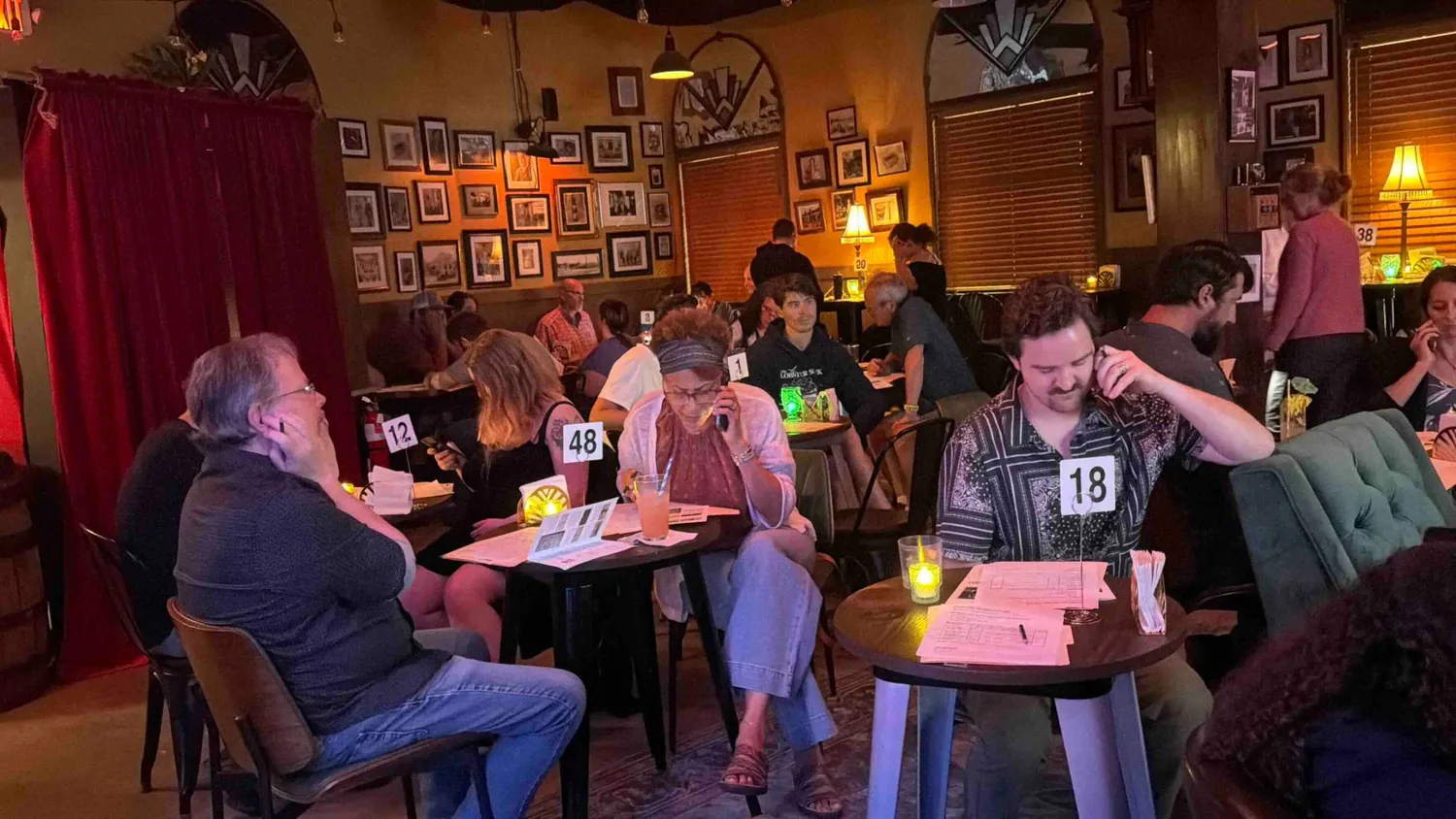
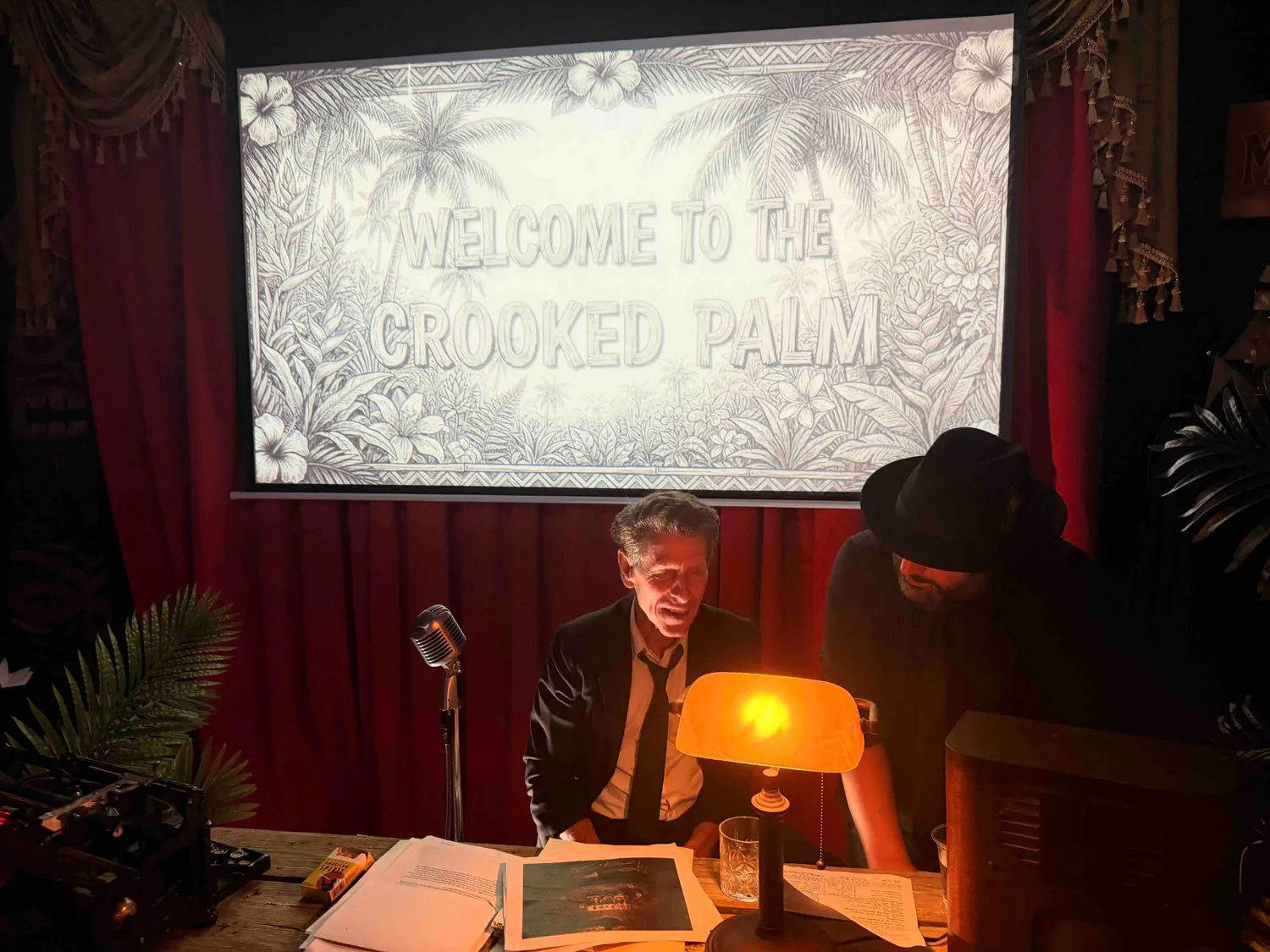
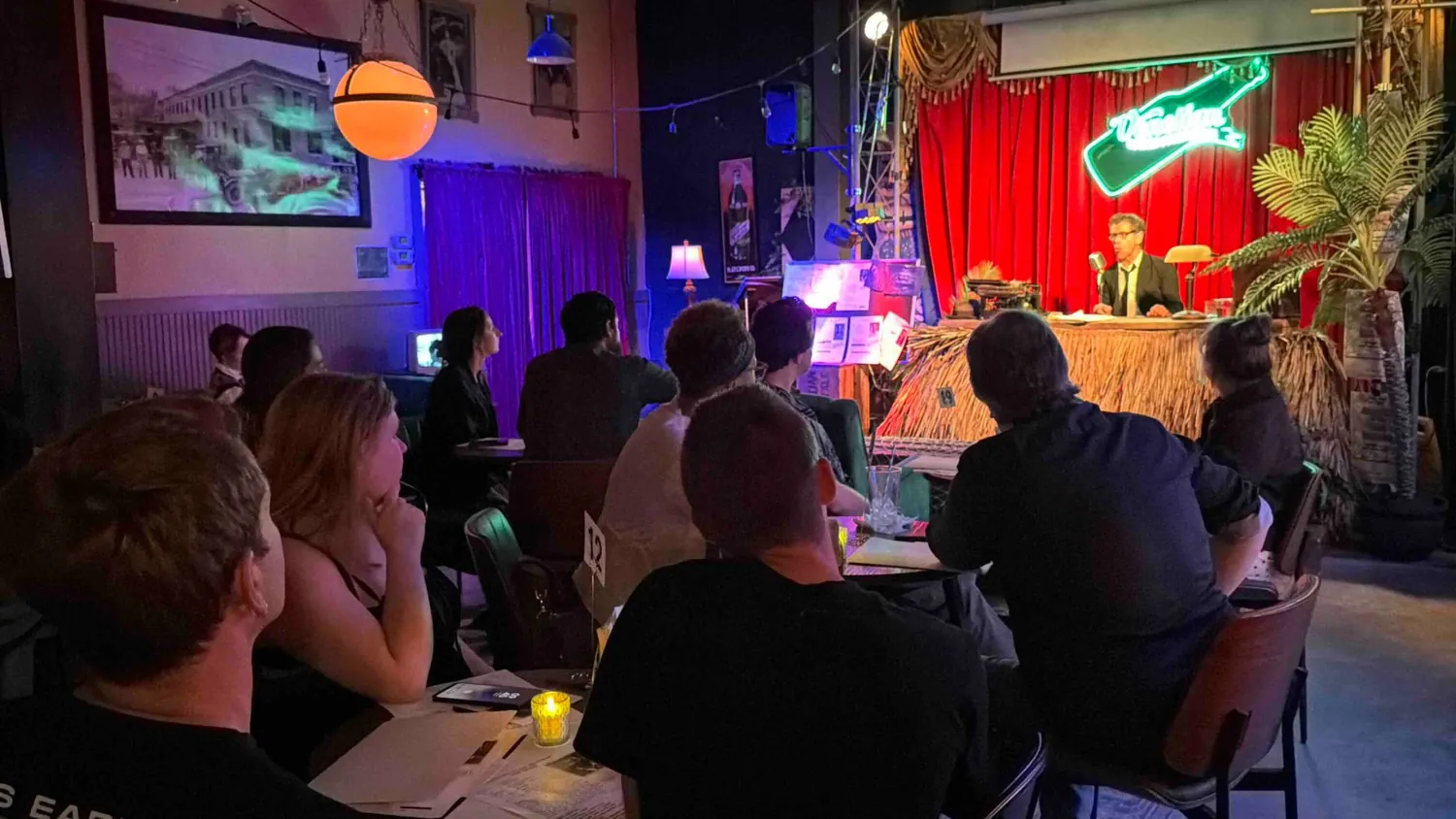
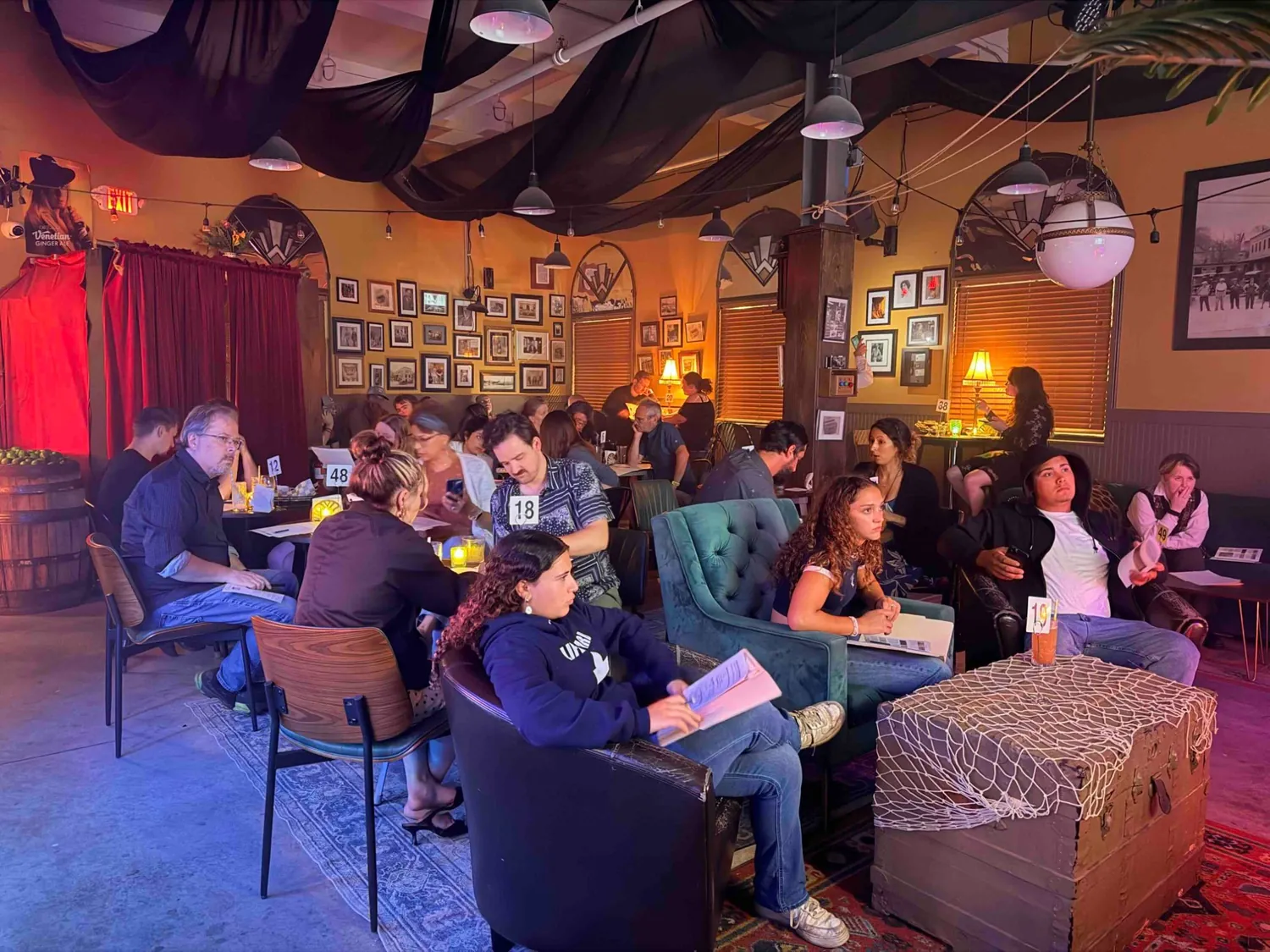
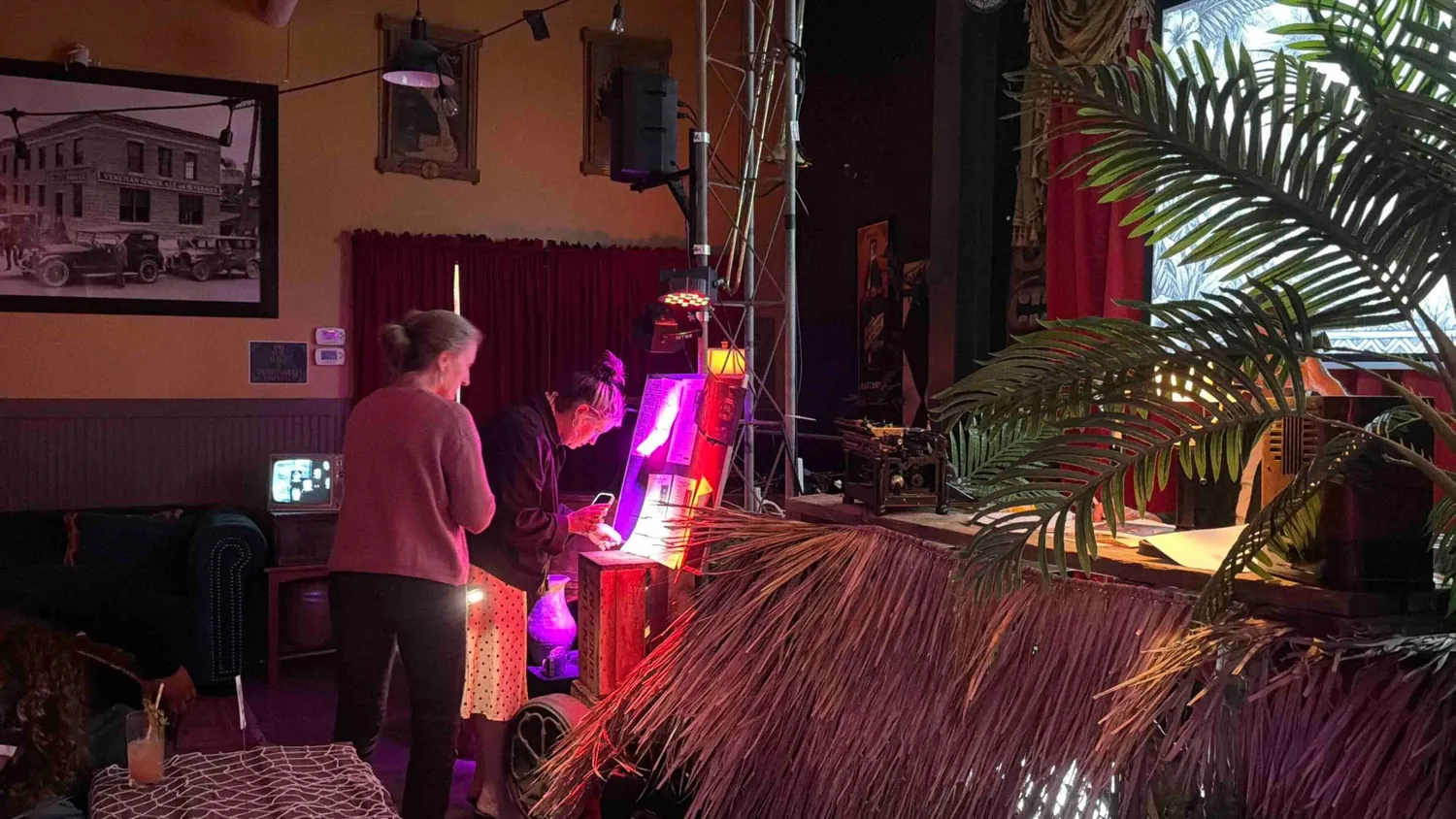
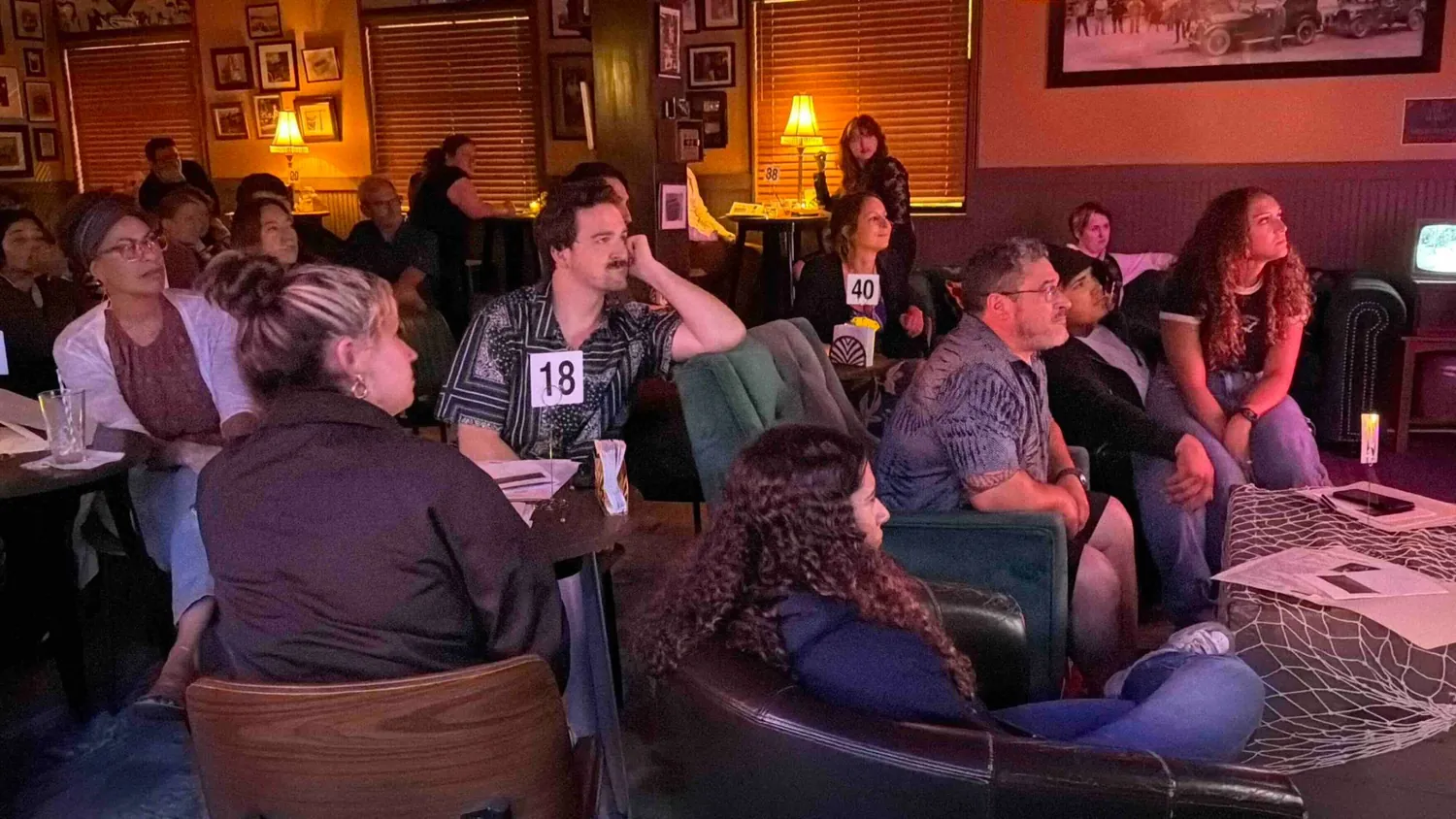
Photographed during Who Killed Dr. Funk? at Venetian Soda Lounge.
Production materials from the show. Guests handled the case file, read the reports and worked the phone against them.
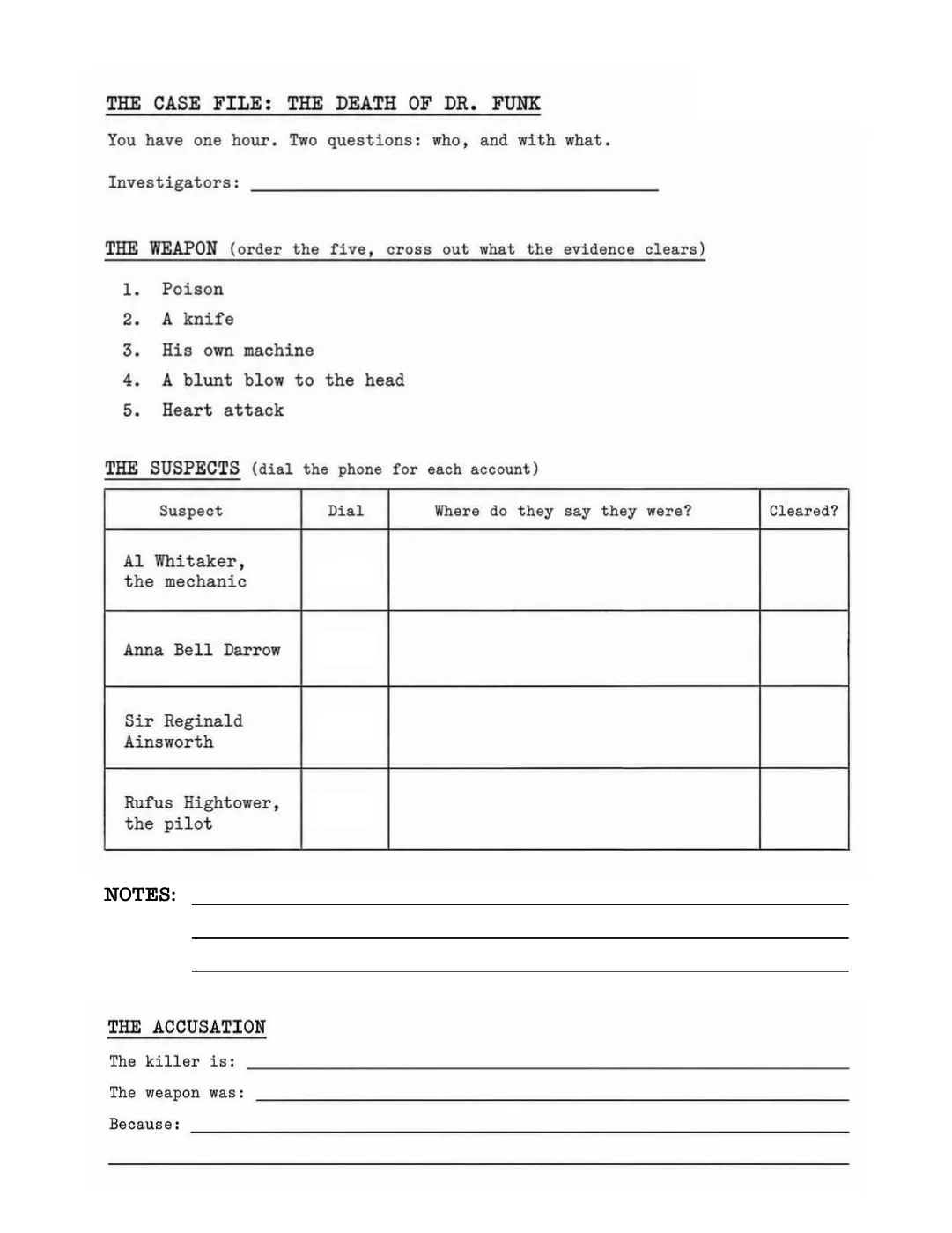
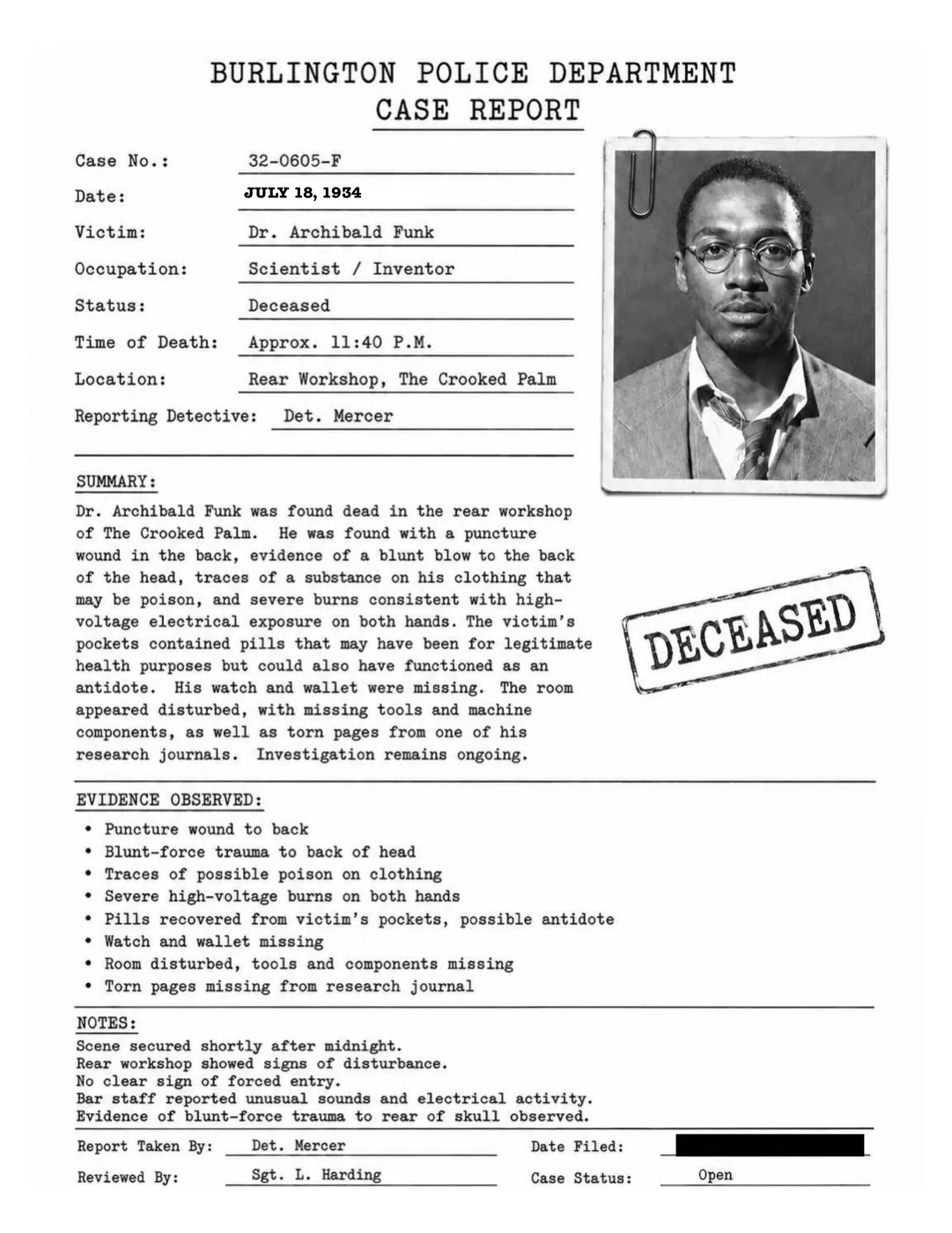
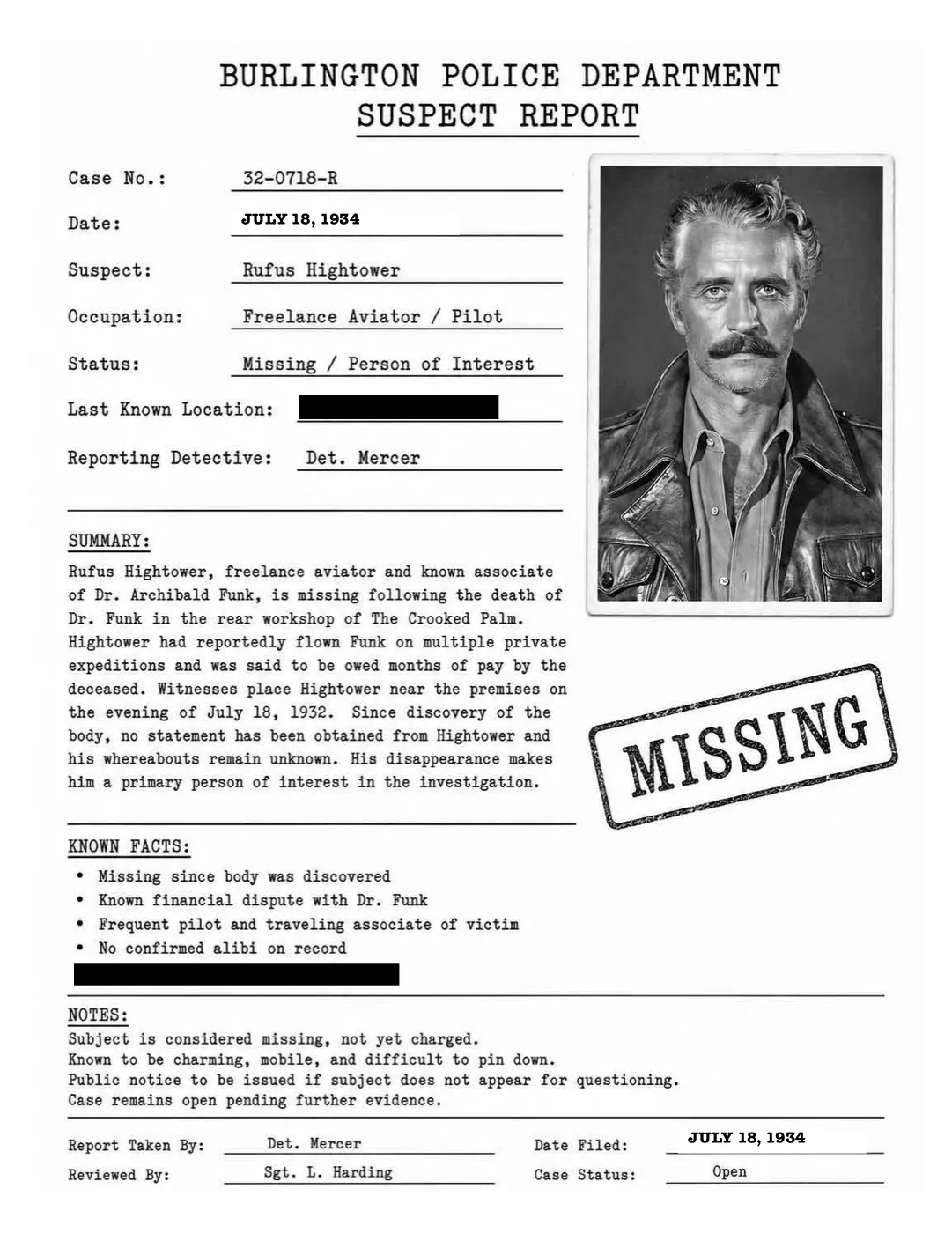
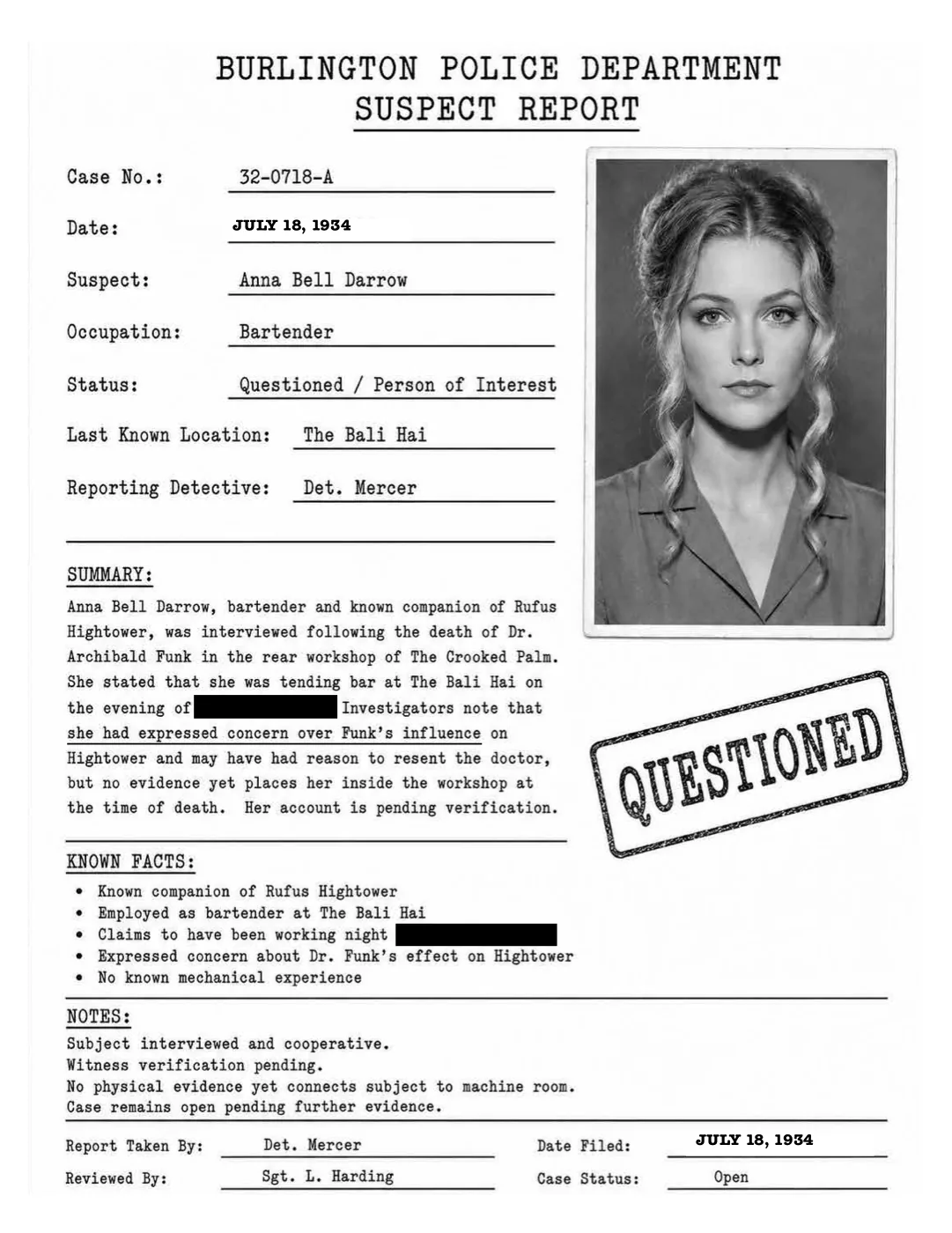
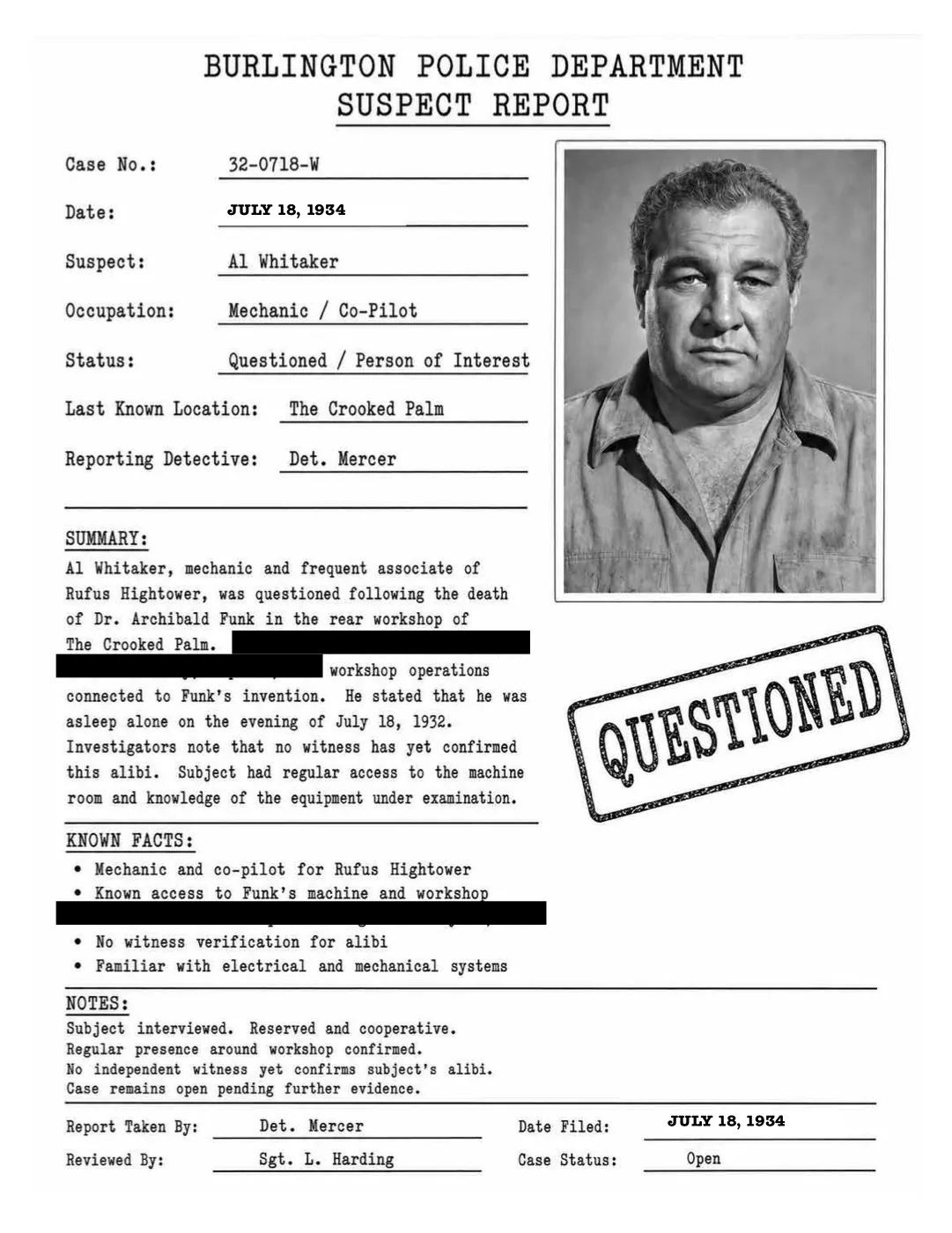
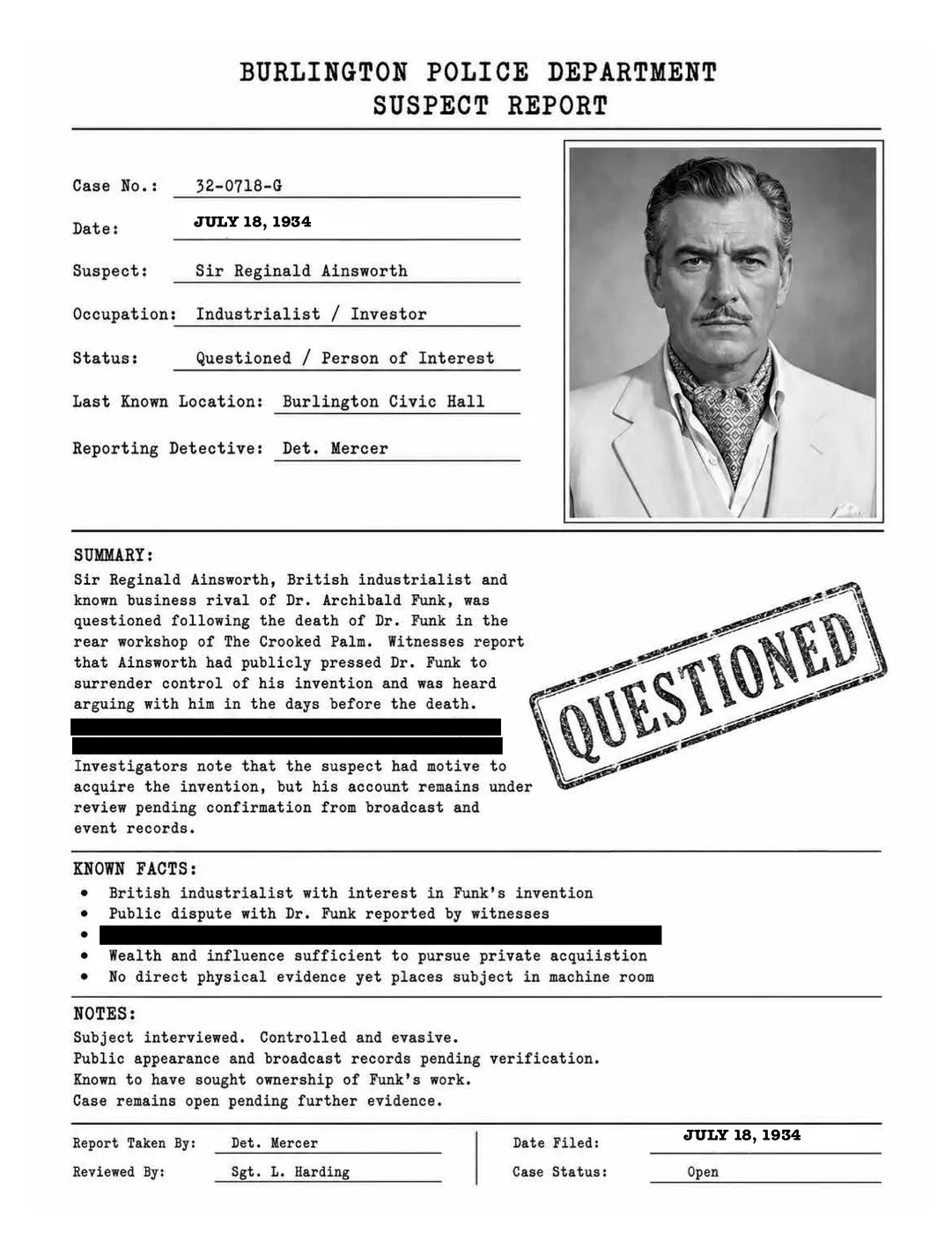
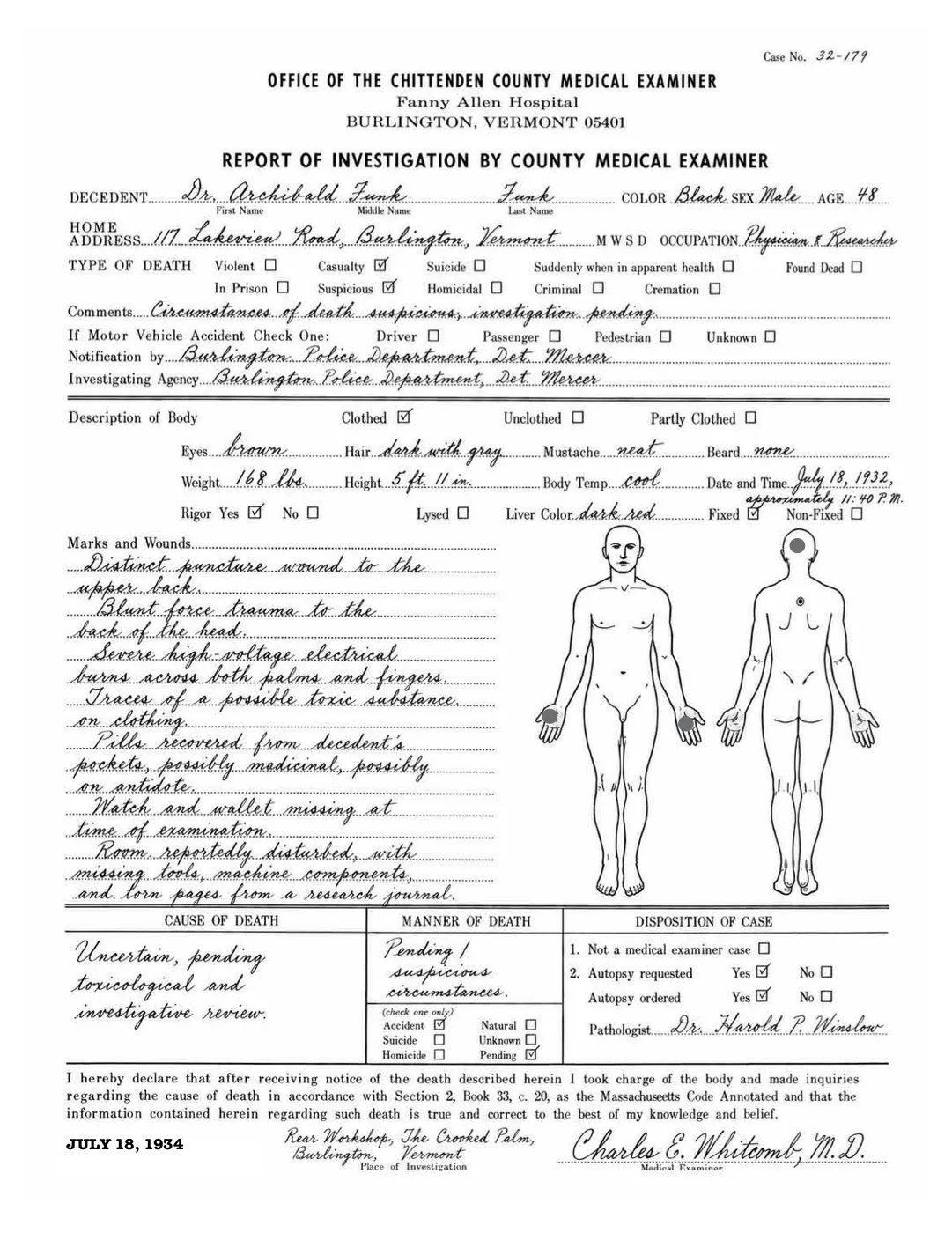
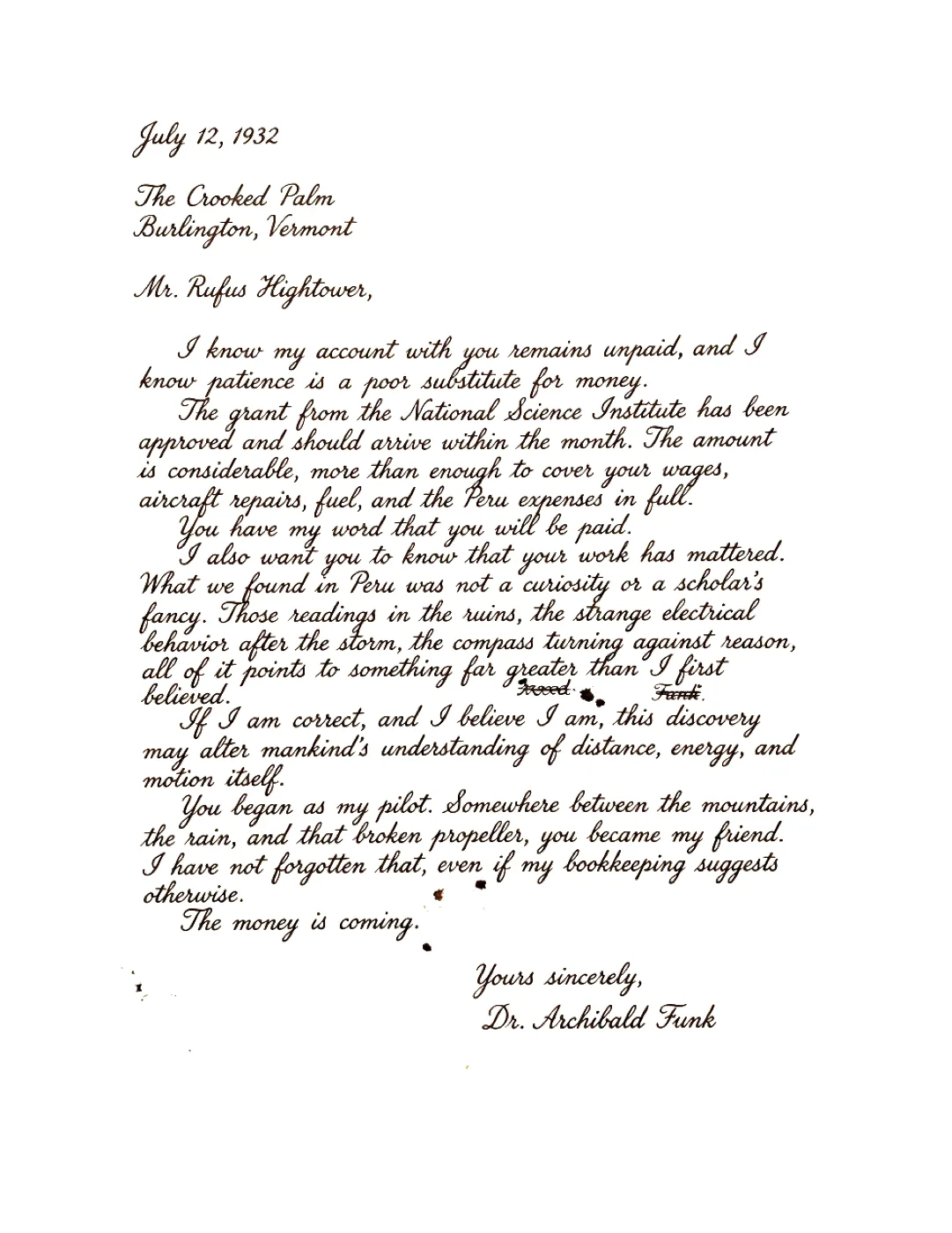
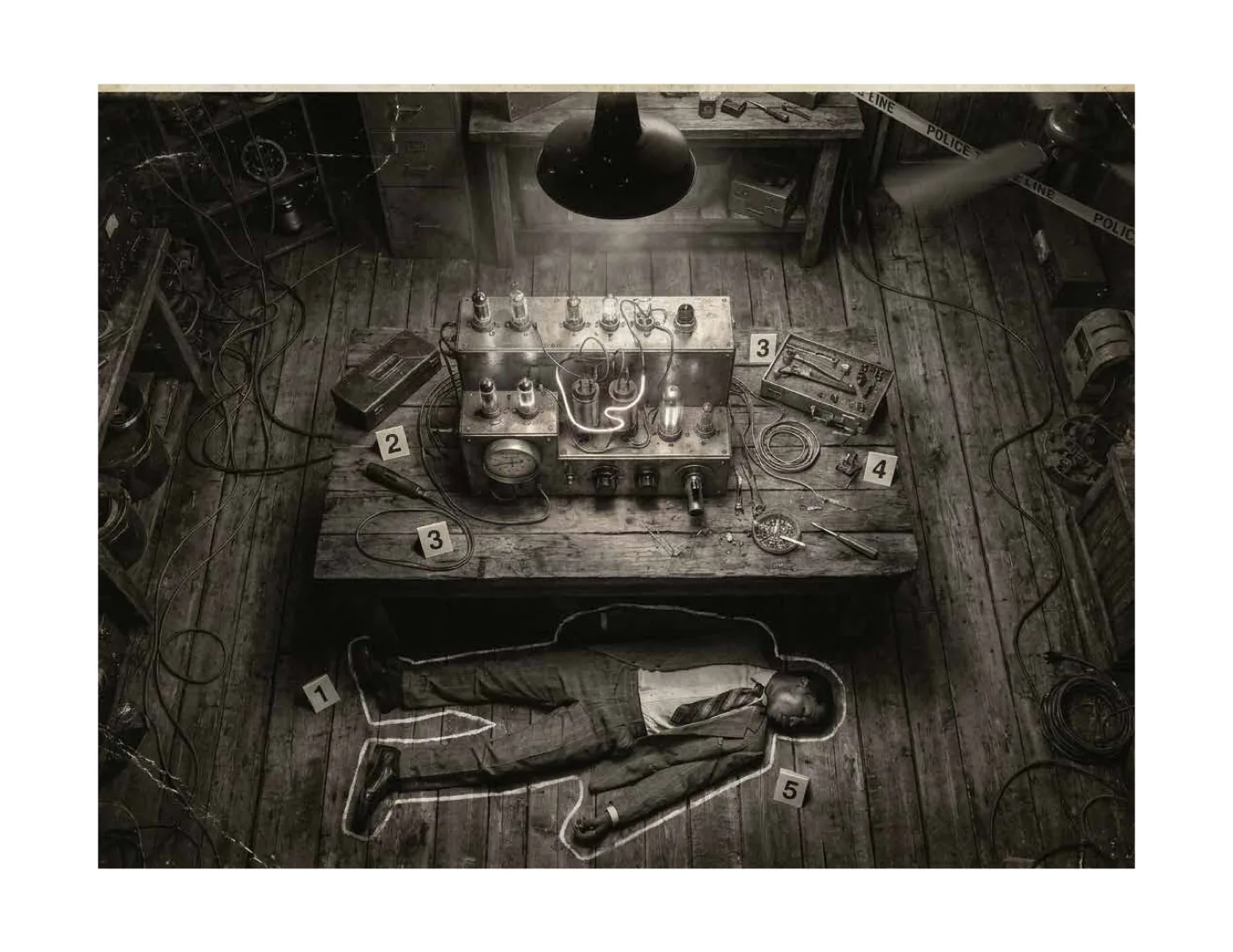
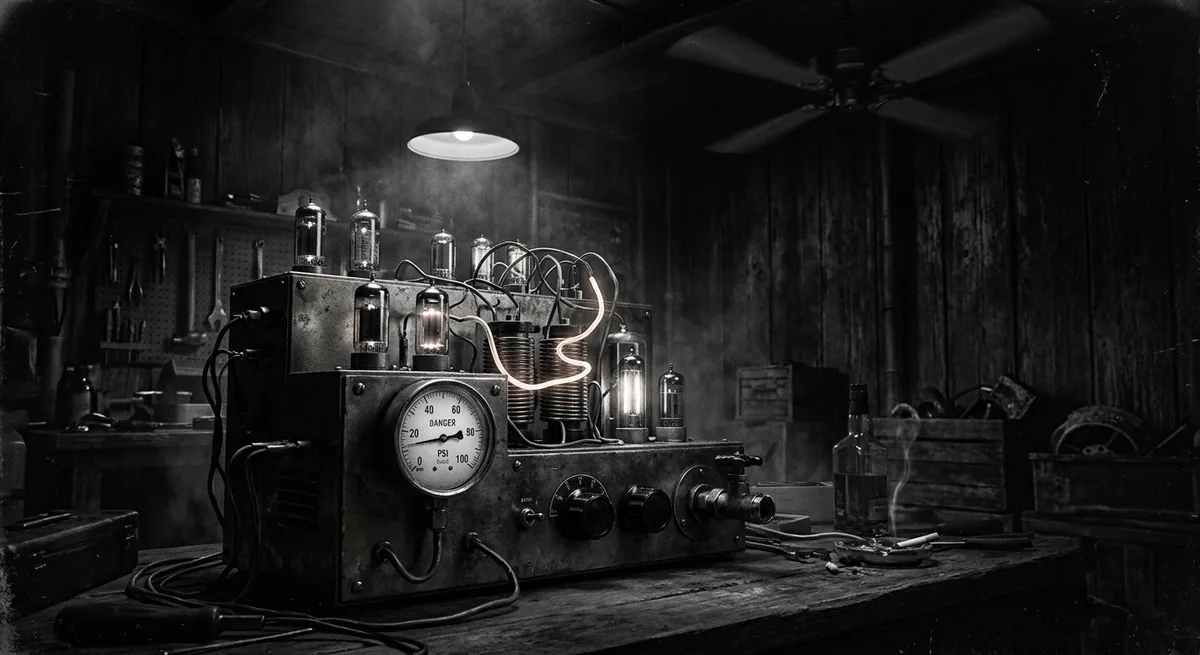
Produced for Who Killed Dr. Funk? at Venetian Soda Lounge.
The solution was designed to be reached by elimination rather than by discovery of one decisive object. That distinction shaped every clue in the room.
Al Whitaker killed Dr. Funk.He rigged one of Funk’s own inventions to do it. His motive grew out of resentment at being treated as the overlooked sidekick, and out of his belief that Funk was exploiting Rufus.
The other suspects were built to absorb suspicion in different ways. Rufus Hightower was the central red herring: his disappearance read as flight, which is the most available explanation in the room and the one guests reached for first. Anna Bell Darrow could be cleared through her bar alibi, which gave guests an early, satisfying elimination and taught them that alibis in this room were checkable. Sir Reginald Ainsworth stood as a credible second suspect with means and motive, keeping the field open after Anna Bell was ruled out.
The drink evidence pointed at the weapon rather than at a person, which is why it could sit in plain sight all night without collapsing the mystery. Recorded payphone accounts and environmental evidence then let guests test each suspect’s story against the others.
The intended path ran suspicion, elimination, deduction. Guests began with Rufus because absence looks like guilt, cleared Anna Bell on a verifiable alibi, weighed Ainsworth on motive, and were left with the person nobody had been watching. Al had been present all evening as background rather than as a suspect, which is exactly what made him the answer.
No single clue completed the case. Corroboration did. That was the design goal: a room in which a group has to talk to each other to finish.
Photographs above were taken during the event. The documents below are the printed production materials guests handled on the night.