
Venetian Soda Lounge
Back to Selected WorldsHospitality & Live Experience

Venetian Soda Lounge

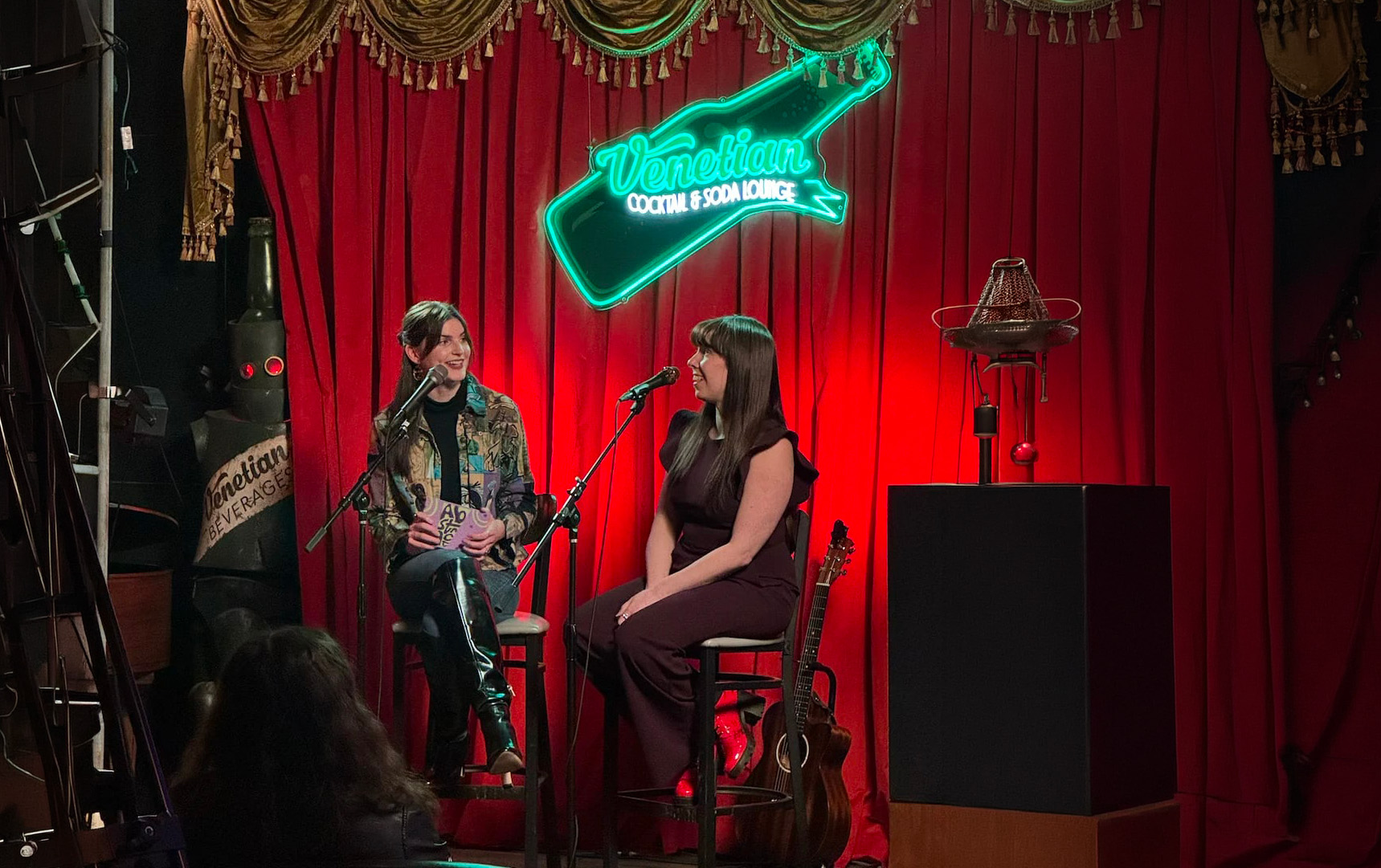
The Venetian Soda Lounge is a vintage-inspired cocktail and soda lounge in Burlington, Vermont, built around craft beverages, live entertainment, immersive hospitality, and the revived history of Venetian Ginger Ale.

4.8K

Instagram Followers

50K

Monthly IG Views

1.2K

Email Subscribers

39K

Annual Web Visits

$314K

2025 Revenue

60%

Email Open Rate

As founder and experience director, Justin developed the brand, guest experience, programming, marketing, visual world, live events, and operational systems behind the venue. Love Burlington describes it as a tribute to 1920s Burlington and a flavor-inventor's laboratory built around Venetian Ginger Ale history, with craft sodas, cocktails, mocktails, food, and performances.

Built byJustin Bunnell

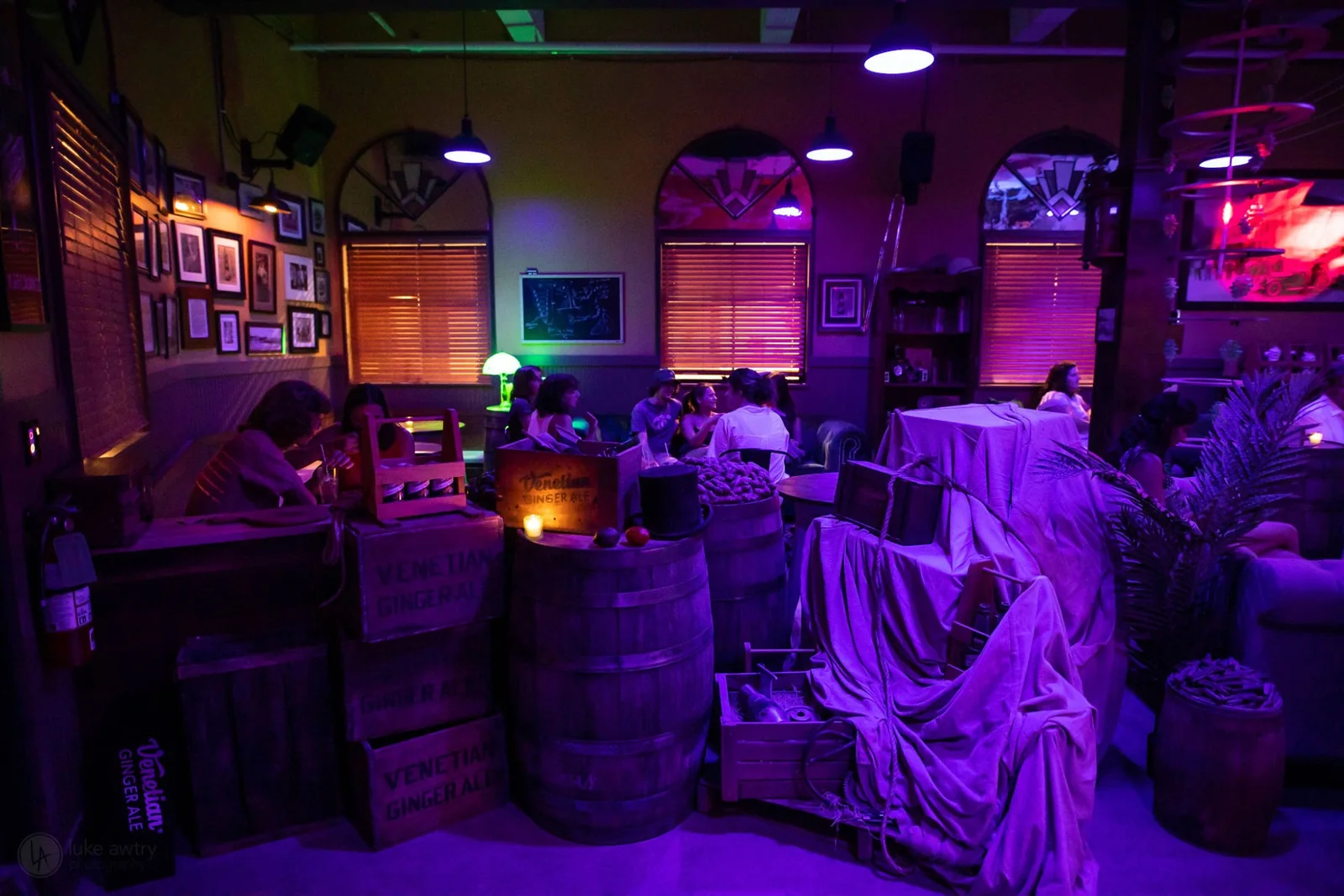
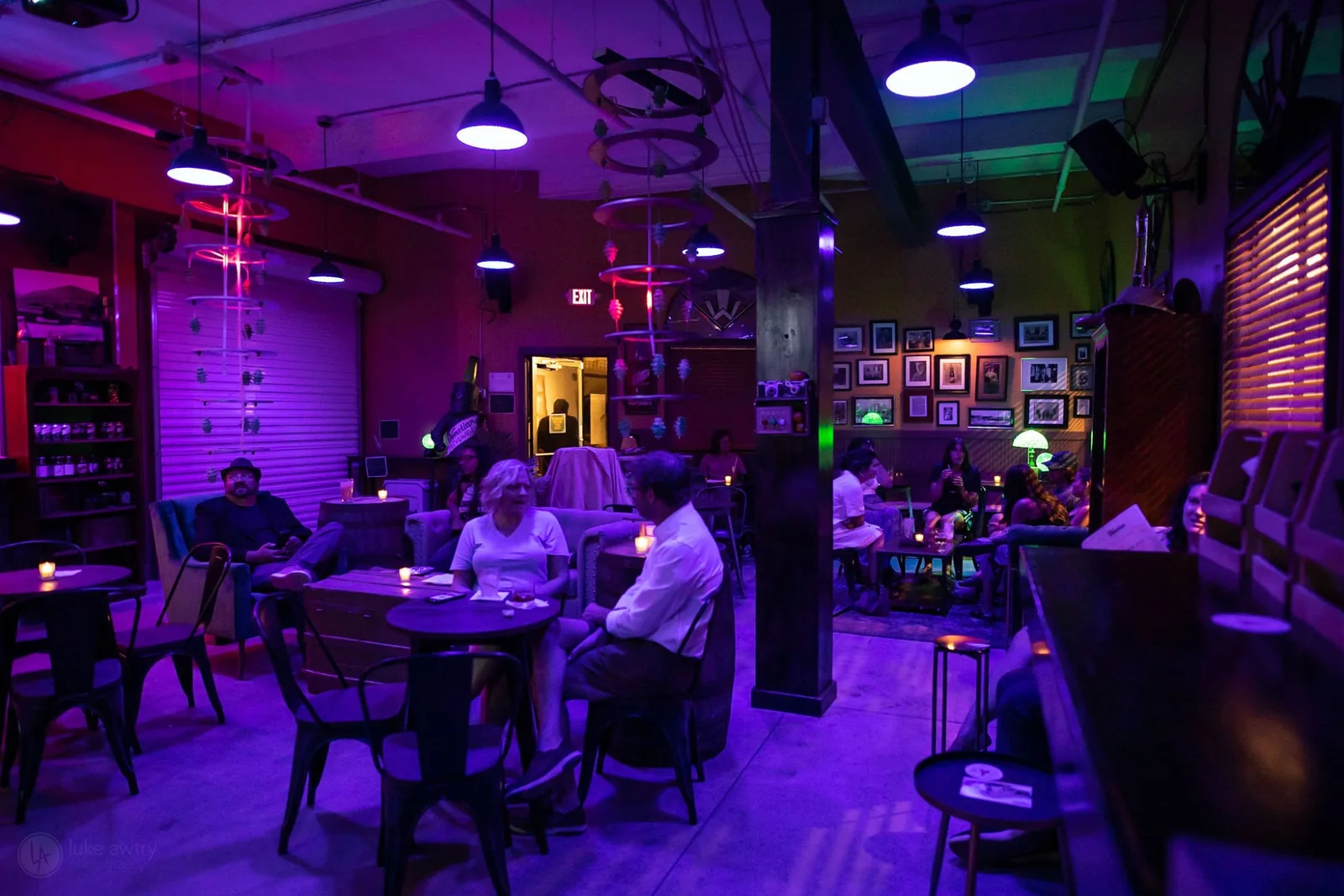
The lounge at 266 Pine Street: the same address the family built their soda plant at in 1917. Old crates still hold up the furniture.

The Venetian Soda Lounge interior under purple and green light, with stacked Venetian Ginger Ale crates and barrels in the foreground and guests seated at tables beyond.
The room, mid-service© Luke Awtry Photography
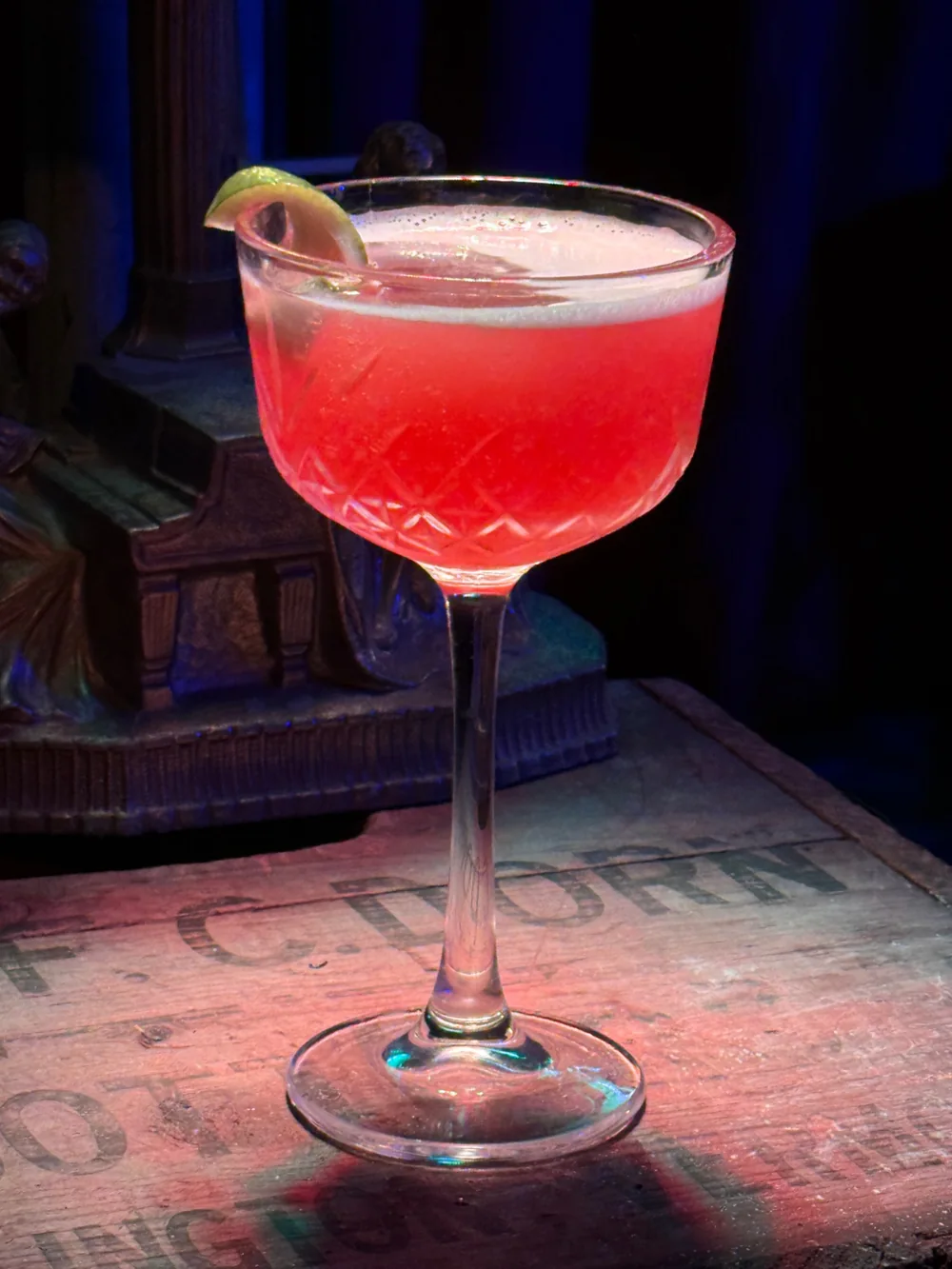
A red cocktail served up in a cut-crystal coupe with a lime wheel, resting on a wooden F.C. Dorn shipping crate.
Served on a Dorn crate
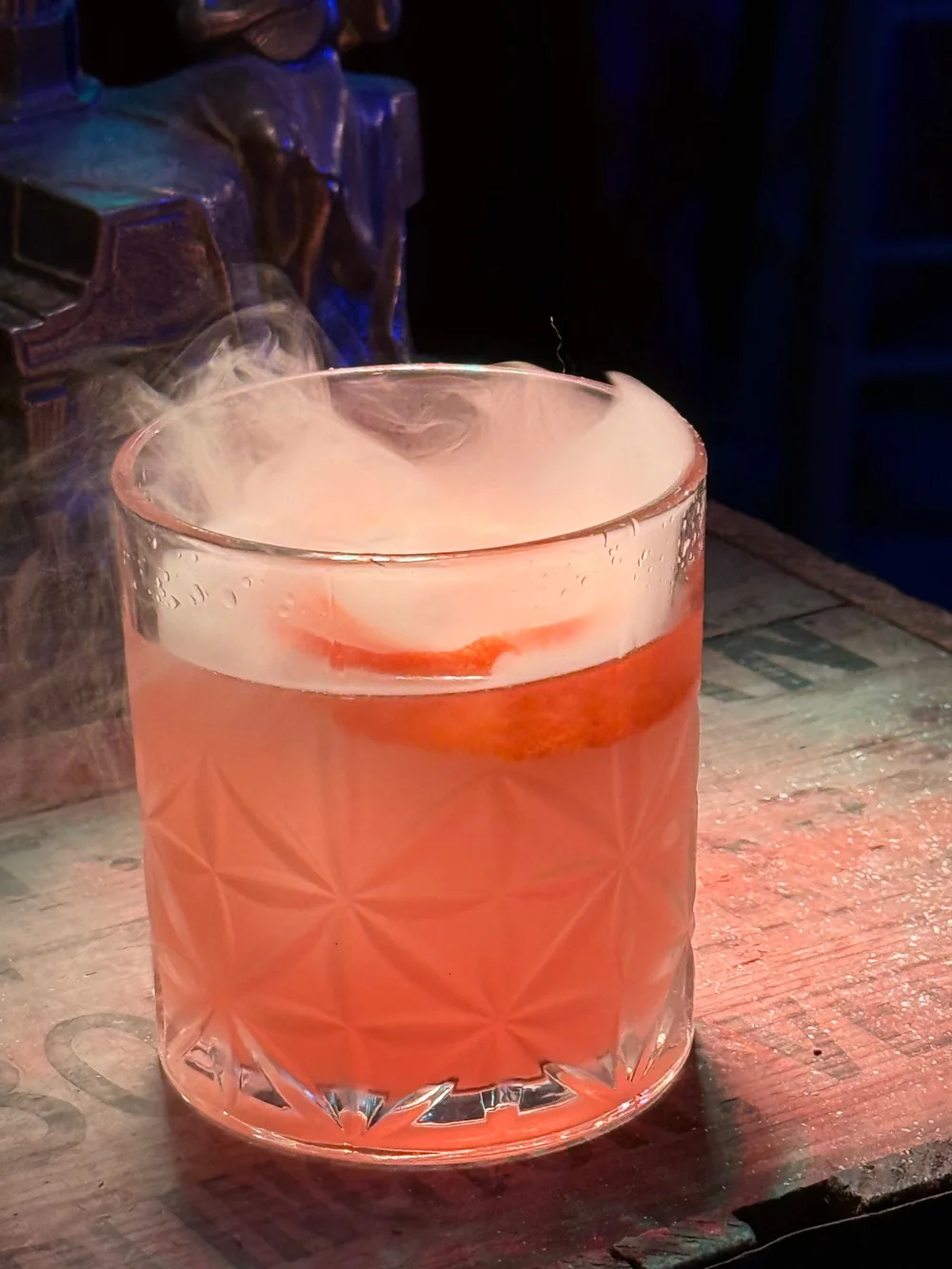
A grapefruit cocktail in a faceted rocks glass, smoke settling over the surface, on the same Dorn crate.
Smoke, grapefruit, cut glass
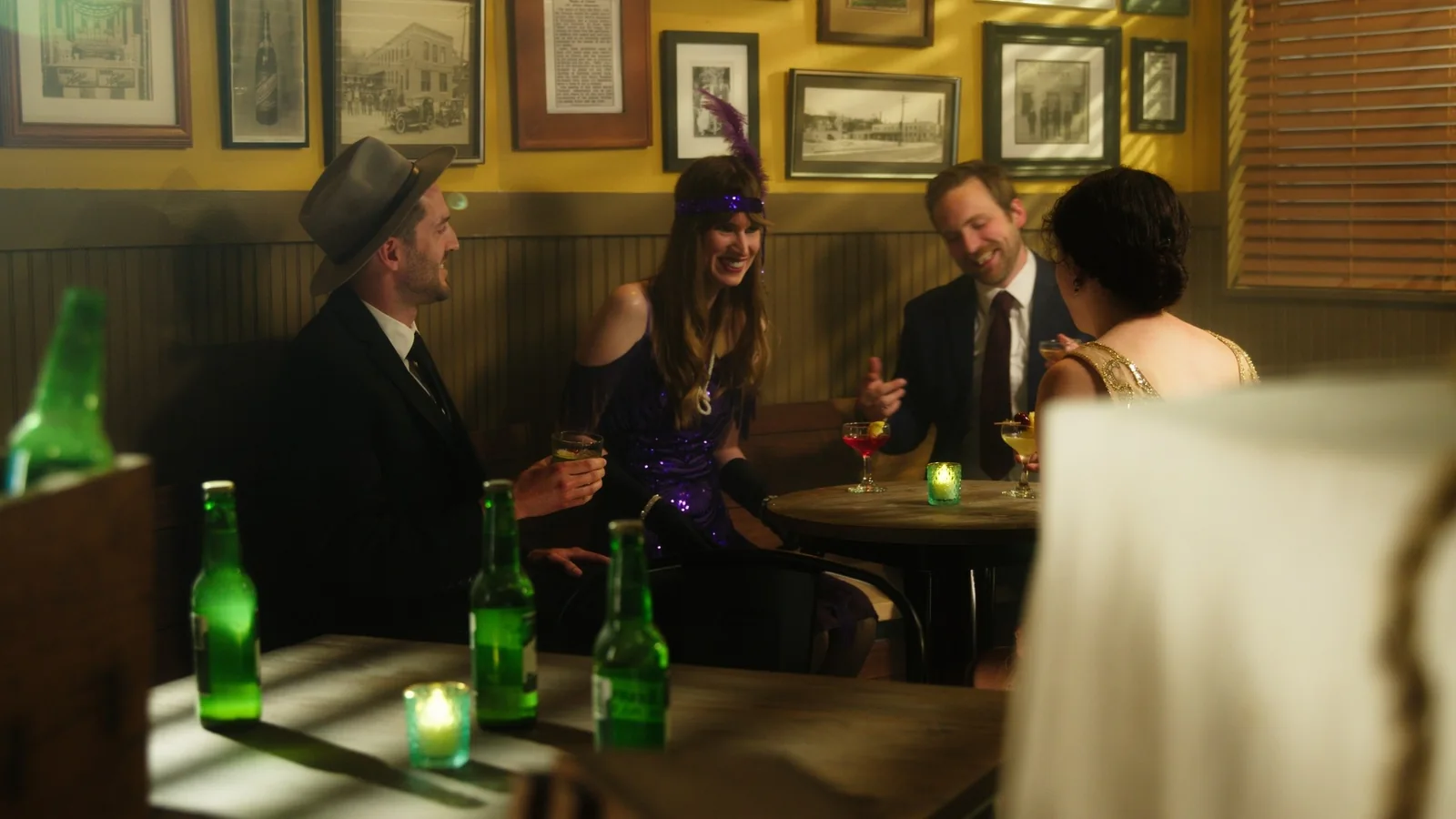
Four guests in 1920s dress laughing around a table with cocktails and green Venetian Ginger Ale bottles, beneath framed archival photographs.
Period night in the lounge
A wide view of the Venetian Soda Lounge, guests seated across the room under coloured light and hanging fixtures.
The full room© Luke Awtry Photography
Project File — Behind the Front of House

Operational Systems I Built

Building the guest experience was only half the job. Behind the lounge I also designed lightweight digital tools to make the operation easier to run: faster access to information for staff, standardised recipes, real visibility into inventory, and a training path a new hire can actually see the end of.

These were not software products built in isolation. Each one answered a problem that turned up while actually operating a hospitality business.

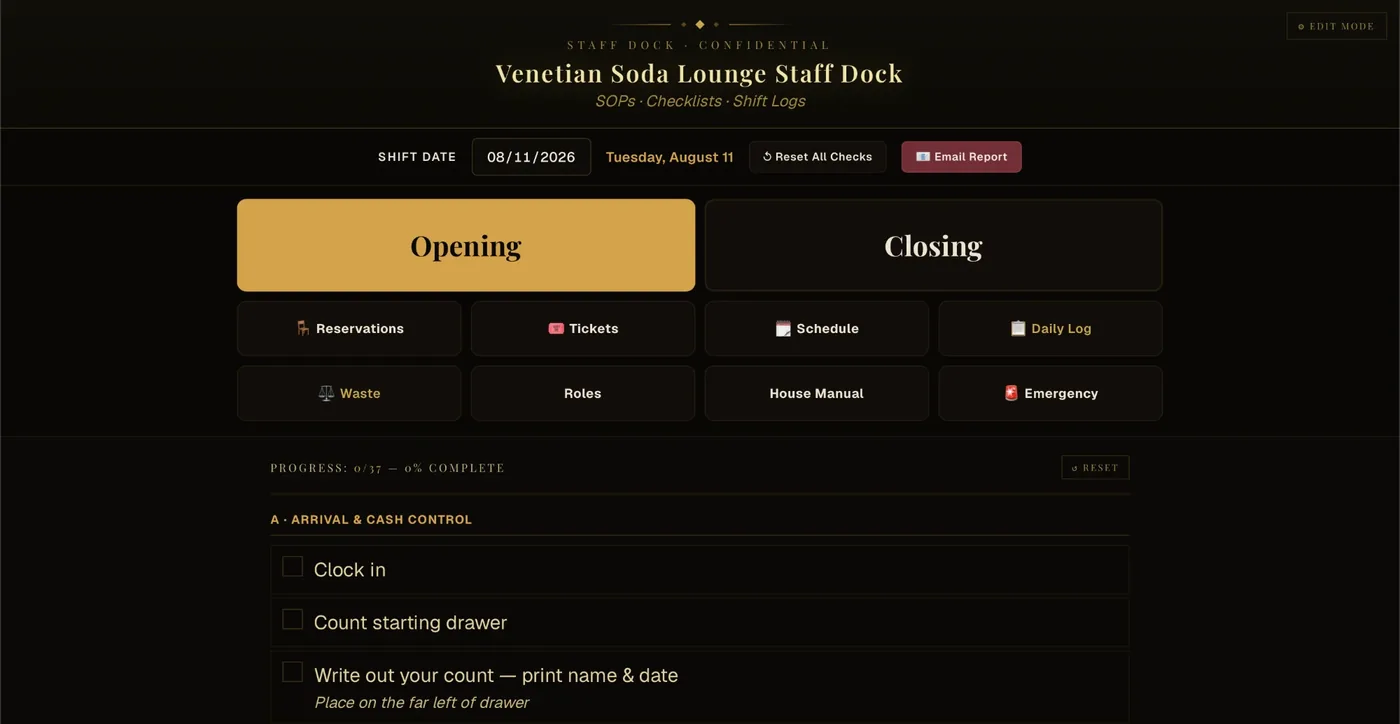
The Venetian Staff Dock home screen, showing Opening and Closing checklists above tiles for reservations, tickets, schedule, daily log, waste, roles, house manual and emergency procedures.
Internal Operations Tool · Produced

Venetian Staff Dock

One place to open the room, close it, and find the answer to anything in between.

Opening and closing run as tracked checklists rather than memory, with a progress count and a report the closing manager can send at the end of the night. Everything else a shift needs sits one tap away on the same screen.

  • Opening and closing checklists, grouped by station, with live progress
  • Reservations, tickets, schedule and daily log in one dock
  • Per-role SOPs covering what to decide and what to escalate
  • House manual: run of show, sound, cash handling, emergency response
  • Staff shifts pulled through from Square
Internal · staff PIN
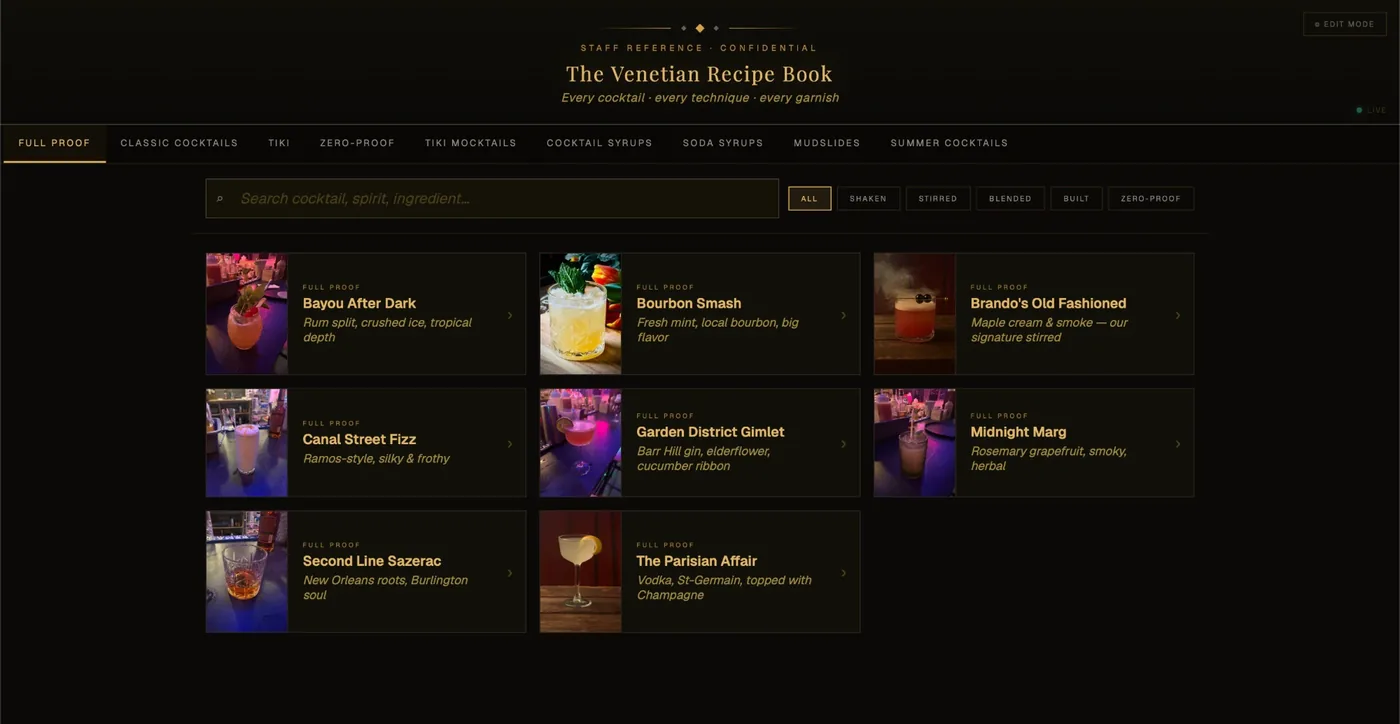
The Venetian Recipe Book, showing a searchable grid of house cocktails with photographs, category tabs and preparation-method filters.
Hospitality Operations Tool · Produced

Digital Recipe Book

The house build for every drink, findable mid-service in a few seconds.

Standardising the pour is what makes a cocktail programme survive a busy Saturday and a new hire. Recipes are searchable by drink, spirit or ingredient, so the answer arrives faster than a binder and does not walk out the door when someone leaves.

  • Search across cocktail, spirit and ingredient
  • Filter by method: shaken, stirred, blended, built, zero-proof
  • Nine categories, from full proof to syrups and mocktails
  • Each build carries measures, technique, garnish and glassware
  • Batch syrup entries include yield and numbered instructions
Internal · staff reference
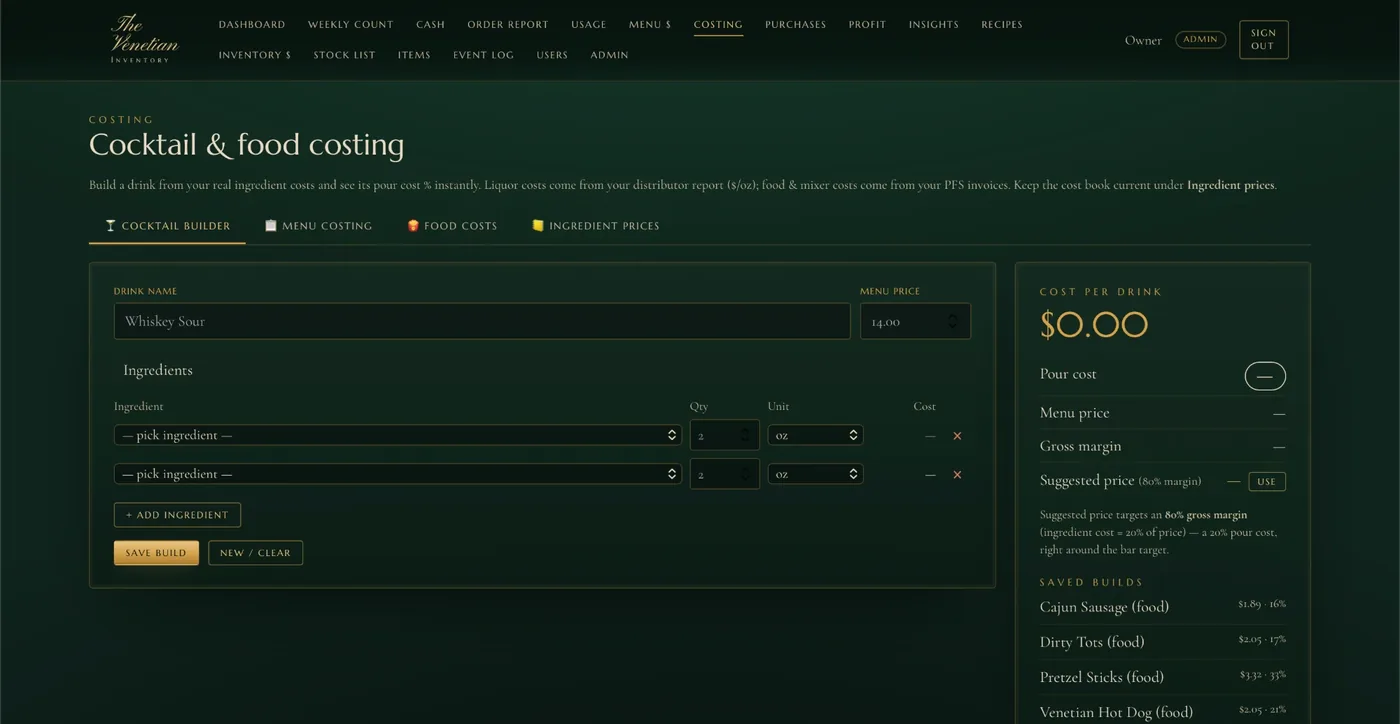
The Venetian inventory system's costing screen, showing a cocktail builder that calculates cost per drink and pour cost from real ingredient prices.
Business Operations Tool · Produced

Inventory Tracking System

What the bar holds, what a drink costs to make, and where the margin actually goes.

A weekly count is only useful if it connects to something. This ties counts to ingredient costs, so a drink can be built against real prices and a pour cost read straight off it, and so the gap between what sales should have consumed and what the shelves actually lost becomes visible instead of assumed.

  • Weekly counts, stock list and per-section stock value
  • Cocktail and food costing against real ingredient prices
  • Pour cost and suggested price per build
  • Usage and variance: sales converted to ingredient depletion
  • Menu performance by volume and margin, with sales pulled from Square
Internal · account required
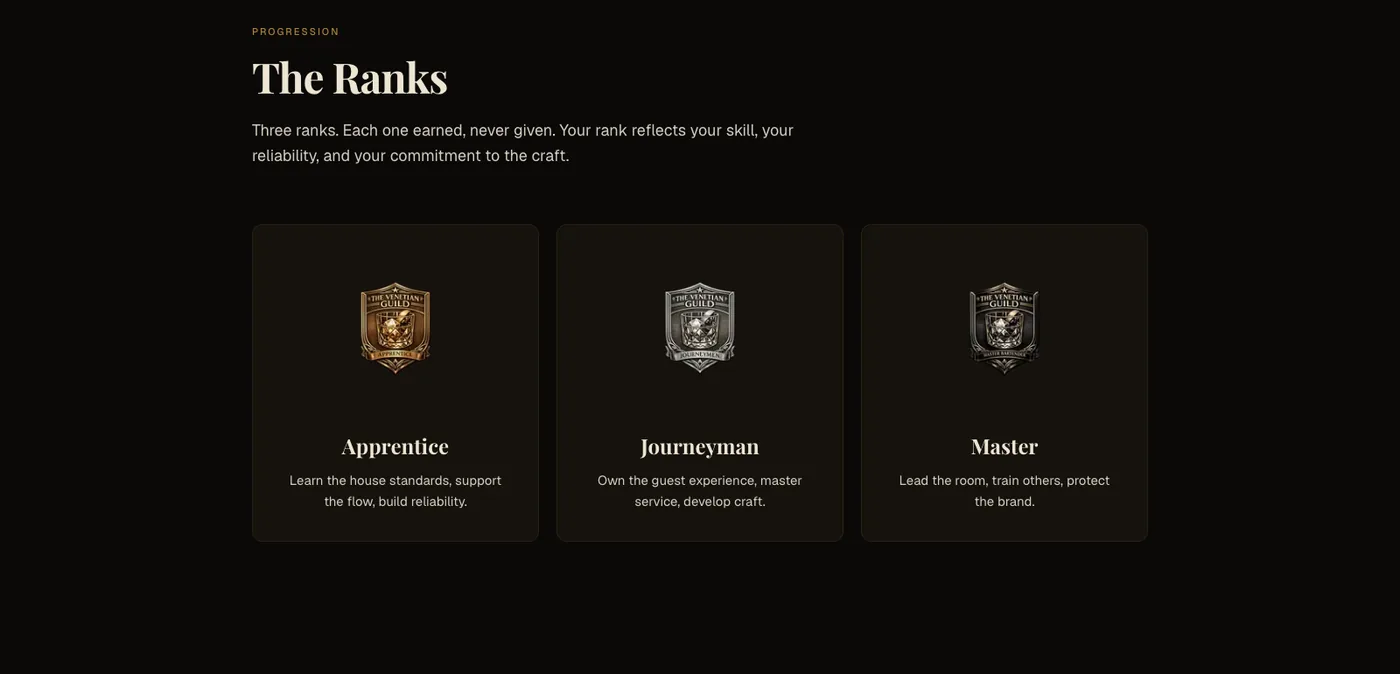
The Venetian Guild ranks page, showing three earned crests for the Apprentice, Journeyman and Master ranks with the responsibilities attached to each.
Staff Training Program · Produced

The Venetian Guild

A training and advancement system that turns a new hire into a craftsperson on a visible path.

Most hospitality training is a shift or two of shadowing and then hope. The Guild replaces that with structured modules, knowledge checks and floor practice, and puts a rank on the other side of it. Promotion is earned by demonstrated skill rather than by how long someone has been on the schedule, which gives the standard a shape people can actually work toward.

  • Three earned ranks: Apprentice, Journeyman, Master
  • A six-step path: watch, complete, quiz, practice, manager sign-off, advance
  • Training modules with knowledge checks before floor practice
  • Named house values as a shared language for service quality
  • Advancement tied to demonstrated skill, never tenure alone
Internal · member sign-in

The experience guests see depends on systems they never see.

Venetian became a useful laboratory for that idea. When an operational problem appeared, I increasingly looked for a better system rather than another manual process. These tools became part of the infrastructure behind the guest experience.

It is the same instinct behind the rest of my work: design the workflow, not just the moment, and build the thing rather than describe it.

Beyond the Front of House

Hospitality systems · Internal tools · Workflow design · Rapid prototyping · Operational problem solving